

Historical Background
Early Beginnings (9th Century)
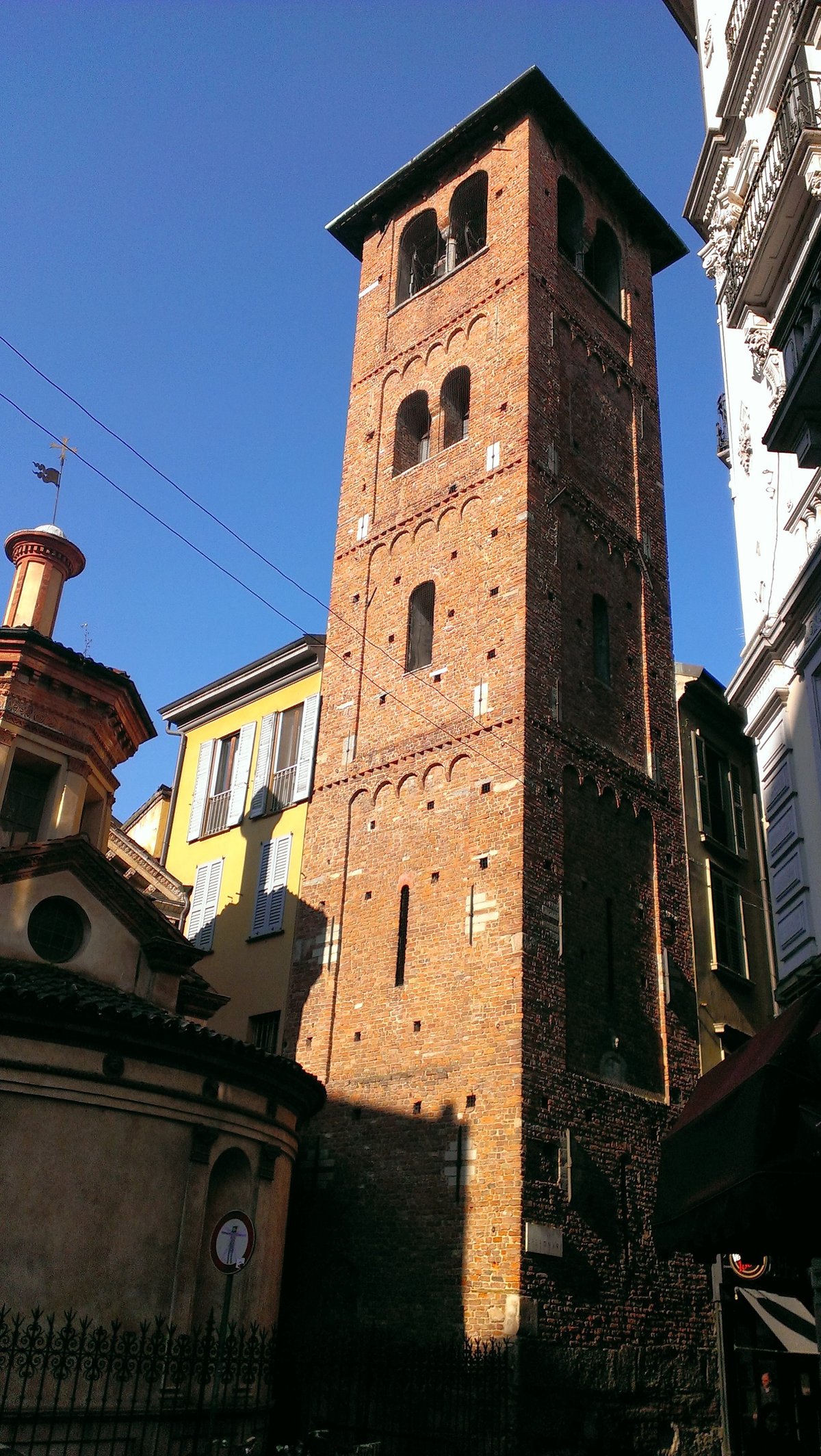
The story of San Satiro begins in the 9th century, a time of significant upheaval in Europe. Around the year 879, Anscar, Bishop of Brescia, sought to establish a religious center in Milan, strategically located near Monza. His vision was to build a church dedicated to Saint Satyrus, a Milanese martyr. This early church, likely constructed in the Romanesque style, was much smaller and simpler than the grand structure we see today. Unfortunately, very little of the original church remains.
The Sforza Era and Bramante's Transformation (15th Century)
Fast forward to the 15th century, Milan came under the rule of the powerful Sforza family, Dukes of Milan. Ludovico Sforza, known as 'Il Moro,' commissioned the renowned architect Donato Bramante to renovate and expand San Satiro. Bramante's innovative use of space and perspective led to the creation of a trompe l'oeil in the apse, making a shallow space appear much deeper. This illusion remains one of the most celebrated features of the church.
Architectural Significance
The Illusion of Space
Confined by a street behind the church, Bramante ingeniously created an illusion of a much larger space. He achieved this by constructing a trompe l'oeil apse, a masterpiece of perspective painting that tricks the eye into perceiving a deep, vaulted space where there is actually none. This nine-meter deep perspective view of a barrel vault is rendered in plaster, creating a remarkable sense of depth and grandeur (Musement Blog).
Architectural Features
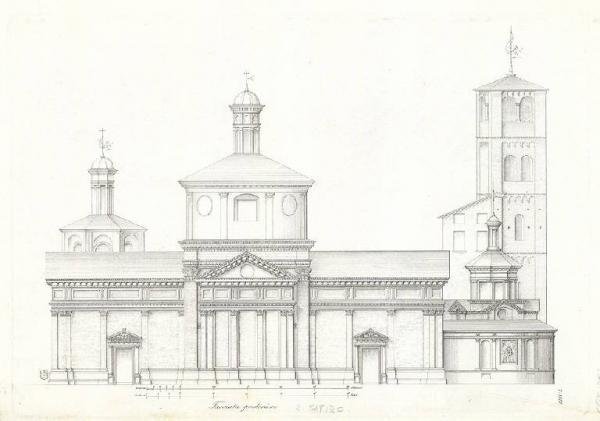
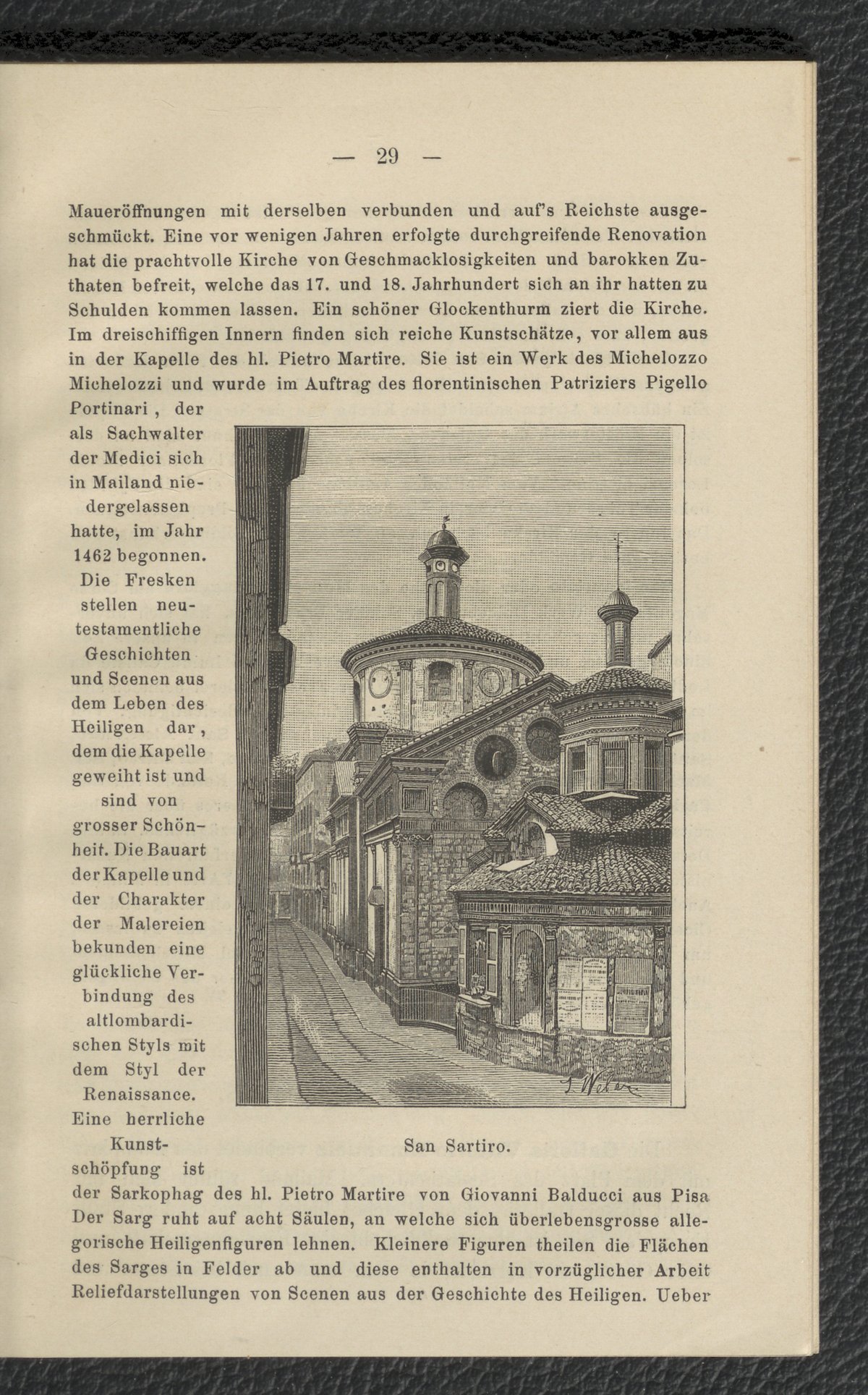
While Bramante's trompe l'oeil is the star attraction, San Satiro boasts other noteworthy architectural features. The church's unfinished facade showcases elements of both Romanesque and Gothic styles. Inside, the nave is lined with columns adorned with intricate carvings. The 15th-century sacristy features a beautiful vaulted ceiling and a collection of Renaissance frescoes.
Architectural Styles
Santa Maria presso San Satiro beautifully embodies the transition from the Gothic to the Renaissance style. While the original 9th-century structure was Romanesque, Bramante's additions introduced elements of Renaissance architecture, such as:
- Emphasis on Proportion and Symmetry The church's design, particularly the façade and the nave, reflects the Renaissance focus on harmonious proportions and symmetrical balance.
- Use of Classical Elements Bramante incorporated classical elements like arches, columns, and pilasters, drawing inspiration from Roman architecture.
- Humanist Approach The trompe l'oeil apse, while an illusion, reflects the Renaissance humanist philosophy. It emphasizes human ingenuity and the power of art to transform perception.
Notable Artworks
Bramante's Perspective Illusion
Perhaps the most famous artistic feature of Santa Maria presso San Satiro is not a painting or sculpture but an ingenious architectural illusion. Due to space constraints, Bramante created a trompe l'oeil perspective of a choir that appears to extend nine meters deep, while in reality, it is only about one meter. This masterful use of perspective, painted in fresco, tricks the eye into perceiving depth where there is none, making it a highlight of the church.
"The Lamentation over the Dead Christ" by Agostino de' Fonduti
This poignant terracotta sculpture group, dating back to 1522, is a masterpiece of Lombard Renaissance art. Located in the south transept, the work depicts the mourning over the body of Christ, with figures rendered in life-size and with remarkable emotional intensity. De' Fonduti's skill in capturing the sorrow and grief of the scene makes this artwork deeply moving.
Frescoes by Ambrogio Bergognone
Ambrogio Bergognone, a prominent painter of the Lombard school, contributed significantly to the church's artistic heritage. While some of his frescoes have been lost or whitewashed over time, several important works remain:
- Stories of the Life of Saint Ambrose Located in the Brivio Chapel, these frescoes depict scenes from the life of the patron saint of Milan. Bergognone's style, characterized by soft modeling and a serene atmosphere, is evident in these well-preserved works.
- "Madonna and Child with Saints" This fresco, found in the south transept, showcases Bergognone's ability to create intimate and devotional images. The Madonna and Child are depicted with a tender realism, while the surrounding saints add to the sacred atmosphere.
Wooden Crucifix (13th Century)
Hanging above the main altar is a powerful and expressive wooden crucifix from the 13th century. This older piece stands in stark contrast to the Renaissance art found elsewhere in the church, highlighting the continuity of religious devotion across different artistic periods. The crucifix's simple yet impactful design draws the viewer's eye to the suffering of Christ, serving as a focal point for prayer and contemplation.
16th-Century Frescoes in the Chapel of Saint John the Baptist
The Chapel of Saint John the Baptist, located to the left of the presbytery, is adorned with a vibrant cycle of frescoes dating back to the 16th century. These frescoes, attributed to various artists, depict scenes from the life of John the Baptist, including his birth, preaching, and martyrdom. The vivid colors and dynamic compositions bring these biblical stories to life, offering a glimpse into the religious art of the late Renaissance.
Other Notable Artworks
In addition to these highlights, Santa Maria presso San Satiro contains other noteworthy artworks:
- 15th-Century Frescoes in the Sacristy The sacristy features a series of well-preserved frescoes from the 15th century, depicting scenes from the Old and New Testaments. These frescoes offer a fascinating look at the artistic styles prevalent in Lombardy before the arrival of Bramante.
- Baroque Altarpiece The high altar is adorned with a grand Baroque altarpiece, a later addition to the church. While contrasting with the earlier Renaissance aesthetic, the altarpiece adds a layer of opulence and grandeur to the interior.
Visitor Information
Visiting Hours and Tickets
- Opening Hours Santa Maria presso San Satiro is open to visitors from 7:30 AM to 12:00 PM and from 4:00 PM to 6:30 PM on weekdays. Weekend hours may vary, so it's advisable to check the official website for the most up-to-date information.
- Ticket Prices Admission to the church is generally free, but donations are welcome to help with maintenance and preservation efforts.
Travel Tips
- Best Time to Visit To avoid crowds, consider visiting early in the morning or late in the afternoon.
- Photography Photography is allowed, but please respect the sanctity of the space and avoid using flash.
- Guided Tours Consider joining a guided tour to fully appreciate the historical and architectural details.
Nearby Attractions
Monza offers several other historical sites worth visiting, including the Monza Cathedral and the Royal Villa of Monza. Both are within walking distance of San Satiro.
Accessibility
Santa Maria presso San Satiro is accessible to visitors with disabilities. Ramps and elevators are available to ensure everyone can enjoy this historical site.
FAQ
Q - What are the visiting hours for Santa Maria presso San Satiro? A - The church is typically open from 7:30 AM to 12:00 PM and from 4:00 PM to 6:30 PM on weekdays. Weekend hours may vary.
Q - Is there an entry fee? A - Entry is free, but donations are appreciated.
Q - Can I take photos inside the church? A - Yes, photography is allowed, but please avoid using flash.
Q - Is Santa Maria presso San Satiro accessible for people with disabilities? A - Yes, the church is wheelchair accessible.
Q - What are some nearby attractions? A - Nearby attractions include the Milan Cathedral (Duomo di Milano), Galleria Vittorio Emanuele II, and Teatro alla Scala.