Why does a church famous for serenity feel, on a second look, like the scene of a political cover-up? Santa Maria delle Grazie in Milan, Italy, rewards a visit because it lets you watch power, grief, architecture, and genius collide in one building: come for The Last Supper, stay for the church that explains why it ended up here. Step into the brick nave today and the air cools at once; footsteps click over stone, incense lingers faintly, and Bramante's dome rises ahead like a calm answer to a question the building still hasn't fully settled.
Most visitors treat the church as the waiting room for Leonardo. Fair enough. But that misses the better story, because Santa Maria delle Grazie is one of those rare places where you can see Milan changing styles, rulers, and ambitions in the space of a few dozen meters.
Records show the Dominican complex began after Count Gaspare Vimercati donated the land in 1460, and construction started in 1463 under Guiniforte Solari. Then the Sforza court stepped in, Donato Bramante reworked the eastern end in the 1490s, and the whole place became a visual argument about who deserved to rule Milan.
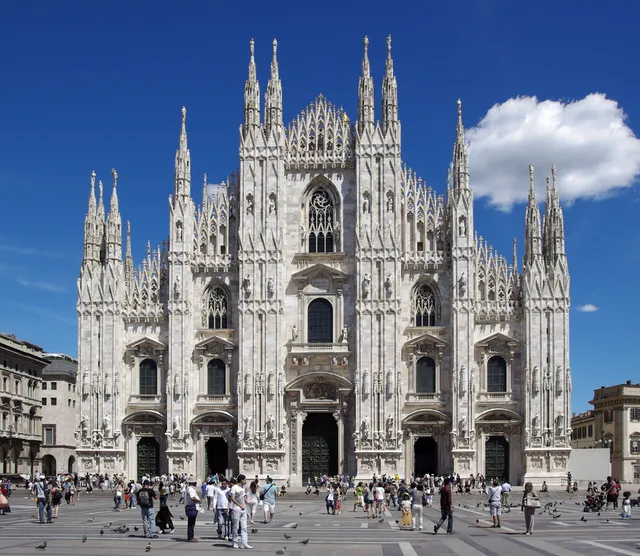
Look carefully near the crossing. The pointed Gothic vaults give way to Renaissance geometry so abruptly that the church feels almost cut and spliced, which is exactly why it matters more than many prettier interiors in the city, even near the theatrical marble certainty of the Duomo di Milano.
Researched by the Audiala editorial team from historical records, architectural archives, and local expertise.
What to see
Bramante's Tribune and the Gothic Nave
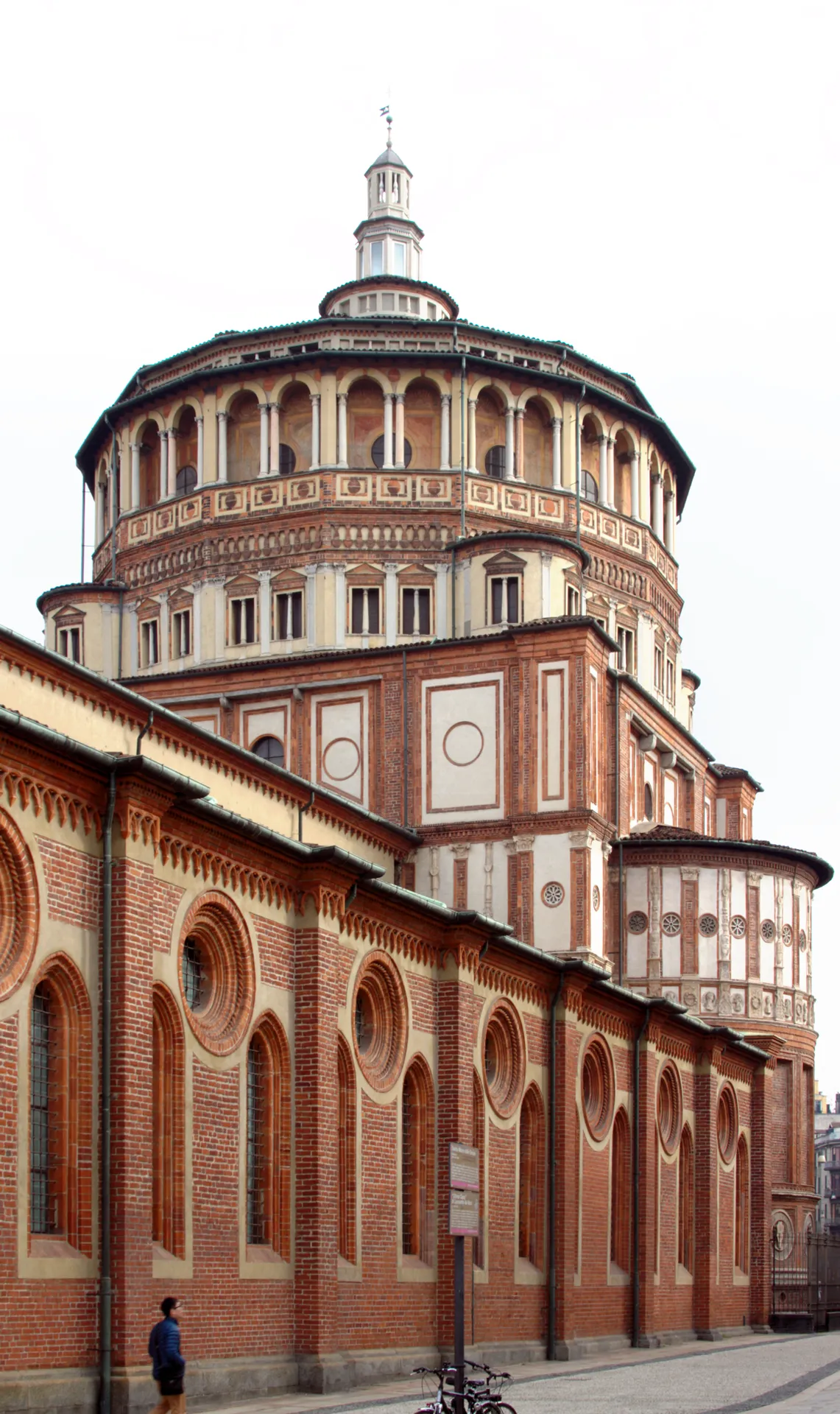
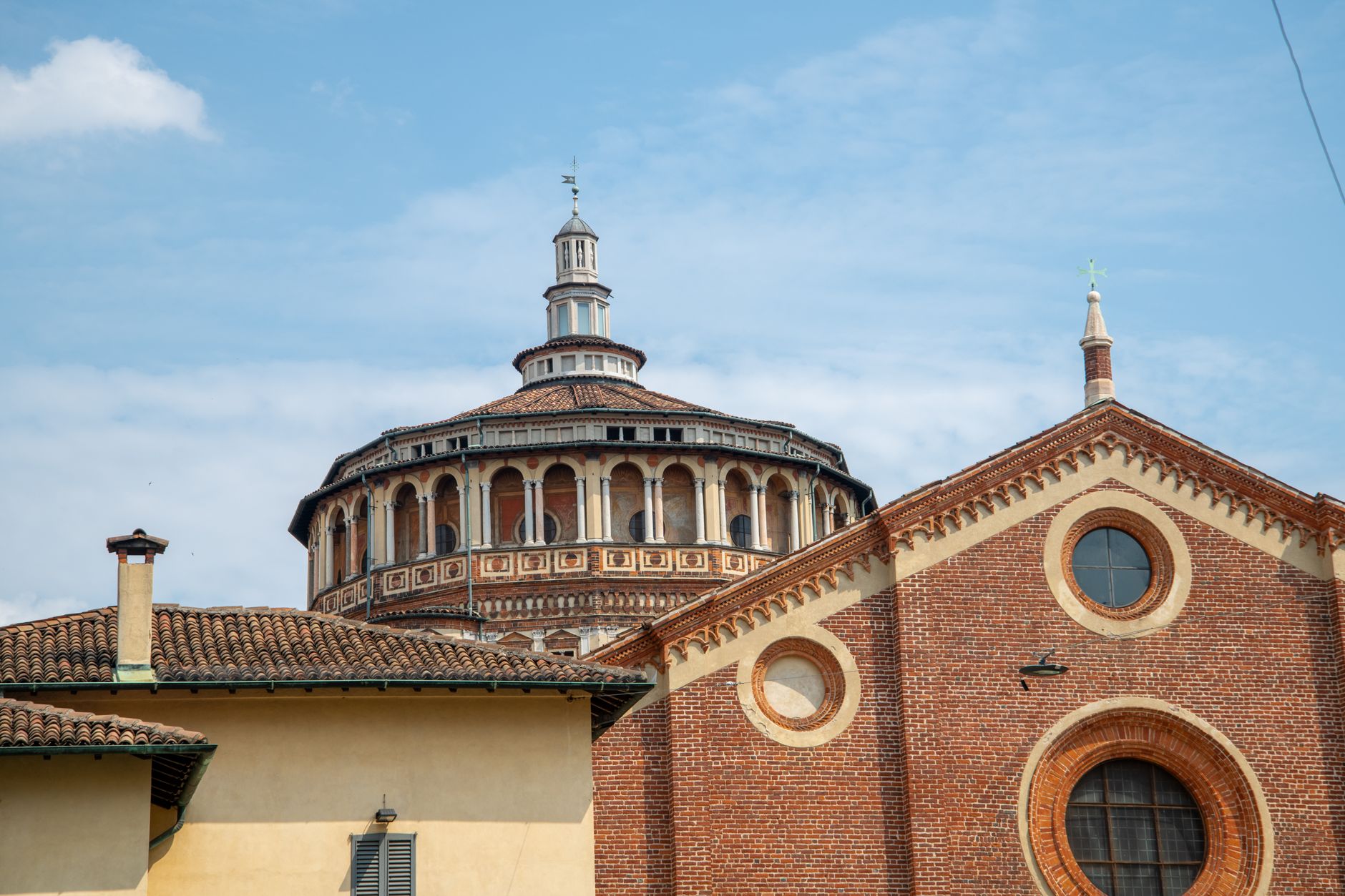
Santa Maria delle Grazie works because it refuses to be one thing. Guiniforte Solari's nave, begun in 1463 and finished by 1482, pulls you forward under pointed arches and ribbed vaults; then Bramante's late-15th-century tribune opens behind it like a held breath, a 20-meter-wide geometric calm capped by a dome whose scale feels closer to a city room than a chapel. Stand at the crossing and look back before you look up: the church stops being a famous Milan address and becomes an argument between Gothic ascent and Renaissance order, made in brick the color of baked earth and stone pale as old paper.
The Refectory and Leonardo's Last Supper
The room that holds Leonardo's The Last Supper is quieter than people expect, almost stern, because the visit is still shaped by conservation: 15 minutes, small groups, filtered air, no loitering. That pressure helps. You notice the shock of the painting's scale, the dry wall surface that has survived everything from bad technique to the bombing of 15 August 1943, and across from it Montorfano's Crucifixion holding the room in balance like a second voice nobody warned you to hear.
The Frog Cloister and a Better Way to Arrive
Most visitors come for Leonardo and leave too quickly, which is a mistake. Enter the Chiostro delle Rane and the whole complex changes register: five arches on each side, terracotta and marble in soft light, and a fountain where four bronze frogs send thin streams of water into the basin, a sound far more persuasive than any guidebook sentence. If you have time, pair the cloister with a slow exterior lap around the church before heading toward the Monument To Leonardo Da Vinci or back into central Milan; the rear view teaches you more than the facade does, because Bramante's dome and tribune reveal how cleverly this place was stitched together.
Plan your visit
Getting There
Le Grazie sits at Via Giuseppe Antonio Sassi 3, with the Cenacolo entrance a few steps away at Piazza Santa Maria delle Grazie 2. From Duomo di Milano, take Metro M1 to Conciliazione and walk 5 minutes, ride tram 16 direct, or walk Corso Magenta in about 20 minutes; from Cadorna, it is an 8-10 minute walk, and from Castello Sforzesco about 10-12 minutes on foot. Drivers should think twice: the church is inside Milan's Area C restricted zone, with paid street parking on Via Fratelli Ruffini and a taxi stand at Via Ruffini 1.
Opening Hours
As of 2026, the basilica is open Monday-Saturday 07:00-13:00 and 15:00-19:30, and Sunday 07:30-12:30 and 15:00-21:00. Services still run here, so sightseeing stops during liturgies; that matters more than the clock. If you are also seeing The Last Supper, remember the museum keeps separate hours: Tuesday-Sunday 08:15-19:00, last entry 18:45, closed Mondays, 1 January, and 25 December.
Time Needed
A quick look inside the church takes 15-25 minutes, which is enough to feel the scale and see how Bramante's calm geometry holds the space together like a tuned instrument. Give yourself 45-60 minutes if you want the basilica at human speed, with time for the cloister or a quiet pause. Pairing the church with the Cenacolo needs 1.5-2 hours, because the painting itself lasts 15 minutes but the museum requires arrival 30 minutes early.
Accessibility
The basilica nave is mostly obstacle-free, and staff can indicate an alternate ramped route where steps interrupt access near the altar; the cloister and sacristy are trickier and may need assistance. The Cenacolo is better documented for mobility access, with a step-free one-level route, an entrance ramp of about 8 percent, an accessible restroom, wheelchairs on loan, tactile materials, and LIS/ISL audiovisual support. Stone paving around the site is manageable, though some older surfaces can jolt like a cobbled tram stop.
Cost & Tickets
As of 2026, entry to the basilica is free. The separate Cenacolo ticket costs EUR 15 for adults 25+, EUR 2 for ages 18-25, and is free for under-18s and eligible visitors with disabilities plus one companion, but every person still needs a reservation. First Sundays are free too, though places vanish fast; museum tickets are released in quarterly blocks, with extra seats posted each Wednesday at 12:00 for the following week.
Tickets & tours.
These are guided options from our partners — same price as booking direct.
Prices are indicative — final pricing and availability are confirmed at checkout. Audiala may earn a commission from bookings made through these links.
Photo Gallery
A view of Santa Maria delle Grazie Church, Milan, Italy. · SavioR2003The brick façade and Renaissance dome of Santa Maria delle Grazie rise above a sunlit Milanese square as visitors gather outside. · tommy picone on PexelsThe brick apse and Renaissance dome of Santa Maria delle Grazie rise against a cloudless blue sky in Milan. Bright sunlight reveals the arcades, columns and terracotta details. · Bianka Bécsi on PexelsThe brick facade, rose window and slender white pinnacles of Santa Maria delle Grazie rise beneath a cloud-streaked Milan sky. · Giuseppe Di Maria on PexelsThe red-brick facade and ornate Renaissance portal of Santa Maria delle Grazie face a sunlit Milan street. A lone pedestrian provides a sense of scale. · Simone Cisale on PexelsThe red-brick facade of Santa Maria delle Grazie rises beneath a bright blue Milan sky. Circular windows and an ornate marble portal frame the church entrance. · Andrew Patrick Photo on PexelsThe brick facade and Renaissance dome of Santa Maria delle Grazie rise beneath a pale blue Milan sky. No people are visible in the sunlit view. · Andrew Patrick Photo on Pexels
History
A Monastery Rewritten by Ambition
Records show Santa Maria delle Grazie began as a Dominican foundation on Milan's western side, not as a shrine to Leonardo and not as a dynastic monument. The first campaign, started in 1463 under Guiniforte Solari, gave the friars a Lombard Gothic church and convent built for prayer, study, meals, and burial.
Then Milan's politics changed the view. In the 1490s, Ludovico Sforza turned the complex into a statement about his own legitimacy, bringing in Bramante, backing Leonardo, and folding private grief into public propaganda after Beatrice d'Este died in 1497 at just 22.
The turning point
The Duke Who Tried to Bury Doubt in Marble
At first glance, Santa Maria delle Grazie looks like the natural home of Leonardo's mural and Bramante's dome, as if art, devotion, and ducal power had always belonged together here. That is the surface story most visitors accept: a glorious Renaissance church built to frame genius.
But the dates don't behave. Records show the Dominicans were already building here from 1463, with the convent largely complete by 1469 and the church finished in 1482, years before Leonardo painted and before Ludovico Sforza remade the eastern end; the building was not born as his monument, and his hold on Milan was shakier than the brickwork suggests because he ruled in place of his young nephew Gian Galeazzo.
The revelation is harsher and more human. After Beatrice d'Este died in 1497, Ludovico had something personal at stake as well as political survival: he needed a burial church that could turn grief into legitimacy, so he designated Santa Maria delle Grazie as a Sforza mausoleum, backed Bramante's tribune, and filled the adjoining refectory with Leonardo's The Last Supper; then the turning point came in 1499, when French forces drove him from Milan and the dynasty-building project collapsed before his own tomb scheme could settle into stone. Once you know that, the church stops looking harmonious. It looks patched, persuasive, a little desperate, and all the more moving for it.
The Seam in the Architecture
Most scholars credit Solari with the nave and Bramante with the eastern tribune, dome, and apse, though some historians still argue that Giovanni Antonio Amadeo had a larger hand than the usual story admits. Stand just before the crossing and the evidence turns physical: Gothic ribs and pointed forms give way to classical order and rounder volume, a stylistic fault line you can read with your own eyes.
The Night the Wall Stayed Standing
On 15 August 1943, Allied bombing wrecked much of the convent and smashed the refectory roof, leaving Leonardo's mural wall exposed to the night air and drifting smoke. UNESCO and site records show the painting survived through a mix of preparation, luck, and thick masonry, which means the church you see now is also a postwar rescue story, not just a Renaissance survivor.
Tips for visitors
Church Manners
This is still a working Dominican church, not a stage set attached to Leonardo. Cover shoulders and knees, keep your voice low, and do not try to sightsee during Mass unless you enjoy being the loudest person in a room built for prayer.
Photo Rules
Photography rules for the Cenacolo are not clearly stated in one consistent public notice, so play it safe: no flash, no tripod, no selfie stick, and ask staff before shooting anything more than a discreet phone photo. Inside the basilica, put the camera away during liturgy; the echo under those vaults carries every click.
Buy Officially
Cenacolo tickets are nominative, and the museum uses that system to block scalping. Buy through the official channel, not inflated reseller listings, and watch your pockets on Metro changes at Cadorna or Conciliazione, where the real nuisance is ordinary transit theft rather than trouble on the square.
Eat On Magenta
Skip the first generic tourist stop you see. For a fast budget lunch, De Santis at Corso Magenta 9 does historic panini at about EUR 10; for old-school Milan energy, Bar Magenta at Via Carducci 13 is good for a sandwich or aperitivo; for coffee and a slower reset, Ditta Artigianale at Corso Magenta 31 is the cleaner mid-range pick.
Best Visit Slot
Early morning or late afternoon suits this place best, when Corso Magenta feels less like a corridor and more like a neighborhood. Summer heat turns the paving reflective and hard, while the church interior stays cool and smells faintly of stone and incense, so a first-slot visit or an after-17:00 pass is the smarter move.
Pair It Properly
Most people rush in for Leonardo and leave. Better plan: book The Last Supper, then step into the free church and, if open, the Chiostro delle Rane; after that, Corso Magenta puts you within easy reach of Duomo di Milano by tram or metro, without dropping you back into the city's loudest crowds too soon.
Where to Eat
local_dining
Don't Leave Without Trying
risotto alla milanesecotoletta alla milaneseossobucocassoeulapanettonepanzerottoaperitivo
Cavoli a merenda! La Terrazza nascosta.
fine dining
Creative Italian with a seasonal, sustainable focus€€star4.7(125)directions_walkNear Santa Maria delle Grazie
Order: Order the tiramisu, which one reviewer called the best they had in Milan, and look hard at the pasta if it's on the menu because more than one guest regretted skipping it.
This is the kind of Milan address people miss because they walk straight past the courtyard buzzer. The terrace-in-a-palazzo setting and the polished, inventive cooking make it feel intimate rather than staged.
Classic Milanese bar-bistro for coffee, pasta, and simple local plates€star4.5(306)directions_walkVery close to Santa Maria delle Grazie
Order: Go for the cappuccino if you're here early, then add a pasta or the eggs with ham for a quick meal before seeing The Last Supper.
This is the practical answer to the area: affordable, unshowy, and full of the energy of a real neighborhood bar. Reviews keep coming back to the warmth of the owner and the fact that locals seem to outnumber tourists.
Modern Italian osteria and brunch bistrot€€star4.7(2687)
Order: The seafood pasta sounds like the strongest savory order from reviews, and the brunch set gets repeated praise if you want a slower daytime meal.
Service seems to be the real draw here: staff who guide you through the menu without ceremony, plus a room that feels relaxed rather than precious. It is not next door to the church, but it earns its place by being consistently well liked by people who care about both food and hospitality.
Traditional Italian trattoria with pizza, pasta, and coffee€€star4.3(1205)
Order: Try the carbonara or the fume pizza with prosciutto, mushrooms, and cheese, then finish with coffee if you want the order that reviewers mention most warmly.
Bellavista works when you want familiar Milan dinner territory without paying purely for a postcard view. Reviews are mixed enough to keep expectations honest, but the better ones describe attentive service and a room people happily return to.
checkNear Santa Maria delle Grazie, you are in central-west Milan, about 5 minutes on foot from Conciliazione and 7 minutes from Sant’Ambrogio.
checkBreakfast in Milan is usually light and fast: coffee at the bar and a pastry.
checkLunch is generally served around 12:30-14:30.
checkAperitivo is part of the city's daily rhythm and commonly starts around 19:00; in some areas it can stand in for a light dinner.
checkDinner usually runs about 19:30-21:30, with many locals sitting down around 20:30-21:00.
checkMany independent restaurants in Milan close one day per week, often Monday, so check opening days before you go.
checkTipping is not compulsory in Italy; a small tip or rounding up is standard rather than automatic.
Food districts:Corso Magenta around Santa Maria delle GrazieConciliazioneSant’Ambrogio
Restaurant data powered by Google
Frequently asked
Is Santa Maria delle Grazie worth visiting?
Yes, even if you never get a ticket for The Last Supper. The surprise is that the church itself holds two moods in one body: Guiniforte Solari's late-Gothic nave pulls you forward under ribbed vaults, then Bramante's Renaissance tribune opens out beneath a dome shaped with near-mathematical calm. Step into the Frog Cloister after the traffic on Corso Magenta and the sound shifts to splashing water and soft footsteps on stone.
How long do you need at Santa Maria delle Grazie?
Give the church 45 to 60 minutes if you want more than a rushed look. A quick basilica visit can take 15 to 25 minutes, but the full experience needs time for the Gothic-to-Renaissance seam, the Madonna chapel, and the Frog Cloister; if you are also seeing The Last Supper, allow 1.5 to 2 hours total because the museum asks you to arrive 30 minutes early for a 15-minute viewing slot.
How do I get to Santa Maria delle Grazie from Milan?
From central Milan, the easiest route is usually the metro or a short walk. From Duomo di Milano, take Metro M1 to Conciliazione and walk about 5 minutes, ride Tram 16 directly, or walk about 20 minutes along Corso Magenta; from Cadorna, it is roughly an 8 to 10 minute walk. The basilica address is Via Giuseppe Antonio Sassi 3, while the museum entrance for the Cenacolo is at Piazza Santa Maria delle Grazie 2.
What is the best time to visit Santa Maria delle Grazie?
Spring is the sweet spot, and early morning is the calmest hour. The Frog Cloister shows best when the air is mild and the fountain becomes part of the visit rather than an afterthought, while the church feels more like a living place during May devotions and Lent than in the thinner August rhythm. If you want quiet, go early; if you want atmosphere, time your visit around prayer hours without walking in during Mass.
Can you visit Santa Maria delle Grazie for free?
Yes, the basilica is free to enter, but the ticketed museum for The Last Supper is separate. Church access follows worship hours and pauses during liturgical celebrations, while the Cenacolo currently charges 15 euros for adults 25 and over, 2 euros for ages 18 to 25, and still requires advance booking even on free-entry days such as the first Sunday of the month.
What should I not miss at Santa Maria delle Grazie?
Do not stop at Leonardo and leave. The real sequence is the threshold where Solari's pointed Gothic vaults give way to Bramante's domed geometry, the choir woodwork, the older Madonna delle Grazie chapel that started the whole cult site, and the Chiostro delle Rane with its four bronze frogs sending water into the basin. Outside, walk around the rear tribune too; from there the dome reads less like a postcard and more like a piece of Milan arguing with itself across one building.
Sources & attribution12
Researched and written by the Audiala editorial team from historical records, architectural archives, and local expertise. Last updated July 2026.
Cenacolo Vinciano - Saint Maria delle Grazie — Core history of the church complex, including the 1460 land donation, 1463 start of construction, 1482 completion, and the contrast between Solari's Gothic church and Bramante's later intervention.
UNESCO World Heritage Centre — Used for World Heritage status, confirmed chronology, and the site's importance as a combined monument including the church and Leonardo's refectory.
Le Grazie Milano - Orari — Used for current basilica opening hours, liturgical restrictions, seasonal rhythm, and guided-visit information for the church, cloister, and sacristy.
Cenacolo Vinciano - Info — Used for current museum hours, ticket prices, advance-arrival rules, transport directions, and the 15-minute timed-entry format for the Last Supper visit.
Cenacolo Vinciano - How to Plan Your Visit — Confirmed the conservation-first visitor regime, including timed visits, visitor limits, and practical planning details for the museum side of the complex.
YesMilano - Magenta San Vittore — Helped frame the surrounding neighborhood as a quieter, refined part of central Milan rather than a pure tourist corridor.
Italia.it - Santa Maria delle Grazie — Used as supporting national tourism context for the church's identity, UNESCO recognition, and the broader reading of the complex beyond Leonardo alone.
Saved and recently read places — kept on this device only.
Photo credits (12)
Santa Maria delle Grazie 2457 — C messier — CC BY-SA 4.0 (https://creativecommons.org/licenses/by-sa/4.0/) — Source: https://commons.wikimedia.org/wiki/File:Santa_Maria_delle_Grazie_2457.jpg
Santa Maria delle Grazie with Leonardo's The Last Supper — AI coolTIM — CC BY-SA 4.0 (https://creativecommons.org/licenses/by-sa/4.0/) — Source: https://commons.wikimedia.org/wiki/File:Santa_Maria_delle_Grazie_with_Leonardo's_The_Last_Supper.jpg
Santa Maria delle Grazie (Milan) - 52894269114 — dconvertini — CC BY-SA 2.0 (https://creativecommons.org/licenses/by-sa/2.0/) — Source: https://commons.wikimedia.org/wiki/File:Santa_Maria_delle_Grazie_(Milan)_-_52894269114.jpg
Side and dome - Santa Maria delle Grazie - Milan 2014 — José Luiz — CC BY-SA 3.0 (https://creativecommons.org/licenses/by-sa/3.0/) — Source: https://commons.wikimedia.org/wiki/File:Side_and_dome_-_Santa_Maria_delle_Grazie_-_Milan_2014.jpg
Milano - Chiesa di Santa Maria delle Grazie - SR — SavioR2003 — CC BY-SA 4.0 (https://creativecommons.org/licenses/by-sa/4.0/) — Source: https://commons.wikimedia.org/wiki/File:Milano_-_Chiesa_di_Santa_Maria_delle_Grazie_-_SR.jpg
tommy picone — Pexels License (https://www.pexels.com/license/) — Source: https://www.pexels.com/photo/36665791/
Bianka Bécsi — Pexels License (https://www.pexels.com/license/) — Source: https://www.pexels.com/photo/33669998/
Giuseppe Di Maria — Pexels License (https://www.pexels.com/license/) — Source: https://www.pexels.com/photo/13526628/
Strictly necessary cookies keep the site working. Analytics (PostHog, Google Analytics) measures how each visitor uses our pages. Marketing loads YouTube videos and walking-route maps without a tap and lets Google Analytics set advertising cookies. We never sell your data. You can change this any time from the footer.
Analytics and marketing cookies are optional and only load if you agree. Details under Customize.
Privacy
Cookie preferences
Pick what you're okay with. You can change this any time from the footer.
Strictly necessary
Always on
Sign-in, language, navigation. Always on.
Product analytics
PostHog (EU) and Google Analytics record which pages you view and how you use them, under a random identifier stored in your browser. Helps us see which pages work and which need fixing. Google's ad personalisation stays off. No selling.
Marketing
Loads YouTube videos and the walking-route maps (OpenFreeMap) without a tap; without it, they load only when you tap them. If analytics is also on, Google Analytics may set advertising cookies. Ad personalisation stays off.