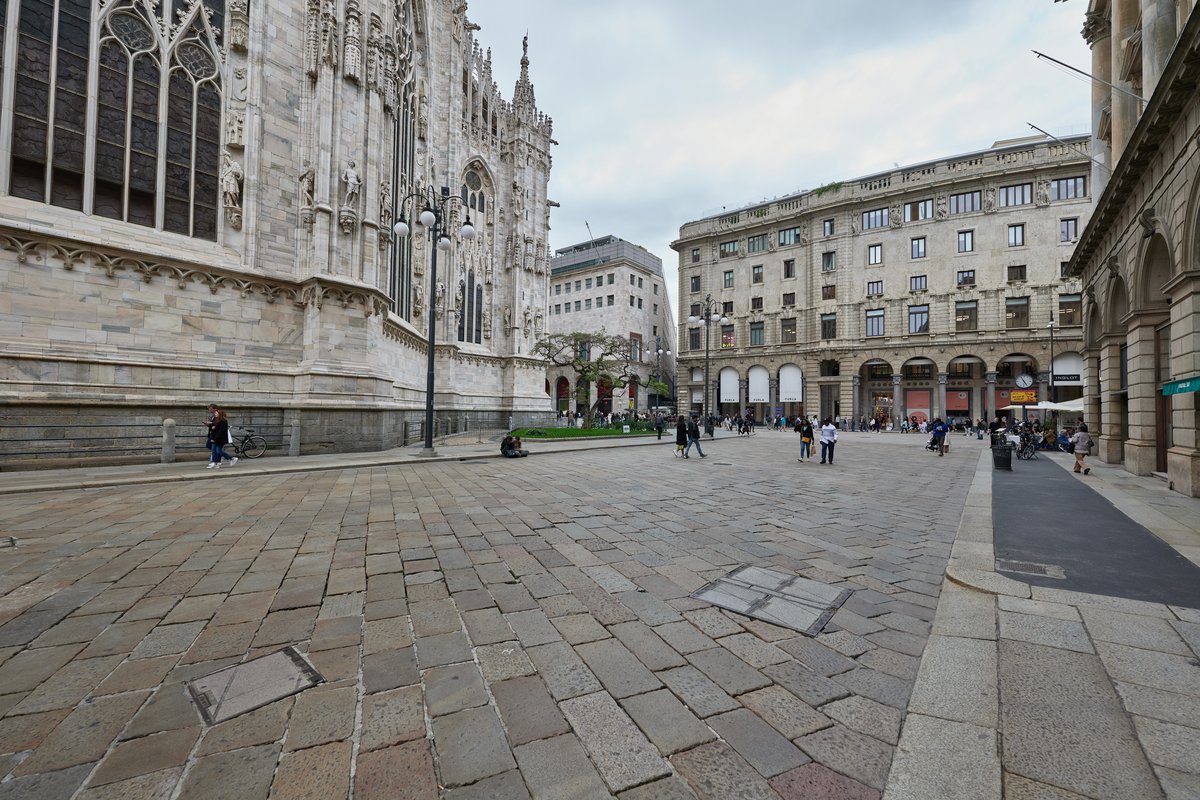
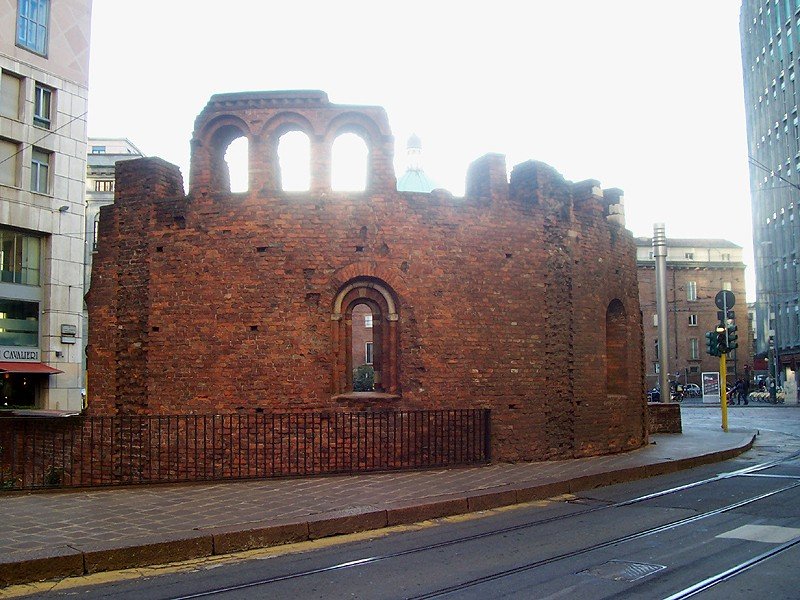
Introduction: Unveiling a Renaissance Gem in Milan
San Pietro in Gessate is a masterpiece of Milanese history and architecture, harmoniously blending late Gothic forms with the innovations of the Renaissance. Located near the city’s vibrant center, this 15th-century church is renowned for its striking blend of art, spiritual significance, and architectural evolution. From its origins with the Umiliati order to its status as a cultural landmark, San Pietro in Gessate offers visitors a unique window into Milan’s artistic and religious heritage. Its serene interior, adorned with frescoes by masters like Bernardino Butinone, Bernardo Zenale, and Giovanni Donato Montorfano, and its elegant architecture make it a must-see for art lovers, history enthusiasts, and travelers alike.
The church’s journey through time has not been without adversity. Environmental challenges, wartime destruction, and the relentless passage of centuries have necessitated thoughtful restoration and preservation. Today, San Pietro in Gessate not only serves as a place of worship but also as a living museum—open to all with free admission, accessible facilities, and engaging guided tours. Its central location near key Milanese sites further enhances its appeal, making it an essential stop on any cultural itinerary.
Explore this guide to discover the history, visiting hours, ticketing details, accessibility, restoration efforts, and practical advice for experiencing San Pietro in Gessate—a Renaissance jewel in the heart of Milan.
(Finestre sull’Arte, In-Domus, Museo Diocesano Milano)
History and Early Development
San Pietro in Gessate’s roots reach back to the 13th century, when it served the Umiliati, a medieval religious order devoted to humility and labor (Finestre sull’Arte). The current church, built largely between 1447 and 1475, reflects the vision of architect Guiniforte Solari. Its construction marked a pivotal moment in Milanese architecture, heralding the city’s transition from the Gothic to the early Renaissance.
Architectural Features and Artistic Treasures
Exterior and Structure
San Pietro in Gessate is a striking example of 15th-century Lombard ecclesiastical architecture. Its façade, restored in the early 20th century by Diego Brioschi, combines the severe lines of Gothic tradition with the terracotta ornamentation and pointed arches characteristic of the Lombard Renaissance. The church’s Latin cross layout features a broad central nave, two aisles, and a series of chapels, all unified by slender granite Corinthian columns—a Renaissance innovation inspired by Florentine humanism (In-Domus).
Artistic Highlights
The Chapel of the Blessed Sacrament: Bernardino Butinone & Bernardo Zenale
The frescoes in the Grifi Chapel, painted by Bernardino Butinone and Bernardo Zenale between 1485 and 1495, recount the life of Saint Ambrose. Their work is celebrated for its expressive narrative style, emotional intensity, and a sophisticated blend of Florentine perspective with Lombard colorism (Museo Diocesano Milano).
Giovanni Donato Montorfano’s Crucifixion
In another chapel, Giovanni Donato Montorfano’s fresco of the Crucifixion stands out for its somber palette and poignant depiction of the Passion. Montorfano, also known for his collaboration with Leonardo da Vinci, brings a unique emotional gravity to the scene (Lombardia Beni Culturali).
Other Masterpieces
- Altarpieces and Polyptychs: Notable works like the “Polyptych of San Ambrogio” by Zenale and Butinone and Vincenzo Foppa’s “Martyrdom of Saint Sebastian” were originally created for the church and are now housed in the Pinacoteca di Brera (Pinacoteca di Brera).
- Architectural Harmony: The nave and aisles feature groin vaults and sculpted keystones, while chapels and apses echo Renaissance ideals of proportion and clarity (Lombardia Beni Culturali).
Restoration and Preservation
Throughout its history, San Pietro in Gessate has endured significant challenges, including water infiltration, humidity, and damage from World War II bombings, which destroyed parts of the adjacent monastery (milanoneicantieridellarte.it). Restoration projects have focused on:
- Roof and Drainage: Repairing and waterproofing the roof and improving rainwater management to protect masonry and frescoes.
- Façade and Masonry: Removing deteriorated plaster to reveal and preserve original Renaissance surfaces.
- Artworks: Cleaning, consolidating, and stabilizing frescoes and altarpieces by Lombard masters, including Butinone, Zenale, Montorfano, and Bergognone (lombardiacristiana.it).
Scientific research, laboratory analysis, and detailed documentation have accompanied these interventions, ensuring the church’s preservation for future generations.
Visitor Information
Opening Hours
- September 15 – June 30:
- Weekdays: 07:30–18:00
- Prefestivi: 08:30–12:00 & 16:30–20:00
- Sundays/Holidays: 08:30–13:00 & 16:30–20:00
- July 1 – September 14:
- Weekdays: 08:00–12:00
- Prefestivi/Sundays: 08:30–12:00 & 17:00–20:00
Note: Opening hours may vary for liturgical events or restoration work. Always confirm before your visit.
Tickets and Admission
- Entry: Free of charge; donations are welcome to support ongoing restoration.
- Guided Tours: Available by reservation, including options for schools and community groups. Some special tours or events may require tickets.
Accessibility
- Wheelchair Access: Ramps are installed at the main entrance.
- Additional Assistance: Available upon advanced request.
Getting There
- Metro: M2 line (Moscova), or M1 (San Babila, about 10 minutes’ walk).
- Tram/Bus: Several lines serve the area.
- Taxi/Bike Sharing: Convenient options for city center access.
Nearby Attractions
San Pietro in Gessate’s central location makes it an ideal starting point for exploring Milan’s treasures:
- Pinacoteca di Brera: Masterworks of Renaissance painting.
- Santa Maria delle Grazie: Home to Leonardo’s Last Supper.
- Sforza Castle and Duomo: Icons of Milan’s historical landscape.
- Brera District: A vibrant cultural neighborhood.
Frequently Asked Questions (FAQ)
Q: What are the San Pietro in Gessate visiting hours?
A: Generally Tuesday to Sunday, with hours varying by season. See above for details.
Q: Is there an entrance fee?
A: Admission is free, but donations are encouraged. Special tours may have a fee.
Q: Is the church accessible for visitors with disabilities?
A: Yes, ramps and additional assistance are available.
Q: Are guided tours available?
A: Yes, guided tours (including for schools and groups) can be pre-booked.
Q: Can I take photographs inside?
A: Photography is allowed without flash. Please respect signage and staff guidance.
Q: Are the original paintings still in the church?
A: Many altarpieces are now at the Pinacoteca di Brera, but the church’s frescoes remain in situ.
Listen to the full story in the app
Your Personal Curator, in Your Pocket.
Audio guides for 1,100+ cities across 96 countries. History, stories, and local insight — offline ready.
Audiala App
Available on iOS & Android
Join 50k+ Curators
Sources
- verified
- verified
- verified
- verified
- verified
- verified
- verified
- verified
Last reviewed: