Introduction
San Babila Church, nestled in the bustling heart of Milan, is one of the city’s most ancient and culturally significant Christian sites. Its origins trace back to the late 4th or early 5th century CE, reflecting the transition from Roman paganism to Christianity. Over centuries, San Babila has evolved architecturally and spiritually, serving as a crossroads of Milanese Christian tradition and urban life. This guide provides a comprehensive overview of San Babila’s history, architectural evolution, cultural significance, and all the practical information you need for your visit, including up-to-date visiting hours, ticketing, accessibility, travel tips, and nearby attractions.
Photo Gallery
Explore San Babila Church in Pictures

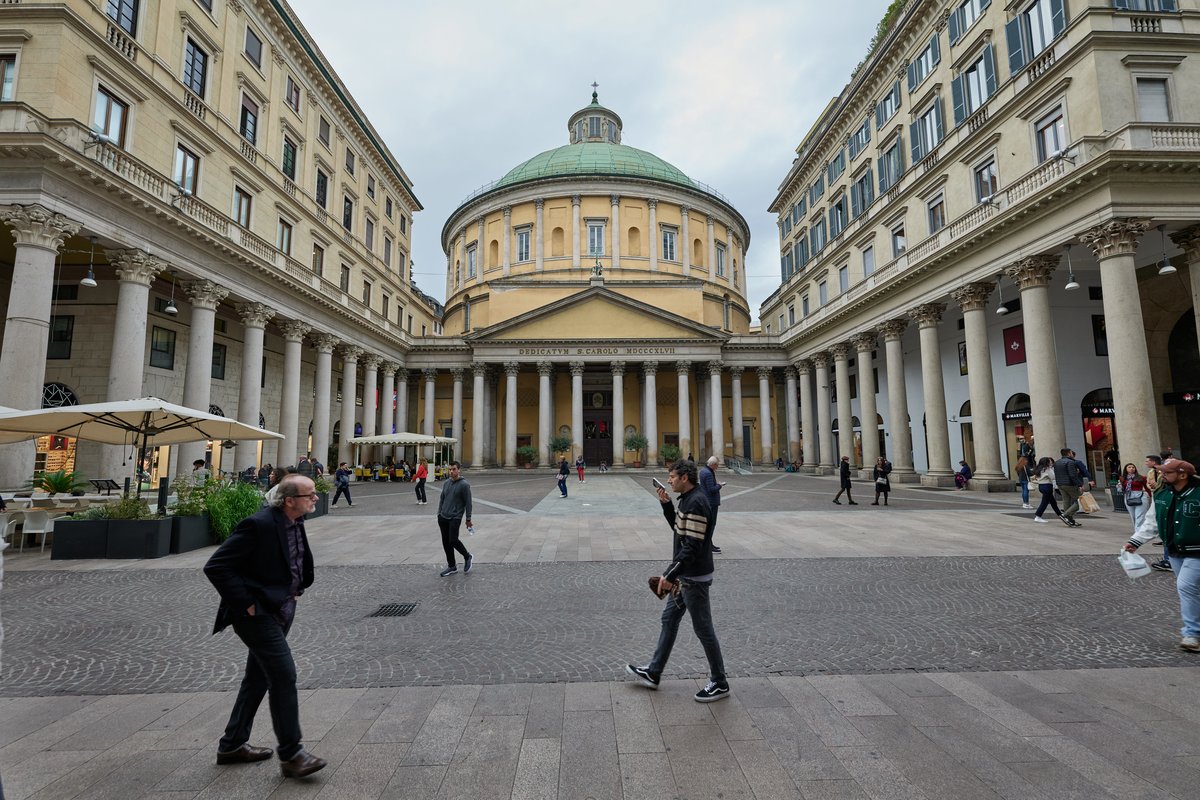
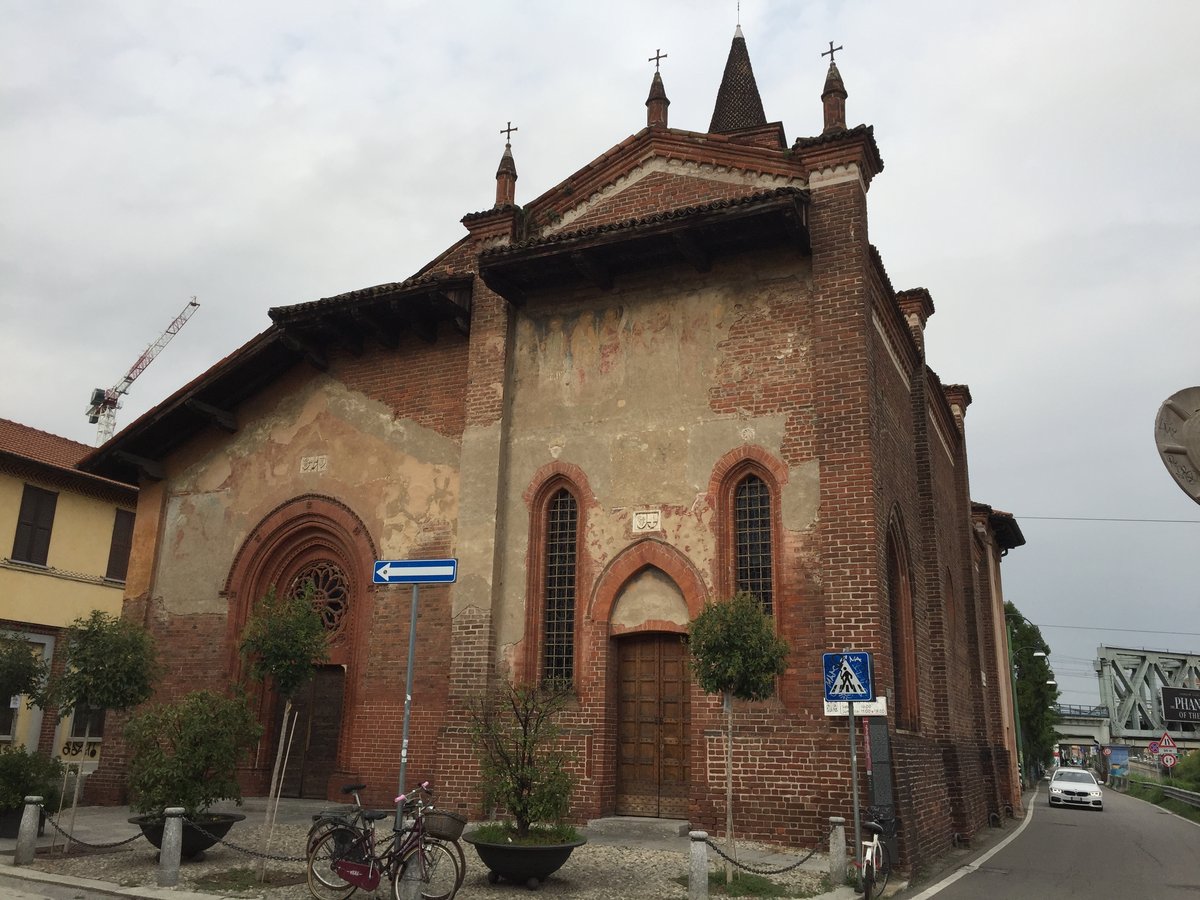
Exterior view of the Basilica di San Babila church in Milan showcasing its architectural facade under a clear sky

Night view of Basilica di San Babila church beautifully illuminated, located in Milano, Italy

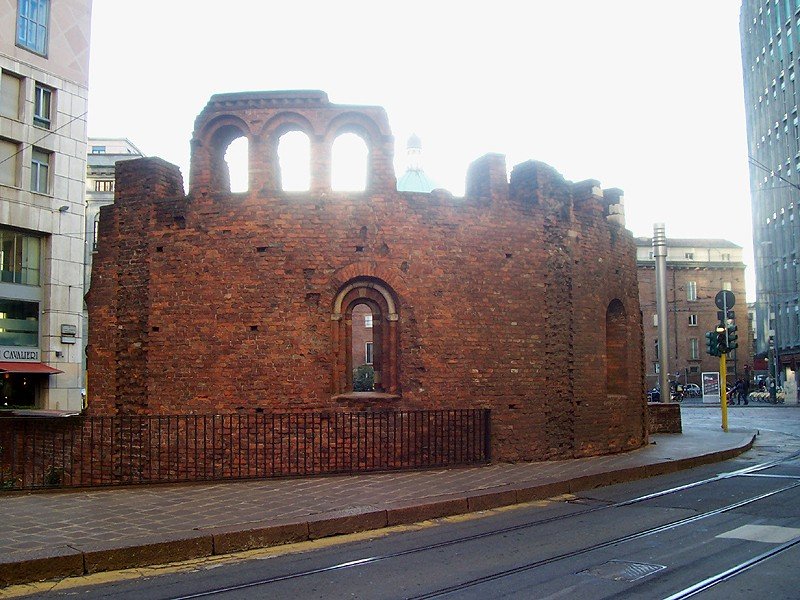
Detailed exterior of Basilica di San Babila church located in Milano, showcasing its architectural features and historical design

Exterior view of the Basilica di San Babila church in Milan, showcasing its architectural details and historic facade under a clear blue sky.
Origins and Early History
San Babila Church stands as one of Milan’s oldest Christian places of worship. Built atop a former Roman temple, possibly dedicated to the Sun God, the church’s original structure dates to the late 4th or early 5th century CE (Duomo di Milano Official). The earliest reference to the church is from 1097, but archaeological evidence suggests a Christian presence long before.
Dedication and Saint Babylas
The church’s dedication to Saint Babylas of Antioch—a 3rd-century bishop and martyr—underscores Milan’s early Christian connections with the Eastern Mediterranean. Bishop Marolus is credited with transferring Saint Babylas’s relics from Antioch to Milan in the early 5th century, enhancing the church’s prestige and making it a key pilgrimage destination (milanesechurches.com; wikipedia).
Medieval and Modern Transformations
The church underwent significant transformations over the centuries:
- Romanesque Rebuilding (11th-12th centuries): The main structure was rebuilt in the Romanesque style, featuring thick masonry walls, rounded arches, and a semi-circular apse (Lombardia Beni Culturali).
- Baroque and Later Modifications: Various additions and refurbishments occurred through the Renaissance and Baroque periods.
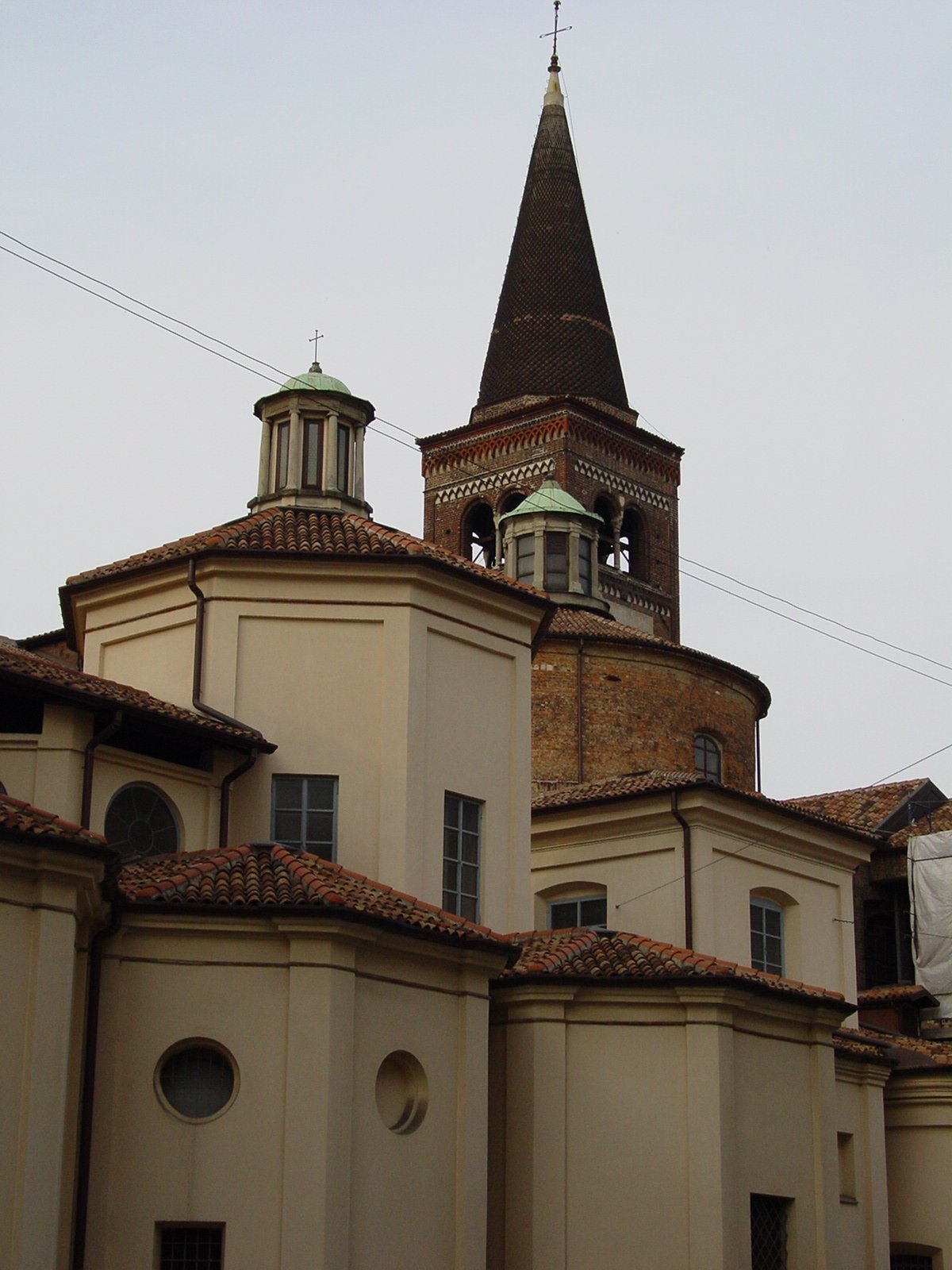
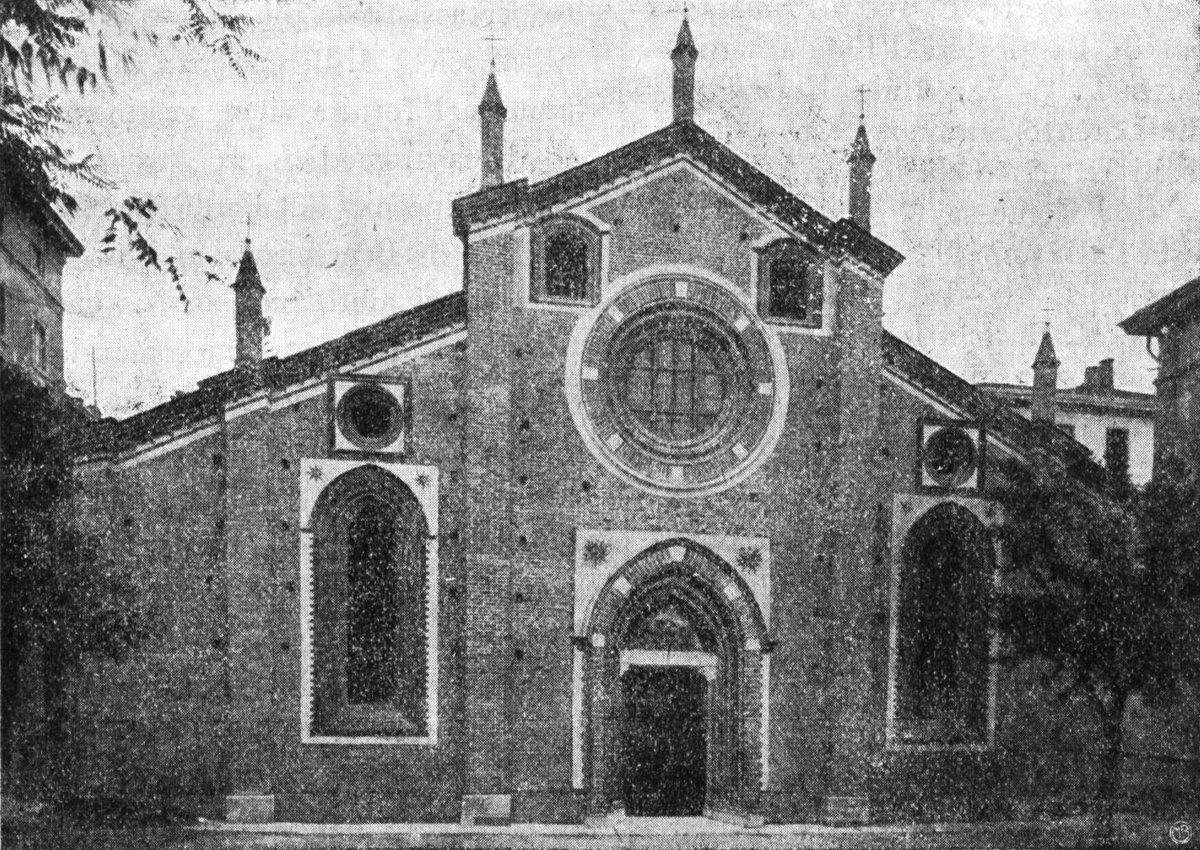
- Neo-Romanesque Restoration (1894–1905): Architect Paolo Cesa Bianchi restored the church to its Romanesque roots, resulting in the current red-brick façade and bell tower (Arte.it).
Architectural & Artistic Highlights
Façade, Bell Tower, and Interior
- Façade: The striking red-brick neo-Romanesque façade, completed in the early 20th century, features three portals with sculpted lunette mosaics and blind arcading.
- Bell Tower: The 52-meter tower is a prominent city landmark, echoing Lombard medieval campaniles (Lombardia Beni Culturali).
- Interior: The basilica layout includes a central nave, two aisles divided by robust columns, and semicircular apses.
Notable Artworks and Treasures
- Frescoes and Paintings: The nave and chapels contain remnants of medieval frescoes and a 16th-century Madonna and Child, attributed to Bernardino Luini’s school (Arte.it).
- Altars and Chapels: Side chapels feature altars dedicated to various saints, reflecting popular devotion. The right aisle houses a venerated Madonna image.
- Stained Glass: The rose window, installed during the 19th-century restoration, bathes the nave in colored light.
- Pipe Organ: San Babila boasts a renowned Zanin pipe organ, central to its musical tradition (milanesechurches.com).
The Crypt and Archaeological Remains
A crypt beneath the sanctuary preserves early Christian tombs and Roman masonry, offering a glimpse into the church’s ancient origins (Duomo di Milano Official).
Cultural Role & Community Life
Religious and Civic Functions
San Babila has long been a focal point for Milan’s Christian community, hosting regular Masses, sacraments, and religious ceremonies. The annual feast of Saint Babylas on January 24 draws both pilgrims and locals (milano24ore.it).
Symbolism and Urban Identity
Located at Piazza San Babila, the church anchors one of Milan’s key public spaces, historically serving as a marketplace and civic gathering point. The nearby Lion Pillar ("Leone di Porta Renza"), dating to 1626, connects the church to the city’s civic history (milano24ore.it). The church’s distinctive façade and urban presence symbolize Milan’s continuity and resilience.
Visiting Information
Opening Hours
- Monday to Saturday: 9:00 AM – 6:00 PM
- Sunday: 10:00 AM – 6:00 PM
- Note: Hours may vary on holidays or for special events. For the latest updates, check the official parish website or YesMilano.
Tickets and Admission
- Entry: Free of charge. Donations are appreciated to support maintenance and restoration (Milanoguida).
- Guided Tours: Available through Milan’s official tourism offices and select tour operators. Advance booking is recommended for in-depth explorations.
Accessibility
- Wheelchair Access: Ramps are available at the main entrance; the church is accessible throughout most public spaces. Assistance can be arranged on request.
Location and Transport
- Address: Piazza San Babila, Milan, Italy.
- Metro: San Babila station (Lines M1 and M4) is adjacent to the church (Milan Metro).
- Buses and Trams: Multiple lines serve the area. Parking nearby is limited; public transport is recommended.
Dress Code and Etiquette
- Dress modestly (cover shoulders and knees).
- Remove hats upon entry.
- Maintain silence, especially during services.
- Photography is generally allowed (without flash); respect any posted restrictions.
Nearby Attractions
San Babila’s central location makes it perfect for exploring Milan’s top landmarks:
- Duomo di Milano: The iconic Gothic cathedral (Duomo di Milano).
- Galleria Vittorio Emanuele II: Elegant shopping arcade nearby (Galleria Vittorio Emanuele II).
- Via Montenapoleone: Milan’s premier fashion street (Via Montenapoleone).
- Teatro alla Scala: Famous opera house within walking distance (Teatro alla Scala).
Practical Visitor Tips
- Best Times: Early mornings or late afternoons are quieter.
- Events: Check the parish website for concerts or special liturgical events.
- Photography: Use natural light to capture mosaics and stained glass at their best.
- Language: Signage and brochures are available in Italian and English.
- Facilities: Restrooms are not available inside; nearby cafés offer facilities.
Frequently Asked Questions (FAQ)
Q: What are the visiting hours for San Babila Church?
A: Generally Monday–Saturday 9:00 AM–6:00 PM, Sunday 10:00 AM–6:00 PM; check for updates on holidays.
Q: Is there an entrance fee?
A: No; entry is free, donations are encouraged.
Q: Are guided tours available?
A: Yes, via official tourism services or authorized tour operators.
Q: Is the church wheelchair accessible?
A: Yes, with ramps and accessible entrances.
Q: Can I take photos inside?
A: Photography is allowed in most areas, but avoid flash and respect signage.
Q: What attractions are nearby?
A: Duomo di Milano, Galleria Vittorio Emanuele II, Via Montenapoleone, and Teatro alla Scala.
Listen to the full story in the app
Your Personal Curator, in Your Pocket.
Audio guides for 1,100+ cities across 96 countries. History, stories, and local insight — offline ready.
Audiala App
Available on iOS & Android
Join 50k+ Curators
Sources
- verified
- verified
- verified
- verified
- verified
- verified
- verified
- verified
- verified
- verified
Last reviewed: