Introduction
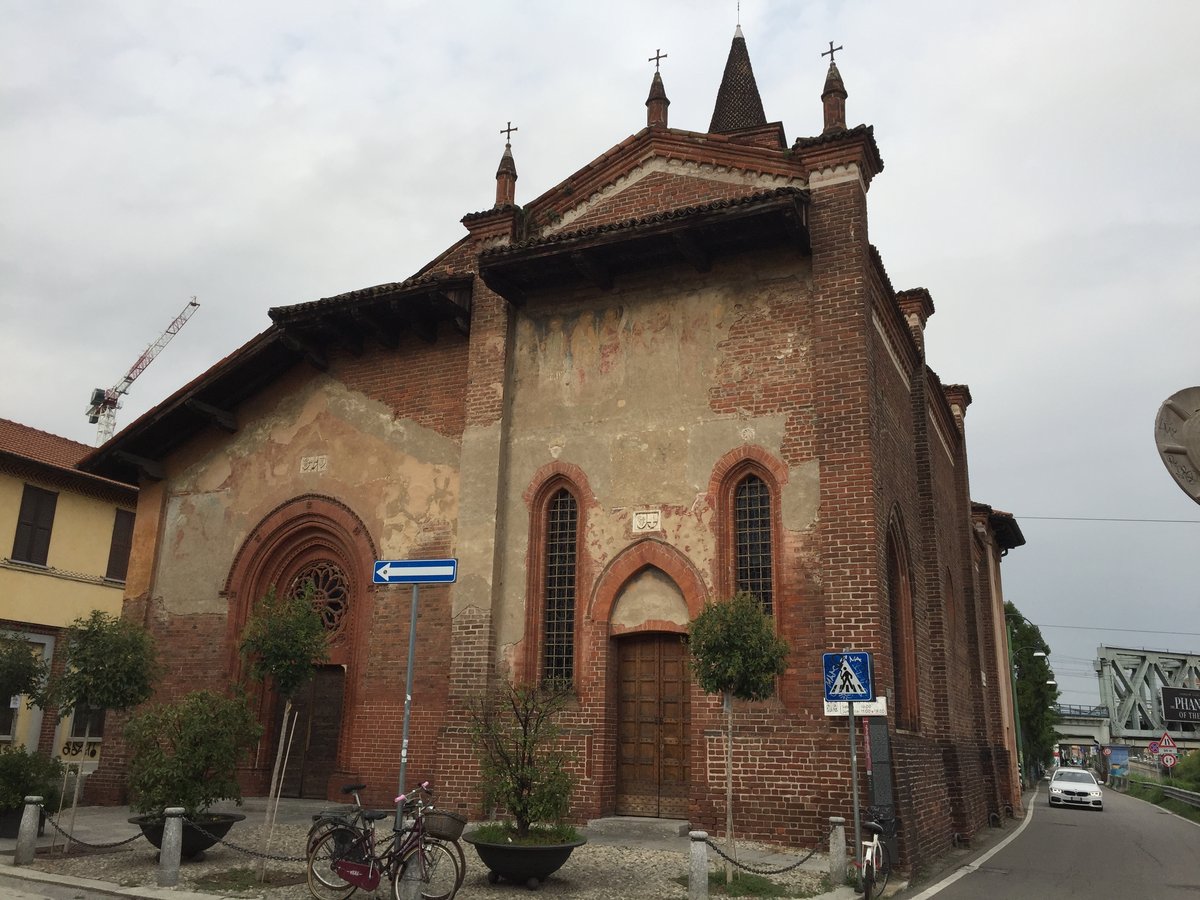
The Porto Fluviale di Mediolanum, Milan’s ancient Roman river port, offers a compelling journey into the city’s deep-rooted past and its evolution as a major commercial hub. Situated near today’s Via Larga and Piazza Fontana, this fluvial port was foundational in connecting ancient Mediolanum (the Roman name for Milan) to the vast waterways of northern Italy and the Adriatic Sea. Through centuries of urban transformation, the port’s legacy endures in Milan’s cityscape, museums, and cultural memory, making it a must-see for visitors seeking to explore the city’s Roman heritage and historical sites (3daysinmilan.com, Neiade).
This guide brings together the essential historical context, archaeological highlights, and practical information—such as visiting hours, ticketing, accessibility, and nearby attractions—to help you make the most of your visit to Porto Fluviale di Mediolanum and its surrounding landmarks.
Photo Gallery
Explore Porto Fluviale Di Mediolanum in Pictures
Roman Origins and Urban Context
Mediolanum’s rise as a crucial Roman city is closely linked to its waterways. The establishment of the Porto Fluviale took advantage of the Seveso, Olona, Nirone, and Vettabbia rivers, which provided natural channels for commerce and communication (utemilano.it, it.wikipedia.org). The port was situated near present-day Via Larga and Piazza Fontana, with the first stone quays—constructed from large slabs of serizzo and supported by oak piles—dating to the early Imperial period. These structures enabled the movement of goods such as grain, oil, wine, and building materials, fueling the city’s prosperity and cementing its role as a trade hub.
The grid layout of Roman Mediolanum, with its main roads (the cardo and decumanus) converging near the forum and port, reflects the city’s emphasis on efficient logistics and civic life (3daysinmilan.com).
Economic and Strategic Significance
After Emperor Maximian designated Milan as the capital of the Western Roman Empire in 286 CE, the city’s infrastructure—including the river port—was expanded and modernized. The Porto Fluviale enabled direct connection with the Vettabbia canal, linking to the Lambro and Po rivers and, ultimately, the Adriatic Sea (Neiade). This placed Milan at the heart of a regional trade network, facilitating the import and export of goods across the empire.
The port was more than a logistical node; it symbolized Milan’s integration into the Roman economic system and supported the growth of local markets, artisans, and merchants (MuseoCity).
Decline and Transformation
With the fall of the Western Roman Empire, Milan’s port gradually lost prominence. The city suffered from invasions and urban decline in the 5th and 6th centuries (inyourpocket.com). While the Navigli canal system would later revive Milan’s role as a waterborne trade center, the Porto Fluviale itself was repurposed, eventually becoming a landfill as river courses shifted and urban priorities changed (it.wikipedia.org). The memory of the port, however, remains embedded in local toponyms, archaeological finds, and the structure of Milan’s historic core.
Archaeological Discoveries
Excavations at Piazza Fontana and Via Larga have unearthed remnants of the Roman quay—serizzo stone slabs and oak piles—now preserved at the Museo Civico di Storia Naturale di Milano. Artifacts such as amphora fragments and evidence of hydraulic engineering illustrate the port’s sophistication and daily life (MuseoCity). The port’s integration into a wider network of canals and the urban water management system is a testament to Roman engineering prowess.
Other archaeological highlights in the area include the remains of the Roman forum, walls, theatre, imperial palace, and amphitheater, which can be explored at the Museo Archeologico di Milano and through walking tours in the Cinque Vie district (urbanfile.org).
Visitor Information
Visiting Hours and Tickets
-
Museo Civico di Storia Naturale di Milano:
Open Tuesday to Sunday, 9:00 AM–5:30 PM; closed Mondays.
Tickets: €7 (standard), €5 (reduced), free for EU citizens under 18 and over 65 (Museo Civico di Storia Naturale di Milano). -
Museo Archeologico di Milano:
Open Tuesday to Sunday, 9:00 AM–5:30 PM; closed Mondays.
Tickets: €5 (standard), €3 (reduced), free for under 18s and Milan residents (Museo Archeologico di Milano). -
Special Events and Guided Tours:
Access to some port remains is possible during cultural events like MuseoCity and through guided tours by local associations or the Soprintendenza Archeologia Belle Arti e Paesaggio (MuseoCity). Booking in advance is recommended for tours.
Accessibility
The city center, including Via Larga, Piazza Fontana, and the museums, is generally accessible to visitors with mobility needs. Some archaeological areas may have limited access due to their underground setting; it is advisable to check ahead with tour operators or museums for specific accessibility information.
Getting There
The Porto Fluviale area is centrally located:
- Metro: Duomo (Lines M1, M3) or Cordusio stations.
- Tram: Lines 2, 3, 14, 16.
- On Foot: Short walk from the Duomo and Galleria Vittorio Emanuele II.
Nearby Attractions
Combine your visit with other historic sites:
- Duomo di Milano: The iconic cathedral nearby.
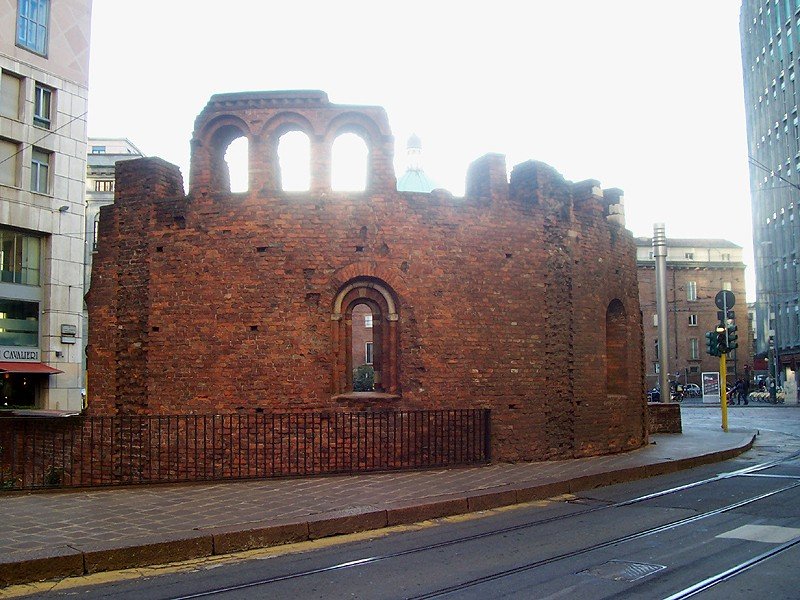
- Colonne di San Lorenzo: Roman ruins within walking distance.
- Galleria Vittorio Emanuele II: Historic shopping arcade.
- Cinque Vie District: Explore ancient street patterns and artisan shops.
Frequently Asked Questions (FAQ)
Q: Are there visible remains of the Porto Fluviale di Mediolanum today?
A: Yes, remnants of quays and port infrastructure are preserved in museums; some foundation stones are visible near Piazza Fontana and Via Larga.
Q: What are the visiting hours for related museums?
A: Museums are open Tuesday to Sunday, 9:00 AM–5:30 PM; closed on Mondays.
Q: Are guided tours available?
A: Yes, guided tours of Roman Milan, including the port area, are offered by cultural associations and museums. Check event calendars for schedules.
Q: Is the site accessible for visitors with disabilities?
A: Museums are accessible; some archaeological areas have limited access due to location. Contact venues in advance for details.
Q: Do I need tickets to visit the port site?
A: Outdoor remains can be viewed freely; museum and guided tour entry requires tickets.
Final Tips
- Plan your itinerary to include both museums and a self-guided or organized walking tour of the historic center.
- Check museum and tour operator websites for up-to-date information on visiting hours, ticketing, and accessibility.
- Consider combining your Porto Fluviale visit with other landmarks like the Duomo, Colonne di San Lorenzo, and the Navigli district for a comprehensive experience of Milan’s layered history.
- Download the Audiala app for immersive audio guides and stay informed about upcoming cultural events.
Listen to the full story in the app
Your Personal Curator, in Your Pocket.
Audio guides for 1,100+ cities across 96 countries. History, stories, and local insight — offline ready.
Audiala App
Available on iOS & Android
Join 50k+ Curators
Sources
- verified
- verified
- verified
- verified
- verified
- verified
- verified
- verified
- verified
- verified
- verified
- verified
- verified
Last reviewed: