Introduction
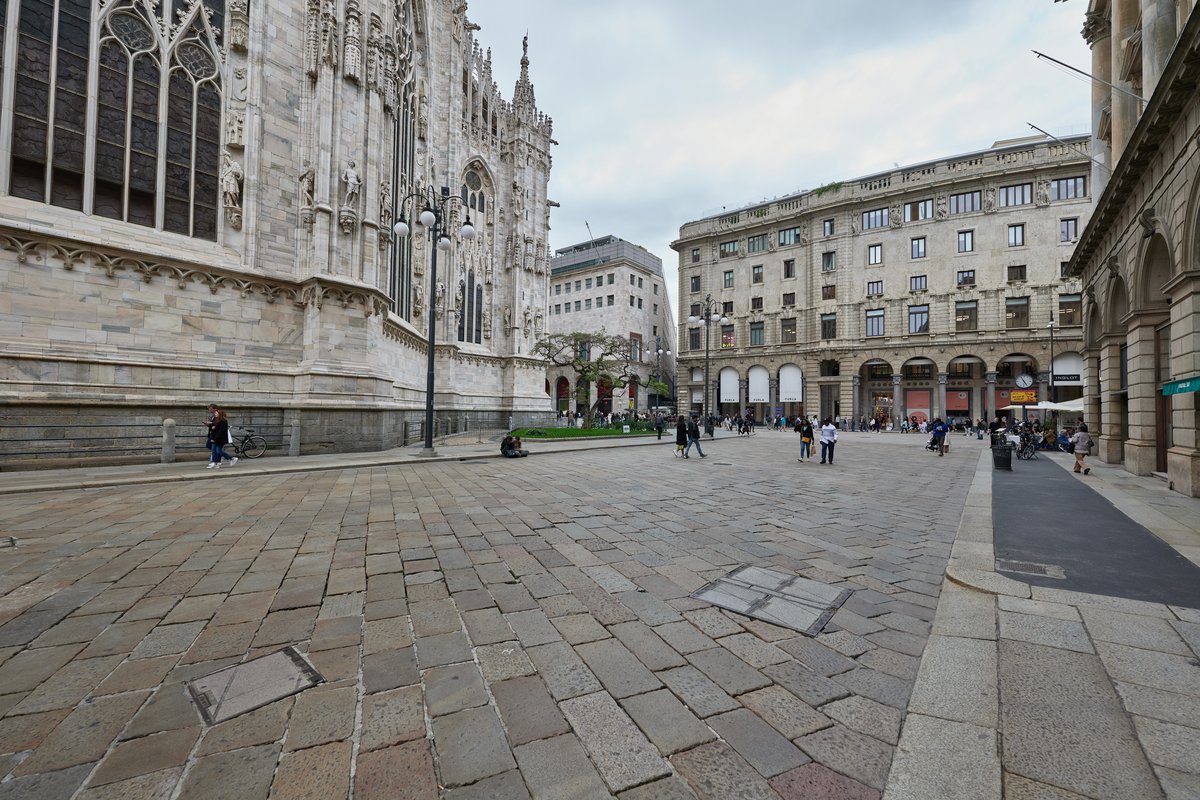
Piazzale Luigi Cadorna is a central Milanese square where history, contemporary art, and urban mobility converge. Named after General Luigi Cadorna, a key figure in Italy’s World War I history, the piazza serves as a crucial transportation hub and a cultural landmark. Its strategic location near Castello Sforzesco and Parco Sempione makes it both a gateway to Milan’s historical treasures and a vibrant meeting point for locals and travelers. This guide provides everything you need to know about Piazzale Luigi Cadorna: its history, architecture, visiting hours, ticketing, accessibility, nearby attractions, and practical tips for making the most of your visit (Treccani; Wikipedia).
Historical Background and Cultural Significance
Origins and Dedication
Piazzale Luigi Cadorna developed in the late 19th century, evolving alongside Milan’s urban growth and the expansion of its railway network. The square is named after General Luigi Cadorna (1850–1928), commemorating his military leadership during World War I (Treccani). This dedication reflects the city’s tradition of honoring national heroes and its layered historical identity.
Urban Evolution and Redevelopment
Originally anchored by the Cadorna railway station (opened 1879), the piazza quickly became a crucial transport node. The area was heavily damaged during World War II and underwent significant reconstruction. In the late 1990s, renowned architect Gae Aulenti led a major redevelopment, transforming the square into a pedestrian-friendly space that integrated modern design, public art, and enhanced connectivity (Domus; Comune di Milano).
Public Art: “Needle, Thread and Knot”
Aulenti’s redesign introduced the monumental sculpture “Ago, Filo e Nodo” (“Needle, Thread and Knot”) by Claes Oldenburg and Coosje van Bruggen. Installed in 2000, this 18-meter-tall sculpture celebrates Milan’s global status as a fashion capital, with the thread’s colors representing metro lines intersecting at the piazza. The artwork dynamically links Milan’s artistic, industrial, and social identities (In Lombardia).
Social and Cultural Role
Piazzale Cadorna is more than a transport interchange—it is a vibrant social space. Its proximity to Castello Sforzesco, Parco Sempione, and the Brera district makes it an excellent starting point for cultural exploration. The piazza regularly hosts public events, art installations, and serves as a popular meeting spot, reflecting Milan’s cosmopolitan spirit (YesMilano).
Architectural Landscape and Public Art
Urban Design
Gae Aulenti’s intervention created a harmonious blend of pedestrian walkways, greenery, and outdoor amenities. The square’s open design encourages movement and interaction, with modern benches, street furniture, and artistic lighting enhancing both functionality and aesthetics (in-lombardia.it).
Stazione di Milano Cadorna
The northern edge of the piazza is dominated by the Stazione di Milano Cadorna, a modern transport terminal featuring glass, steel, and stone elements. The station is notable for its accessibility, clear signage, and seamless integration with the square’s public spaces (pineqone.com).
The “Needle, Thread and Knot” Sculpture
- Concept: A playful, monumental needle and colorful thread, with a knot surfacing from a nearby fountain, symbolizing Milan’s fashion heritage and metro network.
- Symbolism: Represents unity, connection, and Milan’s role as a global design hub.
- Impact: A defining feature of the square, it draws locals and tourists for photos and contemplation (Comune di Milano).
Other Features
- Leonardo da Vinci Statue: Celebrates Milan’s Renaissance legacy (evendo.com).
- Cafés and Shops: Ground-floor spaces in architecturally diverse buildings offer refreshments and shopping.
Visiting Information
Hours and Accessibility
- Piazza: Open 24/7, freely accessible.
- Milano Cadorna Station: Generally operates 5:00 AM to midnight.
- Metro Lines 1 & 2: Run approx. 6:00 AM to 12:30 AM.
- Accessibility: Ramps, elevators, wide walkways, and tactile paving ensure comfort for all visitors (ATM Milano).
Ticketing and Entry
- Piazza: No ticket required.
- Transit: Tickets for trains, metro, trams, and buses are available at machines, station counters, online (Trenord), and via official apps.
- Malpensa Express: Requires a specific ticket for direct airport connection (Omio).
Guided Tours and Events
While there are no tours dedicated solely to the piazza, many Milan city tours include it. The square also hosts occasional public events and art exhibitions (Evendo; My Guide Milan).
Transportation Connections
Railway
Milano Cadorna is a principal station for Trenord regional and suburban lines, with direct links to destinations like Como, Varese, and Malpensa Airport (Ferrovie Nord Milano).
Metro
- Line 1 (Red): To Duomo, San Babila, Sesto 1 Maggio FS.
- Line 2 (Green): To Porta Garibaldi, Centrale FS, Assago Forum.
Trams and Buses
- Trams: Lines 1 and 19 connect central Milan and landmarks.
- Buses: Multiple lines ensure citywide coverage (Wikipedia).
Airport
The Malpensa Express provides fast, direct service to Malpensa Airport (Omio).
Visitor Experience and Amenities
- Atmosphere: Lively, cosmopolitan, with modern art and historic architecture.
- Amenities: Cafés, restaurants, shops, public restrooms, luggage storage, ticket offices, and waiting areas (Omio).
- Safety: Well-patrolled; remain alert during busy hours.
- Accessibility: Fully accessible to wheelchair users.
Nearby Attractions
- Sforza Castle: Majestic Renaissance fortress with museums (5-minute walk) (Trek Zone).
- Parco Sempione: Expansive public park adjacent to the castle.
- Brera District: Art galleries and boutiques within easy reach.
- Galleria Vittorio Emanuele II: Iconic 19th-century shopping arcade (19-minute walk).
- Teatro alla Scala: Renowned opera house (17-minute walk).
- Museo del Novecento: 20th-century Italian art, near the Duomo (20-minute walk).
- Via Dante: Lively pedestrian street connecting the castle and city center (Wander in Italy).
Practical Travel Tips
- Best Times to Visit: Spring and autumn for mild weather; early morning or late afternoon for photos.
- Getting Around: Use public transport for efficiency; many attractions are walkable.
- Tickets: Buy at station kiosks, online, or via mobile apps.
- Luggage Storage: Available at the station for day-trippers and airport travelers.
- Food: Nearby cafés and restaurants offer Milanese specialties.
- Safety: Watch for pickpockets in crowds.
- Language: English widely spoken; tourist info points available.
- Connectivity: Free Wi-Fi in the station and many cafés.
- Money: ATMs on site; cards widely accepted.
- Emergencies: Dial 112 for police or medical assistance.
Frequently Asked Questions (FAQ)
Q: Is there an entrance fee for Piazzale Luigi Cadorna?
A: No, the piazza and its public art are freely accessible at all times.
Q: What are the visiting hours?
A: The public square is open 24/7; the station operates roughly 5:00 AM–midnight.
Q: How can I reach Malpensa Airport from Cadorna?
A: Take the Malpensa Express train directly from the station.
Q: Are guided tours available?
A: Many Milan city tours include the piazza and nearby landmarks.
Q: Is the square accessible for people with disabilities?
A: Yes, it features ramps, elevators, and accessible pathways.
Summary and Final Recommendations
Piazzale Luigi Cadorna embodies Milan’s fusion of history, innovation, and artistic flair. Its seamless integration of transportation networks, proximity to top attractions, and iconic public art make it both a practical entry point and a cultural destination. Whether you’re transferring between metro lines, exploring Milan’s museums, or enjoying a coffee near the “Needle, Thread and Knot” sculpture, this piazza offers a dynamic, accessible, and enriching experience for every visitor (Domus; Ferrovie Nord Milano; YesMilano; Trek Zone).
Plan your visit, take advantage of Milan’s efficient transit, and immerse yourself in the cultural heartbeat of this iconic piazza. For updated schedules, events, and insider tips, download the Audiala app and consult official tourism resources (Audiala; My Guide Milan).
Listen to the full story in the app
Your Personal Curator, in Your Pocket.
Audio guides for 1,100+ cities across 96 countries. History, stories, and local insight — offline ready.
Audiala App
Available on iOS & Android
Join 50k+ Curators
Sources
- verified
- verified
- verified
- verified
- verified
- verified
- verified
- verified
- verified
- verified
- verified
- verified
- verified
- verified
- verified
Last reviewed: