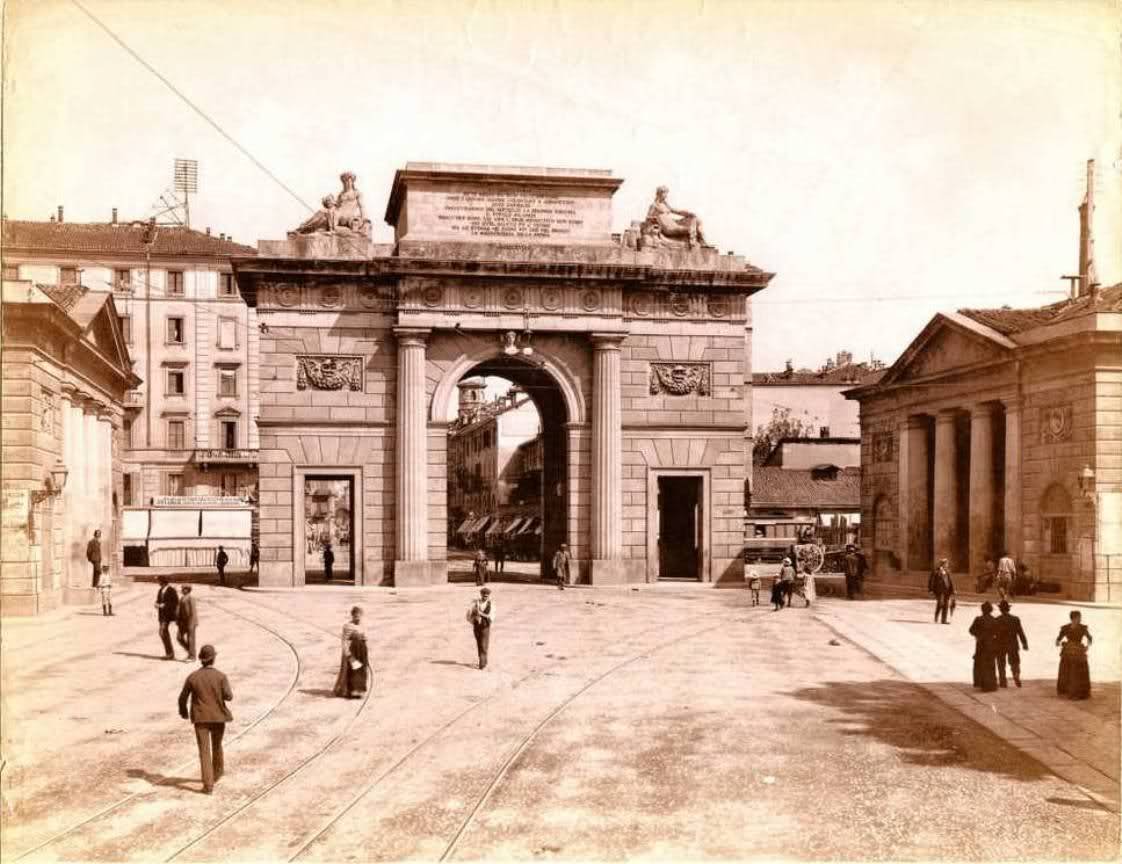
Introduction: The Significance of Piazzale Loreto
Piazzale Loreto, located in Milan’s northeastern Zone 2, is a site of deep historical resonance and ongoing urban renewal. Once an unassuming junction named after a Marian shrine in Loreto, Ancona, it has evolved into a pivotal urban hub, linking major avenues such as Corso Buenos Aires and Viale Andrea Doria (Wikipedia). Today, Piazzale Loreto stands at the intersection of memory and modernity: its past marked by tragic World War II events and its future shaped by ambitious urban transformation projects (Comune di Milano; Silvia Colombo, 2017).
Piazzale Loreto is accessible 24/7 and free to visit, making it a welcoming destination for those wishing to engage with Milan’s layered history, witness urban innovation, and explore nearby cultural and commercial attractions (Fodor’s; Trek Zone). Whether you are a history enthusiast or a traveler seeking urban experiences, this guide will provide all essential information for your visit.
Photo Gallery
Explore Piazzale Loreto in Pictures

A vintage 1953 black and white image capturing the urban scene at Piazzale Loreto in Milan, showcasing period cars and buildings.

Historic photograph from 1966 of Milano Piazzale Loreto featuring cityscape and architectural details

Close-up details of the northern Milan maneuver map fragments created by the Italian Military Geographic Institute (IGM) in 1878, showcasing historical cartographic details.

Milano Piazzale Loreto showing ongoing metro construction works with surrounding buildings and active street traffic

Photograph showing the dead body of Benito Mussolini next to his mistress Claretta Petacci and other executed fascists including Nicola Bombacci, Alessandro Pavolini, and Achille Starace on public display in Milan's Piazzale Loreto on 29 April 1945, a year after fascists had displayed the bodies of

Historical photograph showing a militia soldier standing guard over the executed bodies at Piazzale Loreto in 1944 during World War II.

Historical image showing Piazzale Loreto in Milan on 10 August 1944 with the exposed bodies of 15 antifascist detainees executed during World War II, part of the Piazzale Loreto massacre.

Historical black and white photograph capturing the victims of the Piazzale Loreto massacre in Milan on August 10, 1944, serving as an important civil testimony of the event.

Historical photograph showing the corner of Piazzale Loreto and Corso Buenos Aires in Milan during the 1940s, capturing the architectural and urban atmosphere of the era.

Black and white historical photograph of Piazzale Loreto, a prominent square in Milan, taken in 1948 showcasing people walking and vintage cars on the street.

Historical black and white photograph depicting the execution of Achille Starace at Piazzale Loreto during World War II.

Historical photograph showing the dead bodies of Benito Mussolini, Claretta Petacci, Nicola Bombacci, Alessandro Pavolini, Achille Starace, and an unknown person displayed in Piazzale Loreto, Milan on April 29, 1945 after their execution during World War II.
Historical Background
Origins and Early Development
Piazzale Loreto’s name derives from a sanctuary dedicated to Our Lady of Loreto, connecting Milan to the famed Marian shrine in Loreto, Ancona (Wikipedia). In the early 20th century, Milan’s rapid industrialization transformed the area into a major urban junction, connecting several major thoroughfares and nurturing a growing commercial and residential district.
Interwar Period and Urbanization
During the 1920s, Piazzale Loreto became a vibrant meeting point, bolstered by the construction of the “Titanus” hotel in 1928—then Milan’s largest. The hotel symbolized the city’s modernization, offering contemporary amenities and architectural distinction (DOAJ). However, the economic downturn of the 1930s led to its decline, mirroring the broader challenges faced by Milan and Italy during that era.
Piazzale Loreto During World War II
The square’s darkest chapter unfolded during World War II. On August 10, 1944, fifteen Milanese civilians were executed by Nazi forces in retaliation for a partisan attack—a tragedy etched into Italian memory as the “Strage di Piazzale Loreto” (Wikipedia; Comune di Milano). Less than a year later, the bodies of Benito Mussolini and other Fascist leaders were publicly displayed here following their execution by partisans, marking a pivotal moment in Italy’s liberation (Silvia Colombo, 2017).
Visiting Piazzale Loreto
Hours and Tickets
- Open Access: Piazzale Loreto is an open public square, accessible 24 hours a day, year-round.
- Tickets: No entry fee is required. All outdoor spaces and memorials are freely accessible.
- Guided Tours: While the square itself is free, guided historical walking tours—including WWII-focused itineraries—may require advance booking and a fee through local operators or the official tourism office (Fodor’s).
Accessibility and Getting There
- Metro: Served by Loreto station (Lines M1 and M2), offering direct connections to Milan Central Station and other districts.
- Trams and Buses: Multiple surface lines intersect the square, ensuring excellent connectivity.
- Pedestrian and Cycling Access: Ongoing redevelopment is expanding sidewalks and adding 1.2 km of new bike lanes (Urbanfile).
- Mobility: The square and metro station feature ramps and elevators, making them accessible for wheelchair users.
- By Car: Driving is discouraged due to heavy traffic and construction; use public transport or nearby parking garages for convenience (Milanodavedere).
Nearby Attractions
- Corso Buenos Aires: A bustling shopping street with over 350 shops, just steps away (Trek Zone).
- Memoriale della Shoah: Holocaust memorial at Milan Central Station, a 12-minute walk from Loreto.
- Casa Guazzoni: Art Nouveau architecture, about 23 minutes on foot.
- Giardini Pubblici Indro Montanelli: Milan’s oldest public park, less than 30 minutes by foot.
- Planetario di Milano: The city’s largest planetarium, located in Porta Venezia, about 28 minutes’ walk.
- NoLo District: Vibrant, multicultural neighborhood north of Loreto, known for independent shops and eateries.
- Dining: Try Trattoria Da Abele Temperanza for classic Milanese cuisine (Fodor’s).
Urban Renewal and Redevelopment
Piazzale Loreto is undergoing an ambitious transformation under the “Loreto Open Community” project, led by Ceetrus Nhood and partners as part of Milan’s “Reinventing Cities” initiative (Comune di Milano; Elle Decor). Key features include:
- Pedestrianization: Expansion of pedestrian areas from 2,484 m² to over 24,000 m², with 69% devoted to public space.
- Green Spaces: Creation of nearly 3,900 m² of parks and planting of over 200 trees.
- Traffic Rerouting: Reduced traffic flows, especially on Via Padova, and improved cycling routes.
- Architectural Revitalization: Restoration of the modernist Palazzo di Fuoco as a mixed-use complex with shops, offices, coworking spaces, and a kindergarten.
- Timeline: Construction begins in August 2025, with a pause during the 2026 Winter Olympics; completion is expected within two years (Urbanfile; Milanodavedere).
Visitor Experience During Construction
While redevelopment is underway, expect:
- Some access limitations and temporary diversions for pedestrians, cyclists, and vehicles.
- Noise and dust during working hours.
- Ongoing access to the metro station and main walkways.
- Community events and pop-up markets may still occur, providing a glimpse into the evolving urban scene.
Visitor Tip: Consult the Comune di Milano’s official website for real-time updates on accessibility.
Practical Travel Tips
- Best Times to Visit: May to early July for pleasant weather; weekday mornings and early afternoons are less crowded.
- Safety: The area is generally safe, but remain vigilant for pickpockets, especially around public transport (Travel Safe Abroad).
- Etiquette: Treat memorials and historical markers with respect.
- Restrooms: Limited public facilities; use nearby shopping centers or cafes.
- Accommodation: Consider staying in nearby Porta Venezia or NoLo for a more atmospheric experience.
Frequently Asked Questions (FAQ)
Q: Is there an entry fee or ticket required for Piazzale Loreto?
A: No, it is a free, open public space.
Q: How do I get to Piazzale Loreto from Milan Central Station?
A: Take metro line M2 (green) directly to Loreto station.
Q: Are guided tours available?
A: Yes, many city walking tours include Piazzale Loreto as a historical stop.
Q: Is the area accessible for wheelchair users?
A: Yes, both the square and metro station are equipped for accessibility.
Q: What is the impact of construction on visitors?
A: Expect temporary barriers and rerouted paths, but the square remains accessible.
Listen to the full story in the app
Your Personal Curator, in Your Pocket.
Audio guides for 1,100+ cities across 96 countries. History, stories, and local insight — offline ready.
Audiala App
Available on iOS & Android
Join 50k+ Curators
Sources
- verified
- verified
-
verified
Silvia Colombo, 2017
Liberation at Loreto: Memory and Politics in Milan
- verified
- verified
- verified
- verified
- verified
Last reviewed: