Introduction
Located on the western edge of Milan’s renowned Piazza del Duomo, Palazzo Carminati is more than an architectural treasure—it's a symbol of Milan’s evolution from a 19th-century industrial powerhouse to a cosmopolitan capital of culture, fashion, and design. Built as a private residence and later transformed into a commercial and cultural beacon, the palazzo’s history reflects the city’s ongoing dialogue between tradition and modernity. This detailed guide provides everything you need to know for visiting Palazzo Carminati, including historical context, visitor information, accessibility, and nearby attractions, ensuring you make the most of your time in Milan’s historic heart (YesMilano, Italia.it, NomadicNiko).
Historical Background
Origins and Architectural Significance
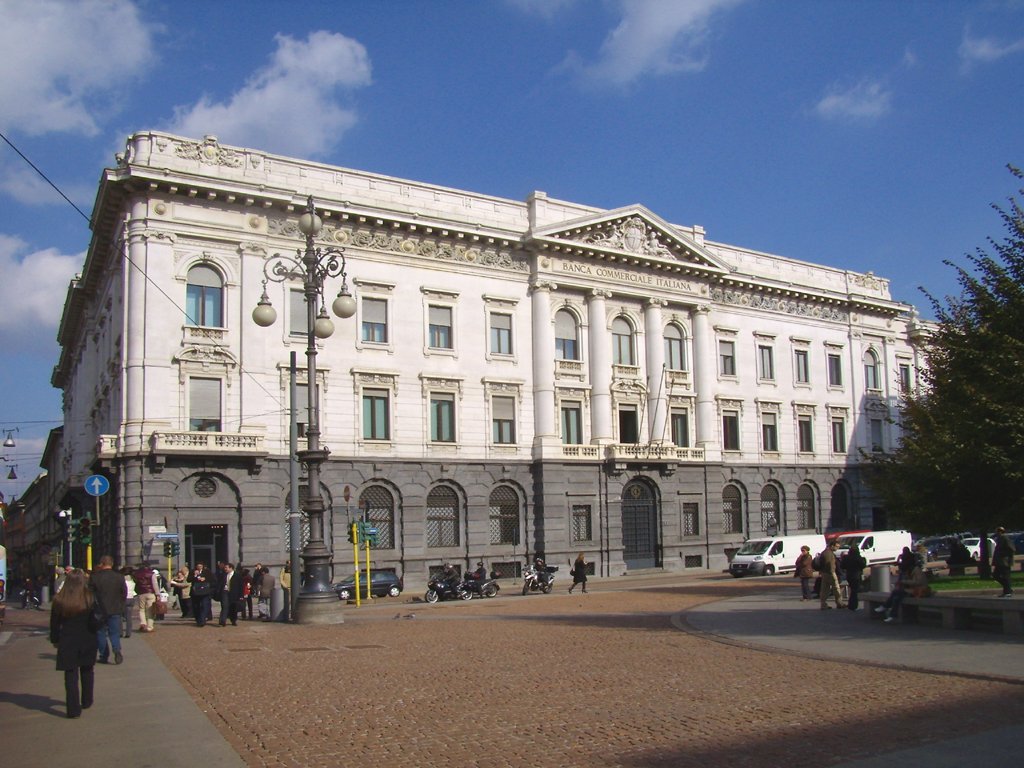
Commissioned by Giacomo Cesati, a prosperous Milanese entrepreneur, Palazzo Carminati was completed in 1867 and designed by architect Giuseppe Pestagalli. The neoclassical façade, with its elegant arches, pilasters, and ornate cornices, immediately distinguished the building as a prestigious residence. Its name derives from the famed Caffè Carminati, which would come to occupy the ground floor, reinforcing the palazzo’s role as a social epicenter for Milan’s bourgeoisie.
Over the years, the building’s ground floor hosted iconic establishments, transitioning from the popular Birreria Casanova beer hall to the legendary Carminati Café—a gathering place for intellectuals, artists, and travelers. This vibrant social scene, coupled with its strategic position opposite the Duomo, cemented the palazzo’s status as a focal point in Milan’s urban landscape (nomadicniko.com).
The Neon Era and Modern Identity
Perhaps the most iconic chapter in Palazzo Carminati’s history began in the 1920s, when its façade was adorned with neon advertising signs. These luminous displays transformed the building into an Italian counterpart of Times Square or Piccadilly Circus, symbolizing Milan’s economic boom and innovative spirit. From the 1920s through the late 1990s, the palazzo’s neon glow became an emblem of Milan’s nightlife and cosmopolitan allure, immortalized in films, commercials, and collective memory (Wikipedia).
The removal of the neon signs in 1999, as part of a restoration effort led by the city’s mayor, sparked vibrant public debate. For many, it marked the end of an era; for others, it was a necessary restoration of the piazza’s historical dignity. Today, the palazzo’s restored façade is celebrated for its refined 19th-century elegance, even as the city continues to reflect on its modern legacy.
Architectural Features
Palazzo Carminati exemplifies Milanese neoclassicism with its symmetrical composition, tall arched windows, decorative pediments, and wrought-iron balconies. The ground floor's arcades once welcomed customers to vibrant cafés and shops, while the upper floors offered panoramic views of the Duomo and bustling piazza. Despite the removal of neon signs, the architectural integrity of the building has been meticulously preserved, allowing visitors to appreciate its historical charm from the outside (Italia.it, nomadicniko.com).
Inside, Palazzo Carminati has evolved to accommodate modern uses, including retail, offices, and luxury suites. Notably, the Amabilia Private Suites now occupy the upper floors, designed by Federico Peri to blend Milanese tradition with contemporary comfort, offering guests exclusive views over the Duomo (ifdm.design).
Cultural and Social Impact
Urban Life and Social Gatherings
Directly facing the Duomo, Palazzo Carminati has been at the center of Milan’s most significant public celebrations, from fashion weeks and New Year’s Eve festivities to political rallies and cultural events. Its illuminated façade became a backdrop for countless photos and media broadcasts, reinforcing its role as a symbol of Milanese style and creativity.
Controversies and Preservation
The removal of the neon lights in 1999 was both a civic and cultural milestone, provoking discussions about urban heritage, modernization, and the balance between commerce and historical preservation. While some mourned the loss of the vibrant signage, others welcomed the return to architectural purity, reflecting the palazzo’s ongoing place in Milan’s collective consciousness (it.wikipedia).
Visiting Information
Location and Getting There
- Address: Piazza del Duomo, 21, 20121 Milano MI, Italy
- Metro: Duomo station (Lines M1, M3) is adjacent to the piazza
- Tram: Lines 2, 3, 12, 14, 16
- Bus: Several city lines serve the area
Visiting Hours
- Exterior Access: The façade is visible 24/7 from the pedestrianized Piazza del Duomo.
- Interior Access: The building is not generally open to the public, as it houses commercial and office spaces. Access to the Amabilia Private Suites is by reservation only.
Tickets
- Exterior Viewing: No ticket required to view or photograph the building from outside.
- Guided Tours: While Palazzo Carminati itself does not offer tours, many city walking tours include the piazza and provide historical context. Book through reputable operators or the YesMilano website.
Accessibility
- The piazza and walkways are fully wheelchair accessible.
- No public elevators or interior access for visitors, but nearby attractions such as the Duomo offer accessible facilities.
Travel Tips and Nearby Attractions
- Best Times to Visit: Early mornings and late evenings are ideal for photos and a tranquil atmosphere. The area is especially lively during major events and holidays.
- Nearby Sights: Combine your visit with the Duomo di Milano, Galleria Vittorio Emanuele II, Museo del Novecento, and Teatro alla Scala.
- Dining: Enjoy Milanese specialties at nearby cafés and restaurants; the area offers everything from traditional trattorias to modern bistros.
- Photography: The best shots capture the palazzo’s façade with the Duomo in the background. Consider rooftop views for unique perspectives.
Frequently Asked Questions (FAQ)
Q: Can I enter Palazzo Carminati?
A: The building’s interior is not open to the public except for private guests of the Amabilia Suites.
Q: Is there an entry fee?
A: No, there is no fee to view Palazzo Carminati’s exterior.
Q: Are guided tours available?
A: Yes, many city tours include the Piazza del Duomo and discuss the history of Palazzo Carminati.
Q: Is the area accessible for visitors with disabilities?
A: Yes, the piazza and surrounding streets are wheelchair accessible.
Q: How do I get to Palazzo Carminati?
A: The Duomo metro station and several tram/bus lines provide easy access.
Visuals and Media Recommendations
- Images: High-resolution photos of Palazzo Carminati’s façade, especially with the Duomo in view. Use descriptive alt tags for SEO such as “Palazzo Carminati Milan façade” and “Milan historical sites.”
- Map: Embed an interactive map of Piazza del Duomo and Palazzo Carminati’s location.
- Virtual Tours: Link to virtual tours of Milan’s historical center when available for an enriched visitor experience.
Insider Tips
- Pair your visit with a tour of the Duomo’s rooftop terraces for panoramic city views.
- Check the YesMilano website for updates on events in Piazza del Duomo.
- Use public transport or rent a bike for sustainable travel in the city center.
- Download the Audiala app for real-time updates, audio guides, and curated walking tours.
Preservation and Future Prospects
Palazzo Carminati continues to evolve alongside Milan’s urban fabric. Current preservation efforts ensure the building remains a vital part of the city’s architectural and cultural identity. Its restored façade, ongoing use for hospitality and commerce, and enduring presence in the collective imagination make it a must-see for any visitor to Milan.
Summary
Palazzo Carminati is a quintessential Milanese landmark, reflecting the city’s journey from aristocratic grandeur to modern vibrancy. Its story encompasses neoclassical elegance, neon-lit innovation, social dynamism, and thoughtful preservation. While interior access is limited, the building’s striking exterior and prime location make it an indispensable stop for anyone exploring Milan’s historic center. Combine your visit with nearby attractions, guided tours, and local dining for a rich and memorable experience (YesMilano, Italia.it, IFDM Design).
Listen to the full story in the app
Your Personal Curator, in Your Pocket.
Audio guides for 1,100+ cities across 96 countries. History, stories, and local insight — offline ready.
Audiala App
Available on iOS & Android
Join 50k+ Curators
Sources
- verified
- verified
- verified
- verified
- verified
Last reviewed: