Introduction
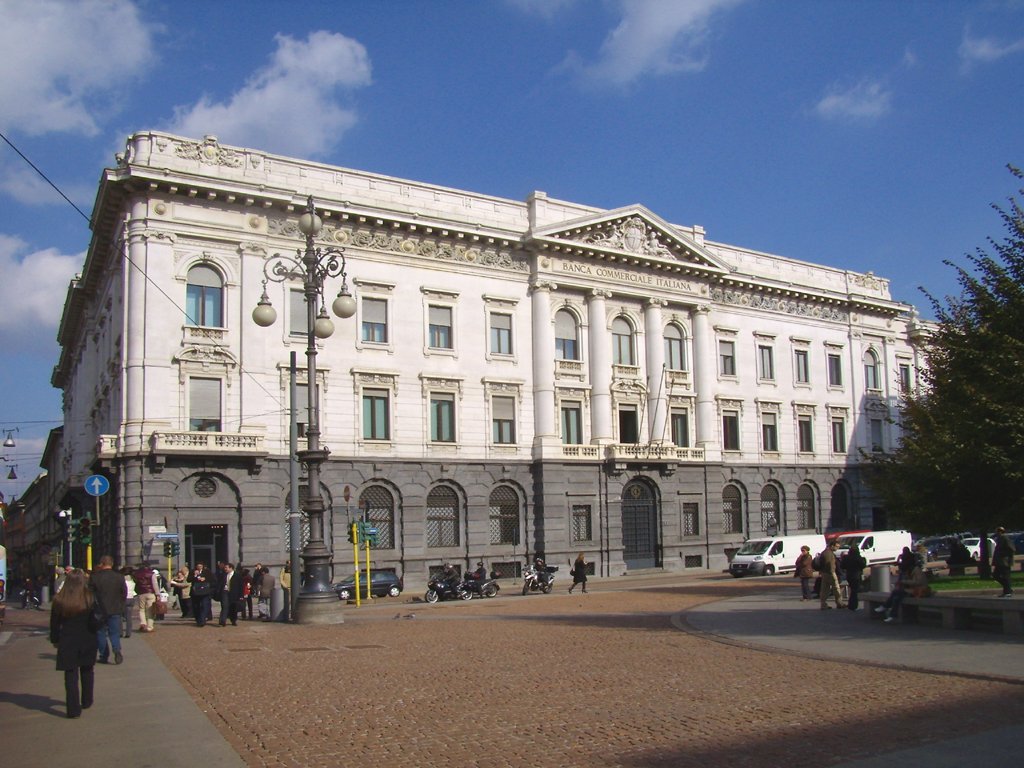
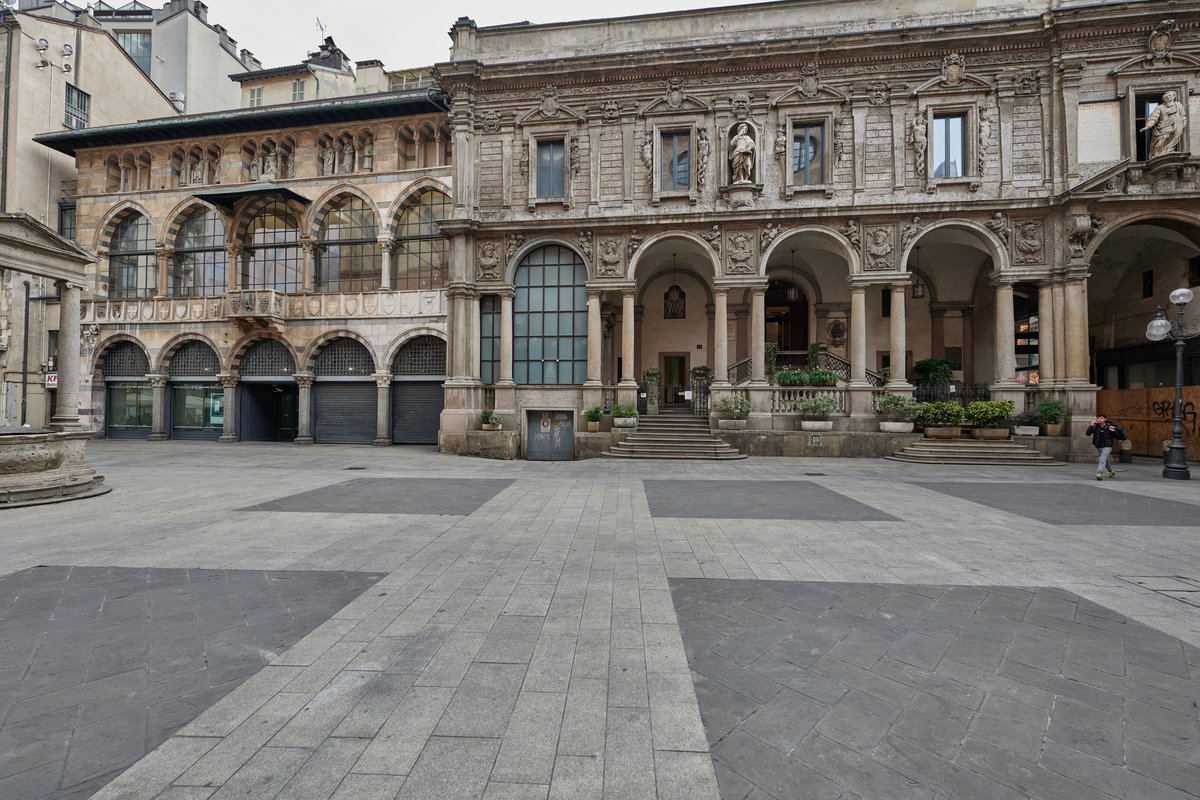
Palazzo Borromeo D’Adda stands as a striking symbol of Milan’s aristocratic legacy and architectural evolution. Located in the heart of Milan, the palazzo bridges centuries, from its late medieval roots as the Borromeo family residence to its neoclassical transformation under the d’Adda family in the 19th century. Distinguished by its brickwork façades, heraldic emblems, and notable frescoes, the palazzo offers a window into Milan’s social, cultural, and artistic history (Lombardia Beni Culturali; MilanoFree; Milanodavedere).
While Palazzo Borromeo D’Adda remains a private residence and office complex, occasional public openings and cultural events give visitors access to its elegant courtyards, grand staircase, and lush gardens. This guide provides a detailed overview of the palazzo’s layered history, architectural features, practical visitor information, travel tips, and nearby attractions, equipping you with everything needed for a memorable Milanese experience (Milano Weekend; Audiala).
Late Medieval Origins
The original Palazzo Borromeo, built in the late 14th century by the influential Borromeo family, reflects the transition from Gothic to Renaissance architecture in Milan. The family, originally merchant-bankers from Florence, rose to prominence through alliances with ruling dynasties and religious patronage, most notably with the nearby church of Santa Maria Podone (Lombardia Beni Culturali; Audiala).
Neoclassical Transformation
On Via Manzoni, the palazzo underwent significant neoclassical remodeling between 1820 and 1825 under Marquis Febo d’Adda and architect Girolamo Arganini. The resulting structure is a textbook example of early 19th-century Milanese Neoclassicism, with a balanced façade, Ionic columns, and harmonious proportions (Wikipedia; Milanodavedere). The Borromeo and d’Adda families used this transformation to express their social status and cultural sophistication (Lombardia Beni Culturali).
Artistic and Cultural Significance
The palazzo’s frescoes, particularly in the “Sala dei Giochi,” are masterpieces of International Gothic style, depicting aristocratic games and courtly life. These were rediscovered during post-war restoration and offer a rare glimpse into 15th-century Milanese culture (MilanoFree). Over centuries, the palace hosted literary and scientific salons, art collections, and notable figures, including the French writer Stendhal (Milano Weekend).
War Damage and Restoration
Severely damaged during World War II bombings, Palazzo Borromeo D’Adda underwent extensive restoration in the 1950s. Architect Ferdinando Reggiori’s efforts uncovered and preserved the historic frescoes and restored the palazzo’s 15th-century character (Lombardia Beni Culturali).
Architectural Highlights
Exterior and Façade
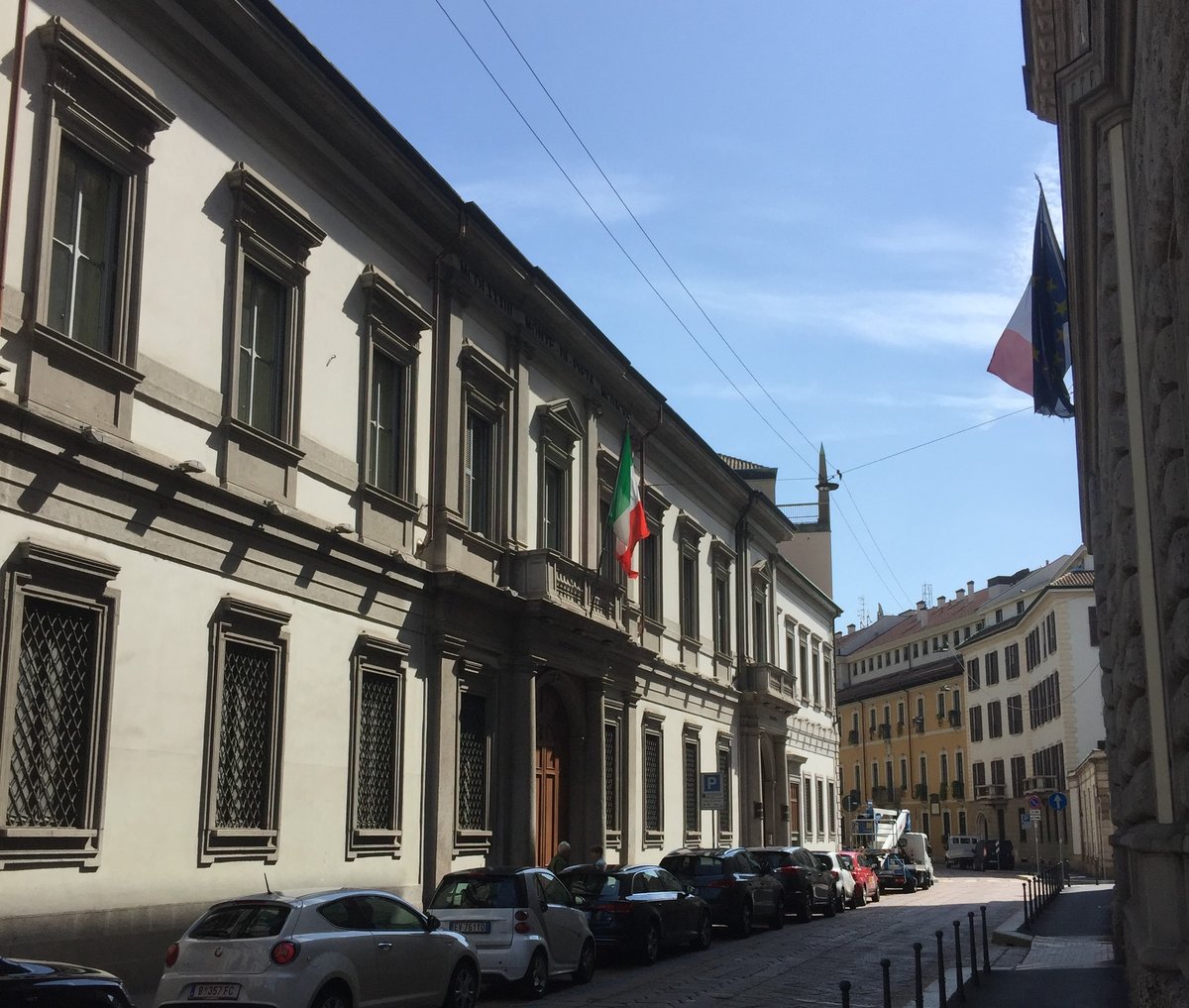
The façade along Via Manzoni is a hallmark of Neoclassical design, with a central portal framed by pink granite Ionic columns and a piano nobile balcony. Twenty-five symmetrically arranged windows are topped with alternating triangular and curved pediments, and the Borromeo family crest adorns the attic. The entrance gate, inscribed with “Humilitas,” leads into the main courtyard (Milanodavedere; Percorsi Case Museo).
Courtyards and Gardens
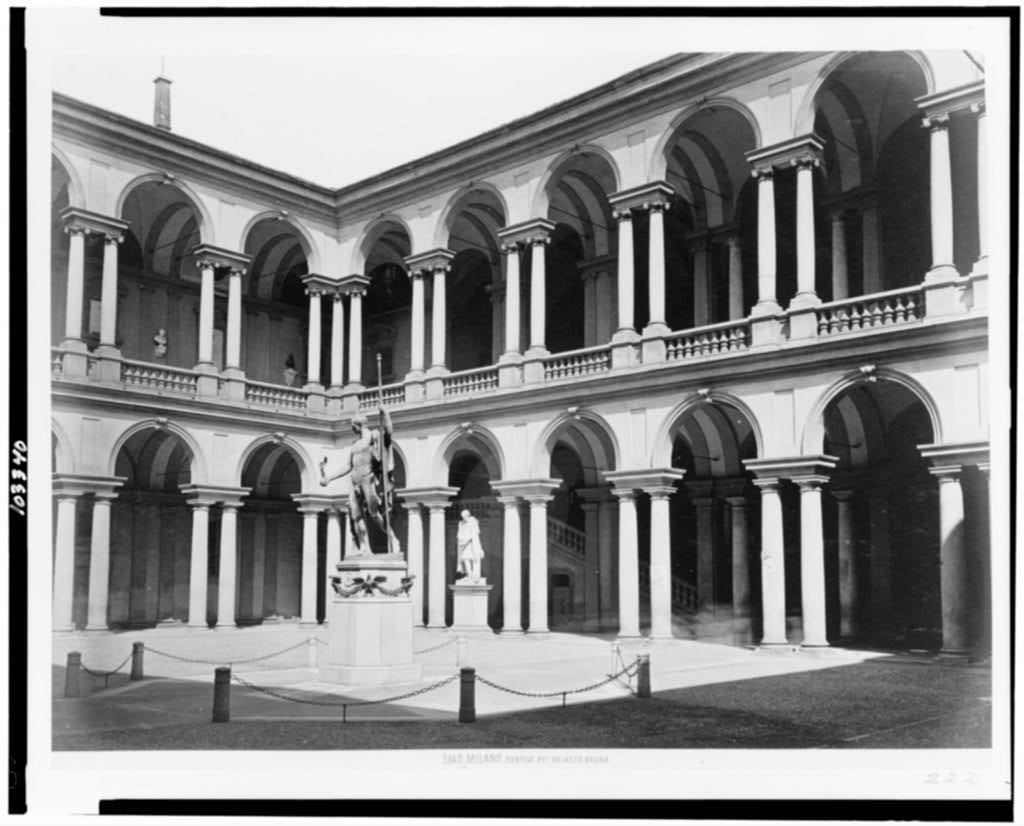
The cortile d’onore is surrounded by elegant porticoes and octagonal pillars, evoking classical peristyle forms. The garden, once one of Milan’s largest and declared of public interest in 1936, is especially beautiful in spring when wisteria blooms (Milano Weekend). The palazzo’s layout seamlessly blends indoor and outdoor spaces, reflecting both Neoclassical and Romantic ideals.
Interior Spaces
Inside, the grand staircase (scalone d’onore) ascends from the honor courtyard to the piano nobile, where reception rooms and private quarters are organized around a circular atrium. Interiors feature stucco decorations, marble fireplaces, and parquet floors, maintaining the palazzo’s original grandeur (Percorsi Case Museo).
Visitor Information
Visiting Hours
Palazzo Borromeo D’Adda is primarily a private residence and office complex. Public access is limited to special cultural events, such as “Cortili Aperti” (Open Courtyards), typically held in the spring. During these occasions, select courtyards and interior spaces are open to visitors (Milano Weekend).
Tickets
Entry during public events is often free, but advance booking or tickets may be required. Check the official website or event organizers for the most current information.
Guided Tours
Occasionally, guided tours are available during public openings, with details provided by local heritage associations or on event websites (Milanodavedere).
Accessibility
Due to the historic nature of the building, accessibility is limited, particularly to upper floors. Visitors with mobility challenges should inquire in advance for possible accommodations.
Getting There
Palazzo Borromeo D’Adda is conveniently located at Via Manzoni, near the Montenapoleone metro station (Line 3) and several tram and bus lines. Walking from Milan’s center offers the chance to enjoy nearby historical sites.
Unique Features and Events
- Cultural Events: The palazzo occasionally hosts exhibitions, concerts, and themed tours focusing on Renaissance art or the Borromeo family legacy.
- Virtual Visits: Digital experiences and virtual tours may be available during cultural festivals.
- Photography: While the exterior and courtyards can often be photographed, restrictions may apply during events—always check on-site guidelines.
Nearby Milan Historical Sites
Make the most of your visit by exploring these nearby attractions:
- Teatro alla Scala: World-renowned opera house.
- Via Montenapoleone: Prestigious fashion district.
- Museo Poldi Pezzoli: Museum with Renaissance art collections.
- Pinacoteca di Brera: Famed art gallery.
- Galleria Vittorio Emanuele II: Historic shopping arcade.
- Duomo di Milano: Iconic Gothic cathedral (Percorsi Case Museo).
Frequently Asked Questions (FAQ)
What are the visiting hours of Palazzo Borromeo D’Adda?
Visiting is limited to special events, usually in spring. Check the official website or local cultural calendars for current schedules.
Are tickets required?
Tickets may be necessary for special events or guided tours. Details are provided by event organizers.
Is the palazzo wheelchair accessible?
Accessibility is limited; inquire in advance for accommodations.
Can I take photographs inside?
Photography may be restricted during events—confirm policies on arrival.
When is the best time to visit?
Spring, especially during “Cortili Aperti,” when the garden is in bloom and cultural events take place.
Travel Tips
- Plan Ahead: Public openings are rare; monitor cultural calendars and book tickets early.
- Combine Attractions: Use the palazzo’s central location to visit nearby museums, shops, and restaurants.
- Use Public Transport: Parking is limited; metro and trams offer convenient access.
- Bring a Camera: The façade, courtyard, and gardens are especially photogenic during spring.
Enhance Your Experience
Download the Audiala app for expert audio guides, event updates, and insider tips on Milan’s historical sites. Follow Audiala on social media for the latest news and exclusive content about Milan’s architectural and cultural heritage.
Summary and Recommendations
Palazzo Borromeo D’Adda encapsulates Milan’s aristocratic and architectural history, from medieval brickwork and frescoes to Neoclassical elegance. While routine access is limited, planning your visit around special public openings lets you experience its courtyards, grand staircase, and lush gardens. Its central location makes it an ideal starting point for discovering Milan’s historic treasures.
For the latest information on visiting hours, tickets, and cultural events, consult official resources and local cultural calendars. Enhancing your visit with audio guides and virtual tours can further enrich your exploration of Milan’s noble past (Lombardia Beni Culturali; Milanodavedere; Audiala).
Listen to the full story in the app
Your Personal Curator, in Your Pocket.
Audio guides for 1,100+ cities across 96 countries. History, stories, and local insight — offline ready.
Audiala App
Available on iOS & Android
Join 50k+ Curators
Sources
- verified
- verified
- verified
- verified
- verified
- verified
- verified
- verified
- verified
- verified
Last reviewed: