Introduction
Located in the historic heart of Milan, the Museo Martinitt e Stelline presents a compelling journey through over five centuries of the city’s social welfare and educational history. Through immersive multimedia exhibits, original archival materials, and dynamic programming, the museum explores the stories of the Martinitt and Stelline orphanages—two institutions that played a pivotal role in Milanese society. Whether you're a history enthusiast, family, educator, or traveler, this guide details everything you need to plan an enriching visit: from the historical background and significance of the orphanages to practical information on visiting hours, ticketing, accessibility, and nearby attractions.
Photo Gallery
Explore Museo Martinitt E Stelline in Pictures

Oil on canvas painting by Antonio Durelli from 1825 depicting Giustina Lambertenghi Recalcati, a noble benefactor of the Martinitt e Stelline orphanage, seated traditionally in her study holding her testament, symbolizing 19th century noble portraiture.

Interior view of Museo Martinitt e Stelline's bookshop and ticket office showcasing wooden counters, shelves with books and souvenirs, and a welcoming ambiance.

An old historical document titled Certificato di Miserabilità displayed at Museo Martinitt e Stelline, representing a certificate of poverty from the Martinitt institution.

Deposit storage of the historic archive at Museo Martinitt e Stelline showcasing organized archival materials and historical preservation.

Art storage room at Museo Martinitt e Stelline displaying numerous framed paintings arranged on walls, showcasing the quadreria gratulatoria collection.

Photo of a classroom scene with students and a teacher at Museo Martinitt e Stelline showing the Deposito quadreria gratulatoria

Historic group photograph showing Martinitt workers in their work uniforms at Museo Martinitt e Stelline

View of the entrance area of Museo Martinitt e Stelline, located in Milan, showcasing the welcoming environment of the museum

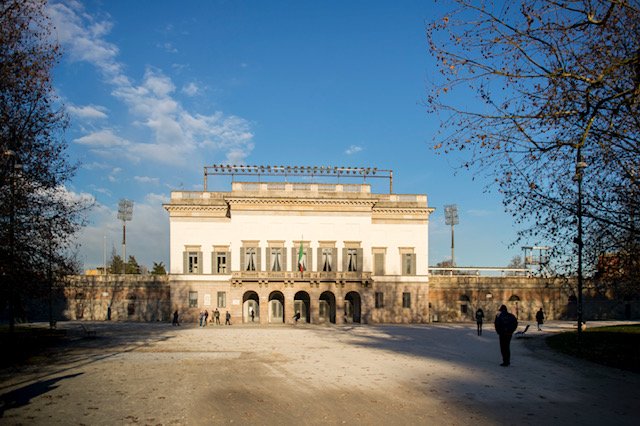
Front view of the historic Palazzo delle Stelline housing the Museo Martinitt e Stelline located on Corso Magenta in Milan, Italy

Portrait of Ignazio Vidiserti painted in 1844 by Pietro Narducci, oil on canvas, housed in Museo Martinitt e Stelline. The painting depicts the Milanese benefactor against a romantic pastoral background.

Old admission form from Museo Martinitt e Stelline documenting the Martinitt admission process

Archived image of a dowry request document titled 'Richiesta dote Stellina' from Museo Martinitt e Stelline
Historical Background: The Martinitt and Stelline Orphanages
Origins and Social Mission
The Martinitt orphanage was founded in 1528, thanks to the combined efforts of Gerolamo Emiliani and Duke Francesco II Sforza, to provide shelter and education for orphaned boys in Milan. The institution, named after Saint Martin, soon became a pillar of social welfare, offering not just a home but also the promise of social mobility through education and vocational training (Wikipedia; Corriere della Sera).
The Stelline orphanage, established later in the 16th century, mirrored the mission of the Martinitt but served girls in need. Housed in the Palazzo delle Stelline, its purpose was to safeguard girls from exploitation and poverty, providing them with education and skills for self-reliance (Children’s Homes).
Institutional Development and Impact
By the 18th century, both institutions were deeply woven into Milan’s social fabric. Under the direction of Empress Maria Theresa of Austria in 1776, reforms extended the orphans’ care until age 18 and incorporated Enlightenment-driven educational ideals (Wikipedia). The Martinitt and Stelline were not isolated from historical events; for example, Martinitt boys served as couriers during the Five Days of Milan in 1848.
Throughout the 19th and 20th centuries, both orphanages adapted to Milan’s changing urban and political climate, including temporary use as a military hospital during the Napoleonic era and the construction of new facilities in the 1930s (Wikipedia).
Integration and Modernization
In 1971, the Martinitt and Stelline institutions were merged into the Pio Albergo Trivulzio, broadening their mission to include care for the elderly and vulnerable populations (Famiglia Cristiana; Children’s Homes). Their vast archives and library (over 20,000 volumes) now form the foundation of the Museo Martinitt e Stelline (Museo Martinitt e Stelline).
Educational Philosophy and Vocational Training
A defining characteristic of both orphanages was their pioneering approach to education and vocational skills. Residents received a comprehensive education in literacy, numeracy, and practical trades such as tailoring and carpentry, preparing them for successful integration into adult society (Museo Martinitt e Stelline; Wikipedia). The museum’s reconstructed classrooms and workshops allow visitors to step into the shoes of the orphans, experiencing the transformative power of education and skill-building.
Notable Alumni and Societal Impact
The legacy of the Martinitt and Stelline institutions is evident in the achievements of their former residents. Notable alumni include Leonardo Del Vecchio, founder of Luxottica, and Angelo Rizzoli, the publishing magnate. Their stories are woven into the museum’s exhibits, illustrating the life-changing opportunities these institutions provided (Famiglia Cristiana; weblombardia.info).
Museum Experience: Exhibitions and Multimedia
Permanent Exhibition: The Orphans’ Story
The museum’s core exhibition, "The Orphans’ Story," traces the daily lives, challenges, and hopes of the children who lived in the Martinitt and Stelline orphanages. Original artifacts—such as uniforms, letters, and personal objects—are displayed alongside immersive reconstructions of dormitories, classrooms, and workshops (Museo Martinitt e Stelline).
Temporary Exhibitions and Special Projects
The museum regularly hosts temporary exhibitions on themes like Milanese philanthropy, women’s roles in society, and the evolution of education. Collaborations with local historians and artists ensure dynamic programming, such as fashion history displays curated by experts like Elisabetta Invernici (Museo Martinitt e Stelline).
Interactive Features and Augmented Reality
Cutting-edge multimedia installations and an AR-enabled app allow visitors to interact with digitized archives, 3D models, and oral histories (academia.edu). Video projections, audio narratives, and personalized “passports” guide guests through individual stories, enhancing engagement for visitors of all ages.
Visitor Information
Visiting Hours and Tickets
- Hours: Tuesday to Sunday, 10:00 AM–6:00 PM (last admission 30 minutes before closing). Closed Mondays and major holidays (Museo Martinitt e Stelline).
- Tickets: General admission €8; reduced €5 (students/seniors); free for children under 12 and Milan residents on selected days. Tickets are available online and at the entrance.
Accessibility
The museum is fully accessible, featuring ramps, elevators, and adapted restrooms. Multilingual audio guides and tactile materials are offered for visitors with special needs (Musei Lombardia).
Location and How to Get There
- Address: Corso Magenta 57, Milan.
- Public Transport: Easily reachable via Metro Line 1 (Conciliazione stop), and tram/bus lines. Cadorna FN station (M1-M2) is also nearby (Museo Milano).
- Parking: Limited street parking; public transport is recommended.
Programming and Educational Activities
The museum offers workshops, guided tours, and school programs that immerse participants in historical contexts while encouraging critical thinking and empathy. Activities are tailored for all age groups, from role-playing as Martinitt children to hands-on archival research (Museo Martinitt e Stelline; MilanoGuida).
Adult learning is supported through seminars and the “Terza Età” series, with topics ranging from costume history to Milanese urban evolution (Museo Martinitt e Stelline). Family and community programming includes weekend workshops and storytelling sessions.
Community Engagement and Research
Beyond exhibitions, the museum is a hub for community events, book presentations, historical commemorations, and music performances. Researchers can access digitized archives and study spaces by appointment (academia.edu). Partnerships with schools and cultural organizations foster intergenerational dialogue and social innovation.
FAQ
Q: What are the opening hours?
A: Tuesday to Sunday, 10:00 AM to 6:00 PM. Closed on Mondays and major holidays.
Q: How much are tickets?
A: General admission €8; reduced €5 for students/seniors; free for children under 12 and Milan residents on some days.
Q: Is the museum accessible?
A: Yes, with ramps, elevators, accessible restrooms, and multilingual/tactile support.
Q: Are guided tours available?
A: Yes, in Italian and English, with special programming for schools, families, and groups.
Q: How do I get there by metro?
A: The museum is near Conciliazione (Metro Line 1) and Cadorna FN stations.
Q: Can I take photos?
A: Photography is permitted in most areas (no flash); restrictions may apply for temporary exhibits.
Practical Tips for Visitors
- Book guided tours in advance, especially for English-speaking groups.
- Arrive early to enjoy exhibits without crowds.
- Download the museum’s AR app for interactive content.
- Combine your visit with nearby sites like Santa Maria delle Grazie and the Leonardo da Vinci Museum of Science and Technology.
- Allocate 1.5–2 hours for a complete experience.
Discover More
The Museo Martinitt e Stelline is a testament to Milan’s enduring values of solidarity, innovation, and social inclusion. Through a blend of historical artifacts, immersive technology, and engaging educational programs, the museum illuminates a vital chapter of Milanese heritage. Whether you’re a researcher, family, or traveler, this destination offers a meaningful and accessible experience.
Plan your visit today:
- Check the latest updates and ticketing info on the official museum website.
- Download the Audiala app for guided tours and AR features.
- Follow the museum’s social media for news on special exhibitions and events.
Discover more Milan historical sites and cultural attractions through our related articles and let the inspiring legacy of the Martinitt and Stelline orphanages enrich your understanding of Milan.
Listen to the full story in the app
Your Personal Curator, in Your Pocket.
Audio guides for 1,100+ cities across 96 countries. History, stories, and local insight — offline ready.
Audiala App
Available on iOS & Android
Join 50k+ Curators
Sources
- verified
- verified
- verified
- verified
- verified
- verified
- verified
- verified
- verified
Last reviewed: