Introduction
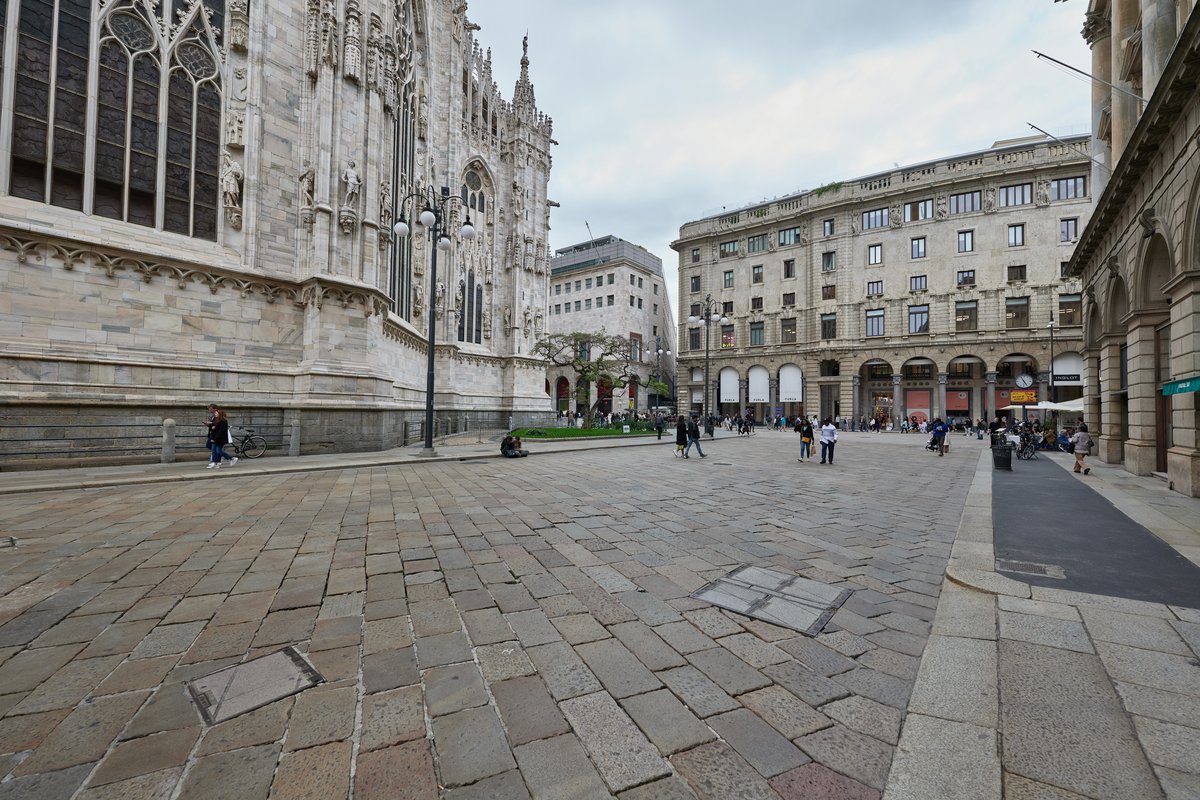
Discover the rich history, architectural beauty, and cultural significance of the Milan Cathedral in Monza, Italy. Known as the Basilica of San Giovanni Battista, this iconic landmark has been a central part of Monza's heritage since its inception in the late 6th century. Commissioned by the Lombard Queen Theodelinda, the cathedral has undergone numerous transformations, incorporating elements of Gothic, Renaissance, and Baroque architecture. This comprehensive guide will provide you with historical insights, practical visitor information, and travel tips to make the most of your visit to this magnificent basilica. Whether you're a history enthusiast or a casual traveler, this guide will help you appreciate the enduring legacy and architectural splendor of the Milan Cathedral in Monza. Learn about the origins of the cathedral, its unique architectural features, and the treasures it houses, including the famous Iron Crown used to crown numerous sovereigns (Wikipedia) (Spotting History).
Photo Gallery
Explore Milan Cathedral in Pictures
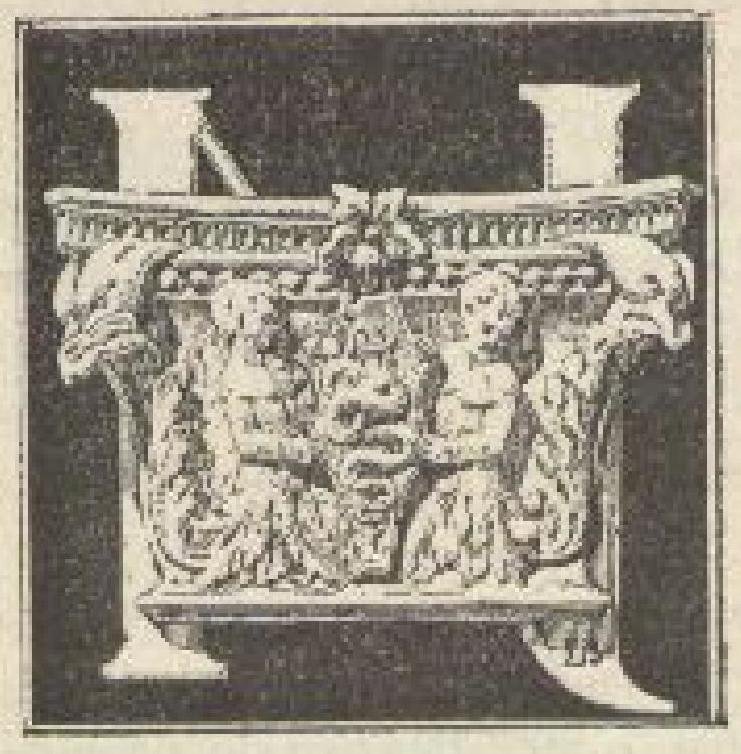
Illustration from Luca Beltrami's 1883 book 'La facciata del nostro duomo' showing the facade of Milan Cathedral
Architectural drawing of the facade of the Duomo by Beltrami, titled 'La facciata del nostro duomo', created in 1883
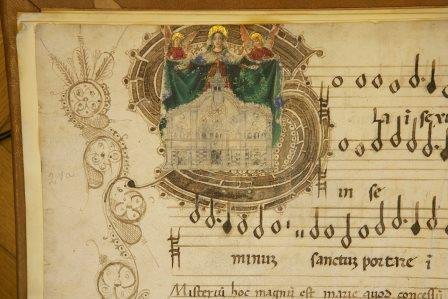
Detailed image of a capital letter 'G' adorned with intricate medieval illustrations and decorations from the Codice Gaffuriano manuscript
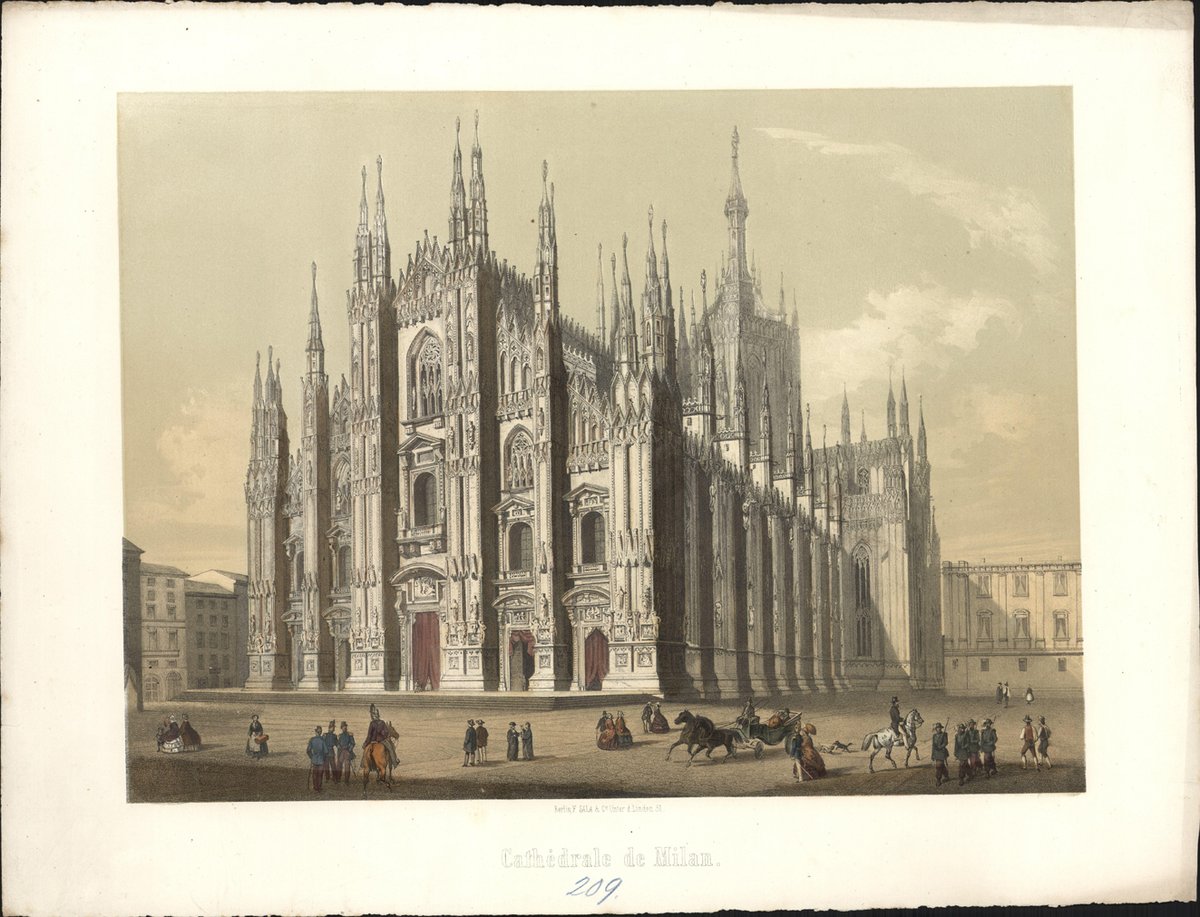
A 19th-century German print of the Milan Cathedral and cityscape, produced in Berlin between 1850-1899 by an unknown printmaker, part of the Willet-Holthuysen collection.
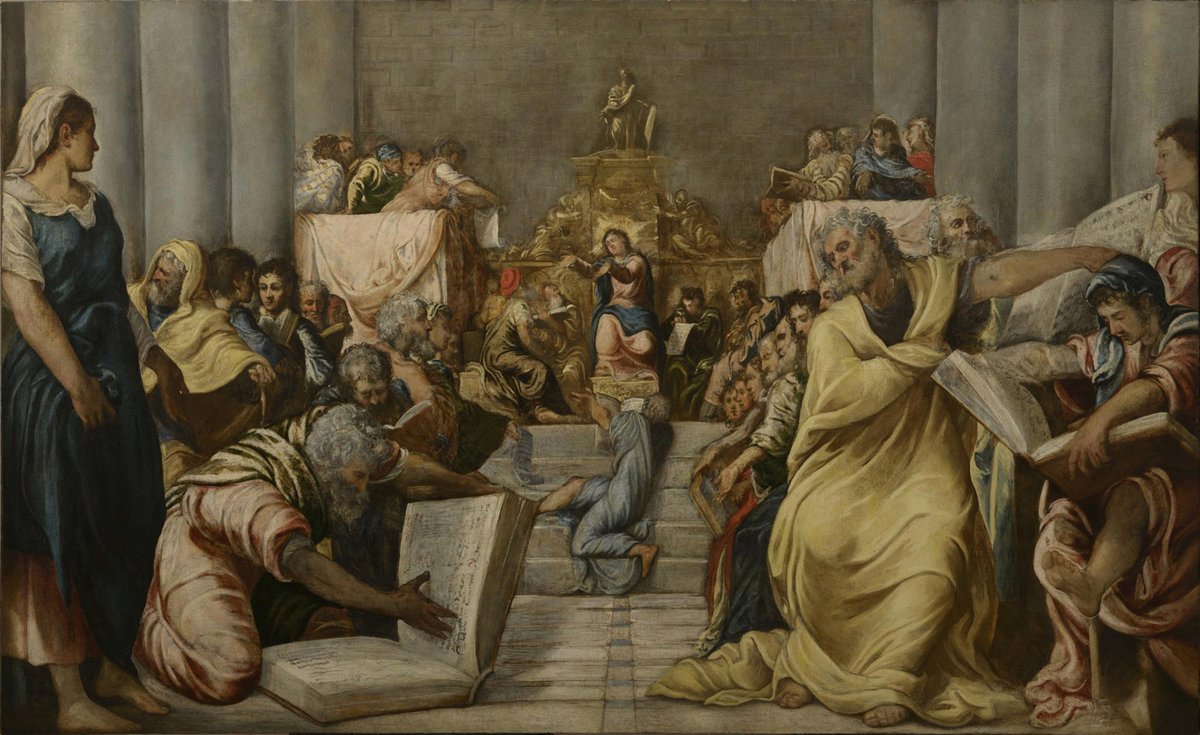
1545-1546 Renaissance painting by Tintoretto depicting Christ disputing with elders in the temple
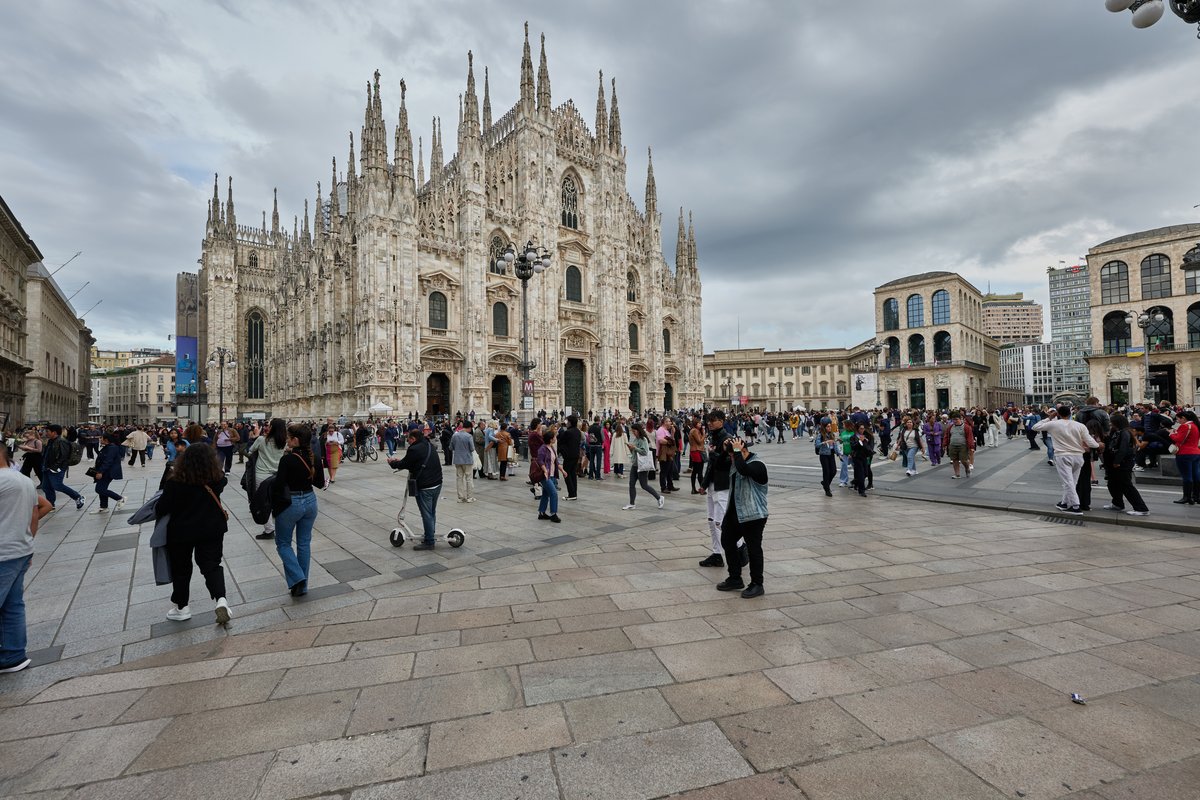
The Cathedral of Milano showcasing intricate Gothic architectural design and detailed exterior facade
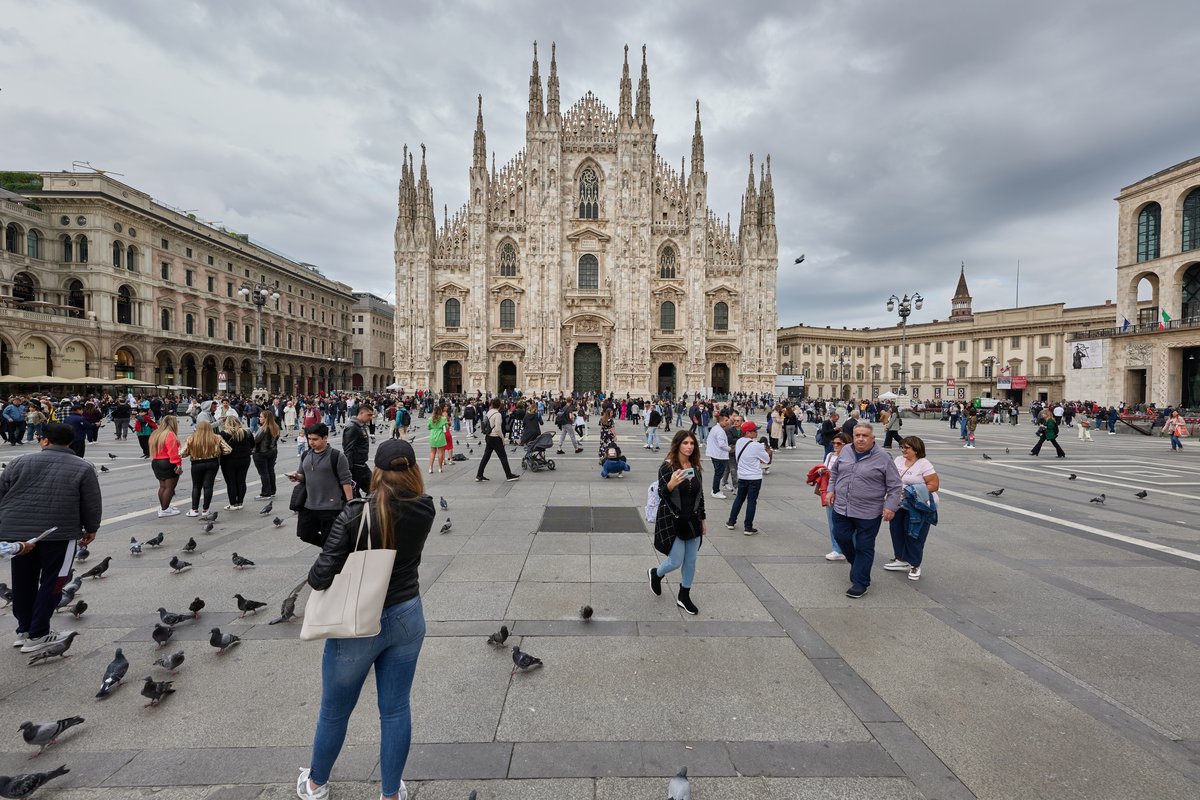
Front view of the Cathedral of Milano showcasing its intricate Gothic architectural details and spires
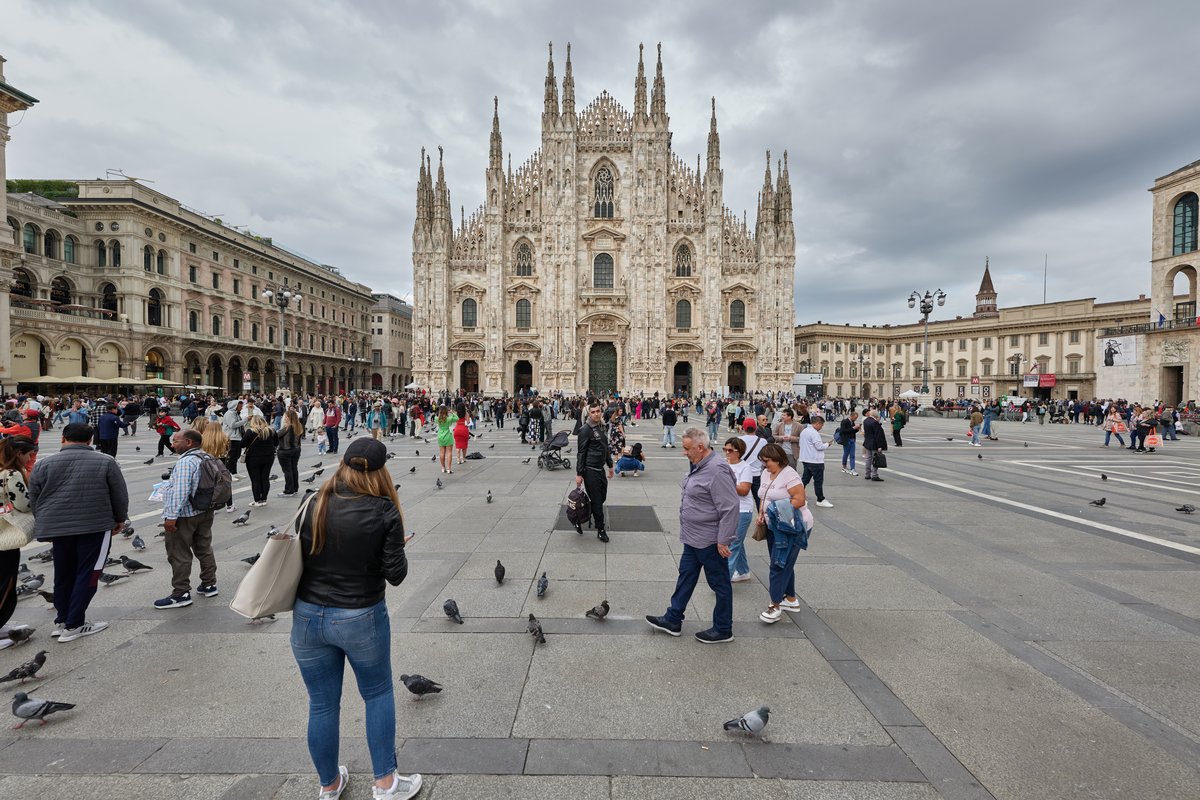
The Cathedral of Milano, also known as Milan Cathedral, showcasing its intricate Gothic architecture and ornate exterior details captured in daylight.
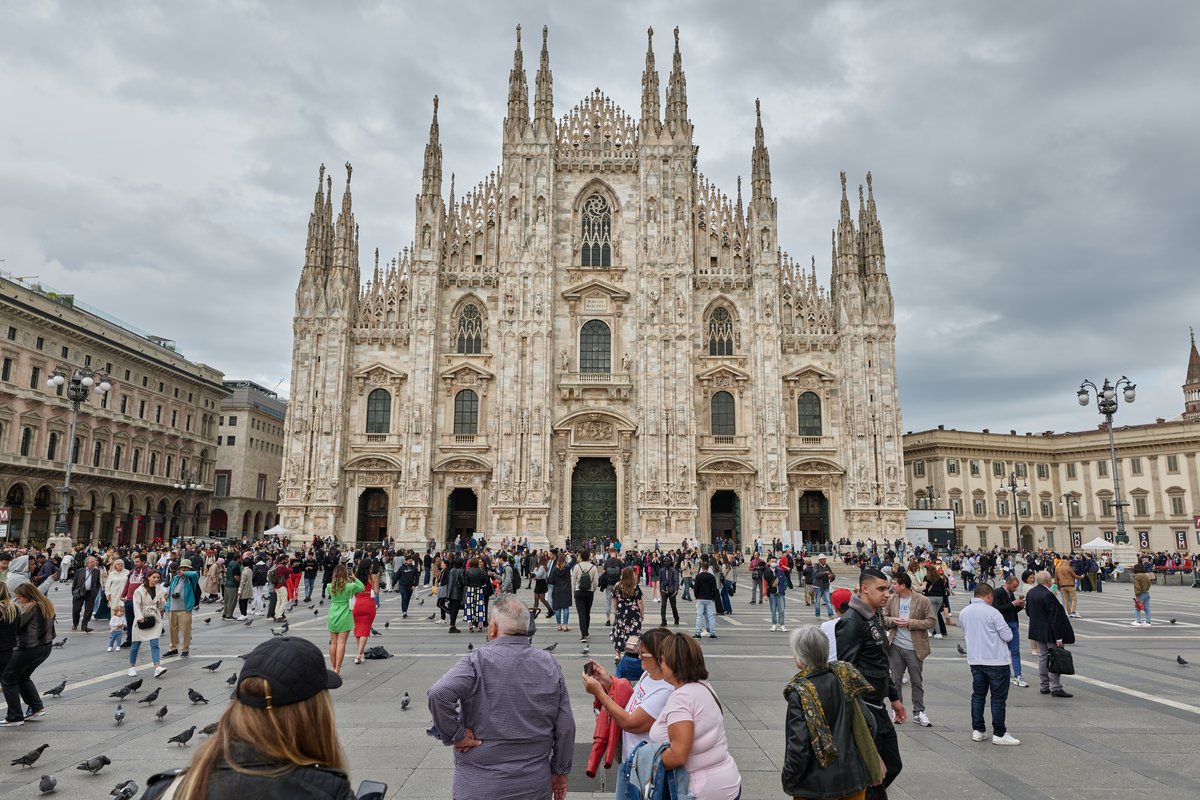
Stunning nighttime view of the Cathedral of Milan showcasing its detailed gothic architecture beautifully illuminated
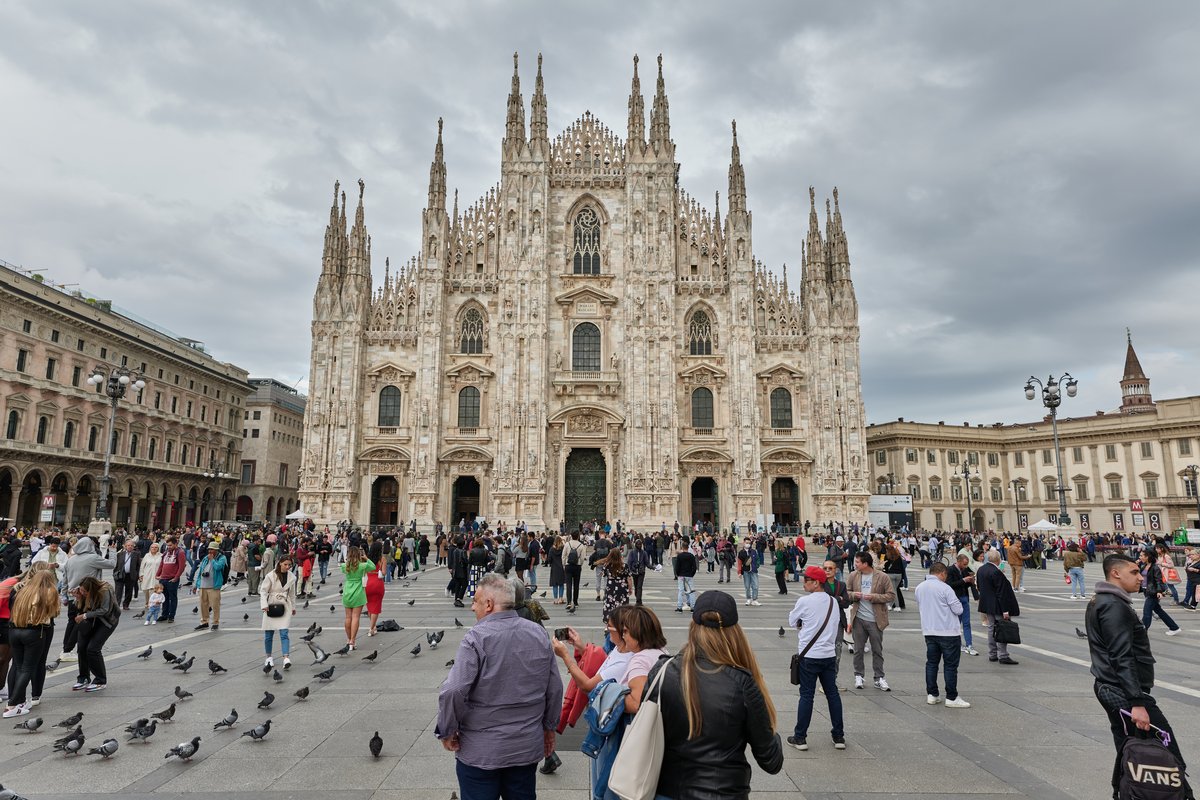
High-resolution image of the Cathedral of Milano showcasing its iconic Gothic architectural style, intricate details, and tall spires against a clear blue sky
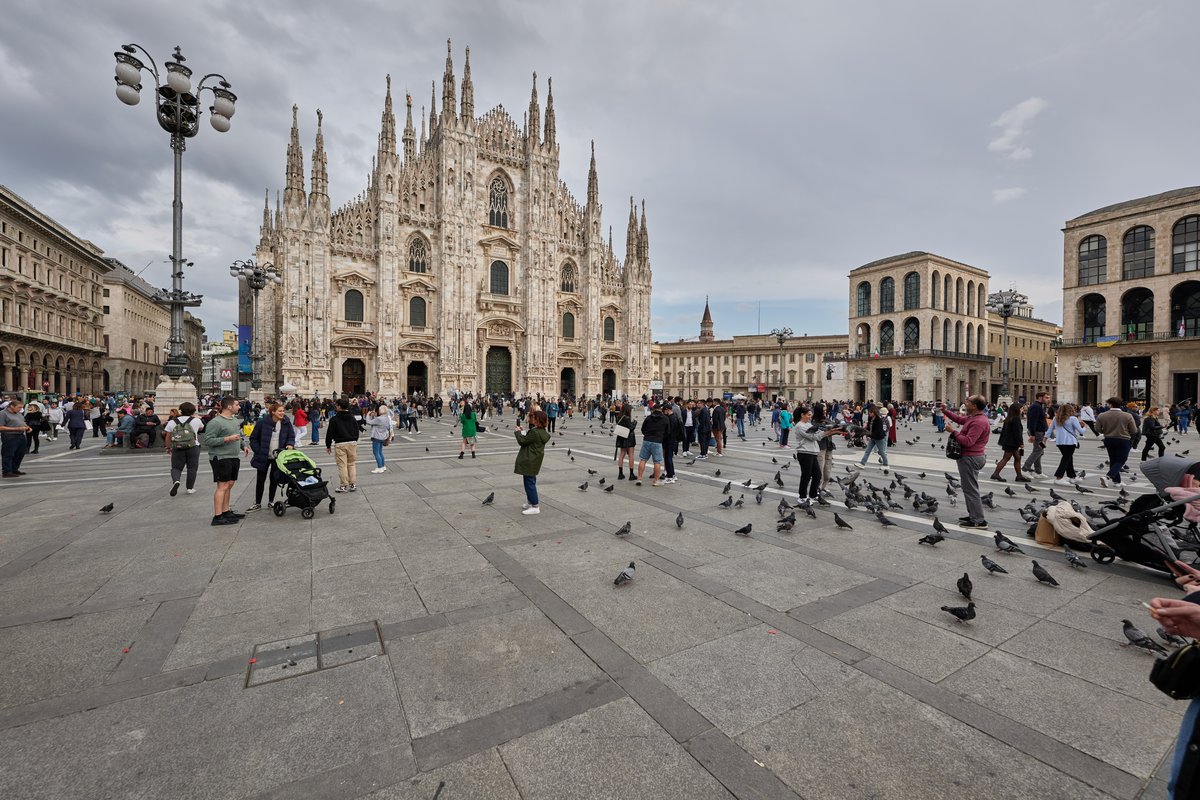
High-resolution image showcasing the intricate exterior architecture of the Cathedral of Milano under clear blue sky
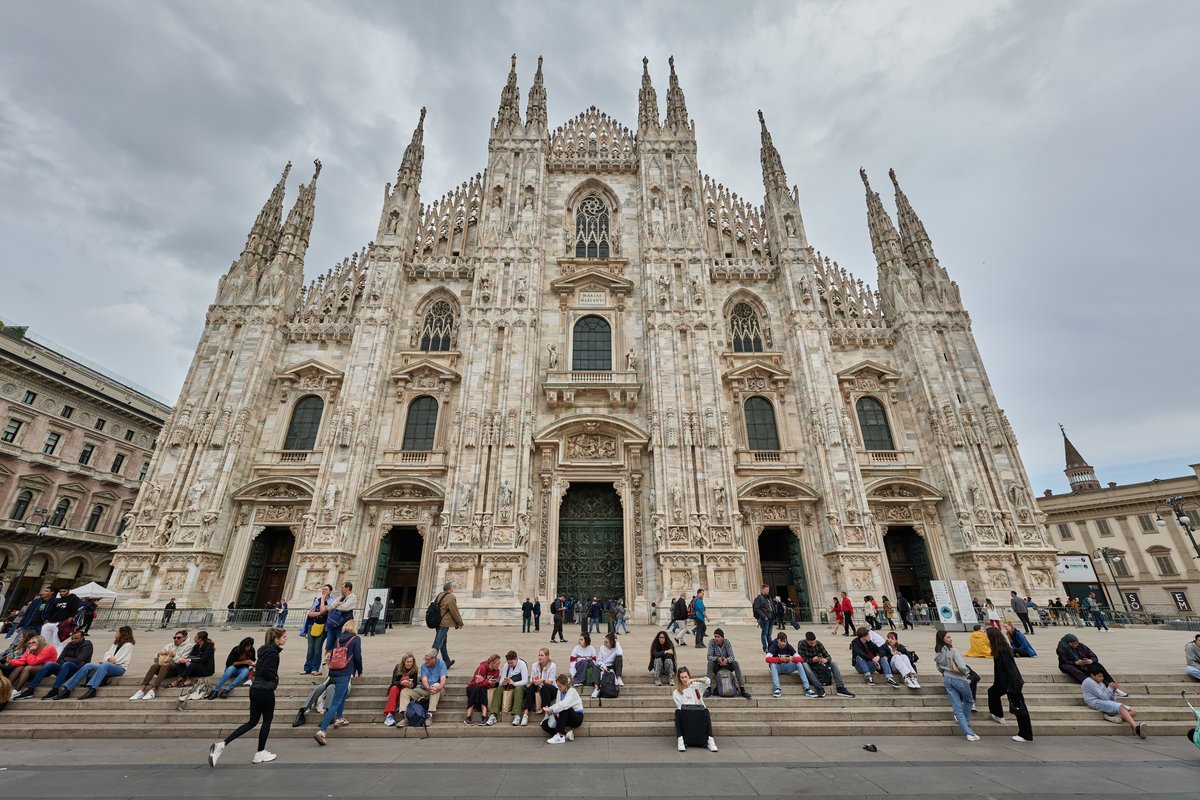
Exterior view of the Milan Cathedral showcasing its intricate Gothic architecture and spires against a clear sky backdrop
Visiting the Milan Cathedral in Monza: History, Tickets, and Tips
Origins and Early Construction
The Milan Cathedral in Monza, also known as the Basilica of San Giovanni Battista, has a rich history dating back to the late 6th century. It was commissioned by the Lombard Queen Theodelinda as a royal chapel to serve the nearby palace. According to legend, Queen Theodelinda made a vow to build a church dedicated to Saint John the Baptist. While riding along the banks of the Lambro River, she was halted by a dove who told her "Modo" (Latin for "now"), to which she replied "Etiam" ("yes"). This event led to the initial naming of Monza as Modoetia (Wikipedia).
In 595, Queen Theodelinda had an oraculum (chapel) built on the Greek Cross plan. This early structure was completed by 603 when Adaloald, heir to the Lombard throne, was baptized here by Secundus of Non (Spotting History). Of this original chapel, only the walls exist today. The queen was buried in what is now the central left aisle of the church.
Medieval Rebuilding and Gothic Influence
On the remains of the oraculum, a new church was erected in the 13th century. This church was again rebuilt as a basilica starting from 1300, adopting a Latin Cross plan with an octagonal tiburium. The late 14th century saw the addition of side chapels and the commencement of the Pisan-Gothic style west front in white and green marble, designed by Matteo da Campione (Italy This Way).
The basilica's imposing marble façade features white and green horizontal bands and a large central rosette by Matteo da Campione, one of the most famous sculptors of the Lombard school. The bell tower, standing 80 meters high, was added in the early 17th century (Spotting History).
Renaissance and Baroque Enhancements
The interior of the basilica is rich in frescoes and paintings from the Lombard school of painting, spanning the Gothic to Rococo periods. The church's three naves and Latin cross layout are adorned with numerous artistic treasures. The basilica also houses a rich museum and a real treasure, the most precious piece of which is the Iron Crown, used to crown numerous sovereigns, including the kings of Italy (Monzanet).
Modern Restorations and Cultural Significance
Over the centuries, the Milan Cathedral in Monza has undergone numerous restorations to preserve its structure and artistic elements. The 20th and 21st centuries saw significant restorative works to maintain the basilica's splendor for future generations. Today, the cathedral stands not just as a place of worship but as a cultural landmark, attracting visitors from around the world (History of Yesterday).
Unique Features and Privileges
An ancient and unusual privilege of the Duomo is its right to employ ceremonial armed guards, known as Alabardieri, who carry halberds. This tradition dates back to an edict of Maria Theresa of Austria in 1763. The guards' 18th-century style uniform, of blue wool with gold braiding and a belt buckle with an image of the Iron Crown, remains unchanged except for the bicorne hat, which replaced the earlier tricorne during the Napoleonic period (Wikipedia).
Architectural Highlights
The basilica's architectural highlights include its Pisan-Gothic style west front, the large central rosette, and the imposing marble façade. The interior features three naves, a Latin cross layout, and an octagonal tiburium. The side chapels, added in the late 14th century, further enhance the basilica's architectural beauty (Italy This Way).
Artistic Treasures
The interior of the basilica is adorned with frescoes and paintings from the Lombard school of painting, spanning the Gothic to Rococo periods. The basilica also houses a rich museum and a real treasure, the most precious piece of which is the Iron Crown, used to crown numerous sovereigns, including the kings of Italy (Monzanet).
Visitor Information
The Milan Cathedral in Monza is located in the historic center, within a restricted traffic area. Visitors are advised to leave their cars in one of the paid parking lots adjacent to the historic center and continue on foot. Guided tours are available, and all information on guided tours can be found on the museum’s website (Monzanet).
Opening Hours and Tickets
- Opening Hours: Monday to Saturday, 9:00 AM - 6:00 PM; Sunday, 1:00 PM - 6:00 PM
- Tickets: Entry to the cathedral is free, but access to the museum and chapel requires a ticket. Adult tickets are €10, and discounted tickets for students and seniors are €8.
Travel Tips
- Best Time to Visit: Early morning or late afternoon to avoid crowds.
- Dress Code: Modest clothing is required; shoulders and knees should be covered.
- Accessibility: The cathedral is wheelchair accessible, but some areas of the museum may have limited access.
- Nearby Attractions: Royal Villa of Monza, Monza Park, and the Autodromo Nazionale Monza.
FAQ
Q: What are the visiting hours for the Milan Cathedral in Monza? A: The cathedral is open Monday to Saturday from 9:00 AM to 6:00 PM and Sunday from 1:00 PM to 6:00 PM.
Q: How much are tickets for the Milan Cathedral? A: Entry to the cathedral is free, but tickets for the museum and chapel cost €10 for adults and €8 for students and seniors.
Q: Are guided tours available? A: Yes, guided tours are available. More information can be found on the museum's official website.
Listen to the full story in the app
Your Personal Curator, in Your Pocket.
Audio guides for 1,100+ cities across 96 countries. History, stories, and local insight — offline ready.
Audiala App
Available on iOS & Android
Join 50k+ Curators
Sources
- verified
- verified
- verified
- verified
- verified
- verified
Last reviewed: