An introduction.
Researched by the Audiala editorial team from historical records, architectural archives, and local expertise.
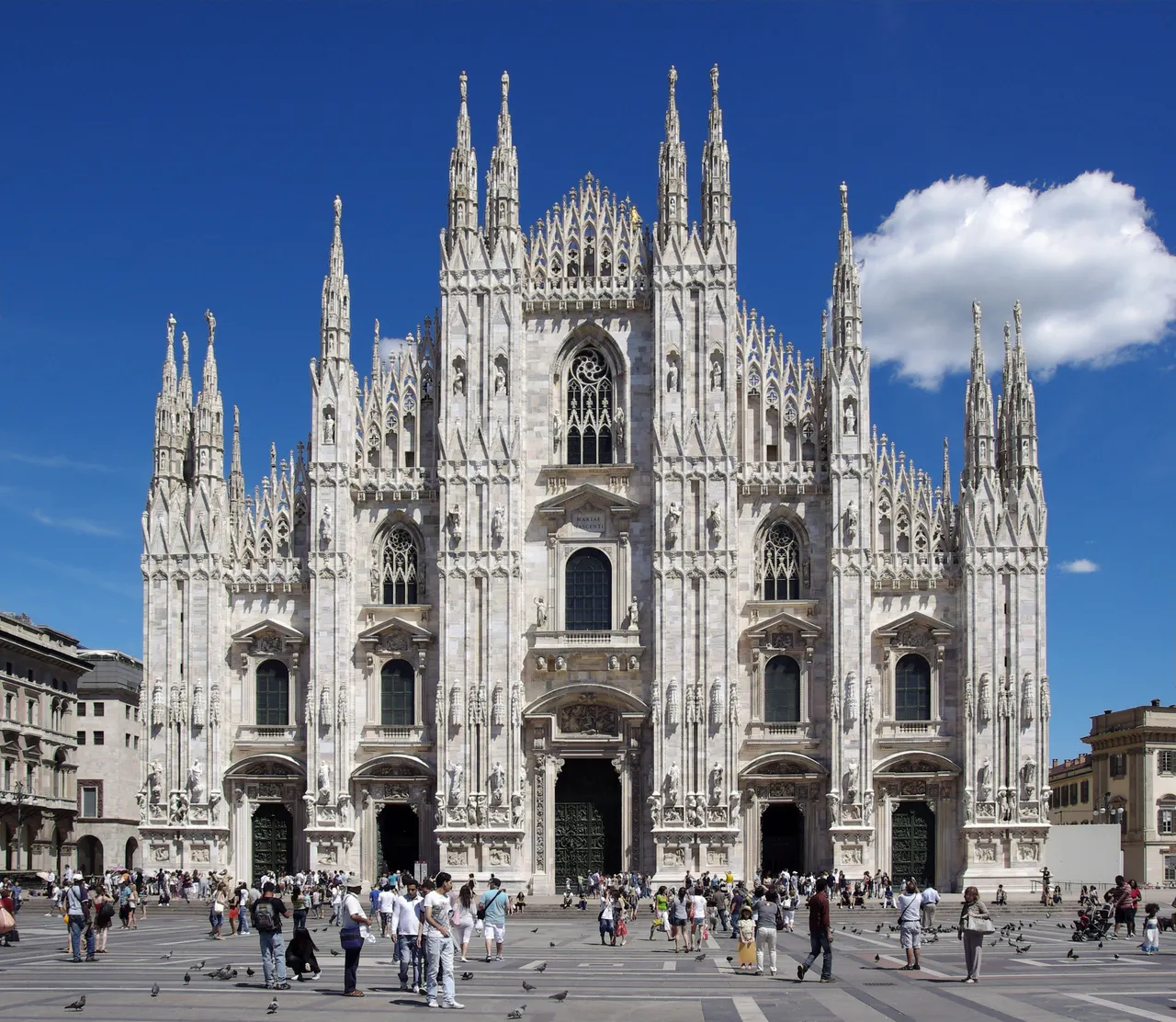
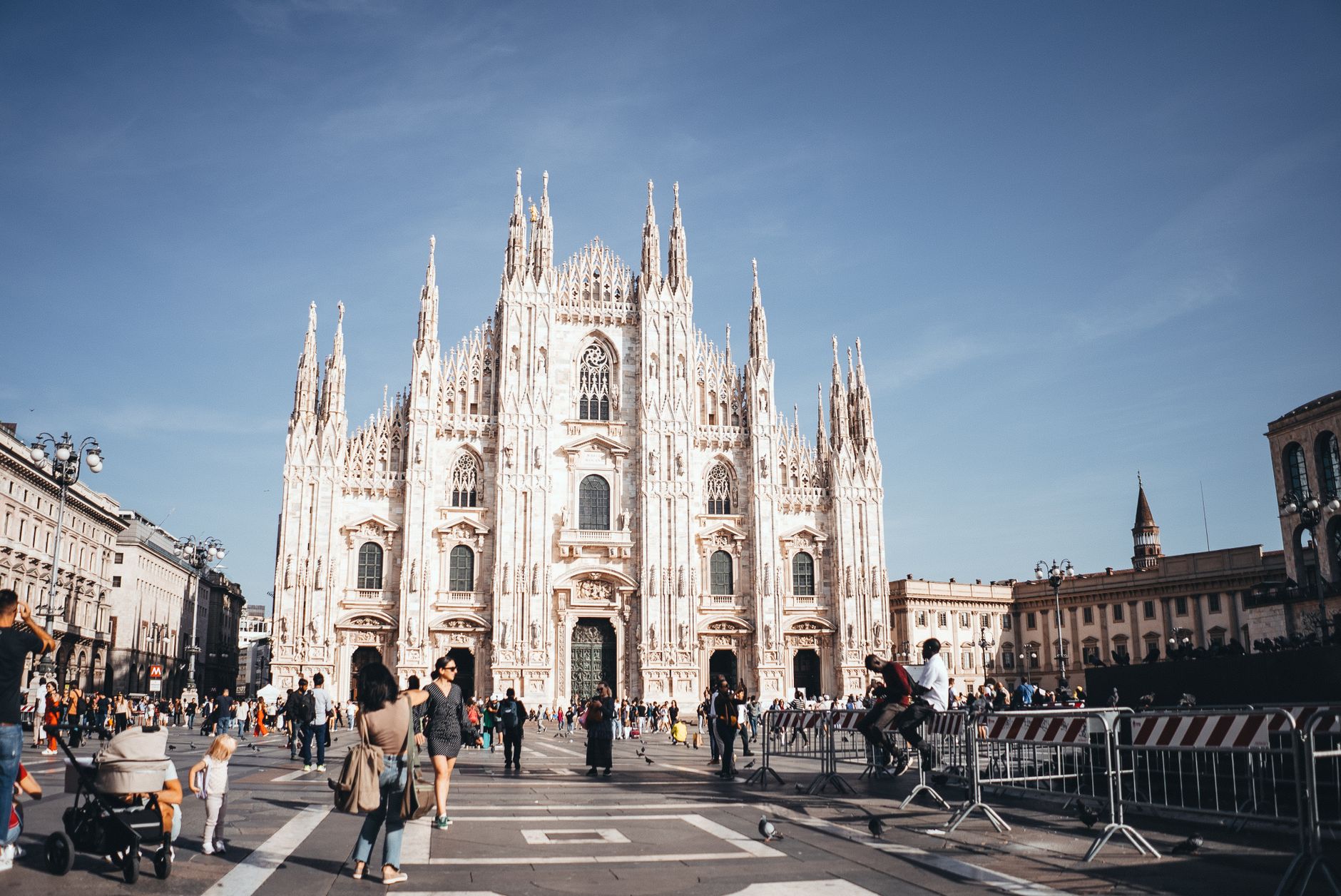
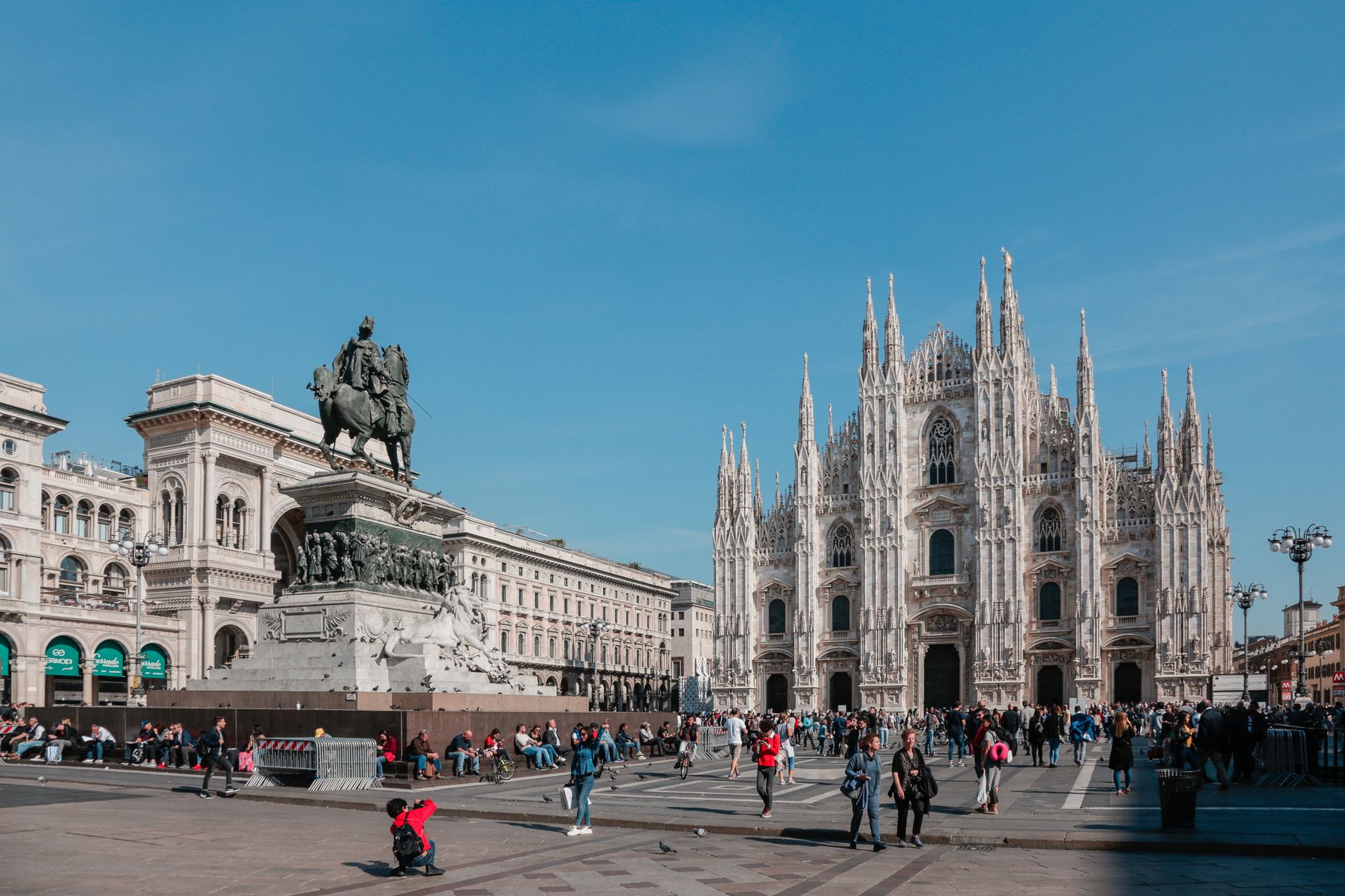
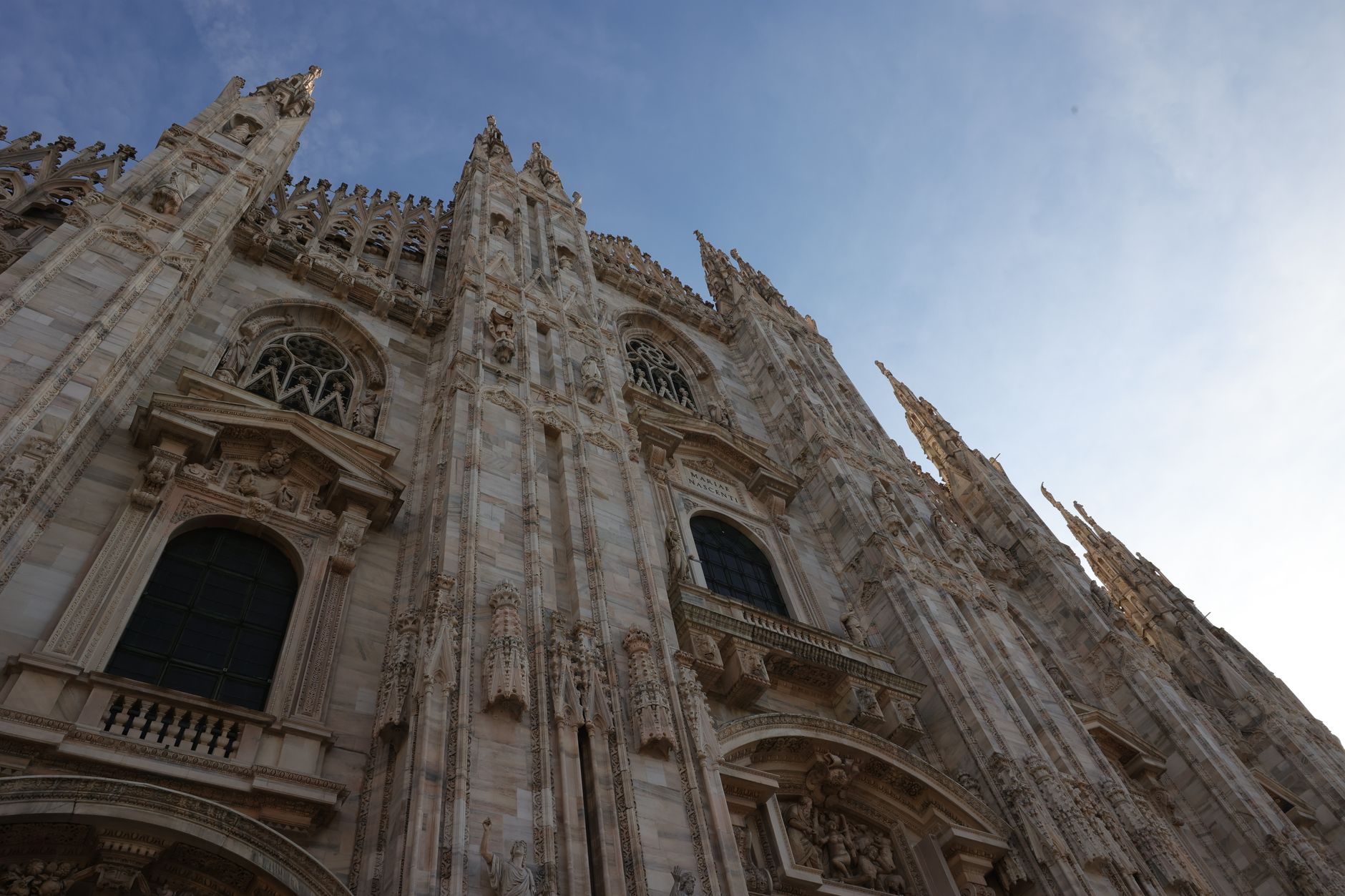
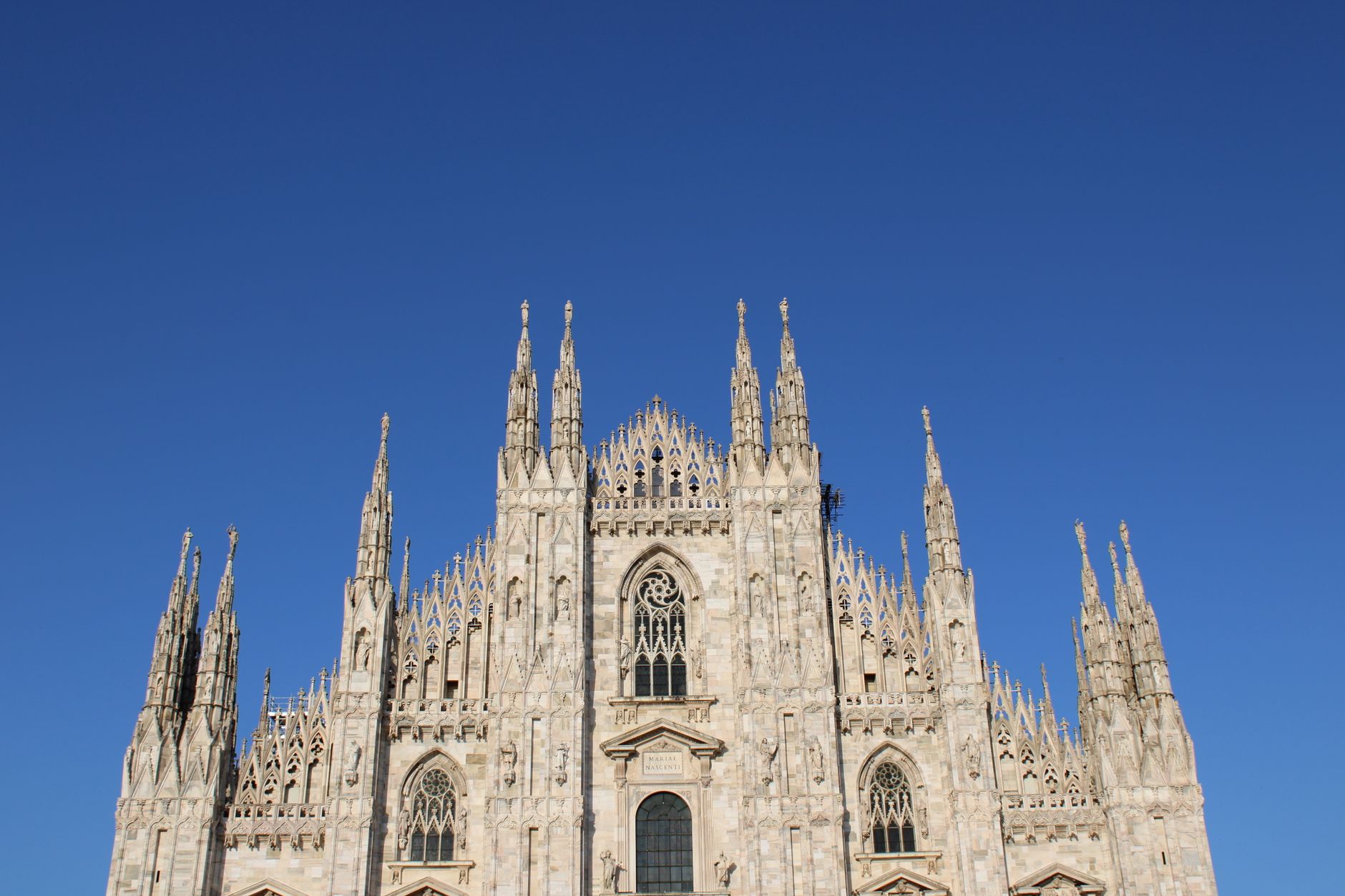
MMost visitors call the Duomo di Milano Gothic. The façade isn't — Carlo Borromeo's 16th-century architects stripped pointed arches as too 'Protestant' and finished the front in 1813 as a Baroque-Neoclassical compromise. Stand in Piazza del Duomo at dusk in Milan, Italy: 3,400 statues catch the last light, the gilded Madonnina burns 108 metres up, and pigeons skid across pink Candoglia marble cut from the same Visconti-era quarry since 1387. Come for one of Europe's strangest cathedrals — a 638-year construction site that still isn't done.
You're standing on Roman Mediolanum's forum. Streets still radiate from this square — every modern Milan map carries a buried 4th-century skeleton. Below the floor sits the Battistero Paleocristiano, the octagonal pool where Saint Ambrose baptised Saint Augustine on Easter Vigil 387. The man who'd shape Western Christian thought for 1,600 years was made a Christian ten metres beneath your feet.
Walk inside and the nave runs 158 metres — longer than two Olympic pools laid end to end. Fifty-five stained-glass windows filter the light, the largest medieval glazing programme in Italy. Take the lift to the roof and you're walking on marble between the spires, 70 metres up, with the Alps visible on a clear day.
And the Veneranda Fabbrica del Duomo, founded in October 1387, has never stopped cutting stone. Workshops on the roof still train sculptors. Pollution eats the marble; restorers replace it. The cathedral you see is partly older than you and partly younger — a building that refuses to finish.
The Church Built For The Devil - Duomo di Milano
grimmlifecollective01 What to see.
The Terraces and the Madonnina
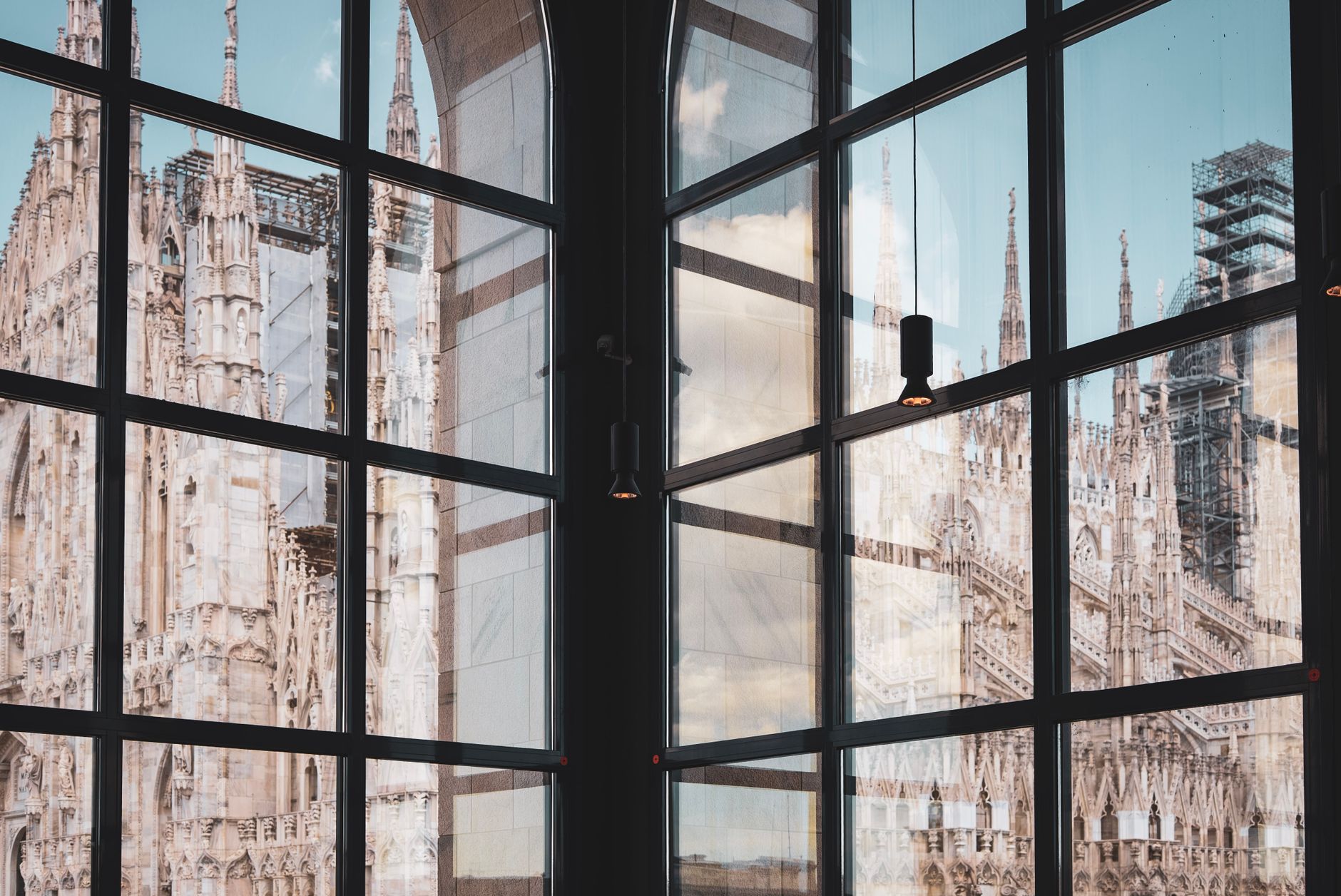
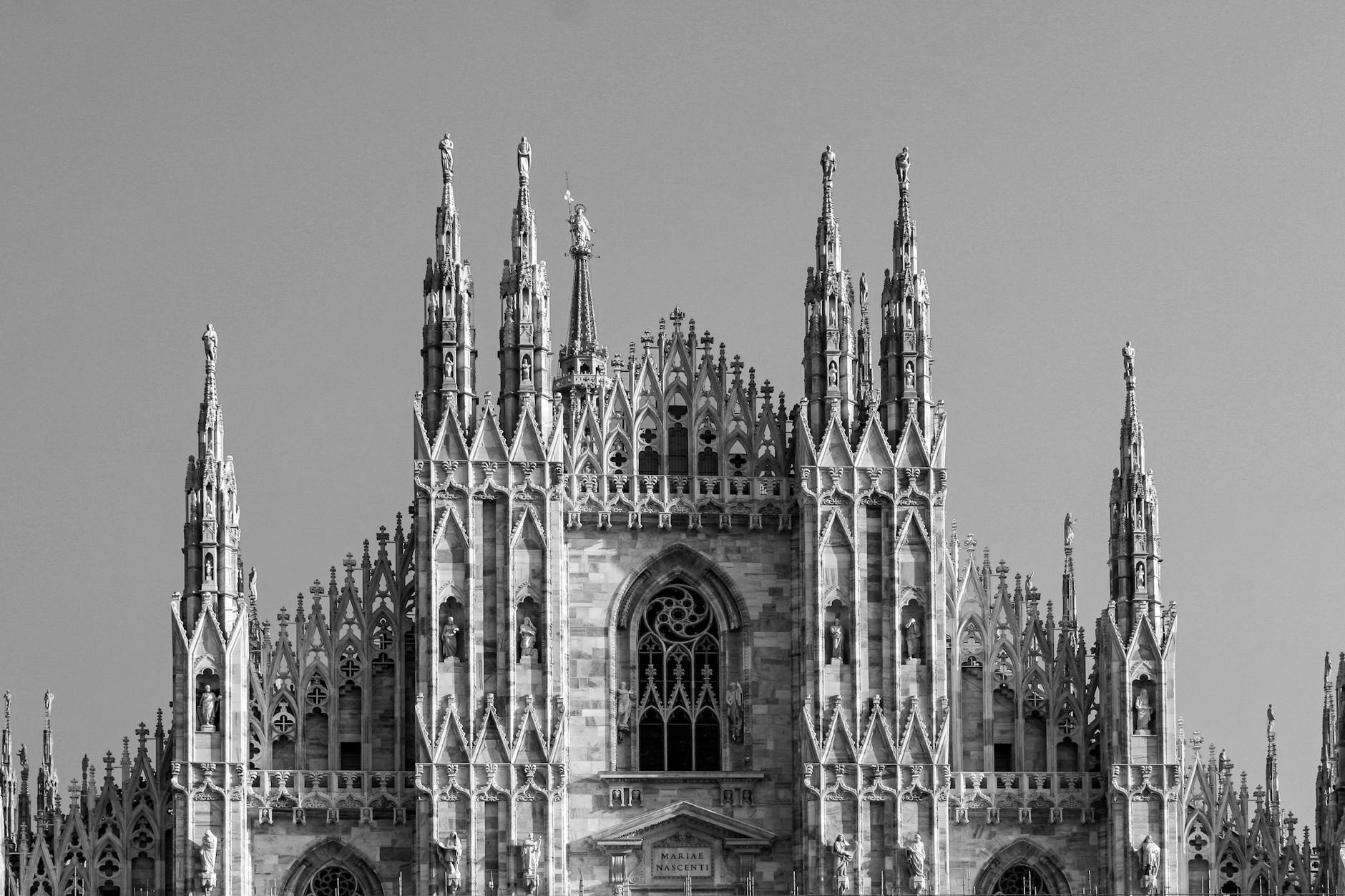
Climb the 250 steps (or take the lift) and you surface 65m up inside a forest of Candoglia marble — pink-veined, warm under the sun, prickling with 135 spires and gargoyles you couldn't see from below. Walk the buttress walkways slowly. Up here the medieval carvers got bored and got funny: among the saints you'll find boxers, grotesque faces, and on later restorations a rifle-toting WWI soldier and what locals swear is a tennis player.
At the top of the Guglia Maggiore stands the Madonnina — 4.16m of gilt copper, 33 hammered sheets, re-leafed with 6,750 squares of gold in 2012. She was hoisted up there in late 1774, and from August 1939 to May 1945 the city draped her in grey-green cloth so RAF bombers couldn't use her as a sighting point. Cardinal Schuster pulled the cover off on May 6, 1945.
Go to the northeast corner on a clear winter morning. The Alps line up behind her gold head like a stage backdrop — the single best photograph in Milan, and the reason Milanese still say sòta a la Madunina when they mean home.
The five-nave interior and San Bartolomeo
Push through the bronze doors and the temperature drops ten degrees. Fifty-two pillars rise into the gloom — one for each week of the year, tradition says — holding up vaults so high your footsteps slap and double back as echo. The stained glass on the apse, some of the largest panels in the world, filters daylight into bruised reds and ultramarines that move across the marble floor as the hours pass.
Walk down the south transept until you hit Marco d'Agrate's San Bartolomeo Scorticato, carved 1562. The saint stands flayed, his own skin slung over his shoulders like a wet coat, every tendon and vein rendered with anatomist's precision. The Latin on the base reads Non me Praxiteles sed Marco finxit Agrate — "Not Praxiteles but Marc'Agrate made me." A 16th-century sculptor calling out a Greek master. The marble is cold to the touch and you will not forget it.
Before you leave, look up into the apse vault. A small red light glows between the ribs. It marks the Sacro Chiodo — a nail said to come from the Crucifixion, lowered once a year, every September 14, in a wooden cloud-shaped lift called the Nivola.
Find the meridian line on the floor
Just inside the main entrance, a brass strip runs across the marble pavement, inlaid with bronze zodiac signs. Most people step right over it. The Brera astronomers laid it down in 1786, and it still works: a pinhole 24m up in the southern nave vault drops a disc of sunlight onto the floor at solar noon, sliding along the strip as the year turns.
Go on a sunny day around midday, find your zodiac sign in the marble, and watch the sun mark the date. In winter the disc travels far down the nave toward Capricorn; in July it pulls in tight to the pillar base at Cancer. Same physics that ran the city's clocks before railways forced standard time. Then walk the few minutes west to the Monument to Leonardo da Vinci on Piazza della Scala — Leonardo lost the 1488 competition to design the Duomo's central spire, and the city eventually put him on a plinth round the corner anyway.
02 In pictures.





Watch & Explore Duomo Di Milano.
Plan and listen to Duomo di Milano with Audiala.
Audio guide in your pocket, itinerary in your browser. Built for the way you actually visit.
Tickets & tours.
These are guided options from our partners — same price as booking direct.
Prices are indicative — final pricing and availability are confirmed at checkout. Audiala may earn a commission from bookings made through these links.
Also on GetYourGuide
More tours for Duomo di Milano
Curated from GetYourGuide. Same price as official, free cancellation on most.

Prices shown are indicative — final pricing and availability are confirmed at checkout. Audiala may receive a commission from bookings made via these links.
03 Visitor logistics.
The practical scaffolding for a good visit — kept short.
Getting There
Metro M1 (red) or M3 (yellow) to Duomo station — exits dump you straight into Piazza del Duomo. From Milano Centrale, M3 direct, ~8 minutes. Trams 2, 3, 12, 14, 16 stop nearby; piazza itself is pedestrian-only, so drivers should aim for Autosilo Diaz garage south of the cathedral.
Opening Hours
As of 2026, cathedral interior runs daily 9:00–19:00, last admission around 18:10. Terraces open 9:00 by stairs, 10:00 by lift. Museo del Duomo closed Wednesdays — plan accordingly. Worshippers enter free for prayer.
Time Needed
Interior alone, 30–45 minutes. Cathedral plus rooftop terraces, around 2 hours. Full complex with museum, San Gottardo and the archaeological area below, 3–4 hours. Add 60–120 minutes if you skip the timed online ticket at peak.
Accessibility
Wheelchair ramp at the front doors; free wheelchair loan at DuomoInfopoint, Piazza Duomo 14/A. Lift reaches the lower terrace only — upper terrace is stairs over uneven marble. Disabled parking at Piazza Fontana and Autosilo Diaz with EU permit.
Cost & Tickets
As of 2026, Duomo + Museum + San Gottardo is €10 adult / €5 child. Cathedral + Terraces by stairs runs €20–25 and is the best-value combo, valid 2 days. Book at ticket.duomomilano.it — street resellers in the piazza are not authorised.
04 Tips for visitors.
Small things that change the day.
Dress The Rules
Knees and shoulders covered, no hats inside — and since July 2025, no wedding dresses, tuxedos, or graduation togas either. Bouncers turn people away; wrap a scarf if you're in a tank top.
Camera, Not Tripod
Handheld photos fine inside and on the roof; flash, tripods, selfie sticks and monopods are banned. Drones over Piazza Duomo are a no-fly zone — ENAC fines are real.
Pickpocket Central
Piazza Duomo and the M1/M3 Duomo platforms are Milan's number-one pickpocket spot. Watch for the bracelet-tie, rose-handoff, and birdseed-on-shoulder routines at the entry queue — walk past, don't engage, and keep wallets front-pocket.
Eat Off The Piazza
Skip the €8-espresso cafés on the square. Luini on Via Santa Radegonda does panzerotti for €3–4 (queue moves fast), Trattoria Milanese on Via Santa Marta nails cotoletta and saffron risotto for €30–45, and Camparino in Galleria pours the original Campari spritz at the standing bar for café prices.
Stairs Beat Lift
250-odd marble steps to the roof — easier than most Italian bell towers and half the price of the lift. Hit the 9:00 stairs opening for empty terraces; the lift fast-track only starts at 10:00 when crowds peak.
Drop The Backpack
Large bags and suitcases are refused at security. Use the Radical Storage points around the square (15% off via the Duomo official link) before you queue, or you'll waste your timed entry slot.
Bring Water Up Top
Roof terraces are pink Candoglia marble with zero shade — Affluences' own advice is porta acqua. Summer afternoons broil; aim for opening time or the last hour before sunset for cooler stone and gold light on the spires.
Stack Nearby Sights
The Last Supper is a 15-minute walk via Via Dante and needs its own pre-booked slot — pair morning Duomo with afternoon Cenacolo. Clerici Palace and the Monument to Leonardo da Vinci sit between them, both free to glance at.
Where to Eat
Don't Leave Without Trying
Sugo Milano - Duomo
local favoriteOrder: The daily special, particularly the tortellini in chicken broth.
This spot perfectly balances a cozy, retro vibe with a modern approach to traditional Italian recipes. It’s a favorite among locals for a reason—the quality is consistent and the service is incredibly attentive.
Risoelatte Duomo
local favoriteOrder: The thick, juicy Cotoletta di Vitello and the authentic 60's style risotto.
Stepping into Risoelatte feels like entering a 1960s Italian home, complete with jukebox nostalgia and warm, family-style hospitality. It is a charming, intimate space that serves up some of the most authentic Milanese comfort food in the city.
Cesarino
quick biteOrder: The #22 sandwich or the #3 and #14, paired with a well-made Aperol or Hugo spritz.
A true hidden gem near the Duomo, Cesarino offers high-quality, made-to-order panini at prices that are a rare find in the area. The atmosphere is laid-back, making it perfect for a quick, delicious lunch or an affordable evening drink with friends.
Don bistrò Milano
cafeOrder: The iced matcha with raspberry or the pancakes with maple syrup.
This cozy, aesthetically pleasing cafe is a sanctuary for coffee lovers, offering one of the best value-for-money menus in the city. Their impressive range of alternative milks and sweet treats makes it the perfect stop for a relaxing break.
Dining Tips
- check Tipping is not obligatory; a small gesture or rounding up the bill is sufficient.
- check Look out for the 'coperto' (cover charge) on your bill, which typically covers bread and service.
- check Many Milanese restaurants add a small service charge; if so, no extra tip is expected.
- check Dinner service usually begins around 19:30 in Milan.
- check For popular spots in the Duomo and Brera districts, reservations are highly recommended for dinner.
- check Apericena (the hybrid aperitivo-dinner) is a quintessential Milanese tradition to try around 19:00.
Restaurant data powered by Google
05 The Quarry That Never Closed
Six hundred and thirty-eight years and counting. Gian Galeazzo Visconti gave the Veneranda Fabbrica del Duomo exclusive, tax-free use of the Candoglia marble quarry in 1387, and that grant has never been revoked. Every block of pink stone in the cathedral — the original 14th-century walls, the spires raised under Napoleon, the panel a stonecutter chiselled last week — comes from the same Lombard hillside, stamped 'AUF' for Ad Usum Fabricae.
Beneath that continuity sits another. Mass has been celebrated on this site, with brief 1943-bombing interruptions, since the 4th century. The liturgy is Ambrosian, not Roman — a distinct rite that survives only in this archdiocese. The Duomo isn't a museum with services bolted on. It's a working parish whose roof is also a 638-year construction site.
The Cloud, the Nail, and the Bishop Who Walked Barefoot Through Plague
Look up into the apse and you'll see a small red lamp burning forty-five metres above the high altar. Most tourists assume it marks the Eucharist, as in any Catholic church. It doesn't. The lamp guards the Sacro Chiodo — a wrought-iron piece claimed to be a nail from the True Cross — and once a year, around 14 September, the Archbishop of Milan ascends in a cloud-shaped wooden lift painted with angels to retrieve it.
The lift is called the Nivola, and the ritual was codified by Carlo Borromeo in 1577. Milan was three years into a plague that killed roughly 17,000 of its 130,000 people. Borromeo, 39, archbishop, refused to flee with the nobility. According to tradition he walked barefoot through the dying city, carrying the Nail in penitential procession, his feet bleeding by nightfall. When the plague broke, the citizens fixed the gesture as ritual: the Nail would descend among the people every year, in cloud, forever.
So that small red lamp isn't decoration. It's a 449-year-old promise. Watch the Nivola lift in September and you're watching Milan re-enact the moment a bishop chose his city over his life — and you'll notice that the cloud-shaped contraption, painted by Paolo Camillo Landriani around 1612 and sometimes attributed (probably wrongly) to Leonardo da Vinci, is the most theatrical piece of plague memory still operating in Europe.
What Changed
What Endured
Listen to the full story in the app
The whole Duomo di Milano,
told well.
Audio guides for 1,100+ cities across 96 countries. History, stories, and local insight — offline ready.
06 Frequently asked.
The questions travellers send us most about Duomo di Milano.
Is the Duomo di Milano worth visiting?
Yes — it's the third-largest cathedral in Europe and the only place where you can walk a rooftop forest of 135 spires at 65m up. The interior holds a flayed St Bartholomew carrying his own skin like a cloak (Marco d'Agrate, 1562) and a working 1786 meridian line in the floor. Skip it only if you refuse to climb stairs and dislike crowds.
How long do you need at the Duomo di Milano?
Plan 2 hours for cathedral plus terraces, or 3–4 hours for the full complex (cathedral, museum, San Gottardo church, archaeological area). Interior alone runs 30–45 min. Add 60–120 min if you queue without a skip-line ticket at peak.
How much does it cost to visit the Duomo di Milano?
The cheapest combo (Duomo + Museum + San Gottardo) is €10 adult, €5 for ages 6–17, free under 5. Cathedral + terraces by stairs runs €20–25; the lift version €25–30. Most 2026 tickets are valid 2 days. Buy only at ticket.duomomilano.it — touts in the piazza sell fakes.
How do I get to the Duomo di Milano?
Take metro M1 (red) or M3 (yellow) to "Duomo" station — exits open straight into the piazza. From Milano Centrale it's roughly 8 minutes on the M3 direct. Trams 2, 3, 12, 14 and 16 also stop nearby; the piazza itself is pedestrian-only.
What is the dress code for the Duomo di Milano?
Shoulders and knees must be covered, and men remove hats inside — it's an active cathedral following the Ambrosian Rite. The July 2025 rules also ban formal attire (wedding dresses, tuxedos, evening gowns) and bar photo shoots inside. Sturdy shoes help on the marble terraces, which get slippery when wet.
Can you go up to the roof of the Duomo di Milano?
Yes, by 250-step staircase or by lift, climbing 65m to walk among the spires. The lift only reaches the first terrace — second-level access is stairs-only and not wheelchair accessible. Stair access opens at 9:00, the fast-track lift at 10:00, so early stair-climbers get the emptiest rooftop.
What should I not miss at the Duomo di Milano?
Look up to the apse vault for the small red lamp marking the Holy Nail (Sacro Chiodo), claimed to be from the Crucifixion and lowered each September during the Rito della Nivola. Look down for the brass meridian line (1786) inlaid in the floor near the entrance, with bronze zodiac signs the noon sunbeam strikes through a pinhole 24m up. Then find the AUF stamp ("Ad Usum Fabricae") on the lower Candoglia marble blocks — every stone since 1387 came tax-exempt from the same quarry.
When is the best time to visit the Duomo di Milano?
Arrive at 9:00 on a weekday and take the stairs — the rooftop is emptiest before the lift opens at 10:00. Clear winter days bring Alps views from the terraces; September 14 is the only chance to see the Holy Nail descend during the Nivola rite. The museum closes Wednesdays, so plan around it.
Verified, and shown.
Researched and written by the Audiala editorial team from historical records, architectural archives, and local expertise.
Official history of the Madonnina: 1774 placement, 1967 stainless-steel armature, 2012 re-gilding with 6,750 gold sheets, civic tricolor protocol.
Official terrace info — spring/summer 2026 opening, stair vs lift access, height of Guglia Maggiore.
Wheelchair access, ramp at front doors, lift limitations to first terrace, free wheelchair loan at Infopoint.
Official 2025 dress code, banned formal attire, photography and security rules.
Background on the Madonnina anthem and Nivola rite around 14 September.
Construction timeline, Madonnina installation 1774, façade completion 1813, statue counts.
Metro M1/M3 access, Centrale FS connection, tram lines.
2026 ticket prices, family rates, 2-day validity, museum closed Wednesdays.
Opening hours 9:00–19:00, last admission 18:10, tram routes.
Parking options, Autosilo Diaz, disabled spaces near Piazza Fontana.
Carlo Borromeo origins, mid-September annual ritual, public reservation procedure.
Hidden details: La Legge Nuova statue, San Bartolomeo Scorticato inscription, Madonna delle Rose legend, façade dragon.
Italian-language deep history: Visconti politics, Bonaventure 1389, Mignot 'pericolo di ruina,' Pellegrini 1571 Baroque-Neoclassical shift.
Detailed account of Napoleon's 26 May 1805 coronation, façade completion order.
Iron Crown history, the True Cross nail relic, Napoleon's self-coronation phrase.
Friendship-bracelet, birdseed, and petition scams targeting Duomo visitors.
'Sotto la Madonnina' idiom, O mia bela Madunina anthem, civic identity context.
Skyline tradition, replica Madonnines on Pirellone, Palazzo Lombardia, Allianz Tower.
Researched from Wikidata, Wikipedia & official sources · fact-checked · How we make our guides →