Introduction
Nestled in the heart of Milan, the Colonne di San Lorenzo (Columns of San Lorenzo) are a captivating testament to the city’s rich Roman heritage and its dynamic urban life. Comprising sixteen towering Corinthian marble columns, the site not only recalls the grandeur of ancient Mediolanum but also serves as a vibrant social hub where history converges with contemporary culture (YesMilano; Wikipedia). This guide offers a comprehensive overview of the Colonne’s historical evolution, architectural and cultural significance, and essential visitor information, ensuring an enriching experience for anyone exploring one of Milan’s most treasured landmarks.
Roman Origins and Relocation
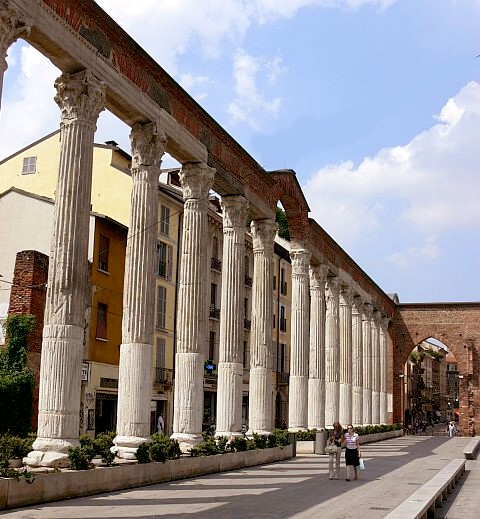
The Colonne di San Lorenzo consist of sixteen Corinthian columns, each over 7 meters tall, crafted from white marble and originally dating back to the late 1st or early 2nd century CE (Wikipedia). Archaeological research suggests that these columns were part of a significant Roman civic building, possibly a temple or a bath complex, as remains of both have been found nearby (YesMilano).
In the 4th century CE, as Christianity became firmly established in Milan, the columns were relocated to stand in front of the newly constructed Basilica di San Lorenzo Maggiore. This practice of spolia—reusing architectural elements from earlier structures—symbolized the city’s transition from its pagan Roman past to its Christian future (YesMilano).
Architectural Significance
The Colonne di San Lorenzo are among the rare surviving examples of monumental Roman architecture in Milan, where most ancient structures have been lost to time and urban transformation (Wikipedia). The columns’ fluted shafts and ornate Corinthian capitals, topped by remnants of the original architrave, hint at the grandeur of the original Roman structure. Their integration into the church forecourt reflects a unique architectural dialogue between pagan antiquity and Christian innovation, making the site a tangible narrative of Milan’s evolving identity (YesMilano).
Urban Evolution and Preservation
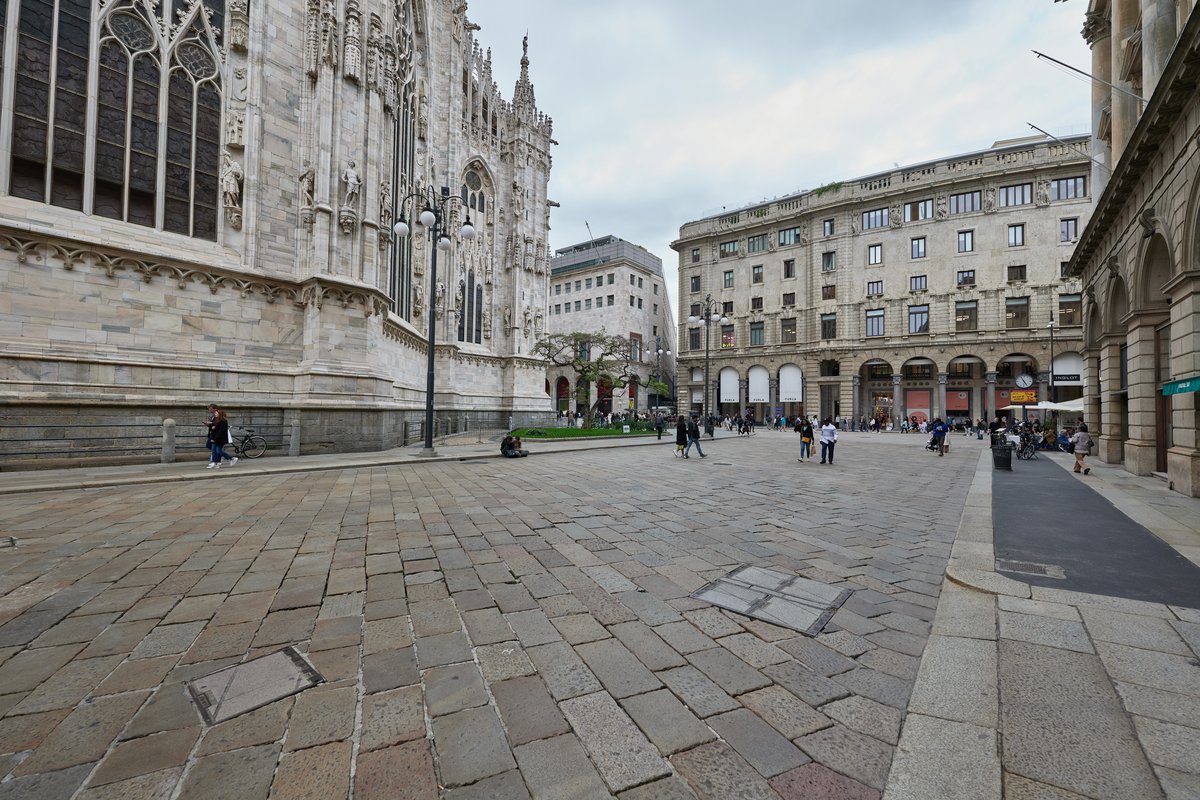
Over centuries, the area surrounding the columns saw significant changes. In the Middle Ages and Renaissance, the site remained a prominent city landmark. By the 20th century, dense housing obscured the monument. In 1935, a major urban renewal cleared these buildings to create the open piazza seen today, enhancing the visibility of both the columns and the basilica (Wikipedia). World War II bombings further transformed the area, leading to the creation of Parco Papa Giovanni Paolo II (Basilicas Park) behind the church.
Efforts to preserve the monument continue, including cleaning, structural consolidation, and restoration of both the columns and the adjoining basilica (Urbanfile).
Integration with Basilica di San Lorenzo Maggiore
Standing directly behind the columns, the Basilica di San Lorenzo Maggiore is one of Milan's oldest and most architecturally intriguing churches (Urbanfile). With origins tracing back to the late Roman Empire (circa 390–410 CE), the basilica showcases a rare tetraconch plan—a central space with four apses—reflecting late antique experimentation. Over centuries, it has been rebuilt and restored in various styles, from Romanesque to Renaissance, with a monumental dome and four bell towers that define its skyline.
Inside, the basilica houses artistic gems such as the Cappella di Sant’Aquilino’s ancient mosaics and the relics of Saints Gervasius, Protasus, and Aquilino. The reuse of Roman materials, including the columns and spolia from the amphitheatre, further illustrates the seamless blend of ancient and Christian traditions (Urbanfile).
Cultural and Social Role
The Colonne di San Lorenzo are not only a historical monument but also a living symbol of Milanese identity (In-Lombardia). The phrase "Vediamoci alle colonne" ("Let’s meet at the columns") encapsulates their role as a popular gathering place for both locals and visitors. The piazza is especially vibrant in the evenings, with people enjoying aperitivo, open-air concerts, and cultural events (Barceló Guide; The Trainline). The area also frequently hosts street performances, art installations, and festivals, emphasizing its importance as a community hub.
Visitor Information
Visiting Hours and Tickets
- Columns and Piazza: Open 24 hours a day, 7 days a week, with free access (The Frugal Tourist).
- Basilica di San Lorenzo Maggiore: Open daily, generally from 9:00 AM to 6:00 PM. Entry is free, but donations are encouraged (YesMilano). Confirm current hours on the official website.
How to Get There
- By Metro: Nearest stations are Missori (M3, Yellow Line, approx. 7 min walk), Sant’Ambrogio (M2, Green Line), and Porta Genova (M2).
- By Tram: Lines 2, 3, and 14 stop at Corso di Porta Ticinese, a short walk from the columns.
- On Foot: About 15 minutes from the Duomo or a pleasant walk from the Navigli district (milantips.com).
- From Airports: Direct connections via metro and bus from Milano Centrale, Malpensa, and Linate.
Accessibility
The piazza is flat and paved, generally accessible for visitors with limited mobility, though some ancient stones are uneven. The basilica is accessible via ramps, but areas like the crypt may have restricted access (mediolan.pl). Check with the basilica for specific needs.
Best Times to Visit
- Early Morning: Enjoy a peaceful atmosphere and optimal photography conditions.
- Late Afternoon/Evening: Experience the lively social scene, illuminated columns, and Milanese aperitivo culture.
- Weekends/Summer Nights: Expect crowds and street performances; a true taste of local life (mediolan.pl).
Facilities and Practical Tips
- Restrooms: Available in nearby cafes and bars.
- Seating: Informal seating around the columns and piazza walls.
- Food and Drink: Abundant cafes, gelaterias, and bars offering Milan’s traditional aperitivo (Barceló Guide).
- Shops: Souvenirs, snacks, and drinks available nearby.
- Wi-Fi: Many local establishments offer free Wi-Fi.
Events and Guided Tours
- Street Performances: Regular music, dance, and art events.
- Cultural Events: Open-air concerts, art installations, and fashion shows in the piazza and adjacent Basilicas Park (In-Lombardia).
- Guided Tours: Numerous walking tours of Milan include the Colonne di San Lorenzo, providing rich historical context (The Frugal Tourist).
Nearby Attractions
- Basilica di San Lorenzo Maggiore: Directly behind the columns, featuring mosaics and relics (mediolan.pl).
- Porta Ticinese: Medieval city gate at the end of the columns.
- Navigli District: Famed for canals, nightlife, and antique markets.
- Basilica di Sant’Ambrogio: Another of Milan’s oldest churches, a short walk away.
Frequently Asked Questions (FAQ)
Q: Is there an entry fee for the Colonne di San Lorenzo?
A: No, the site is free and accessible 24/7.
Q: What are the Colonne di San Lorenzo visiting hours?
A: The columns can be visited at any hour, day or night.
Q: Are guided tours available?
A: Yes, many Milan walking tours include the site (The Trainline).
Q: Is the area accessible for disabled visitors?
A: The square is paved and generally accessible, but some uneven surfaces may require caution.
Q: Where can I find restrooms or food?
A: Nearby cafes, bars, and restaurants provide facilities and refreshments.
Q: What is the best time to visit?
A: Late afternoon to evening for ambiance; early morning for quiet and photography.
Preservation, Etiquette, and Responsible Tourism
- Respect the Monument: Climbing or sitting on the columns is prohibited; help ensure their preservation.
- Litter: Use provided bins to keep the area clean.
- Noise: Maintain reasonable noise levels, especially at night.
- Support Restoration: Consider making a donation at the basilica to support ongoing preservation efforts (Urbanfile).
Listen to the full story in the app
Your Personal Curator, in Your Pocket.
Audio guides for 1,100+ cities across 96 countries. History, stories, and local insight — offline ready.
Audiala App
Available on iOS & Android
Join 50k+ Curators
Sources
- verified
- verified
- verified
- verified
- verified
- verified
- verified
- verified
Last reviewed: