Introduction
Nestled in Milan’s historic Sant’Ambrogio district, Castello Cova stands as a remarkable example of early 20th-century Neo-Gothic architecture and Italy’s medieval revival movement. Designed by Adolfo Coppedè and completed in 1915, this castle-inspired building is celebrated for its striking silhouette, richly detailed façades, and its role in Milan’s architectural evolution. Although it is not a medieval fortress, Castello Cova’s crenellated towers, decorative gargoyles, and ornate stonework evoke the romance of Italy’s feudal past while symbolizing the city’s vibrant blend of tradition and modernity.
Situated among some of Milan’s foremost historical landmarks—including the Basilica di Sant’Ambrogio, the Museo Nazionale della Scienza e della Tecnologia “Leonardo da Vinci,” and the UNESCO-listed Santa Maria delle Grazie—Castello Cova is a must-see for architecture enthusiasts and cultural travelers alike. This guide provides a comprehensive overview of Castello Cova’s history, design features, visiting information, accessibility, nearby attractions, and practical travel tips, equipping you for a memorable exploration of Milan’s layered heritage (trek.zone; Milanodavedere; Spotting History).
Historical Background
Early 20th-Century Milan: The Genesis of Castello Cova
At the dawn of the 20th century, Milan was undergoing rapid urban and cultural transformation. The city, eager to reconcile its medieval roots with the aspirations of a modern European metropolis, saw the emergence of eclectic architecture that paid homage to its storied past. Within this context, Castello Cova was conceived as a symbol of both nostalgia and innovation, blending medieval motifs with contemporary construction (trek.zone).
The Architect: Adolfo Coppedè
Adolfo Coppedè, a renowned Italian architect, was a leading figure in the medieval revival movement. His imaginative and theatrical architectural vocabulary drew on Gothic, Romanesque, and Renaissance influences, resulting in buildings that were as functional as they were fantastical. Castello Cova is a prime example of Coppedè’s approach—melding historical references with early 20th-century style (Milanodavedere).
Architectural Features & Symbolism
Castello Cova’s design is distinguished by its robust battlements, soaring tower with Guelph-style merlons, and richly ornamented stonework. Decorative elements such as gargoyle-like water spouts (doccioni), arched windows, and intricate reliefs impart a sense of drama and historical continuity. The warm red-brick façade, combined with terracotta details, enhances its medieval character and stands in vivid contrast with the surrounding modern buildings. These features collectively symbolize strength, prestige, and Milan’s enduring heritage (Milanodavedere).
Historical Function & Social Significance
Originally envisioned as a residence for Milanese aristocracy, Castello Cova was designed with grand halls and lavish interiors to reflect the social standing of its occupants. Over time, the building adapted to new uses, including serving as an event venue and, more recently, as part of the Università Cattolica del Sacro Cuore. Its continuing evolution attests to Milan’s ability to integrate historical architecture into contemporary urban life (trek.zone).
Castello Cova in Milanese Heritage
Despite its relatively recent construction, Castello Cova has become an integral part of the city's architectural and cultural landscape. It exemplifies early 20th-century trends of marrying tradition with innovation and remains a beloved Milanese landmark (Milanodavedere).
Visiting Castello Cova
Visiting Hours & Tickets
Castello Cova is a functioning residential and business property and does not have regular public visiting hours. The building’s exterior, however, can be admired from the street at any time, with daylight hours best for viewing and photography. There is no ticket required for exterior access, and public entry to the interior is limited to occasional special events or cultural exhibitions announced through official tourism channels (Spotting History; YesMilano).
Accessibility
- Location: Via Giosuè Carducci, 36, 20123 Milano MI, Italy
- Public Transport: Sant’Ambrogio metro station (M2, Green Line) is less than a five-minute walk away. Trams and buses also serve the area (ATM Milano).
- Pedestrian Access: The area is flat, with wide sidewalks and pedestrian-friendly streets.
- Mobility Needs: The exterior and neighborhood are accessible for visitors with wheelchairs or strollers.
Travel Tips
- Best Viewing Time: Early morning or late afternoon offers optimal light for photography.
- Nearby Amenities: Numerous cafés, bakeries, and restaurants are in the vicinity. Public toilets can be found in major museums, department stores, or local cafés (with purchase).
- Safety: Central Milan is generally safe; be mindful of pickpockets in crowded areas.
Special Events
Occasionally, Castello Cova’s interior is accessible during cultural exhibitions, guided tours, or university events. Check YesMilano, Università Cattolica del Sacro Cuore, or local event listings for updates.
Relationship to Surrounding Landmarks
Castello Cova’s location places it within walking distance of some of Milan’s most significant historical and cultural sites:
- Basilica di Sant’Ambrogio (~100 m): One of Milan’s oldest churches, renowned for Romanesque architecture.
- Museo Nazionale della Scienza e della Tecnologia “Leonardo da Vinci” (~400 m): Italy’s largest science museum.
- Santa Maria delle Grazie (~800 m): UNESCO site, home to Leonardo da Vinci’s The Last Supper.
- Pusterla di Sant’Ambrogio: Medieval city gate facing Castello Cova.
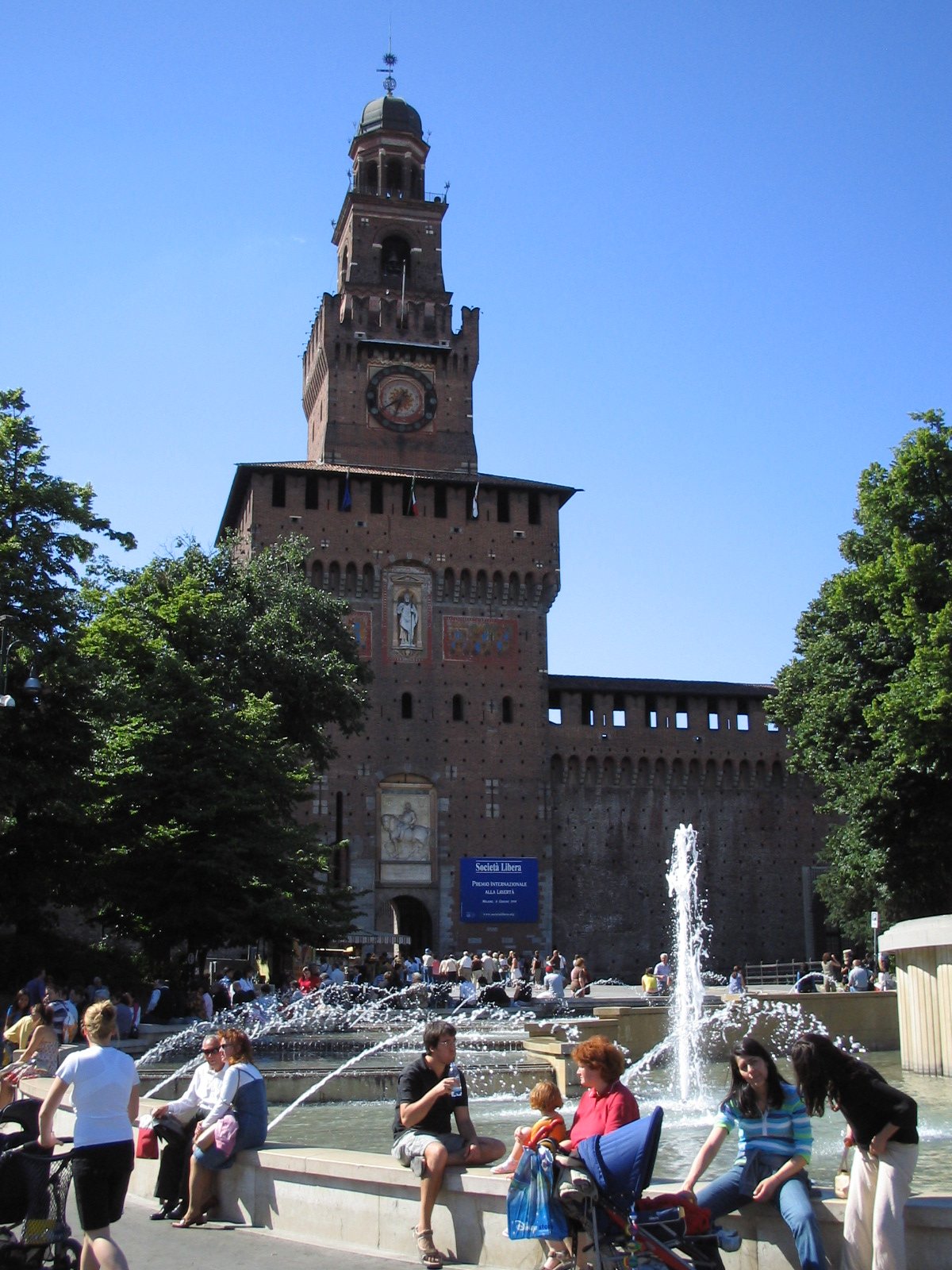
- Castello Sforzesco (~1.2 km): 15th-century fortress and museum complex.
- Parco Sempione: Milan’s largest central park, adjacent to Castello Sforzesco.
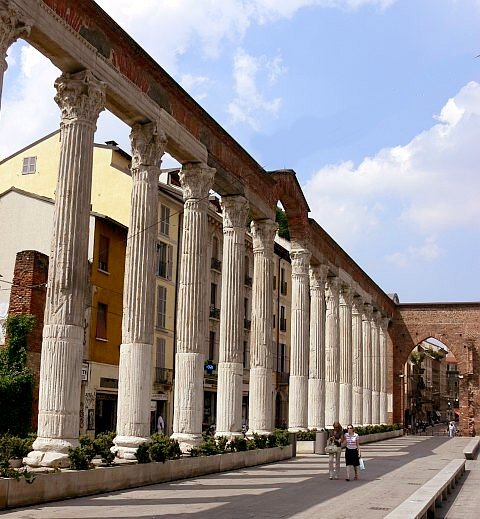
- Colonne di San Lorenzo & Duomo di Milano: Other major sites within a 15–20 minute walk (trek.zone).
Preservation & Contemporary Relevance
Castello Cova exemplifies Milan’s commitment to preserving its architectural heritage while adapting historic structures for modern use. Its ongoing role as a residential, academic, and event space keeps the building relevant in the city’s cultural life, illustrating the integration of history into urban development.
Frequently Asked Questions (FAQ)
Can I enter Castello Cova?
No, the building is not open to the public except during specific events.
What are the visiting hours for Castello Cova?
The exterior can be viewed at any time; there are no official opening hours for interior visits.
Are tickets required to visit Castello Cova?
No tickets are needed for exterior viewing.
Is Castello Cova accessible by public transport?
Yes, the Sant’Ambrogio metro station (M2) is nearby, and trams/buses serve the area.
Are there guided tours?
Some architectural walking tours include Castello Cova as a highlight. Check with local operators or YesMilano.
Where are the nearest public toilets?
Major museums, department stores, and local cafés (with purchase) offer restroom facilities.
Is the area safe?
Yes, central Milan is generally safe, especially in daylight hours.
Listen to the full story in the app
Your Personal Curator, in Your Pocket.
Audio guides for 1,100+ cities across 96 countries. History, stories, and local insight — offline ready.
Audiala App
Available on iOS & Android
Join 50k+ Curators
Sources
- verified
- verified
- verified
- verified
- verified
- verified
Last reviewed: