
AA city that keeps getting flattened still rings its bells at noon. Messina, in Messina, Italy, sits on the Strait like a lookout post with ferry wakes instead of castle moats, and you come here to feel how a port can survive conquest, plague, earthquake, fire, and still keep faith with the sea. The harbor curves in a sickle shape first named by Greek settlers in the 8th century BCE, and the old center still pulls you toward Piazza del Duomo, where marble, clockwork, and catastrophe share the same square.
Messina rewards visitors who like cities with scars that show. Walk from the waterfront up to the cathedral and you move through a place rebuilt after the 28 December 1908 earthquake, then scorched again on 13 June 1943, yet still stubbornly arranged around the same civic heart.
The sound matters here. Ferry horns drift across the Strait, the astronomical clock clatters and turns above the campanile, and inside the Duomo the air carries that cold-stone hush older churches do so well, even though much of what you see is 20th-century reconstruction wearing a Norman memory.
Come for the crossing point between Sicily and the mainland, but stay for the argument Messina makes with history. Few cities show so clearly that survival is its own kind of beauty.
01 What to See
Piazza Duomo and the Cathedral

Santissima Annunziata dei Catalani
Clock Tower, Treasury, and a Slow Circle of the Square
02 Explore Messina in Pictures
 Madonna della Lettera and Messina Harbor in Italy
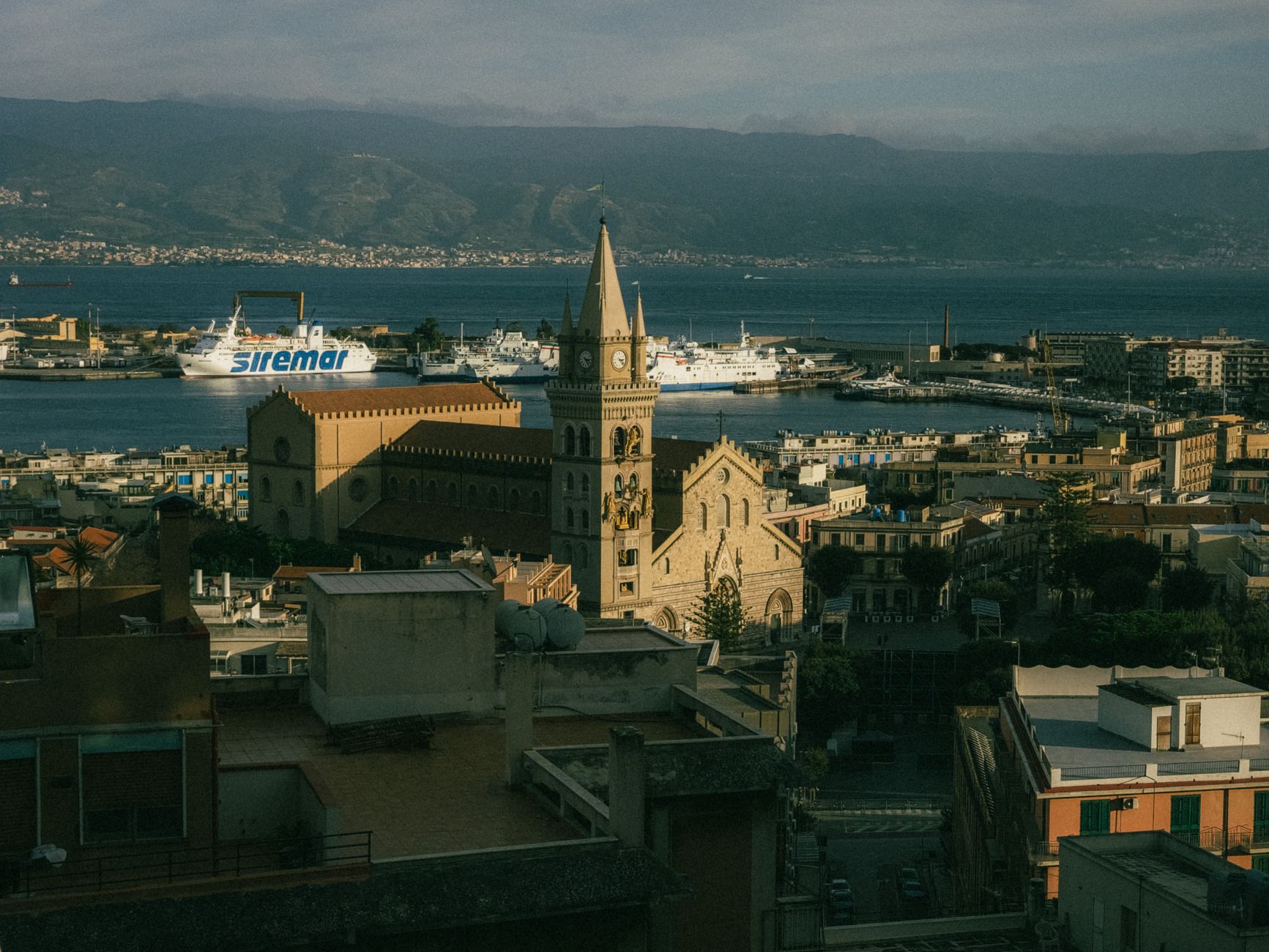 Messina Italy Harbor View with Cathedral and Strait Coastline
 Messina Cathedral and Bell Tower Clock in Messina, Italy
 Messina, Italy harbor with Madonna della Lettera monument and ferry
 Historic domed church and hillside cityscape in Messina, Italy
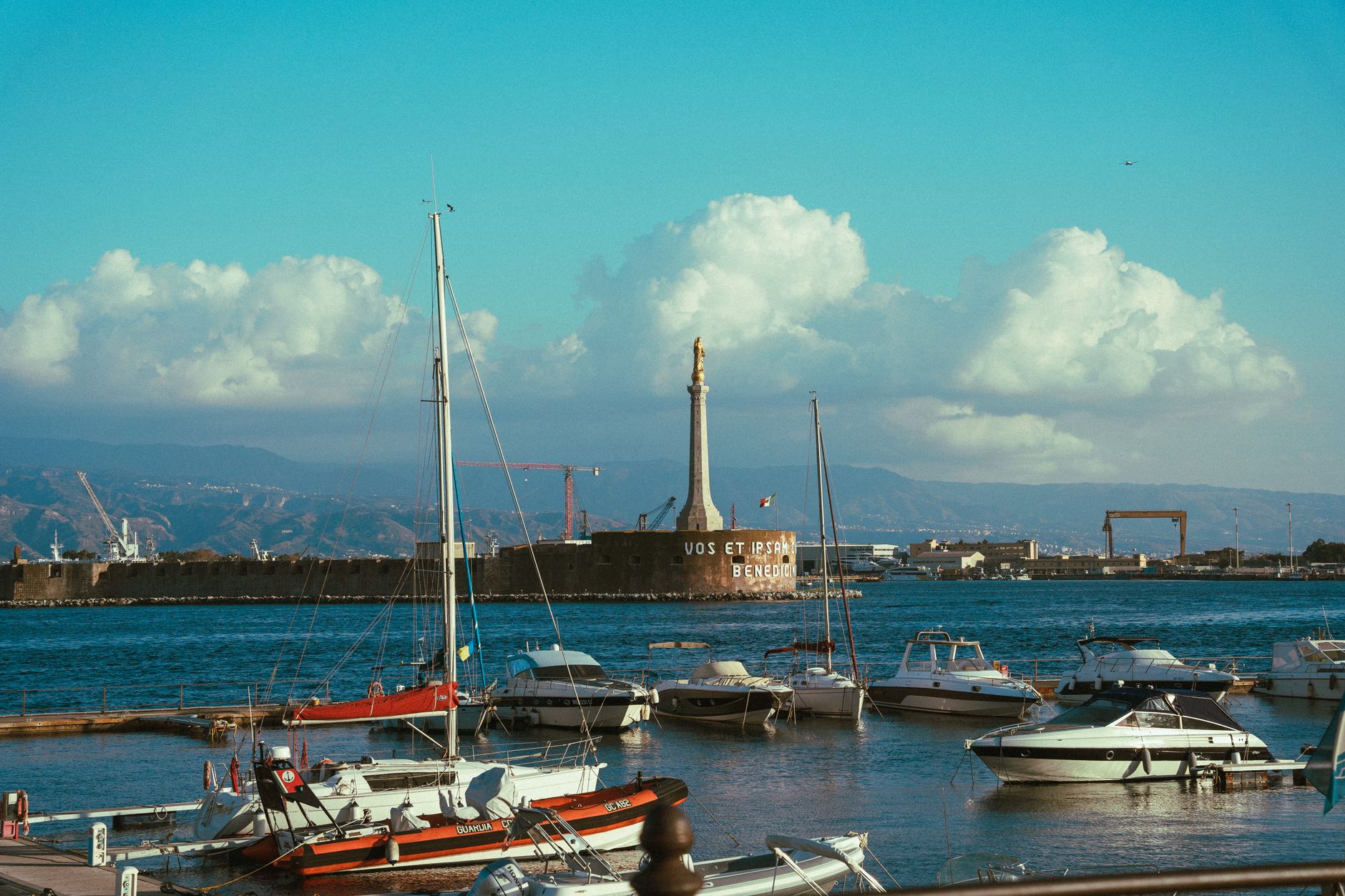 Messina Italy Harbor and Madonna della Lettera Monument
 Messina Italy Harbor Ferry and Hillside Cityscape
Plan and listen to Messina with Audiala
Audio guide in your pocket, itinerary in your browser. Built for the way you actually visit.
03 Visitor Logistics
Getting There
Opening Hours
Time Needed
Accessibility
Cost & Tickets
05 Tips for Visitors
Aim For Noon
Museum Bag Rules
Photos Need Restraint
Eat Near Duomo
Use Free Sundays
Watch The Center Late
04 History
The City That Kept the Crossing
Records and archaeology point to Messina's enduring role as a threshold city from the 8th century BCE onward: first Zancle, named for a harbor shaped like a sickle, then Messana under Anaxilas in the early 5th century BCE. Empires changed, rulers changed, even street plans changed after disaster, but the function stayed almost absurdly constant: ships arrived here, armies fought over here, and Sicily kept meeting the wider Mediterranean here.
That continuity becomes visible in Piazza del Duomo. The cathedral begun under Roger II between 1130 and 1154, consecrated on 22 September 1197, was rebuilt after the 1783 earthquake, rebuilt again after 28 December 1908, and reopened after the 1943 bombing fire; yet worship resumed, bells returned, and the square kept acting as the city's memory chamber.
Angelo Paino and the Decision to Remember
Archbishop Angelo Paino inherited more than a ruined church after the 1908 earthquake at 05:20 local time. What stood at stake for him personally was whether Messina's spiritual center would come back as a living cathedral or remain a wound in the middle of the city, a choice that also carried his own reputation as the man who either restored continuity or admitted defeat.
Documented municipal and scholarly sources credit Paino with launching the cathedral's reconstruction in 1923, with engineer Aristide Giannelli handling structure and Francesco Valenti shaping the artistic program. The turning point came when the project chose not a fashionable new style but a deliberate recovery of the Norman profile, effectively telling citizens that Messina had not become a different city just because the ground had broken beneath it.
Then fire struck again on 13 June 1943 during Allied bombing, and the building had to be restored once more before reopening in August 1947. Paino's real achievement was not a single construction campaign. It was continuity under repeated erasure.
What Changed
What Endured
Listen to the full story in the app
06 Frequently Asked
Is Messina worth visiting? add
Yes, especially if you like cities that show their scars instead of hiding them. Messina's appeal sits in Piazza Duomo, where a rebuilt Norman-rooted cathedral faces one of the world's largest astronomical clocks, and in the fact that the city had to remake itself after the 28 December 1908 earthquake and the 13 June 1943 firebombing. Give it half a day and the place shifts from ferry stop to something tougher and more interesting.
How long do you need in Messina? add
Most visitors need 2 to 4 hours for the city center, and a half day if they add the regional museum. About 60 to 90 minutes covers the cathedral, Orion Fountain, and the noon clock show, while 2 to 3 hours lets you add the tower climb and treasury museum. MuMe can easily take another 90 to 120 minutes, especially if Caravaggio and Antonello da Messina matter to you.
What is the best time to visit Messina? add
Late morning is the best time to visit Messina if you want the city's signature spectacle. Be in Piazza Duomo by about 11:45 so you can catch the astronomical clock at 12:00, when the bronze figures move for roughly 12 minutes and the whole square tilts its head upward at once. Spring and early autumn also make the walking easier, and early June brings the Madonna della Lettera feast if you want the city at its most ceremonial.
Can you visit Messina for free? add
Yes, you can see a good part of Messina for free. Entry to the cathedral is generally free, and Piazza Duomo, the Orion Fountain, and the waterfront walks cost nothing, though the clock tower and cathedral treasury are ticketed. MuMe also opens free on the first Sunday of each month, which is useful if you want the city's art without the €10 full ticket.
What should I not miss in Messina? add
Don't miss Piazza Duomo at noon, then step inside the cathedral and look for the left apse mosaic. That mosaic is the quiet witness in the room, the one major original survivor among layers rebuilt after earthquake and war, and it changes how the whole church reads. Also make time for the tower interior if stairs are fine with you; watching the gears and counterweights from inside beats standing in the square guessing how the spectacle works.
Can you walk around Messina from the cruise port? add
Yes, the central sights are close enough to reach on foot from the cruise area. Recent port guides put Piazza Duomo about 5 to 10 minutes away on a mostly flat route, which makes Messina one of the easier Sicilian port stops for an independent short visit. That short walk is the city's sly advantage.
-
verified
VisitME Messina - Il Duomo Basilica Cattedrale
Official municipal history of Messina Cathedral, including the 1197 consecration, the 1908 destruction, the 1943 fire, and the surviving left apse mosaic.
-
verified
MessinArte - Campanile del Duomo di Messina
Official details on the astronomical clock, the noon performance, tower visit, interior machinery, and belvedere experience.
-
verified
MessinArte - Opening Hours
Official month-by-month opening hours for the clock tower and cathedral treasury, used for current visit-planning context.
-
verified
Museo Regionale Accascina - Tariffe e Informazioni
Official museum hours, ticket prices, and free-entry policy for MuMe, including the first Sunday free admission.
-
verified
Britannica - Messina
Historical overview of Messina, used for the city's long timeline and role beyond the cathedral.
-
verified
Britannica - Italy: Famine, War, and Plague, 1340-80
Background for Messina's place in the arrival of plague in October 1347.
-
verified
INGV - The Earthquake and Tsunami of 28 December 1908
Scientific reference for the 28 December 1908 earthquake and tsunami that devastated Messina.
-
verified
Adventour Begins - Messina Cruise Port Guide
Recent practical guide used for the walking time and flat route from the cruise port to Piazza Duomo.
Last reviewed:


