

Place
Italy Updated Oct 2026
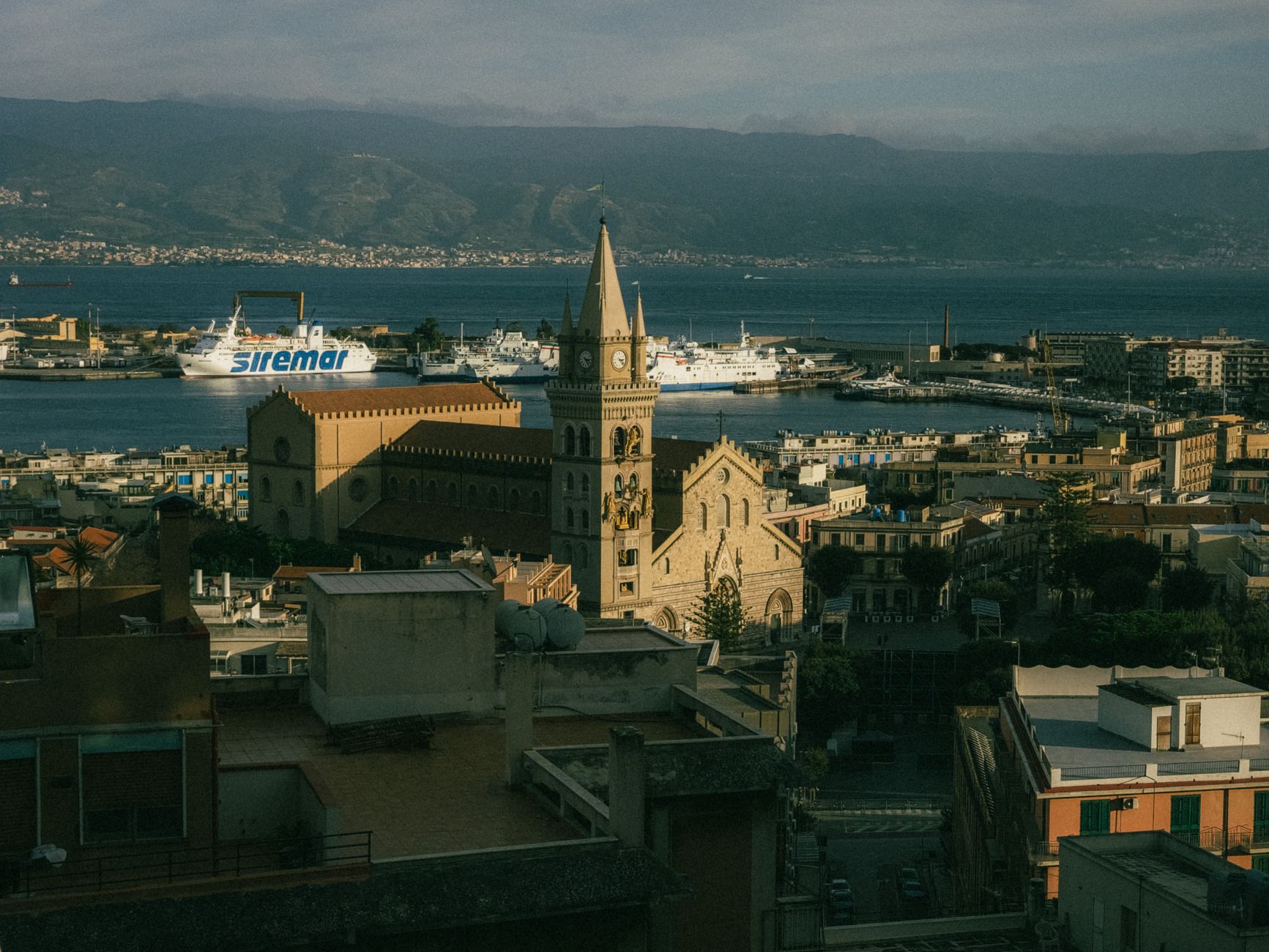
At noon in Messina, Italy, bronze figures animate the cathedral’s 60-meter bell tower. A lion waves its flag; a rooster crows. For 12 minutes, the piazza becomes a mechanical theater above the Strait, with ferry horns carrying in from Calabria.
 Photo: Vikki / Pexels
Built from cited sources · see the method · How we make our guides →
Messina has had to rebuild itself more than once: the 1908 earthquake and World War II bombings remade its center. Rebuilt cathedral stone sits near the sunken, 12th-century Church of the Santissima Annunziata dei Catalani, its lower position a trace of rubble from earlier disasters.
Daily life has a salt-and-coffee rhythm. Order a mezza con panna—coffee granita under whipped cream—with warm brioche, then try focaccia Messinese topped with curly endive, soft cheese, anchovy, and tomato; swordfish alla ghiotta gives the strait a place at the table.
Mid-August belongs to the street processions. First come the 8-meter giants Mata and Grifone; on August 15, thousands haul the 13.5-meter, eight-ton Vara through town, a reminder that faith here is carried shoulder to shoulder. The ferry is no escape hatch from Messina; it is part of its front door.
Not every monument, just the ones we'd walk you past ourselves.


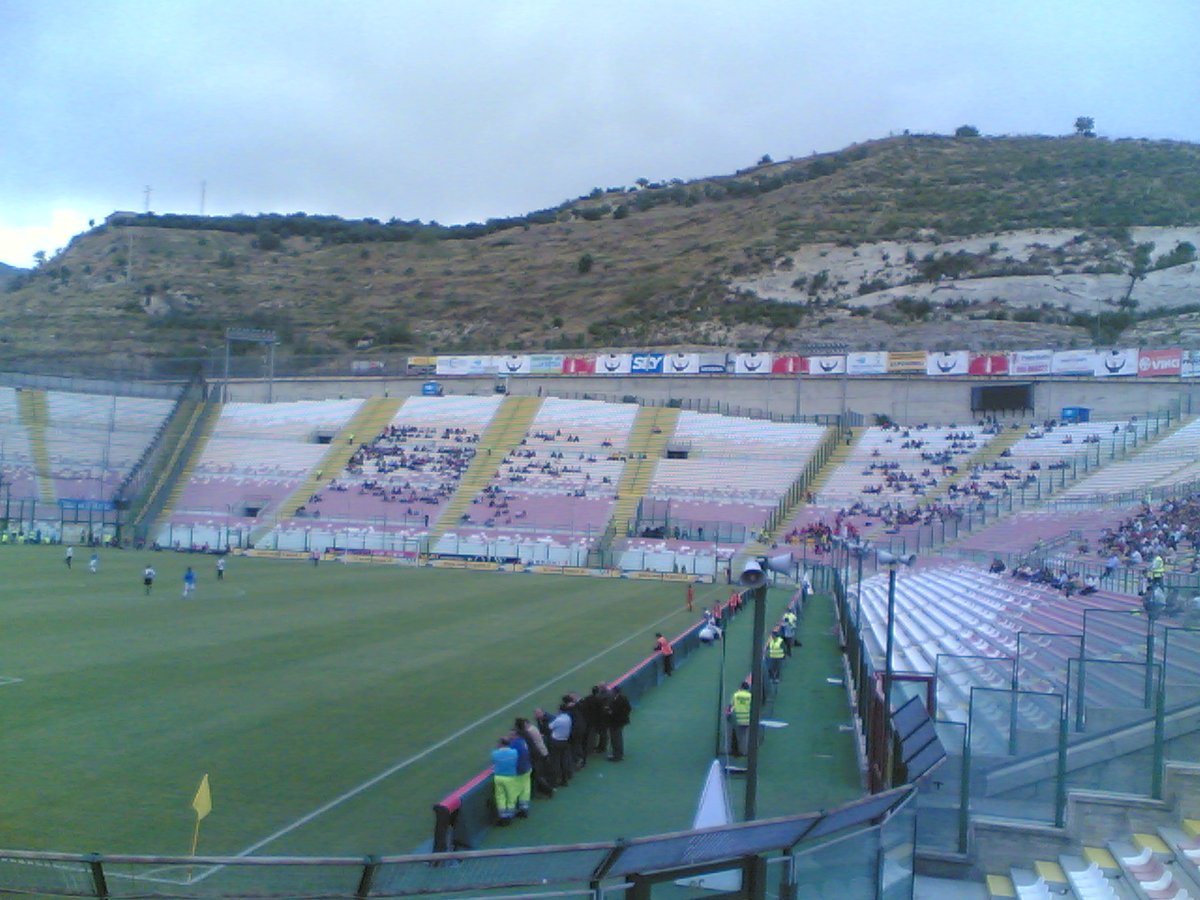


Where to wander, by quarter — each with its own rhythm.
Before you go
Curated from places in this city. Same price as official sites.
Prices shown are indicative — final pricing and availability are confirmed at checkout. Audiala may receive a commission from bookings made via these links.
From Greek harbor to a city repeatedly remade by war and disaster
Archaeological traces point to human settlement around the Strait of Messina by the fifth millennium BCE. The sheltered curve of the harbor would later make this narrow passage between Sicily and the mainland a natural place to trade and anchor.
Greek settlers from Chalcis and Cumae established a colony they called Zancle, a name linked to the Sicel word for “sickle.” The harbor’s curved spit gave the settlement its name and its strategic value.
Anaxilas, tyrant of Rhegium across the strait, seized Zancle with the help of refugees from Samos and Miletus. He resettled it with people from Messenia and called it Messene, binding the city’s name to a new population.
During the Sicilian wars, Carthaginian general Himilco captured and destroyed Messana. Syracuse rebuilt and fortified the city under Dionysius I; its position at the strait was too useful to leave in ruins.
Campanian mercenaries known as the Mamertines entered Messana under false pretenses, killed its male citizens, and took their property. They made the city their base, turning a Greek colony into a heavily armed mercenary stronghold.
Pressed by Syracuse, the Mamertines appealed to both Rome and Carthage for help. Rome’s intervention at Messana helped ignite the First Punic War; after Rome’s victory in 241 BCE, the city became a privileged allied port.
Arab forces captured Messina and brought it into the Islamic-ruled emirate of Sicily. The conquest followed centuries of Byzantine rule and placed the harbor within new Mediterranean networks of power and trade.
Robert Guiscard and his brother Roger I crossed from Calabria and took Messina in May. The city became their bridgehead for the conquest of Sicily, its harbor the doorway through which Norman rule entered the island.
Roger II founded the Kingdom of Sicily in 1130, and Messina rose as one of its leading ports alongside Palermo. The city’s cathedral, begun under Norman rule, was consecrated in 1197; its long history of rebuilding began with a church that announced the new kingdom’s wealth and authority.
The Sicilian Vespers revolt against Angevin rule reached Messina, where the city resisted the forces of Charles I of Anjou during a prolonged siege. Messina held out until Peter III of Aragon’s intervention helped turn the revolt into a change of rulers.
Civic tradition remembers Dina and Clarenza as women who helped defend Messina during the Angevin siege: one hurled stones from the walls, while the other rang an alarm bell. Their bronze figures still appear in the Cathedral’s clock, where the city’s mechanical theater gives local memory a daily performance.
After the Compromise of Caspe, Sicily was attached directly to the Crown of Aragon. Messina’s fortunes remained tied to rulers across the water, even as its harbor continued to serve as a major gateway between Sicily and the mainland.
Born in Messina around 1430, Antonello da Messina became one of the city’s defining artists, joining Italian perspective to the close observation associated with northern European painting. He maintained a workshop here and returned near the end of his life; his will was drawn up in Messina in 1479.
Born in Messina, Francesco Maurolico became a mathematician, astronomer, and humanist whose work ranged from optics to ancient geometry. He later taught at the city’s university and supplied the inscriptions and intellectual program for the Orion Fountain in Piazza del Duomo.
Ignatius of Loyola founded the first Jesuit college in Messina, setting out a teaching model that the order would adapt elsewhere. In a port city accustomed to arrivals and departures, the school made learning another of Messina’s durable exports.
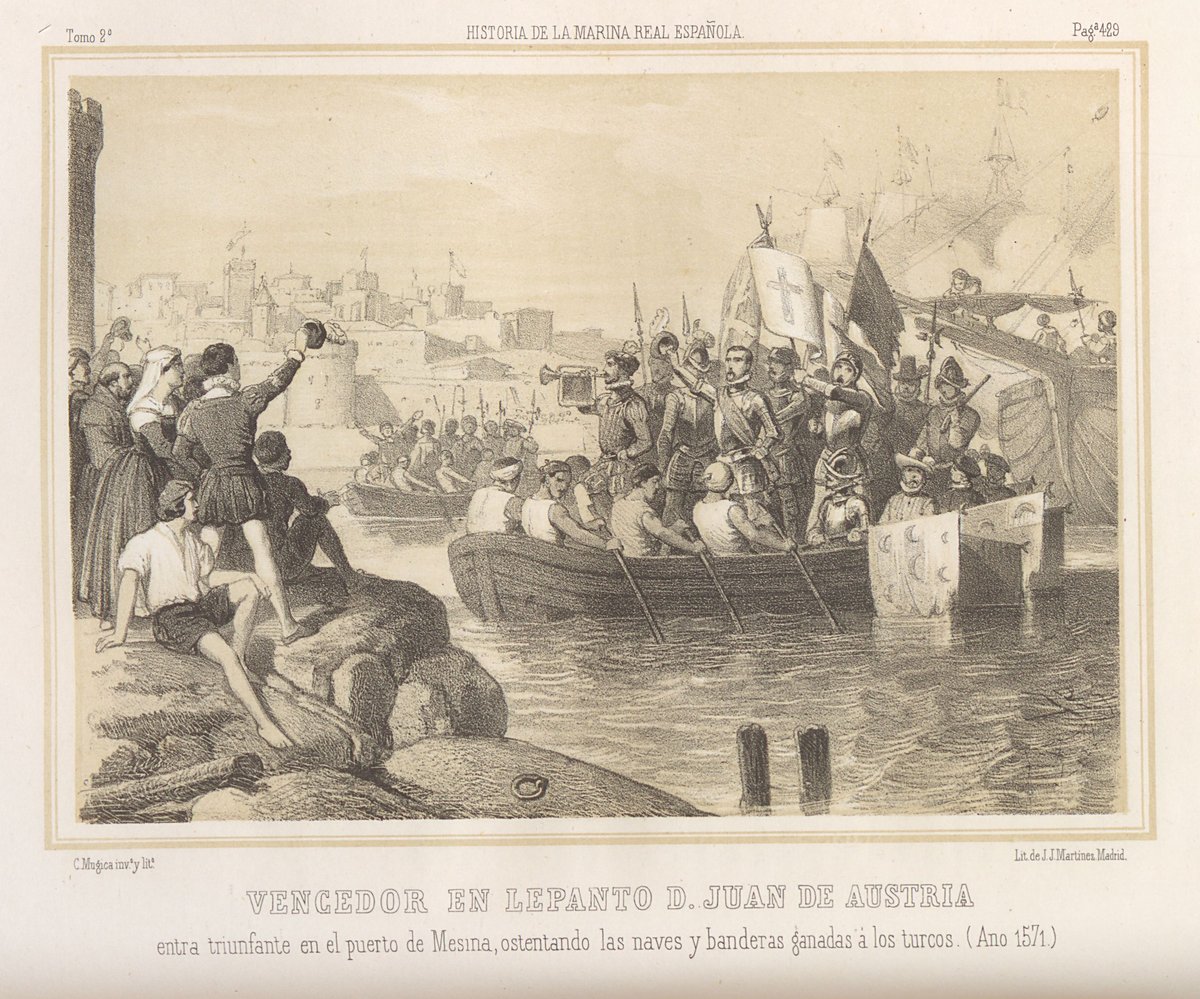
The Holy League gathered its fleet in Messina’s harbor before sailing to fight the Ottoman fleet at Lepanto. The port briefly became the staging ground for one of the era’s largest naval encounters.
Wounded at Lepanto, Miguel de Cervantes returned with the fleet and spent months recovering in Messina. The future author of Don Quixote encountered the city not as a visitor, but from a hospital bed after the battle had cost him the use of his left hand.
Fleeing imprisonment in Malta, Caravaggio reached Messina in 1608 and found patrons among the city’s religious institutions. He painted The Resurrection of Lazarus and The Adoration of the Shepherds here, works in which darkness seems to press right up against the figures.
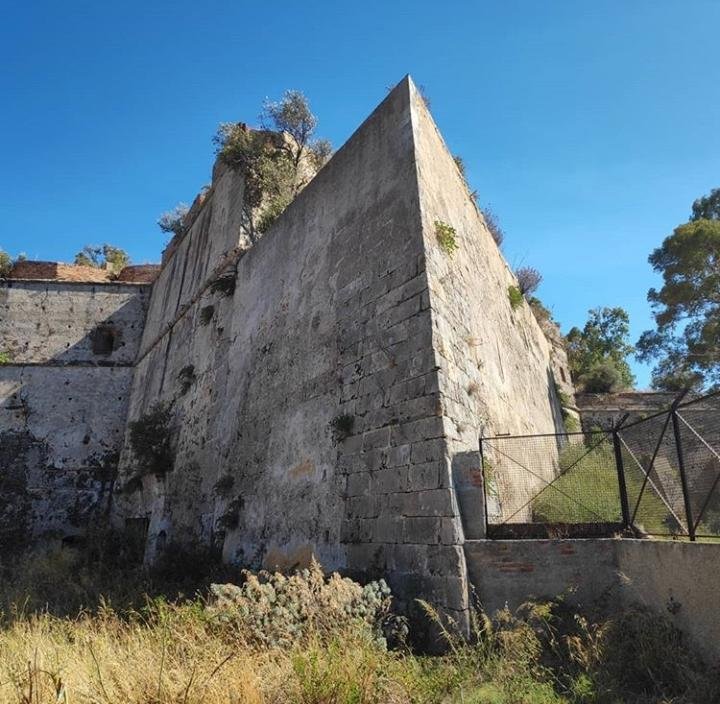
A revolt against Spanish rule began in 1674 amid local factional conflict and restrictions on trade; Messina sought French protection. When French troops withdrew in 1678, Spanish forces retook the city, abolished its Senate, stripped away privileges, and built the Real Cittadella to keep it under watch.
Bubonic plague struck Messina, bringing death into homes and streets already crowded around the harbor. Some accounts claim more than 40,000 people died, though that toll is uncertain; the epidemic left a deep mark on the city’s memory.
A series of earthquakes in February damaged Messina and collapsed hundreds of buildings. The harborfront Palazzata, the monumental line of buildings that had framed the water, was badly damaged—a reminder that the city’s most public face stood on unstable ground.
During the Sicilian revolution, Messina rose against Bourbon rule, and deputy Giuseppe Natoli moved to restore the city’s free-port status. In September, Ferdinand II’s forces shelled the city from the Real Cittadella for days, earning the king the bitter nickname “Re Bomba.”
After the Battle of Milazzo, Giuseppe Garibaldi’s forces entered Messina in July. The city joined the emerging Kingdom of Italy, formally established in 1861, and left Bourbon rule behind.
At 5:20 on December 28, a magnitude 7.1 earthquake shook the Strait for roughly 37 seconds; a tsunami followed, and fires spread through the ruins. More than 90 percent of Messina was destroyed, and estimates put the city’s dead at roughly 75,000—a catastrophe that changed the scale and shape of the place.
Engineer Luigi Borzì’s reconstruction plan took shape with broad avenues, low-rise buildings, and new anti-seismic rules. The rebuilt city was designed to give rescuers room to move and buildings more chance of surviving the next shock.
The rebuilt Cathedral bell tower received its astronomical clock, designed by Frédéric Klinghammer and Théodore Ungerer of Strasbourg. At noon, bronze figures move through a mechanical pageant, including the lion of Messina and the remembered defenders Dina and Clarenza.
As Axis troops withdrew across the strait, Allied bombing and naval fire again devastated Messina; the Cathedral was badly damaged. Allied forces entered the city in August, leaving residents to rebuild once more, this time after a war fought above their streets.
From June 1 to 3, foreign ministers of six European Coal and Steel Community countries met at Palazzo Zanca. Their Messina Declaration helped set the course toward the 1957 Treaty of Rome, giving the battered port a role in the making of postwar Europe.
Messina became the administrative center of a newly established metropolitan city. Its harbor still carries daily passenger traffic across the Strait to Calabria, making the old Greek passage a working crossing as much as a historical one.
Painter · c. 1430–1479
Born here
Messina gave Antonello his name, and MuMe preserves a work that draws the city into the story of Renaissance painting: his Polyptych of Saint Gregory. Before its quiet figures, the rebuilt streets outside feel less like a break with the past than a way of carrying it forward.
Painter · 1571–1610
Worked here during his stay in Sicily
During his time in Messina, Caravaggio painted two monumental altarpieces now held at MuMe: The Raising of Lazarus and The Adoration of the Shepherds. Their hard light and heavy shadows seem at home in a city that knows how quickly buildings can disappear.
Sculptor and architect · 1507–1563
Created fountains here in 1553 and 1557
Montorsoli’s Fountain of Orion, completed in 1553, marked the arrival of Messina’s first municipal aqueduct; his 1557 Fountain of Neptune turns toward the Strait, with Scylla and Charybdis held below. He might recognize his old subject in every ferry wake: a city still negotiating with the water around it.
Where locals actually book dinner — not the tourist menus.
Small things that change how the city treats you.
The city, as it actually looks.
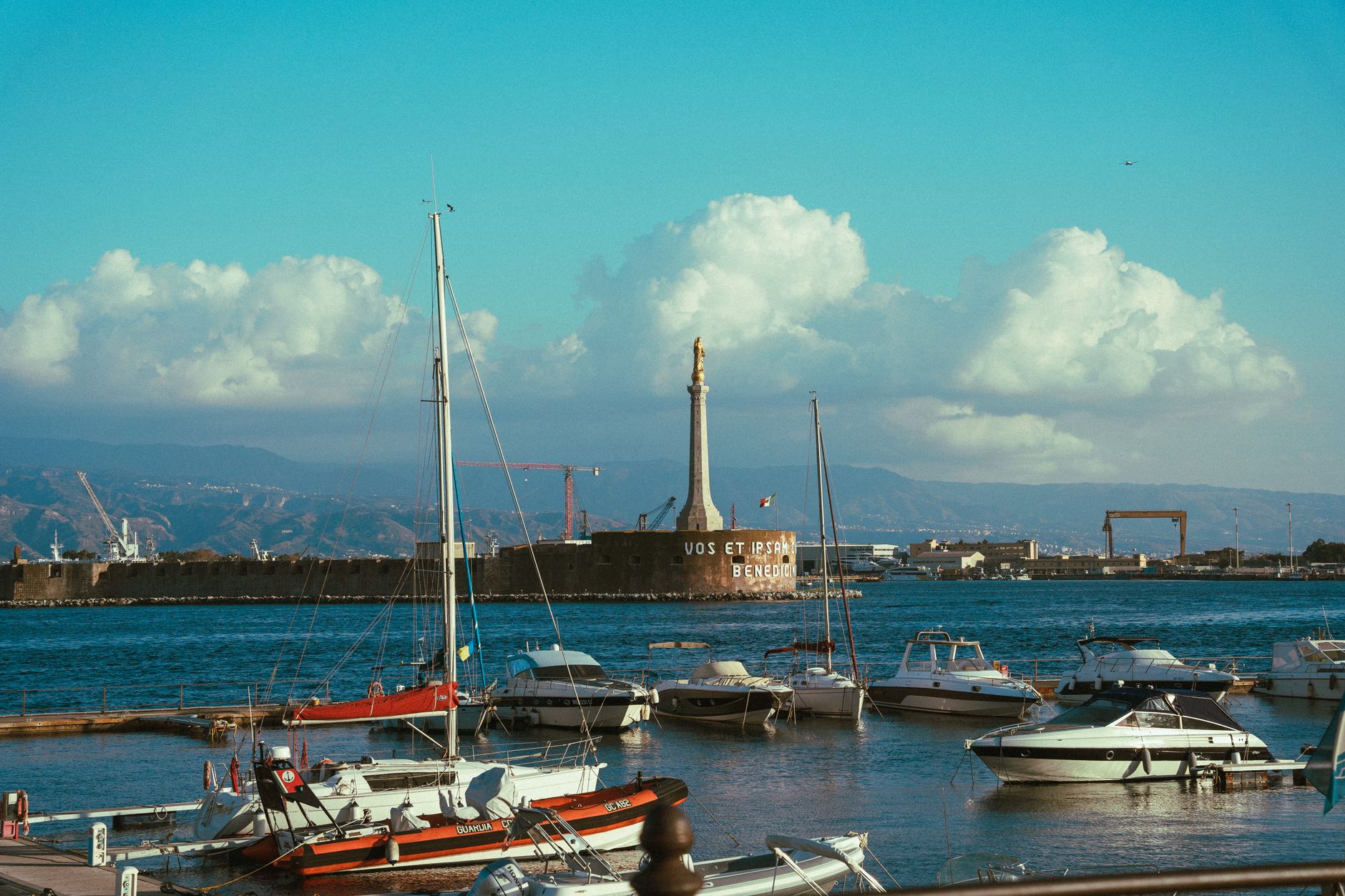


Yes, especially if you like cities whose history shows through in the details. Watch the moving figures on the cathedral clock, see Caravaggio’s paintings at MuMe, then step inside the medieval Santissima Annunziata dei Catalani.
One full day covers the cathedral square, its clock and fountains, and the compact central sights. Stay two days if you want time for MuMe and a trip to the Ganzirri lagoons or a hilltop viewpoint.
Yes. Piazza Duomo and other central sights are about 5–15 minutes on foot from the cruise terminal, depending on your destination.
Walk around the compact center, then use ATM buses and the north–south tram for longer trips. A 100-minute ticket is valid on both; the ATM MovUp app sells tickets and provides route planning and vehicle tracking.
Messina is generally considered safe for visitors, though crowded transport areas call for ordinary care. Keep bags zipped near the station, port and markets, and watch your phone in cafés.
Yes: the central sights are close enough to explore on foot, and one ATM ticket covers bus and tram for 100 minutes. Buying a ticket on board adds a €0.50 surcharge; check ATM’s current fares before you travel.
April to June and September to October are good months for walking and sightseeing, with milder temperatures than midsummer. July and August are hotter and more humid, while October to February is the wetter part of the year.
23 places to discover



Saved and recently read places — kept on this device only.
Photos may have been resized or cropped.