Plan and listen to Torre Degli Zuccaro with Audiala.
Audio guide in your pocket, itinerary in your browser. Built for the way you actually visit.
Introduction
Nestled in the UNESCO-listed historic center of Mantua, Italy, the Torre degli Zuccaro stands as a testament to the city’s layered medieval and Renaissance heritage. This slender brick tower, dating back to at least the 12th century, is both an architectural landmark and a silent witness to the shifting tides of Mantua's noble dynasties. Though interior visits are rare, the tower’s imposing exterior and strategic location near Piazza Sordello make it an essential stop for anyone curious about Mantua’s rich history, urban evolution, and cultural vibrancy.
This comprehensive guide explores the tower’s historical roots, architectural features, visiting logistics, and its place within Mantua’s remarkable constellation of historical sites. Whether you are a history enthusiast, photographer, or casual visitor, this article will help you plan and enrich your visit to the Torre degli Zuccaro.
Medieval Origins and Ownership
Originally constructed by the Da Ripalta family circa 1143, the Torre degli Zuccaro exemplifies the rise of noble power and defensive architecture in Lombard cities (Italia-Italy.org). The Bonacolsi family, Mantua’s de facto rulers in the 13th and 14th centuries, later acquired the tower, integrating it into their network of urban fortifications (Wikipedia).
Transition to Gonzaga Rule
Following the Bonacolsi’s overthrow in 1328, the burgeoning Gonzaga dynasty absorbed the tower into their estate, maintaining its prominence within Mantua’s evolving political and urban landscape (Italia-Italy.org).
The Zuccaro Family and Modern Name
The tower’s current name derives from Giovanni Antonio di ser Bello da Palazzo, known as Zucharo, whose family acquired the property between the late 15th and mid-16th centuries (Mondi Medievali). Local tradition also links the name to its historical use as a salt warehouse, with “sücar brüsc” (“bitter sugar” in dialect) referring to salt (Wikipedia).
Later Ownership and Restoration
After a damaging lightning strike in 1540, the tower underwent restoration under Giulio Ceruto, a local merchant. The roof was rebuilt in 1717, and by 1590 the property had returned to Gonzaga hands (Mondi Medievali).
Architectural Features and Conservation
Urban Context and Function
Located at Via Tazzoli 10, just off Piazza Sordello, the Torre degli Zuccaro sits amidst Mantua’s most significant civic and religious landmarks (VisitSights). It once formed part of the ancient Palazzo dei Canossa and, under Pinamonte Bonacolsi, was connected via passages to the Torre della Gabbia (Mantovanotizie).
Architectural Typology
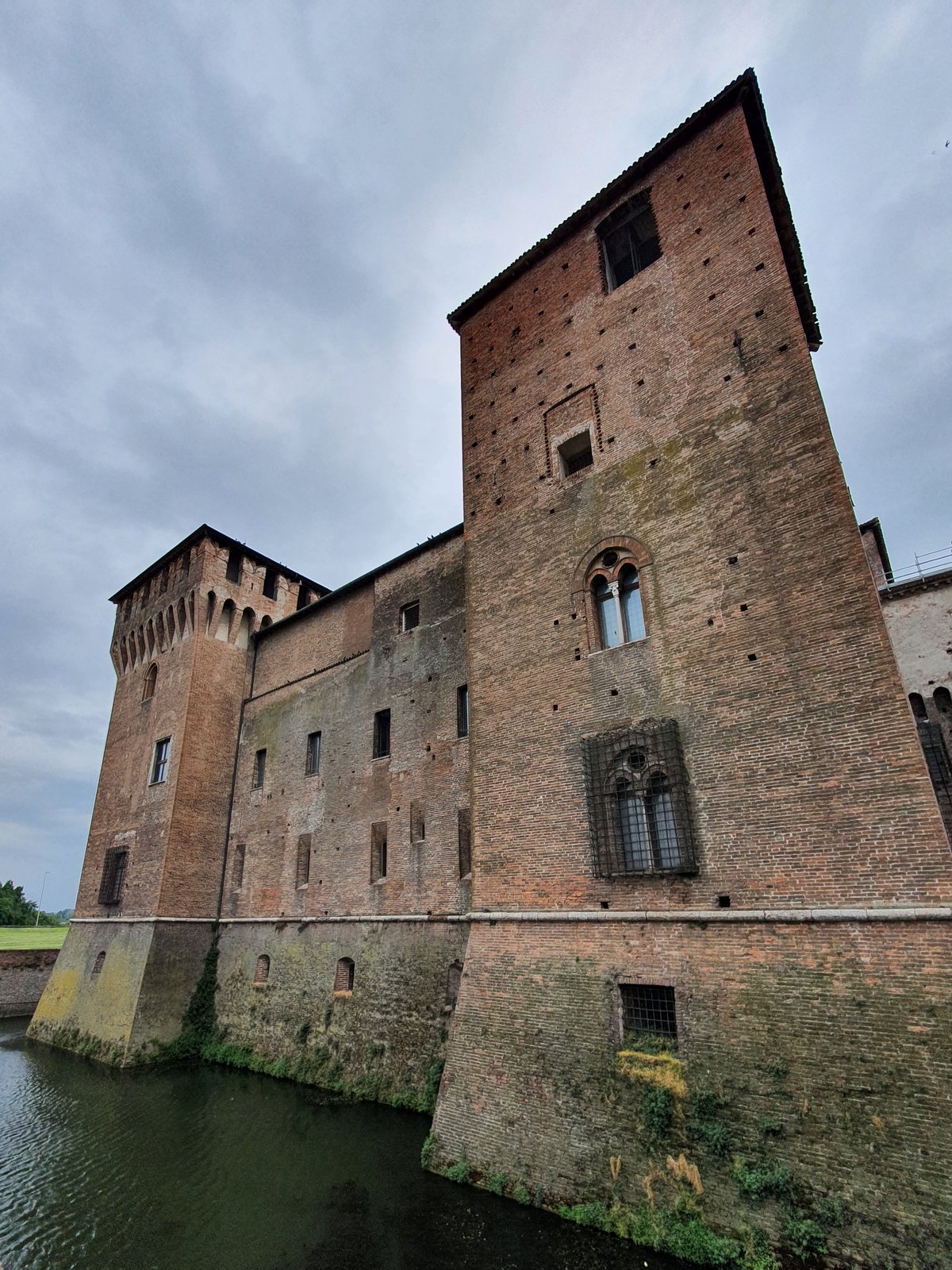
As a classic example of Lombard medieval urban towers, the Torre degli Zuccaro is characterized by slender verticality, robust brick construction, narrow windows, and an austere façade (Politesi Thesis). Originally designed for both defense and residence, it later adapted to commercial uses, including as a salt warehouse.
Decorative Elements
The tower features small, regularly spaced windows and modest stone detailing, reflecting its utilitarian origins. While records of the original roof are lacking, similar towers had simple pitched or flat tops, sometimes crenellated for defense.
Conservation and Seismic Vulnerability
Modern studies have highlighted the tower’s vulnerability to seismic events due to its slender masonry design (Politesi Thesis). Recent conservation follows Italian guidelines that emphasize minimal, reversible interventions and continuous structural monitoring to preserve its historical integrity.
Visiting Torre degli Zuccaro
Current Visiting Hours and Tickets
As of July 2025, Torre degli Zuccaro is not regularly open for interior visits; there are no set visiting hours or tickets required for exterior viewing (Mantovanotizie). The tower can be admired at any time from Via Tazzoli and adjacent streets. Occasionally, special guided tours and cultural events may allow interior access—check Mantua’s official tourism platforms for updates.
Guided Tours and Events
Many of Mantua’s walking tours include the Torre degli Zuccaro as a highlight, offering historical context and stories. During festival seasons, such as Festivaletteratura in September, special events or evening openings may be organized (placesofjuma.com).
Accessibility
The area around the tower is accessible via flat, paved streets, but the tower’s interior is not wheelchair accessible due to narrow staircases and historic preservation constraints.
Nearby Attractions
- Piazza Sordello (with Palazzo Ducale and the Cathedral)
- Torre della Gabbia
- Palazzo Bonacolsi (Castiglioni)
- Teatro Bibiena
- Other medieval towers: Torre dei Gambulini, Torre delle Ore
All these sites are within easy walking distance, making Mantua’s center ideal for exploration (Travel Connect Experience).
Photography Tips
- Early morning and late afternoon provide the best lighting.
- Excellent vantage points are from Via Tazzoli, Piazza Sordello, and Ponte di San Giorgio for skyline panoramas.
- For unique cityscape shots, consider boat tours on the Mincio River.
Practical Visitor Information
Location and Access
- Address: Via Tazzoli, Mantua
- Train: Mantua station is a 15–20 minute walk from Piazza Sordello (Travel Connect Experience)
- By Car: Park outside the ZTL and walk into the city center.
- By Air: Verona Airport is 30 km away, with regular transport to Mantua.
Visitor Amenities
- Dining: Try Scaravelli or Grifone Bianco for local cuisine.
- Restrooms and Cafés: Available nearby in Piazza Sordello.
- Shopping: Artisan boutiques and souvenir shops within the historic center.
- Accommodations: Range from guesthouses to upscale hotels, all within walking distance.
Local Etiquette and Tips
- Respect all posted signs and do not attempt unauthorized entry.
- Italian is widely spoken; English is common in tourist areas.
- Engage with locals for deeper cultural insights.
Frequently Asked Questions (FAQ)
Q: Is the Torre degli Zuccaro open to the public?
A: Generally, only the exterior is accessible for viewing. Interior visits are rare and typically limited to special guided events.
Q: Do I need a ticket to visit?
A: No ticket is required for exterior viewing. If a special tour is available, there may be a fee.
Q: Is the area wheelchair accessible?
A: The streets around the tower are accessible, but the tower’s interior is not.
Q: What other sites should I visit nearby?
A: Piazza Sordello, Palazzo Ducale, Torre della Gabbia, and Palazzo Bonacolsi are all within a short walk.
Q: When is the best time to visit?
A: Early morning or late afternoon for optimal lighting and fewer crowds. Spring and autumn offer pleasant weather.
Discover More
For the latest updates on guided tours, special events, and Mantua’s cultural calendar, download the Audiala app. Enhance your discovery of Mantua’s medieval towers and Renaissance palaces with interactive maps, audio guides, and real-time information. Follow us on social media for travel inspiration and the latest news from Mantua’s historic heart.
Listen to the full story in the app
The whole Torre Degli Zuccaro,
told well.
Listen to sourced travel stories with local history and practical context — ready offline.

Verified, and shown.
Researched and written by the Audiala editorial team from historical records, architectural archives, and local expertise.
Built from cited sources · see the method · How we make our guides →