Plan and listen to Palazzo Valenti Gonzaga with Audiala.
Audio guide in your pocket, itinerary in your browser. Built for the way you actually visit.
Introduction
Palazzo Valenti Gonzaga, located in the heart of Mantua, Italy, stands as a magnificent testament to Baroque architecture and the enduring legacy of one of the city’s most influential noble families. This 17th-century palace, once the residence of the Valenti Gonzaga family—a cadet branch of the illustrious Gonzaga dynasty—offers visitors a captivating journey through Mantua’s cultural, artistic, and political history. Renowned for its dramatic Baroque transformation under architect Frans Geffels and adorned by the artistry of Gian Battista Barberini, the palace is a vital touchstone for understanding Mantua’s aristocratic heritage, social rituals, and revolutionary past (Tourist Inspiration; valentigonzaga.com).
Whether you are an art lover, a history enthusiast, or a curious traveler, this guide provides essential details on Palazzo Valenti Gonzaga’s visiting hours, ticketing, accessibility, guided tours, and the palace’s broader role within Mantua’s vibrant network of historical sites.


History and Origins
Palazzo Valenti Gonzaga was constructed in the 17th century as the residence of the Valenti Gonzaga family, a powerful offshoot of the ruling Gonzaga dynasty. The palace was designed to reflect the family’s status and ambitions, featuring architectural innovations and opulent decor that marked Mantua’s transition from Renaissance to Baroque splendor. Its central location places the palace at the crossroads of Mantua’s artistic and political life (valentigonzaga.com).
Baroque Transformation
In 1670, the palace underwent a significant Baroque renovation under the direction of Flemish architect Frans Geffels. The transformation introduced elaborate stuccoes, dramatic fresco cycles, and spatial complexity, creating a theatrical environment that embodies the era’s fascination with grandeur and illusion (Tourist Inspiration).
The Valenti Gonzaga Family
As a cadet branch of the Gonzaga dynasty, the Valenti Gonzaga family played a crucial role in Mantua’s civic, cultural, and political life, using their residence as both a symbol of lineage and a center for noble society.
Architectural and Artistic Features
The palace’s Baroque façade is adorned with ornate window frames, sculpted cornices, and a grand entrance. Inside, visitors encounter a sequence of lavishly decorated rooms, grand staircases, and reception halls designed for social gatherings and ceremonial events.
Frescoes and Decorative Arts
A defining feature of the palace is its cycle of 17th-century frescoes, attributed to Frans Geffels. These works, found in prominent rooms such as the Gallery, the Room of the Prodigal Son, the Chapel, and the Room of the Triumph of Time over Fame, combine mythological, allegorical, and biblical themes to convey the family’s values and aspirations (valentigonzaga.com; Comune di Mantova).
Statuary and Stucco Work
Eighteen statues attributed to Gian Battista Barberini complement the frescoes, integrating allegorical figures and classical motifs into the palace’s interiors. These works exemplify the Baroque ideal of Gesamtkunstwerk—a harmonious blend of architecture, painting, and sculpture (Comune di Mantova).
The Chapel: Spiritual and Social Life
The palace’s private chapel, where Cardinal Silvio Valenti Gonzaga celebrated Mass, is richly decorated with frescoes and stuccoes. It served as a venue for family rites and social rituals, embodying the Baroque fusion of art, spirituality, and social display (valentigonzaga.com).
The Gallery and Noble Rituals
Historically, the Gallery functioned as a reception space for guests and social events, with its decorative program designed to impress and convey the family’s sophistication. Today, some rooms are available for overnight stays, offering a unique connection to Mantua’s aristocratic past (valentigonzaga.com; Frommer’s).
The Historic Tavern and Carbonari Meetings
Beyond its artistic value, the palace played a political role as a meeting place for the Carbonari, a secret revolutionary society during the Italian unification. This history adds an element of intrigue and underlines the palace’s multifaceted legacy (valentigonzaga.com).
Visiting Information
Opening Hours & Tickets
- Hours: Open Tuesday–Sunday, 10:00 AM–6:00 PM; closed Mondays and select public holidays.
- Tickets: Standard admission €10 (adults), with discounts for students, seniors, and children. Free admission for children under 12. Special rates may apply during exhibitions.
- Booking: Advance booking recommended, especially during festivals and peak seasons. Tickets available online or at the entrance (Monday Feelings; valentigonzaga.com).
Guided Tours
- Schedule: Daily guided tours at 10:30 AM, included in the ticket price. Advance booking advised for groups and during high season.
- Languages: Primarily Italian and English; other languages available on request for groups.
Accessibility
- Mobility: Partial wheelchair access; ground floor and some main rooms accessible, upper floors by stairs only. Contact staff in advance for accommodations.
- Facilities: Modern restrooms, cloakroom, and a gift shop.
Booking & Contact
- Website: valentigonzaga.com
- Phone: See official site for current contact details.
Best Times to Visit & Travel Tips
- Seasons: Spring (April–June) and early autumn (September–October) offer pleasant weather and fewer crowds.
- Events: The annual Mantua Literature Festival in September increases visitor numbers; book well ahead.
- Attire: Comfortable shoes recommended due to historic flooring; dress smart casual.
Facilities and Visitor Services
- Photography: Non-flash photography permitted in most areas; restrictions may apply during exhibitions. Tripods and professional gear require permission.
- Refreshments: No on-site café, but numerous nearby options.
- Gift Shop: Books, local crafts, and memorabilia available.
Nearby Historical Sites & Suggested Itineraries
Enhance your visit with these nearby attractions:
- Palazzo Ducale: Renaissance palace and former Gonzaga residence with Mantegna’s famous frescoes (Italia.it).
- Palazzo Te: Celebrated for Giulio Romano’s Mannerist frescoes (Monday Feelings).
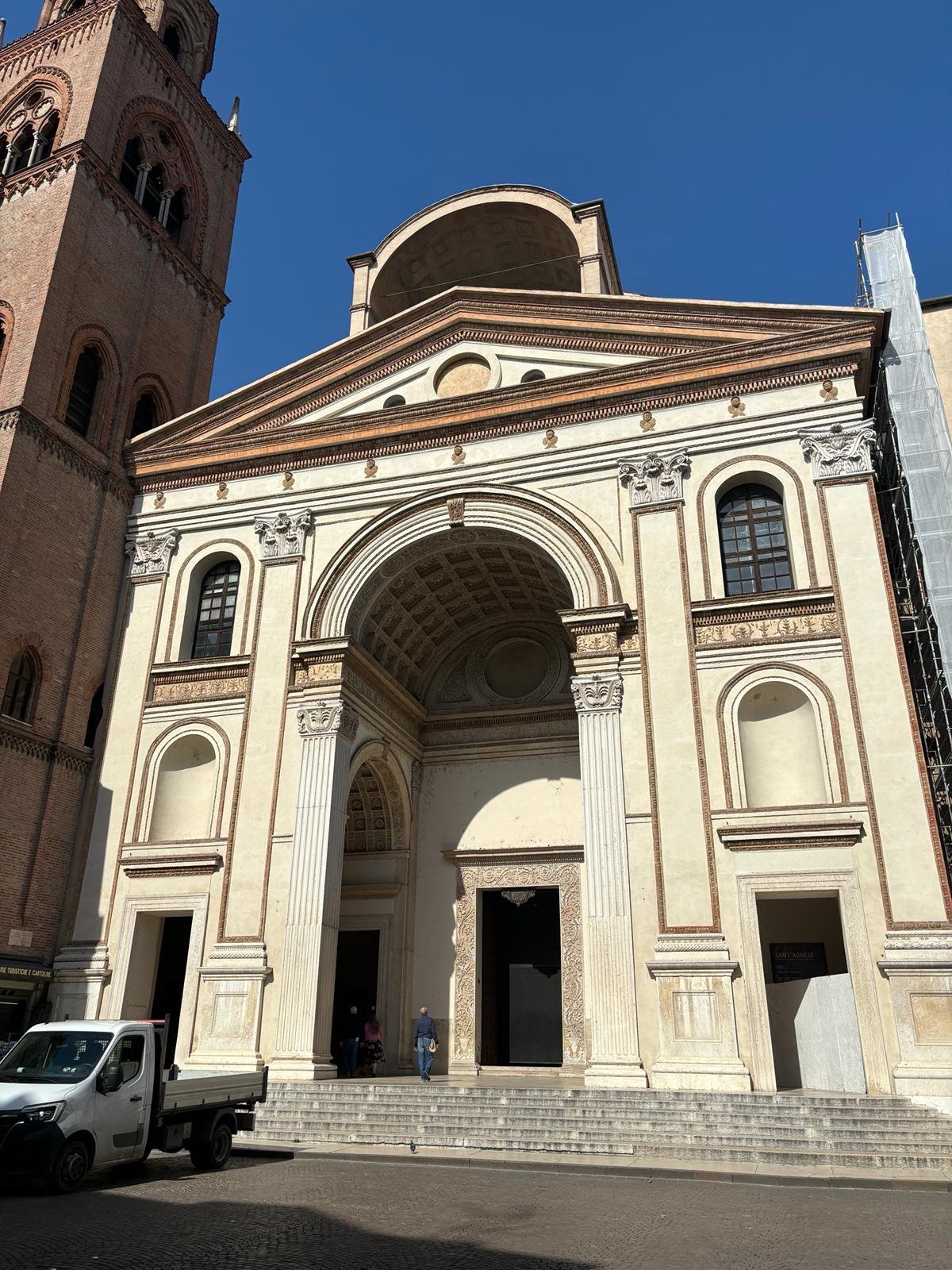
- Basilica of Sant’Andrea: Renowned Renaissance church.
- Rotonda di San Lorenzo: 11th-century church.
- Teatro Bibiena: Rococo theater where Mozart performed.
A typical day might include Palazzo Valenti Gonzaga in the morning, lunch nearby, and afternoon tours of other sites (A Sprinkle of Italy; The Guardian).
Frequently Asked Questions (FAQ)
Q: What are the Palazzo Valenti Gonzaga visiting hours?
A: Tuesday–Sunday, 10:00 AM–6:00 PM; closed Mondays and some holidays.
Q: Are tickets available at the entrance?
A: Yes, but advance booking is recommended.
Q: Is the palace wheelchair accessible?
A: Partial accessibility; ground floor accessible, upper floors by stairs.
Q: Are guided tours available?
A: Yes, daily at 10:30 AM, included in the ticket.
Q: Can I take photos?
A: Non-flash photography allowed in most areas.
Q: Can I stay overnight at the palace?
A: Select rooms are available as suites; book in advance (valentigonzaga.com).
Cultural Etiquette, Preservation & Sustainability
- Respect all artwork and furnishings; do not touch.
- Keep noise to a minimum, especially during tours.
- Large bags and food are prohibited in exhibition areas.
- Support sustainability by minimizing waste and following preservation guidelines.
Language and Communication
Italian is the primary language, but English-speaking guides and multilingual materials are available. Book English tours in advance if required.
Listen to the full story in the app
The whole Palazzo Valenti Gonzaga,
told well.
Listen to sourced travel stories with local history and practical context — ready offline.
Verified, and shown.
Researched and written by the Audiala editorial team from historical records, architectural archives, and local expertise.
Built from cited sources · see the method · How we make our guides →