Plan and listen to Teatro Del Giglio with Audiala.
Audio guide in your pocket, itinerary in your browser. Built for the way you actually visit.
Introduction
Teatro del Giglio, located in Lucca, Italy, is an enduring emblem of Tuscan culture and artistry. Established in the 17th century, it stands as one of Italy’s oldest continuously operating public theaters. Its journey from the original Teatro Pubblico in 1675, through reconstruction after a devastating fire, to its neoclassical reincarnation in the early 19th century, mirrors not only the artistic evolution but also the political and social changes of Lucca itself. Named by Maria Luisa of Bourbon in honor of the Bourbon dynasty, the theater’s stately façade and refined interiors immerse visitors in the grandeur of Italian theatrical tradition (Italyscapes; dovealucca.it).
Teatro del Giglio holds a special place in Tuscany’s cultural panorama, having hosted legendary performers such as Maria Malibran and Nicola Tacchinardi, and maintaining a close connection to Lucca’s own Giacomo Puccini. Today, the theater is celebrated for its dynamic programming that includes opera, drama, dance, symphonic music, and educational activities. Centrally situated in Piazza del Giglio, it is easily accessible for visitors and is equipped to accommodate individuals with disabilities. Ticketing is available both online and at the box office, with prices varying by event (Evendo; Comune di Lucca).
This guide explores Teatro del Giglio’s history, architecture, cultural importance, visitor logistics, and its place within Lucca’s vibrant landscape of historical attractions.
Origins and Early Development
The roots of Teatro del Giglio date back to 1675, when the Council of the Republic of Lucca responded to the city’s growing appetite for public performances by commissioning a new theater on the site of a former Jesuit convent (Italyscapes). The original Teatro Pubblico showcased the era’s architectural style, with three tiers of boxes and dual entrances. A fire in 1688 destroyed the building, but it was quickly rebuilt, reopening in 1692 with enhanced features including ceiling frescoes and a new stage.
Architectural Evolution
Throughout the 18th century, the theater flourished as Lucca’s artistic hub. After a period of decline following the fall of the Republic in 1799, the theater was revitalized under Maria Luisa of Bourbon. The current neoclassical structure, designed by Giovanni Lazzarini and Lorenzo Nottolini, was completed in 1819 and named Teatro del Giglio, signifying the Bourbon dynasty's emblem (Italyscapes). Its neoclassical façade, ornate interiors, and acoustically optimized horseshoe-shaped auditorium have been carefully preserved through subsequent restorations (Evendo).
Cultural Significance and Artistic Legacy
From its 19th-century reopening, Teatro del Giglio has been a prominent stage for Italy’s foremost opera, ballet, and drama companies. Celebrated artists such as Nicola Tacchinardi, Gilbert Duprez, and Maria Malibran graced its stage (dovealucca.it). The theater’s association with Giacomo Puccini, who supervised productions of his operas here, further cements its status as a cradle of Italian opera (dovealucca.it). Today, it collaborates with the Centro Studi G. Puccini on initiatives celebrating his legacy.
Restoration and the Modern Era
The 20th century saw both adversity and renewal. Following restoration in 1911, the theater was requisitioned for military use during World War I, and later hosted official gatherings during the Fascist era. Artistic functions were restored after World War II, and in 1985, Teatro del Giglio was recognized as a “Teatro di Tradizione,” a title reserved for historic Italian theaters with continuous high-level activity (dovealucca.it).
Notable Events and Artistic Collaborations
The theater’s annual calendar is anchored by the Stagione Lirica (Opera Season), Stagione di Prosa (Drama), Stagione di Danza (Dance), and Stagione Sinfonica (Symphonic Music). It also hosts special events like the Puccini Festival and educational workshops for children. Notably, its partnership with Compagnia Teatro del Carretto has led to internationally acclaimed productions (dovealucca.it).
Visitor Information: Hours, Tickets, and Accessibility
- Address: Piazza del Giglio, 13/15, within Lucca’s historic walls
- Box Office Hours: Monday–Saturday, 10:00 AM–1:00 PM and 3:00 PM–7:00 PM; open until showtime on performance days (confirm on the official website for updates)
- Tickets: Prices typically range from €10 to €70, available at the box office or online (Comune di Lucca)
- Accessibility: Wheelchair access, reserved seating, and accessible facilities are provided. Advance notice is recommended for special arrangements.
- COVID-19 Protocols: Check the theater’s website for current health and safety requirements.
Travel Tips:
- Visit during opera season (September–Spring) or festival periods for special experiences.
- Parking is limited in the historic center; use public transport or park outside the walls.
- Guided tours, including backstage access, are available by appointment.
Architectural and Artistic Features
Teatro del Giglio’s neoclassical façade, with its rusticated portico and balustrade, is a highlight of Piazza del Giglio (Nomads Travel Guide). The lily motif, referencing the Bourbon dynasty, is evident in the decorative scheme. Inside, the horseshoe-shaped auditorium, adorned with gilded stuccoes and painted panels, seats about 700 and provides superb acoustics (Evendo). The in-house library, with over 4,000 volumes, supports research and education in the performing arts (dovealucca.it).
Annual Programming Structure
Opera Season (Stagione Lirica)
Begins in September, featuring Italian operatic classics with a focus on Puccini, including innovative productions such as “Giselle Around the Villi” (Lucca Whats On).
Drama and Prose (Stagione di Prosa)
Runs from late autumn to spring, presenting a variety of Italian and international plays (Teatro.it).
Dance Season (Stagione di Danza)
Features classical and contemporary dance, including interdisciplinary projects (Lucca Whats On).
Symphonic and Chamber Music (Stagione Sinfonica)
Regular concerts by orchestras and soloists, with a special emphasis on works by Puccini and Italian composers (The Tourist Checklist).
Special Events and Festivals
Includes Puccini Chamber Opera Festival, Lucca Puccini Days, and collaborations with citywide festivals (Operabase; Comune di Lucca; MominItaly).
Accessibility and Travel Tips
- Getting There: Short walk from Lucca railway station; nearest bus stop at San Girolamo.
- Parking: Limited in the center; use Parcheggio Palatucci or Parcheggio Cittadella.
- Accessibility: Stairlift available for some sections; request accessible seating in advance (Comune di Lucca).
- Guided Tours: Offered seasonally, including backstage access and historical insights.
Nearby Attractions in Lucca
- Lucca Cathedral (Cattedrale di San Martino)
- Piazza Napoleone
- Guinigi Tower
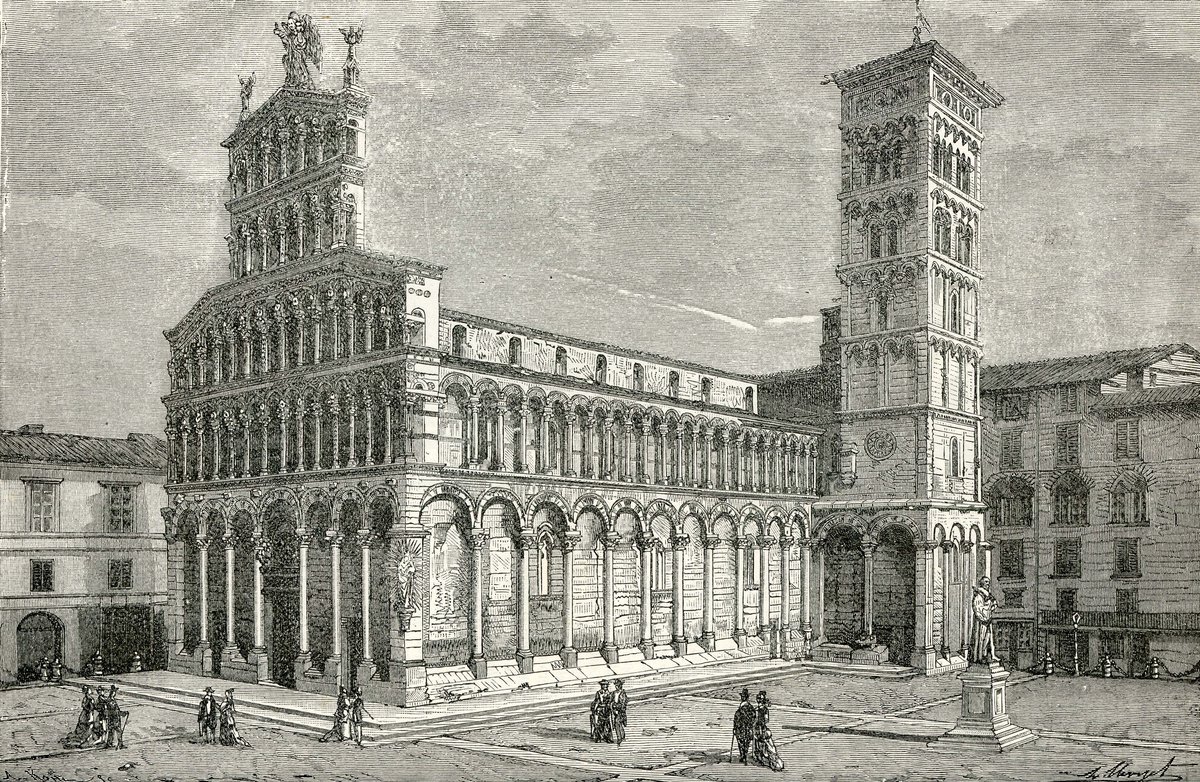
- San Michele in Foro
- Lucca’s Renaissance City Walls
Enjoy local dining and shopping in the vibrant areas surrounding Piazza del Giglio (MominItaly).
Preservation and Recognition
Teatro del Giglio’s ongoing restoration projects maintain its historical and architectural integrity, while modern upgrades enhance visitor comfort. Its designation as a “Teatro di Tradizione” and membership in networks like Opera Europa underscore its national and international cultural significance (Visit Tuscany; Lucca in Diretta; Concertisti Classica).
Frequently Asked Questions (FAQ)
Q: What are the Teatro del Giglio visiting hours?
A: Monday–Saturday, 10:00 AM–1:00 PM and 3:00 PM–7:00 PM; extended on performance days (check the official website for updates).
Q: How do I buy tickets?
A: Tickets are available at the box office and online. Early booking is recommended, especially for popular events.
Q: Is the theater accessible?
A: Yes. Wheelchair access, reserved seating, and accessible restrooms are provided. Contact in advance for assistance.
Q: Are guided tours available?
A: Yes, by appointment. Tours include backstage access and historical commentary.
Q: What nearby attractions should I visit?
A: Lucca Cathedral, Piazza Napoleone, Guinigi Tower, San Michele in Foro, and the city walls.
Continuing Legacy
Teatro del Giglio stands as a testament to Lucca’s enduring artistic spirit. It blends centuries-old heritage with contemporary innovation, offering visitors a unique opportunity to witness Italian performing arts in an intimate and historically rich setting. For schedules, tickets, and the latest updates, visit the official Teatro del Giglio website, and download the Audiala app for real-time information and exclusive content.
Listen to the full story in the app
The whole Teatro Del Giglio,
told well.
Audio guides for 1,100+ cities across 96 countries. History, stories, and local insight — offline ready.

Verified, and shown.
Researched and written by the Audiala editorial team from historical records, architectural archives, and local expertise.
Researched from Wikidata, Wikipedia & official sources · fact-checked · How we make our guides →