Renaissance Walls You Can Walk On
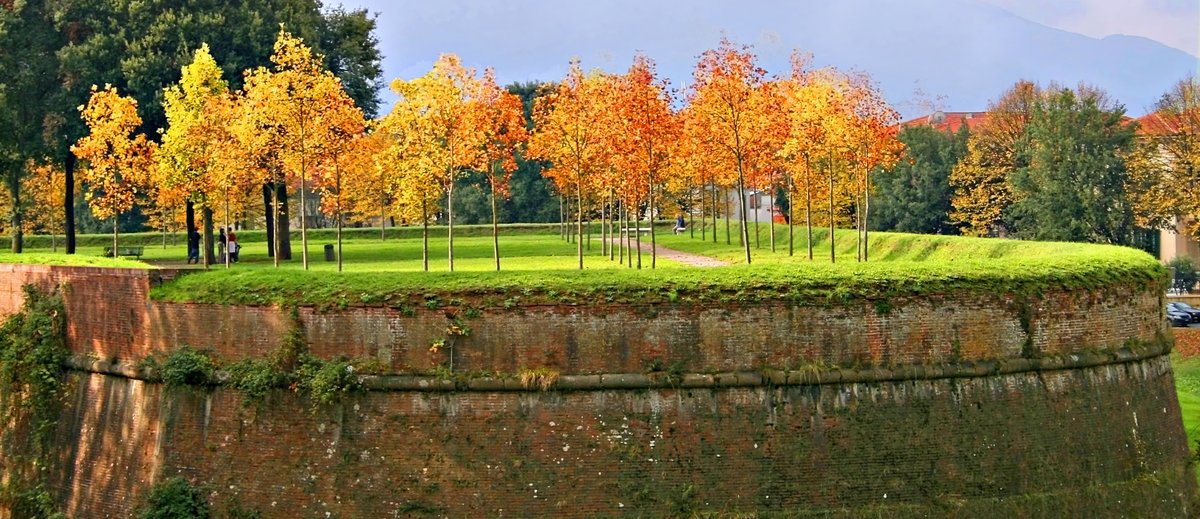
The 4.2 km loop of 16th-century ramparts is now a tree-lined park 12 meters above street level. Rent a bike for €3 an hour and circle the entire historic core in twenty minutes without ever sharing space with cars.
Lucca, Italy has Europe's only walkable Renaissance wall. The guide covers 52 listed attractions. The best season to visit is late April–June or September–October, with an average visit duration of 2–3 days.
The first thing you notice in Lucca, Italy, is the silence inside the walls. No cars, no scooters, just the soft click of bicycle spokes and the echo of your own footsteps on stone. It's Tuscany, but not the postcard version — this is a city that kept its secrets to itself.
 Lucca · Italy
Curated from places in this city. Same price as official sites.


Prices shown are indicative — final pricing and availability are confirmed at checkout. Audiala may receive a commission from bookings made via these links.
Researched from Wikidata, Wikipedia & official sources · fact-checked · How we make our guides →
LThe first thing you notice in Lucca, Italy, is the silence inside the walls. No cars, no scooters, just the soft click of bicycle spokes and the echo of your own footsteps on stone. It's Tuscany, but not the postcard version — this is a city that kept its secrets to itself.
Lucca's Renaissance walls are wider than a London bus is long, and locals treat them like a park. Joggers loop the 4.2-km path at dawn, grandparents push prams under the plane trees at dusk. From the top you see terracotta roofs, cathedral towers, and the Apuan Alps turning pink in the distance. The city inside is a knot of Roman lanes and medieval towers, all of it walkable in twenty minutes if you don't stop. You will stop.
This was an independent republic for seven centuries, rich enough from silk to build 99 churches and a cathedral for the hundredth. Puccini was born here; opera rehearsals spill from open windows in October. The amphitheater is now an oval piazza where waiters set tables on what used to be arena sand. Tourists head for Florence and Pisa; Lucca keeps its wine bars and candle-lit trattorie for whoever bothers to walk through the gate.
What makes this place worth slowing down for.
The 4.2 km loop of 16th-century ramparts is now a tree-lined park 12 meters above street level. Rent a bike for €3 an hour and circle the entire historic core in twenty minutes without ever sharing space with cars.
The composer of La Bohème was born at Corte San Lorenzo 9; the house is now a small museum with his Steinway and handwritten scores. Every evening from April to October, candle-lit concerts in nearby churches feature arias you’ve heard without knowing where they came from.
Piazza dell’Anfiteatro follows the exact ellipse of a 2nd-century Roman arena—look up and you’ll see medieval flats curved like stadium seating. At 6 p.m. the light turns honey-colored and waiters start setting tables in what used to be the lion pit.
Not every monument, just the ones we'd walk you past ourselves.

Piazza Napoleone, often referred to as Piazza Grande, is a historic and cultural gem located in the heart of Lucca, Italy.
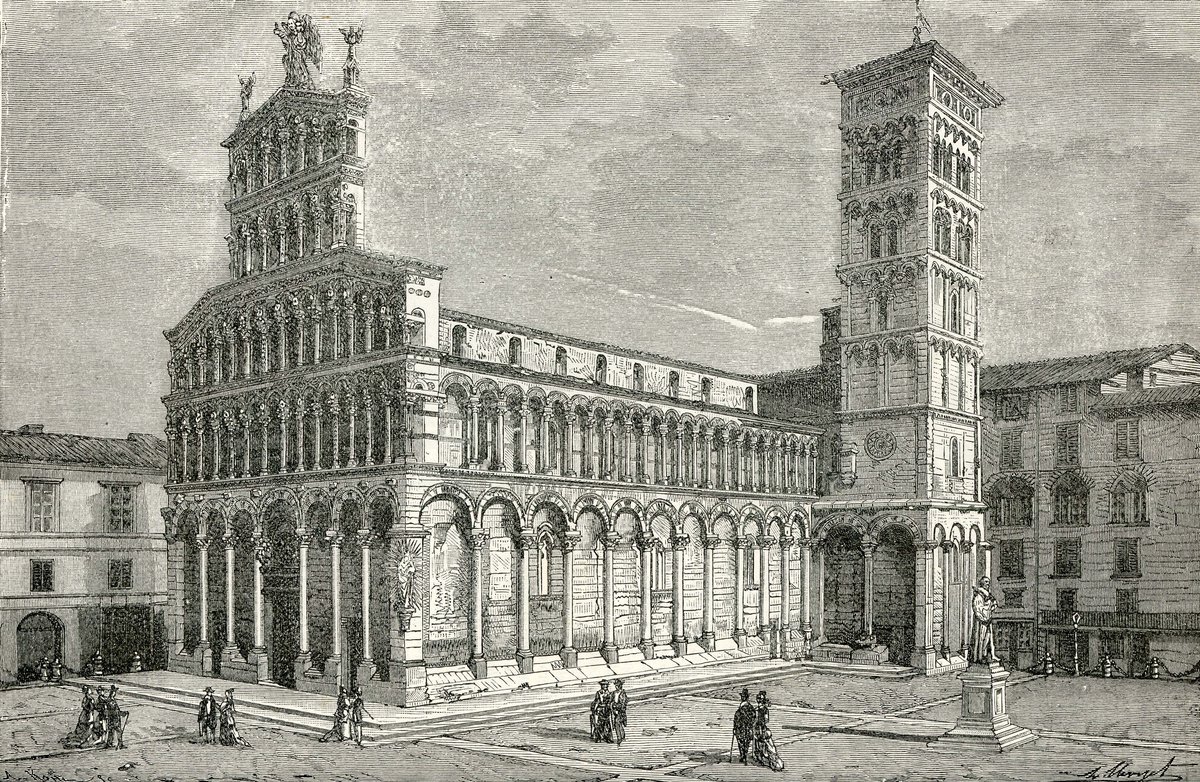
San Michele in Foro, nestled in the heart of Lucca, Italy, is a quintessential example of Romanesque architecture and stands as a monument to the city's rich…
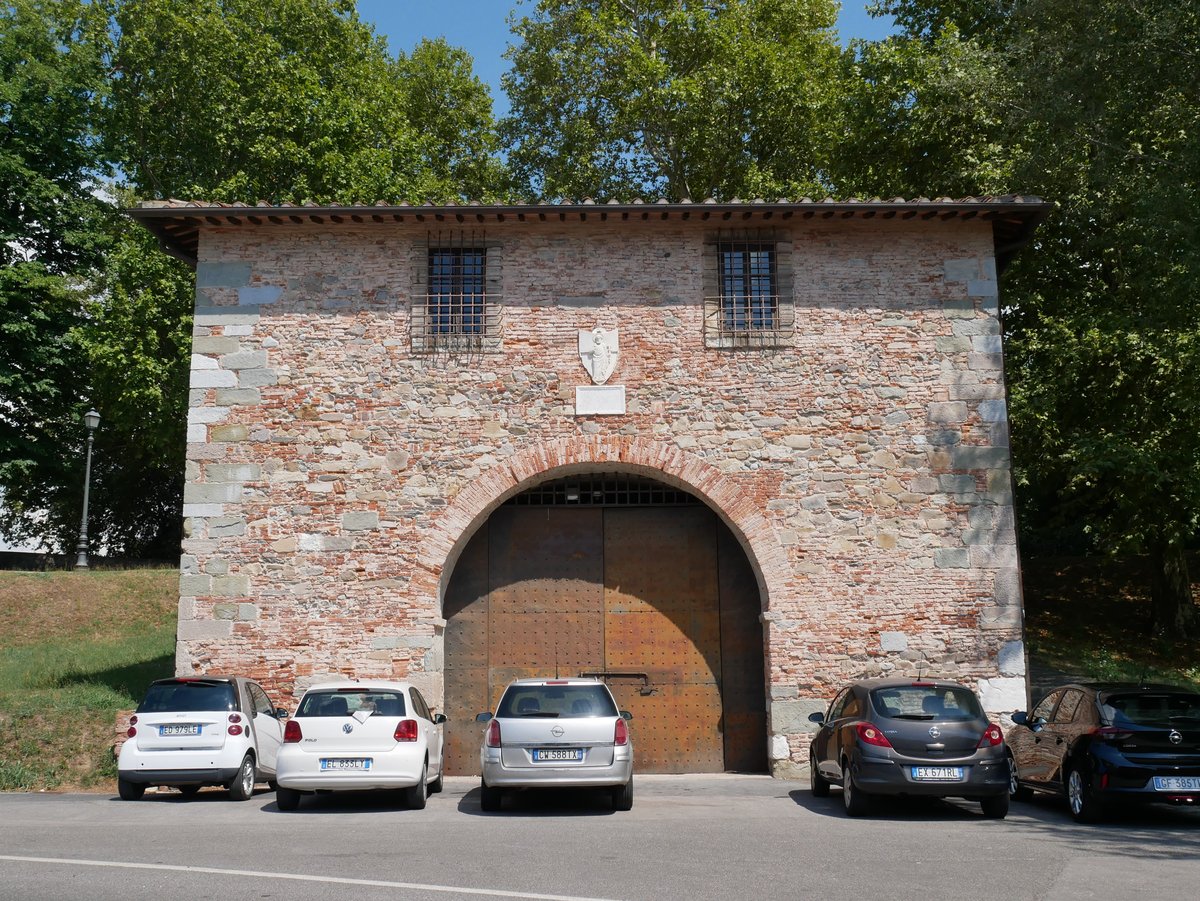
Porta San Pietro, also known as Porta a Mare ('Gate to the Sea') or Porta Nuova, is a historical gem nestled in the heart of Pisa, Italy.
Lucca's city walls, known as Le Mura di Lucca, are among the most well-preserved Renaissance fortifications in Europe.
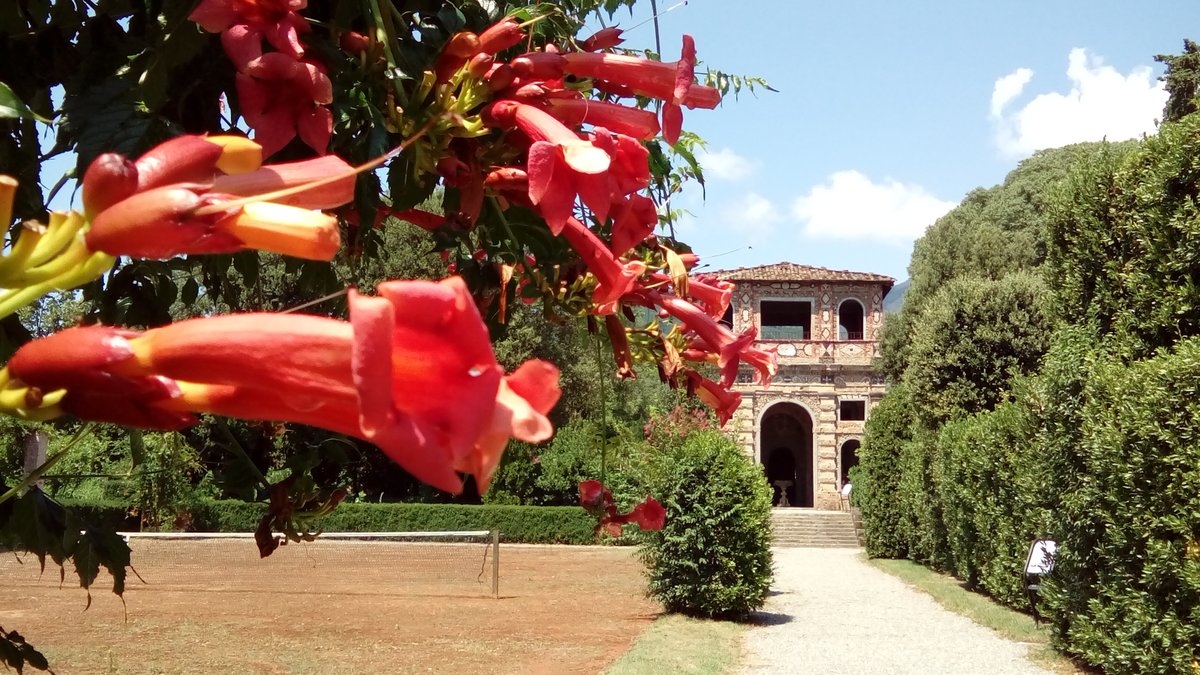
Nestled in the picturesque region of Tuscany, Villa Reale di Marlia stands as a testament to centuries of rich history, architectural evolution, and artistic…
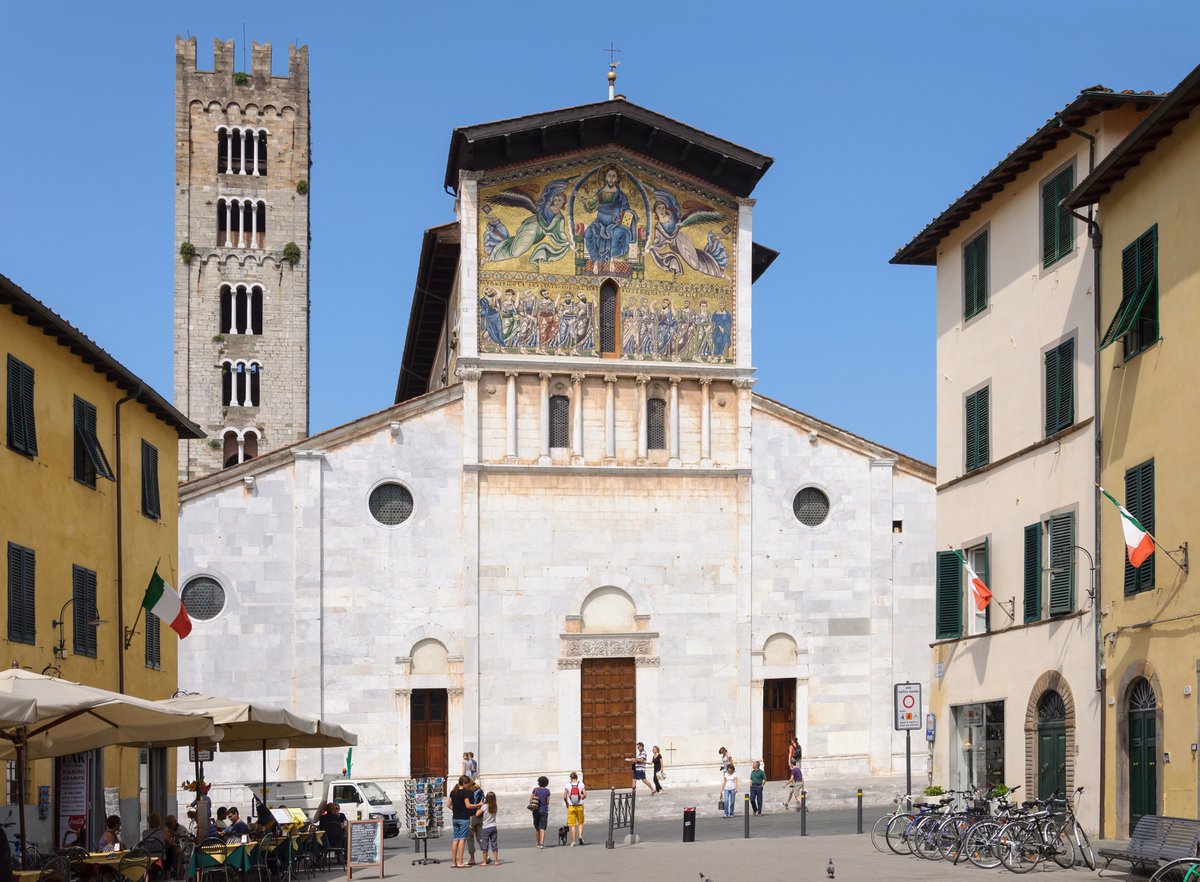
The Basilica of San Frediano stands as one of Lucca’s most captivating historical and architectural treasures, drawing visitors with its remarkable blend of…

Nestled in the charming city of Lucca, Italy, the Museo Nazionale di Villa Guinigi offers visitors a fascinating journey through the region's rich history and…
Where to wander, by quarter — each with its own rhythm.
The walled heart: narrow Roman lanes, sudden piazzas, towers leaning like bored sentries. Everything worth seeing is inside this oval, ten minutes from any gate. Morning markets on Via San Paolino, opera posters on 15th-century palazzi, bikes propped against stone columns.
An ellipse of medieval houses glued to the skeleton of a 2nd-century arena. Four doorways punch through the walls; walk in and the sky opens above you like a trapdoor. Cafés ring the perimeter—order a cappuccino before 11 a.m. or risk public shaming.
North-side grid of artisan workshops and candle-smelling churches. The basilica's gold mosaic blazes at sunset; inside, Saint Zita lies uncorrupted in a glass coffin. Locals queue at Taddeucci for buccellato, anise-scented bread older than the United States.
Cathedral territory: the Duomo's striped façade, the tomb of Ilaria del Carretto so perfect it made Michelangelo jealous, and the tiny museum that guards the Volto Santo. Streetlights here are wrought-iron torches; shadows move like stagehands.
Where the wall meets the rail tracks. Young Lucchesi bring beers to the bastion at dusk; guitars and cheap prosecco appear at 7 p.m. sharp. Best spot to watch swallows dive inside the city before the gates close at midnight.
The main commercial artery since Roman times, now a runway of shop windows and medieval tower-houses converted into boutiques. Look up: the Guinigi tower sprouts oak trees 45 meters above your head. Look down: the stone is grooved by six centuries of cart wheels.
From Roman colony to silk republic, how Lucca built walls thick enough to stop Napoleon
Roman surveyors drive their bronze stakes into the Serchio valley mud, marking out a rectangular grid that still dictates traffic patterns today. They name it Lucca after the Celtic settlement that preceded them. The first stone walls go up immediately — thinner than what's there now, but the same instinct to hunker down and hold out.
Julius Caesar rides through the Porta San Pietro with two legions, heading north to crush the Gallic tribes. He pauses long enough to grant Lucca full Roman citizenship. Suddenly the locals can vote in Rome, and their olive oil commands premium prices across the empire.
An Irish bishop named Frigidian has a vision: the Virgin tells him to build a church where the city's prostitutes gather. He chooses the old Roman forum. The mosaic he commissions still glitters above the entrance — Christ ascending against a gold background, eyes fixed on something beyond the Apuan Alps.
A baker's daughter enters the world in a windowless room above the family oven. She'll spend 48 years scrubbing floors for wealthy merchants, slipping loaves to the poor, praying in San Frediano before dawn. When she dies, they discover her body hasn't decayed. The silk guild pays for an ivory coffin.
Born into exile, Castruccio returns at 35 with a private army and the kind of charisma that makes grown men volunteer to die for him. He rules Lucca for twelve years, defeats Florence at Altopascio, and dies the same way he lived — sword in hand, refusing to retreat. Machiavelli will later write his biography as a how-to manual for Renaissance princes.
Paolo Guinigi orders his tower raised ten meters higher than any rival family's. At the top, he plants seven holm oaks — a medieval flex that says 'I can make trees grow where others can't even stand.' The roots still drink from cisterns built into the stonework. From up there, you can see every other tower that tried to compete.
Paolo Guinigi's young bride dies at 26, leaving him with two children and a grief so profound he commissions Jacopo della Quercia to carve her tomb. The result is marble so lifelike that visitors swear her chest rises and falls with each breath. Her stone dog still waits at her feet, 600 years loyal.
The Guinigi family falls. Not with swords or siege engines, but with paperwork — a republican charter signed in the Palazzo Pretorio. For the next 370 years, Lucca governs itself through a council of merchants. The silk trade booms. Foreign bankers queue outside city gates that stay locked at night, even to kings.
Matteo Civitali, stone-cutter's son turned Renaissance master, completes his miniature temple inside the cathedral. Sixteen marble columns, perfect proportions, designed to house the Volto Santo — a wooden crucifix older than Charlemagne. Pilgrims have been crawling on their knees toward it for five centuries.
The republic bankrupts itself building walls that will never see battle. 4.2 kilometers of brick and earth, twelve meters high, thirty meters thick at the base. Designed by military engineers who studied Machiavelli's treatises, financed by silk merchants who understood that fear sells better than fabric. They finish in 1645, just as gunpowder makes city walls obsolete.
In a house above his father's leather shop, Luigi Boccherini takes his first breath to the rhythm of his mother's lullabies. By six he's playing cello for the cathedral choir. He'll revolutionize chamber music in Madrid, compose 91 string quartets, and die so poor his landlord has to sell his instruments to pay the rent.
Napoleon's sister arrives with a French accent and Italian ambitions. She turns the republic into a principality, moves into the Palazzo Ducale, and commissions a theater where commoners can watch opera for the price of a loaf of bread. The silk merchants grumble, but they adapt — they always do.
The Congress of Vienna gives Lucca to Maria Luisa of Spain, great-niece of the last Habsburg king. She rules from Vienna, visits twice, and dies without seeing her duchy. Her portrait hangs in the Palazzo Ducale — a Spanish princess who owned a Tuscan city she'd never walk through.
Giacomo Puccini enters the world in a house that smells of candle wax and his grandfather's tobacco. The family has provided organists for San Martino for five generations. His mother names him after an ancestor who composed masses. He'll write operas that make grown men weep in languages they don't understand.
The duchy votes itself out of existence. No blood, no speeches in the piazza — just a plebiscite and a telegram to Turin. The walls that kept out Florentines and Frenchmen now mark the boundary between Tuscany and nothing. Lucca becomes a province, not a capital. The silk looms keep humming.
German engineers wire the bridges with TNT, planning to blow them as they retreat. Local partisans cut the fuses in the dark, saving the medieval core. The next morning, American jeeps roll through Porta Elisa. The walls hold again — not against cannon, but against the 20th century's brand of destruction.
The city council votes to transform the ramparts into a public space. They plant plane trees, install benches, ban cars. Where soldiers once patrolled with crossbows, grandmothers now push strollers. The circle closes — four kilometers of elevated park where you can walk above a city that refused to be conquered by time.
A 35-year-old conductor from Lucca's working-class suburb becomes the first woman to direct Venice's opera house. She grew up practicing in the Puccini Museum, where her mother cleaned floors. Now she conducts his operas in halls he never saw. The circle keeps spinning.
The people who shaped the city — and were shaped by it.
He grew up in a flat on Via di Poggio, now crammed with original scores and the piano he used to compose La Bohème. Every evening in summer his operas echo from the same church where he was baptized—he'd recognize the acoustics instantly.
Before Madrid and Prussia claimed him, Boccherini played cello in Lucca's churches. His elegant minuets were born from these narrow streets; today street musicians still busk them outside San Michele, probably earning more than he ever did.
The Antelminelli tower house still stands near Torre Guinigi—he'd climb its 45 meters to survey the republic he ruled. Defeating Florence at Altopascio in 1325, he proved Lucca could punch above its weight; locals still quote Machiavelli's biography with pride.
She spent 48 years sweeping the same Fatinelli palace near San Frediano. Her incorrupt body lies in a glass coffin inside the church; Lucca's maids still leave flowers on April 27, hoping for a fraction of her patience.
While Michelangelo carved giants in Florence, Civitali built delicate marble chapels for silk merchants. His Tempietto inside the cathedral cradles the Volto Santo crucifix—he'd be stunned tourists now queue to see his work while Florentine crowds ignore him.
Where locals actually book dinner — not the tourist menus.
Small things that change how the city treats you.
The 4.2 km wall loop takes 20 minutes by bike and gives you the only vantage point above Lucca's rooftops. Rentals are €3-4 per hour at Porta Santa Maria.
Concerts in the 850-seat church sell out weeks ahead in summer. Reserve online or you'll be listening from the piazza speakers with locals instead.
The oval piazza is gorgeous but the restaurants are 30% overpriced. Walk 50 m to Via dell'Anfiteatro for the same dishes at half the cost.
The tourist office inside Porta Santa Maria will watch your luggage for nothing if you arrive before 6 pm. Saves hauling suitcases up 14th-century stairs.
The weekly market fills Via dei Banchi with €2 porcini and cheap leather. Arrive by 9 am before tour buses block the gates.
The city, as it actually looks.

Close-up view of the masterfully crafted bronze doors found on a historic church in Lucca, Italy, showcasing elaborate relief sculptures.
Peter Vercoelen on Pexels
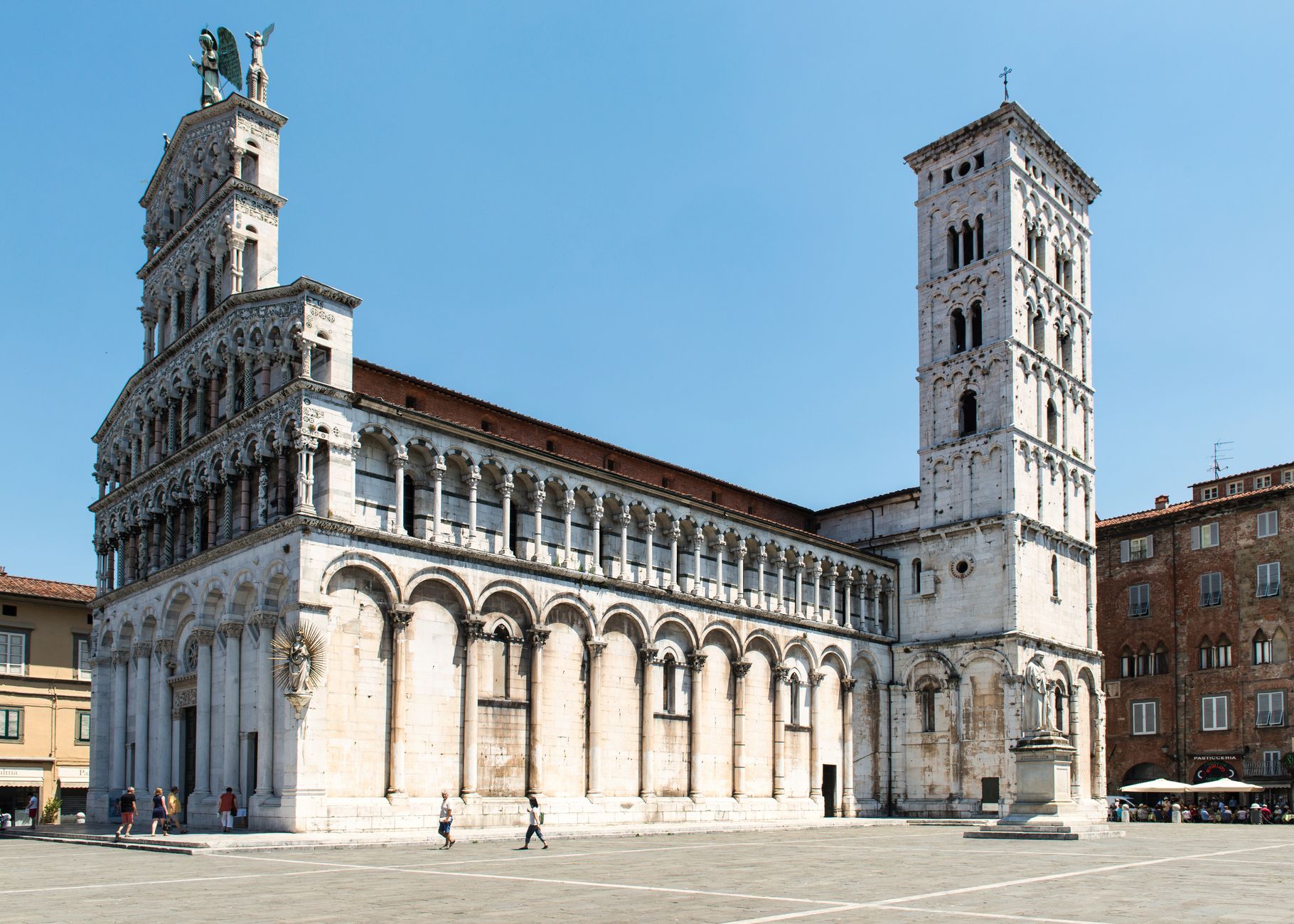
The stunning Romanesque facade of the San Michele in Foro church stands prominently in the heart of Lucca, Italy.
Wolfgang Weiser on Pexels

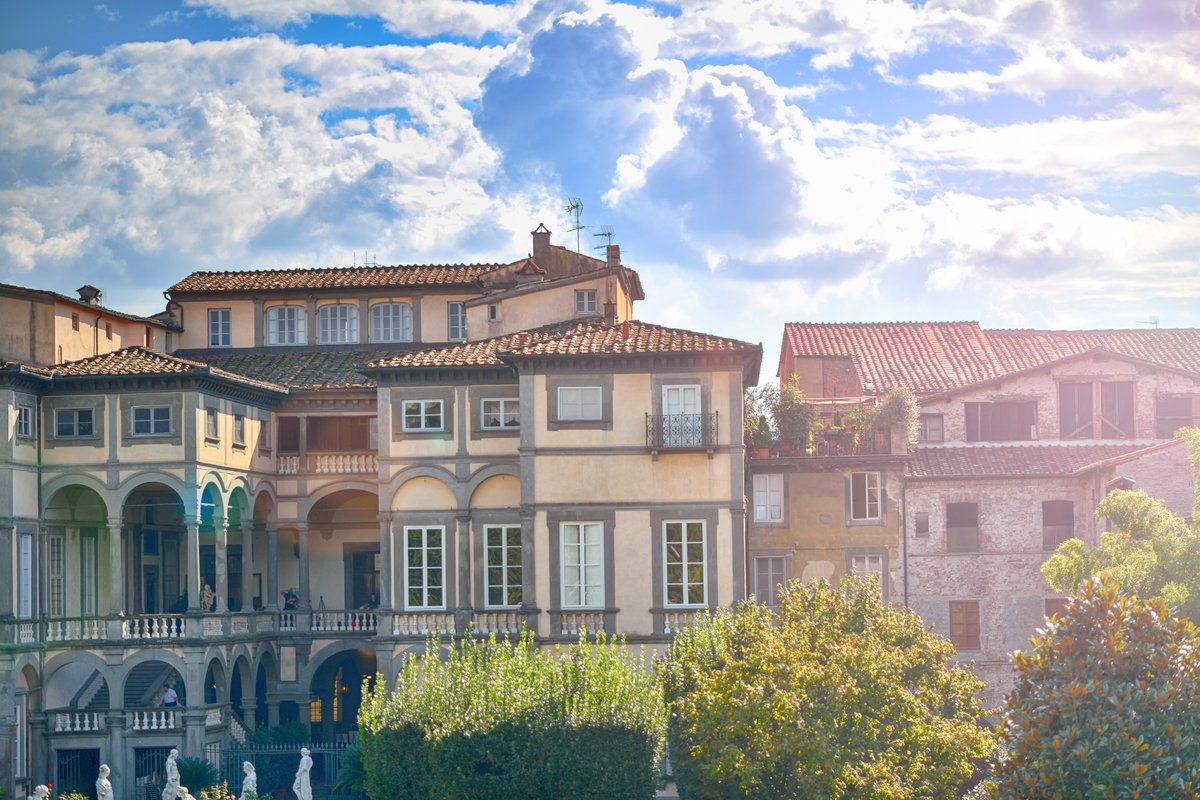
A stunning elevated view of the historic city of Lucca, Italy, featuring its iconic medieval towers and dense collection of terracotta-tiled rooftops.
Mayumi Maciel on Pexels
Yes—Lucca gives you the same Renaissance architecture without the crowds. You'll walk the only intact Renaissance wall in Europe, hear Puccini in the church where he was baptized, and pay €4 for lunch instead of €14 in Florence.
Two full days is the sweet spot. One day covers the wall loop, amphitheatre piazza, and tower climbs; the second lets you bike into the olive-oil hills or catch an evening Puccini concert.
The walls close at 11 pm for safety, but the gates stay open. Locals walk dogs until midnight under dim lamps; after that, the carabinieri politely move you on.
Extremely. The historic center is small, well-lit, and full of residents who still live upstairs. You'll see grandmothers sweeping doorsteps at midnight—classic Tuscan neighborhood watch.
Take the LAM red bus from Pisa Galilei to Pietrasantina then switch to the Lucca bus—€5 total, 45 minutes. The direct train costs €3.60 but runs only twice hourly and drops you outside the walls.
Ready to book?
Curated from places in this city. Same price as official sites.
Prices shown are indicative — final pricing and availability are confirmed at checkout. Audiala may receive a commission from bookings made via these links.
Pisa International (PSA) is 35 km south; the LAM Rossa bus reaches Lucca in 35 minutes, €3.50. Florence Peretola (FLR) is 80 km east; change at Santa Maria Novella station for a 1 hr 20 min train ride. A11 motorway links Lucca to Pisa, Florence, and the A12 coastal route. Lucca’s own station is inside the walls, a 10-minute walk to the center.
No metro—this is a 2 km-wide pedestrian maze. City buses (Vaibus) radiate from Piazzale Verdi; single ticket €1.50, valid 70 min. Cycling rules: bike rental shops cluster near Porta Santa Maria; €3/hr, €15/day. The wall loop is one-way counter-clockwise for bikes; pedestrians have right of way.
April–May: 14–22 °C, wild iris blooming on the walls, hotel rates 30 % lower than summer. July–August: 29–33 °C, dead-flat streets turn into reflective ovens; locals flee, tourist count spikes. September–October: 18–25 °C, harvest in surrounding olive groves, evening concerts still running. November–March: 5–12 °C, frequent drizzle, many trattorie close Mondays—bring a jacket and expect quiet museums.
Italian spoken; Lucchese dialect drops final vowels. English understood in ticket offices and bike shops, less so in neighborhood bars. Euro only; contactless accepted at supermarkets, cash still preferred for sub-€10 purchases in bakeries and markets.
52 places to discover




Showing 1–48 of 52 places