Via Aemilia in Forlì: Visiting Hours, Tickets, and Historical Sites
What Via Aemilia Is
Via Aemilia is a Roman consular road built in 187 BCE by the consul Marcus Aemilius Lepidus. Nearly 260 kilometers long, it connected Rimini on the Adriatic coast with Piacenza near the River Po, crossing the heart of Emilia-Romagna. Built after the Roman conquest of Gallic tribes, it was designed as a straight, elevated road, often following prehistoric routes, to facilitate the movement of troops and trade (Wikipedia; Visit Romagna).
Forlì, known in Roman times as Forum Livii, grew at the crossroads of Via Aemilia and the route to Tuscany. Its historic center retains elements of the ancient city plan, including its street grid and central piazzas. Today, the city’s Roman, medieval, and Renaissance heritage sits alongside cultural events and local gastronomy (Britannica; Visit Romagna; The Crazy Tourist).
History
Via Aemilia linked major Roman colonies, including Bologna (Bononia), Modena (Mutina), Reggio Emilia (Regium), Parma, and Forlì (Forum Livii). The road encouraged Romanization and prosperity, and the network of towns and infrastructure it supported continues to shape the Emilia-Romagna region (Emilia Romagna Turismo; Travel Emilia Romagna).
Forlì was founded as Forum Livii around 188 BCE. Its position along Via Aemilia made it an important outpost for trade, administration, and the spread of Roman culture through the Po Valley (Zainoo; Britannica).
The city’s name reflects its role as a Roman forum. Corso della Repubblica, Via Mazzini, and Via Garibaldi follow or trace Roman routes that converge on Piazza Aurelio Saffi, on the site of the original forum. Forlì retained its importance after Rome’s decline, flourishing in the Middle Ages under the Ordelaffi family and later Caterina Sforza. Its strategic location also made it a center of commerce and political power, shaped by ruling families and later the Papal States. The Abbey of San Mercuriale and remnants of the city’s fortifications attest to its medieval and Renaissance prominence (Britannica; Visit Romagna).
Via Aemilia helped Forlì thrive as a center for agriculture and trade. The city remains a transport hub, with railway and highway connections that echo the route’s role as an artery through the region. The modern SS9 still follows the ancient Via Aemilia (Britannica; Zainoo).
What to See
Piazza Aurelio Saffi and the Roman Street Grid
Piazza Aurelio Saffi occupies the site of Forlì’s original Roman forum. The square is open 24/7 and is surrounded by historic buildings. It hosts the Town Hall, Chiesa di Santa Lucia, and the Abbey of San Mercuriale (inviaggio.touringclub.it).
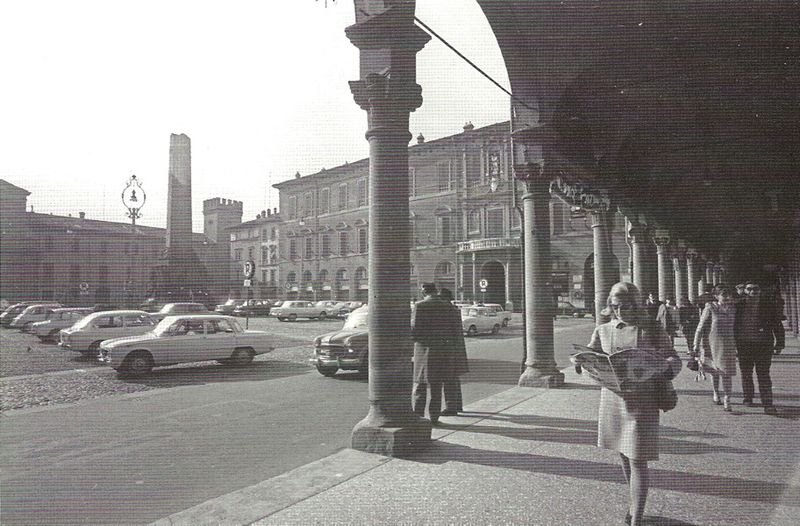
Corso della Repubblica follows the ancient Via Aemilia. Via della Repubblica is also aligned with the Roman route and is lined with shops, porticos, and historic residences.
Abbey of San Mercuriale
This 12th-century Romanesque abbey contains Renaissance altarpieces. It is on Piazza Aurelio Saffi.
Rocca di Ravaldino
This medieval fortress is associated with Caterina Sforza.
Museums and Historic Buildings
- San Domenico Museum Complex Houses art and archaeological collections and hosts special exhibitions.
- Pinacoteca Civica di Forlì Features works by Marco Palmezzano and other Italian masters.
- Palazzo del Merenda and Biblioteca Civica This 19th-century palazzo houses Forlì’s public library. Rare manuscripts are accessible by appointment (inviaggio.touringclub.it).
Other City Sites
- Chiesa di Santa Lucia A Baroque church on Piazza Aurelio Saffi.
- Piazzale della Vittoria A grand entrance square open to the public and popular for gatherings and events.
Forlì’s museums, art galleries, and seasonal markets reflect the city’s heritage. Food festivals and exhibitions at the San Domenico Museum Complex are among the cultural events, alongside regional specialties such as cured meats and cheeses (Zainoo).
Practical Visiting Information
Hours and Tickets
- Via Aemilia Always open and free to explore.
- Piazza Aurelio Saffi Open 24/7 and free.
- Abbey of San Mercuriale Daily, 9:00–18:00; free entry, with donations welcome. Guided tours are available on request.
- Rocca di Ravaldino Tuesday–Sunday, 10:00–17:00; €5 for adults, with discounts for students and seniors.
- San Domenico Museum Complex Tuesday–Sunday, 10:00–18:00; €7. Combined tickets are available.
- Pinacoteca Civica di Forlì Tuesday–Sunday, 10:00–18:00; €6.
- Chiesa di Santa Lucia Weekdays, 9:00–13:00 and 15:00–18:00; free admission.
Most historical sites are described as typically open Tuesday–Sunday, 10:00–18:00, while churches may have longer hours. Check for seasonal variations and holiday closures (overyourplace.com).
Getting There and Getting Around
- Train Forlì railway station is 1.5 km from the city center. Frequent trains run from Bologna, Rimini, and Ravenna.
- Car Take the A14 motorway and exit at Forlì; central parking is available.
- Bicycle City bike rentals and dedicated paths support local exploration.
- Local buses Connect the station with the center and key attractions.
- Air Forlì Airport serves the city.
Walking or cycling along Corso della Repubblica is one way to explore the route and historic center. Guided tours are also available.
Accessibility and Facilities
Most main attractions are wheelchair accessible, and most main streets and attractions are accessible to visitors with mobility challenges, though some historic buildings may have limitations. Public restrooms are available at Piazza Saffi, the San Domenico Museum, and major parks. Free Wi-Fi is available in public areas and some museums. The city is considered safe for tourists; standard precautions apply.
Tours and Experiences
Walking tours last 2–3 hours, cover key sites and local history, and cost €10–20 per person (womtravel.it). Guided tours in English and Italian are available at most sites; most major sites offer English-language tours. Downloadable maps and audio guides are available through the Forlì tourism office and online.
Tips
Spring and autumn offer mild weather and fewer crowds. For local food and drink, try piadina, tagliatelle al ragù, tortellini in brodo, and Sangiovese wine.
For shopping, look for local ceramics, crafts, wines, and regional foods. Markets are held in Piazza Saffi. Shops generally open 9:00–13:00 and 16:00–19:30. Recommended restaurants include Trattoria Petito, Caffè della Piazza, and Osteria Don Abbondio.
For a responsible visit, use public transport or bicycles where possible, dispose of waste properly, respect heritage guidelines, and support local artisans and responsible businesses. Forlì preserves its Roman and medieval legacy through educational programs and interpretive signage.
Nearby Places
The Park of Via Dragoni and green spaces around Monte Poggiolo offer places for walking, cycling, and relaxation. Monte Poggiolo also has panoramic views and archaeological interest.
Frequently Asked Questions (FAQ)
Are tickets required for Via Aemilia or its main attractions?
Via Aemilia and Piazza Saffi are free. Museums and the fortress require tickets.
What are typical opening hours for historical sites?
Many sites are open Tuesday–Sunday, 10:00–18:00. Churches may have longer hours; individual opening times are listed above.
Is the area accessible for those with mobility challenges?
Most main streets and attractions are accessible, but some historic buildings may have limitations.
Are guided tours available in English?
Yes. English-language tours are available at most major sites; tours at most sites are offered in English and Italian.
What’s the best time to visit?
Spring and autumn are recommended for pleasant weather and fewer crowds.