Introduction to Tomba Govi and Its Significance in Genoa
Genoa is renowned for its rich history, cultural diversity, and vibrant artistic heritage. Among its many commemorative landmarks, the Tomba Govi stands out as a tribute to Gilberto Govi (1885–1966), a legendary figure in Genoese dialectal theater. Govi’s enduring influence on regional arts and Italian performing traditions has made his tomb a focal point for those seeking to connect with Genoa’s identity. Situated in the Monumental Cemetery of Staglieno—one of Europe’s most remarkable open-air museums of funerary art—the Tomba Govi is not only a monument to an artist but also a testament to the city’s reverence for its cultural icons.
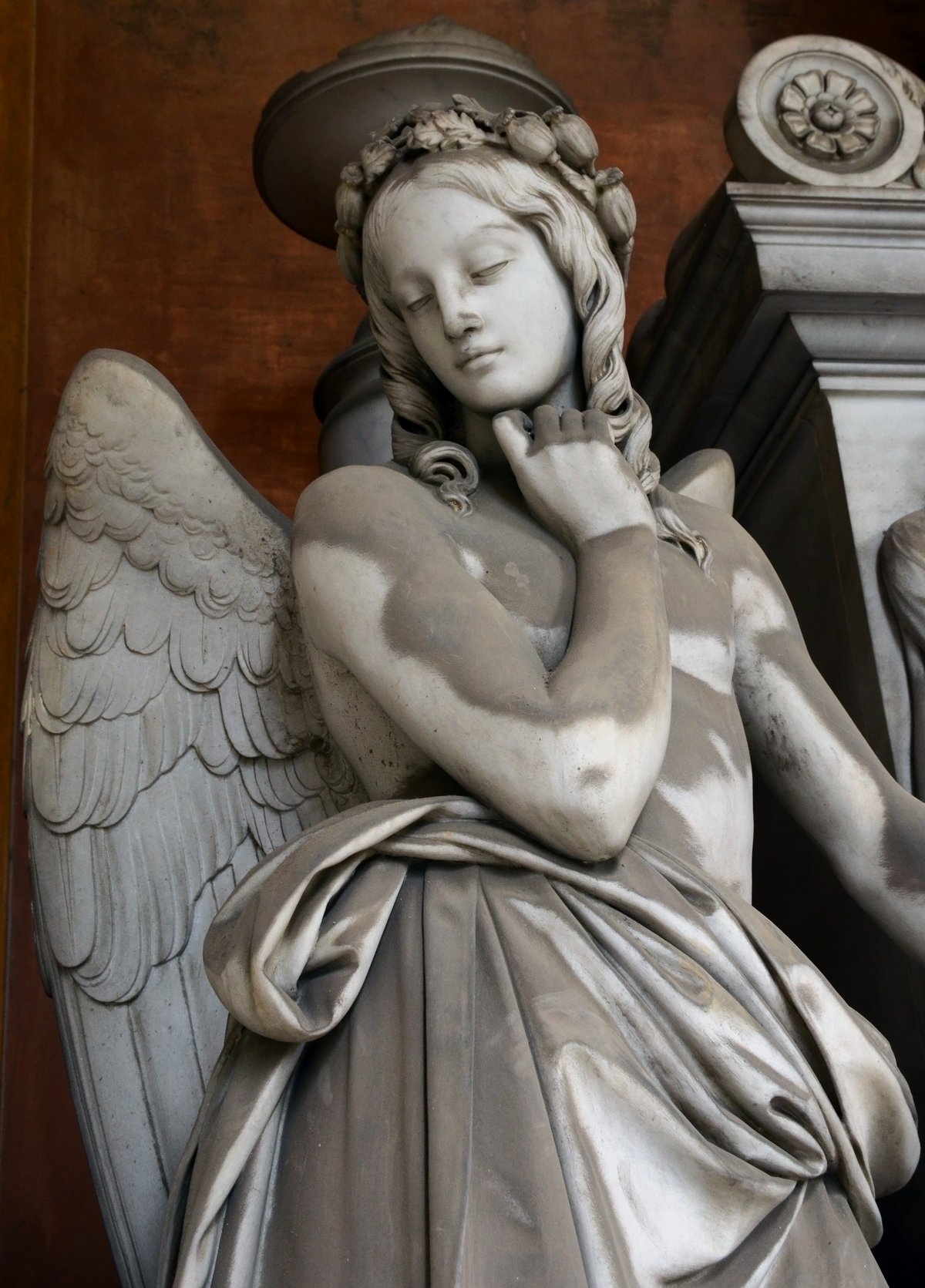
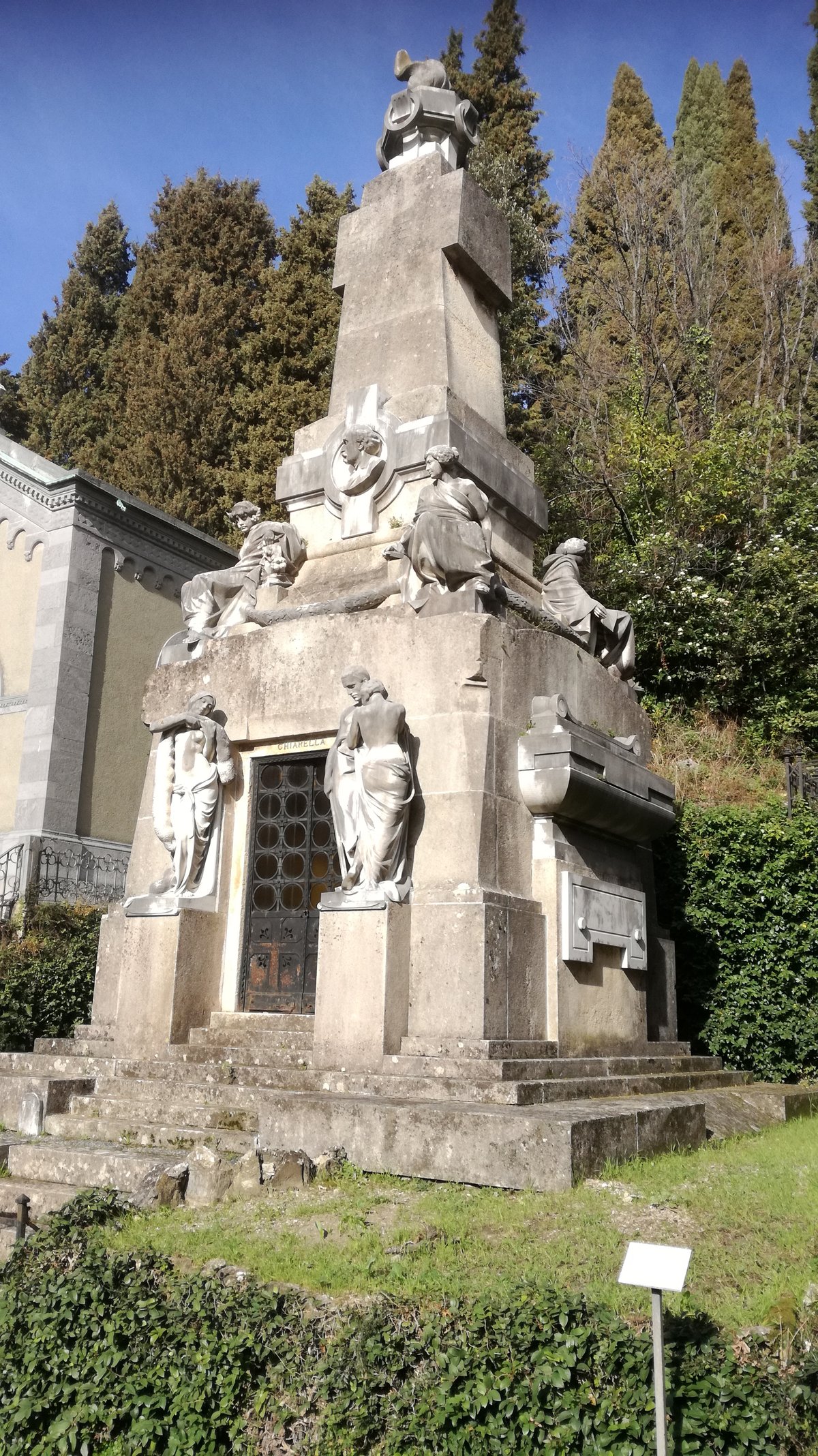
The Staglieno Cemetery, inaugurated in 1851, is famous for its grand sculptures, striking architecture, and tranquil setting. Tomba Govi, with its lifelike marble statue and theatrical motifs, exemplifies the artistic and memorial traditions of the city. This guide provides a comprehensive overview of Gilberto Govi’s life and legacy, the artistic and historical context of his tomb, and detailed practical advice for planning your visit—including hours, ticketing, accessibility, and nearby attractions—ensuring an enriching and seamless experience for all visitors.
For more in-depth information, consult resources such as the Visit Genoa official guide, the Mare Nostrum Rapallo biography of Gilberto Govi, and detailed historical perspectives on the Monumental Cemetery of Staglieno.
Discovering Gilberto Govi and His Monument in Genoa
Gilberto Govi is celebrated as a foundational figure in Genoese dialectal theater, lauded for his compelling performances and unique comic timing. His work offered nuanced portrayals of Genoese life, capturing the city’s linguistic and cultural distinctions. Visiting Tomba Govi in Staglieno Cemetery offers not only a connection with his legacy but also insight into Genoa’s broader artistic and historical narrative.
Early Life and Artistic Formation
Born Amerigo Armando Gilberto Govi on October 22, 1885, in Genoa’s Castelletto district, Govi came from a family rooted in Emilia-Romagna (Treccani; Mare Nostrum Rapallo). He showed an early interest in art, attending the Accademia di Belle Arti, and began working as a draftsman by age sixteen. Inspired by his uncle, an amateur actor, Govi pursued theater, joining Genoa’s Accademia filodrammatica, where he first struggled with standard Italian but soon embraced Genoese dialect (Mare Nostrum Rapallo).
The Birth of Genoese Dialectal Theatre
Disenchanted with traditional Italian theater, Govi pioneered the Genoese Dialectal Theatre, founding his own troupe in 1918 (Wikipedia). Govi’s performances were marked by expressive gestures, precise comic timing, and a deep understanding of local character, helping to legitimize and popularize regional dialects on stage (Mare Nostrum Rapallo).
Signature Works and Artistic Style
Govi’s repertoire includes:
- I manezzi pe majâ na figgia (“How to Marry Off One’s Daughter”)
- Pignasecca e Pignaverde (“Dry Pinecone and Green Pinecone”)
- Colpi di Timone (“Rudder Blows”)
- Quello bonanima (“The One Who Had a Good Soul”)
- Gildo Peragallo, ingegnere (“Gildo Peragallo, Engineer”)
- I Gustavino e i Passalacqua (“The Gustavinos and the Passalacquas”)
- Sotto a chi tocca (“Who’s Next?”)
His acting style is celebrated for its humanity, humor, and deep empathy with Genoese life (Wikipedia; Teche Rai).
Cultural Impact and Legacy
Govi’s influence extended well beyond the stage. He shaped the image of Genoa and its people, championed the value of dialect, and inspired numerous generations of performers (Mare Nostrum Rapallo). His plays remain popular and are regularly performed and broadcast, particularly in Liguria.
The Final Years and Commemoration
Active in theater and television until his final years, Govi’s last performances included a memorable TV commercial and ongoing public appearances (Mare Nostrum Rapallo). He died in 1966, with his funeral at the Church of Santa Zita attended by many admirers.
Tomba Govi at Staglieno Cemetery: History and Significance
Tomba Govi is located in the Galleria di S. Antonino of Staglieno Cemetery, a site renowned for its artistic monuments (Turismo Letterario). The tomb, sculpted by Guido Galletti in 1963, features theatrical masks symbolizing comedy and tragedy, reflecting Govi’s lifelong dedication to drama (Lonely Planet).
Visiting Tomba Govi: Practical Information and Tips
- Location: Galleria di S. Antonino, Monumental Cemetery of Staglieno, Genoa.
- Visiting Hours: Typically daily 7:30 AM–5:00 PM, last entry at 4:30 PM. Check official sources for seasonal changes.
- Tickets: General admission is free. Guided tours may require advanced booking and a fee.
- Accessibility: Some areas have uneven terrain; shuttle services operate for those with mobility challenges.
- Guided Tours: Offered by the Genoa Tourist Office and independent operators (Visit Genoa).
- Best Times: Mornings or weekdays for a quieter experience.
- Nearby Attractions: Giardini Govi, Museo dell’Attore, and Genoa’s historic center.
- Travel Tips: Wear comfortable shoes, bring water, and download a map for navigation.
Other Memorials and Tributes in Genoa
- Statue in Giardini Govi: Celebrates Govi’s cultural pride (Turismo Letterario).
- Museo dell’Attore: Exhibits Govi’s studio, costumes, and memorabilia (Museo dell’Attore).
- Cultural Events: Commemorations held on Govi’s anniversaries (Mare Nostrum Rapallo).
FAQs
What are the visiting hours for Tomba Govi and Staglieno Cemetery?
Generally 7:30 AM–5:00 PM; check for updates on holidays or special events.
Is there an entrance fee?
Entry is free. Guided tours may incur a fee.
Is the cemetery accessible?
Some areas are accessible, but the terrain is hilly; shuttles and assistance available.
Are guided tours available?
Yes, in Italian and sometimes English. Book in advance for best availability.
What else is nearby?
Giardini Govi, Museo dell’Attore, and Genoa’s historic sites.
Monumental Cemetery of Staglieno: History, Layout, and Artistic Heritage
Staglieno Cemetery was designed in the 19th century as a response to Napoleon’s edicts moving burials outside city walls (Wikipedia; Ancient Origins). The cemetery’s Neoclassical design, by Carlo Barabino and Giovanni Battista Resasco, was completed in 1851 and expanded over subsequent decades.
Layout:
Staglieno covers over one square kilometer, with grand colonnades, monumental staircases, and sections dedicated to different religious communities (Wikipedia). Notable features include the Porticato Inferiore, Porticato Superiore with its Pantheon, and the Boschetto Irregolare garden.
Artistic Heritage:
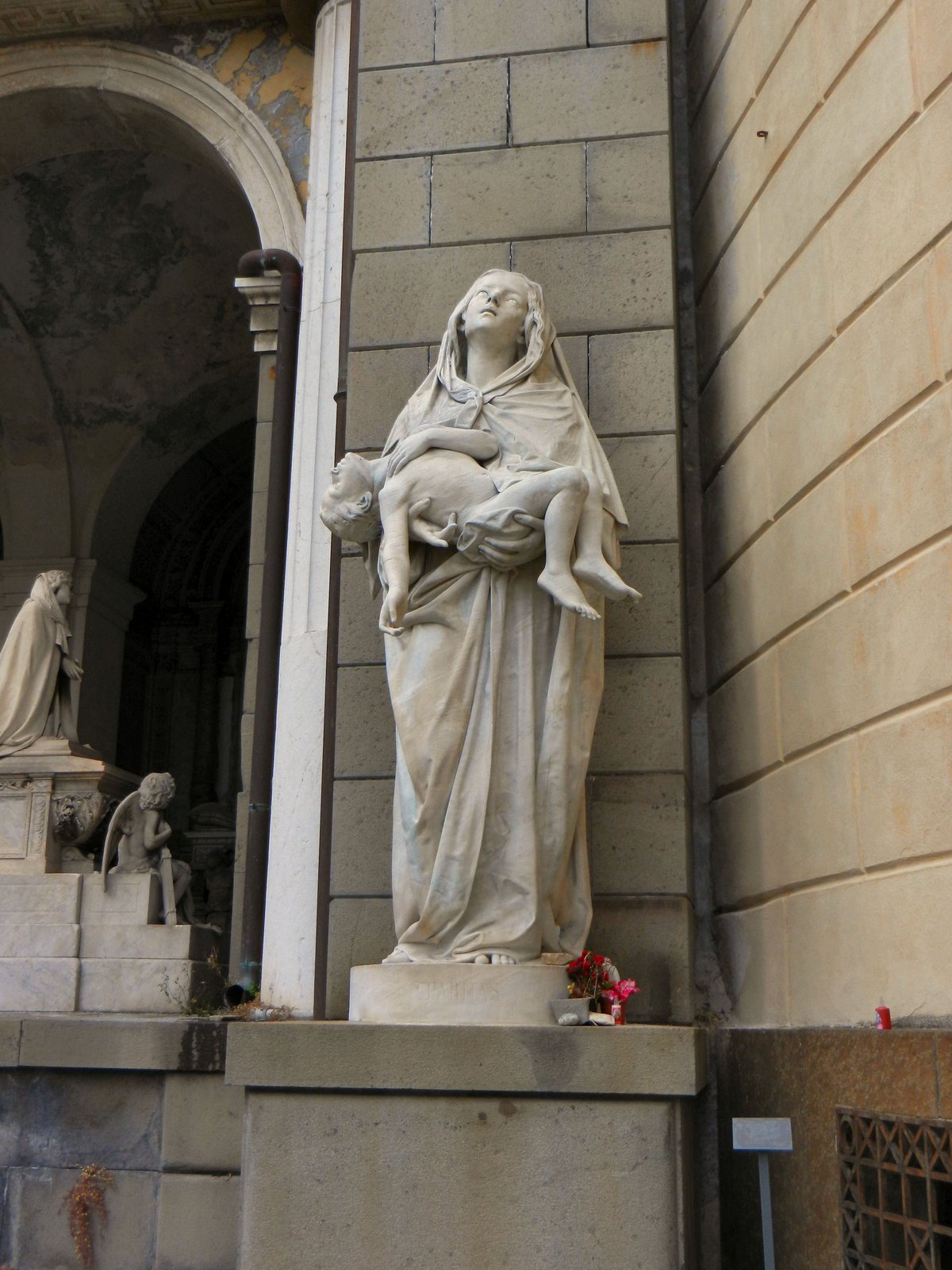
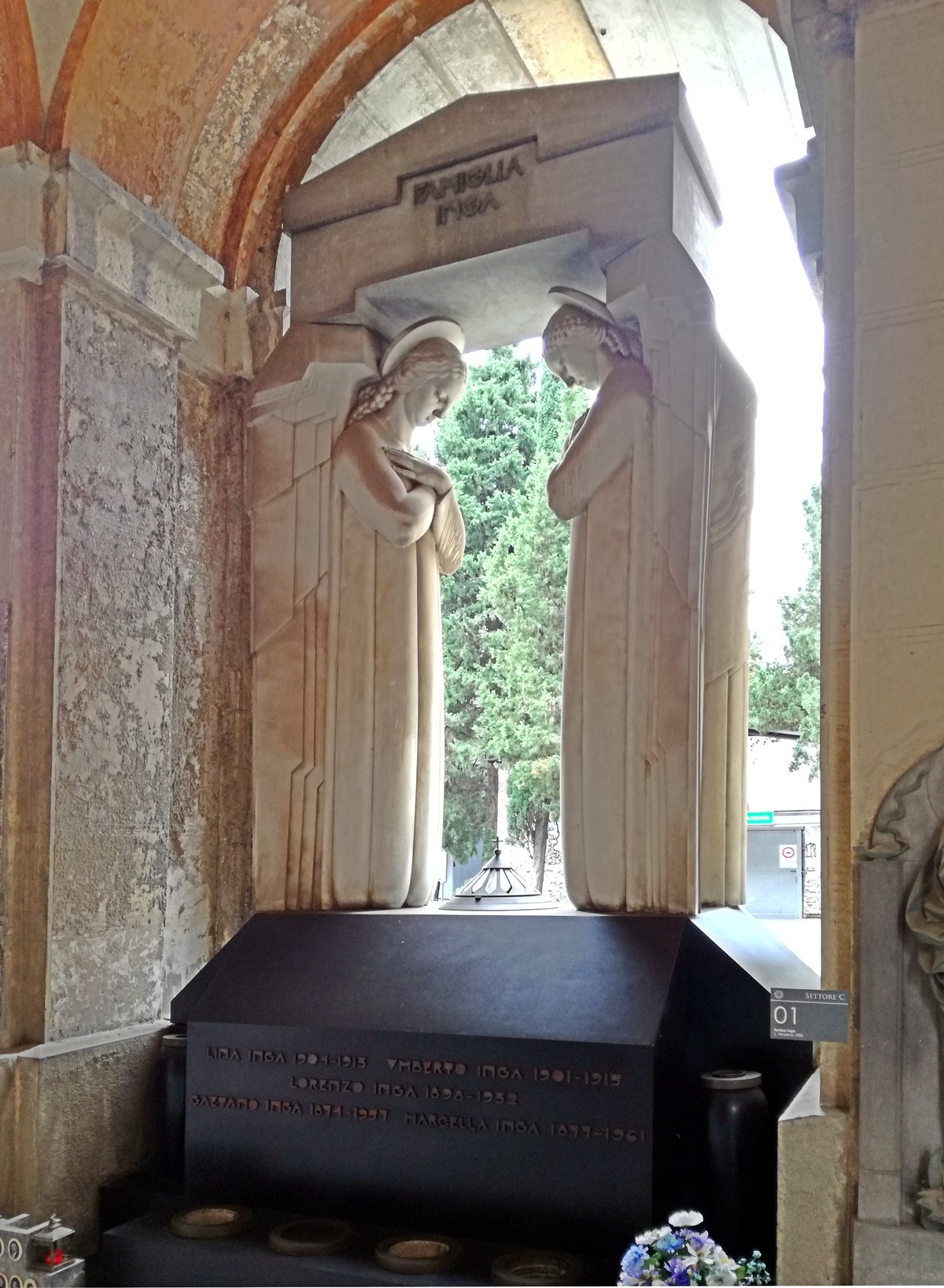
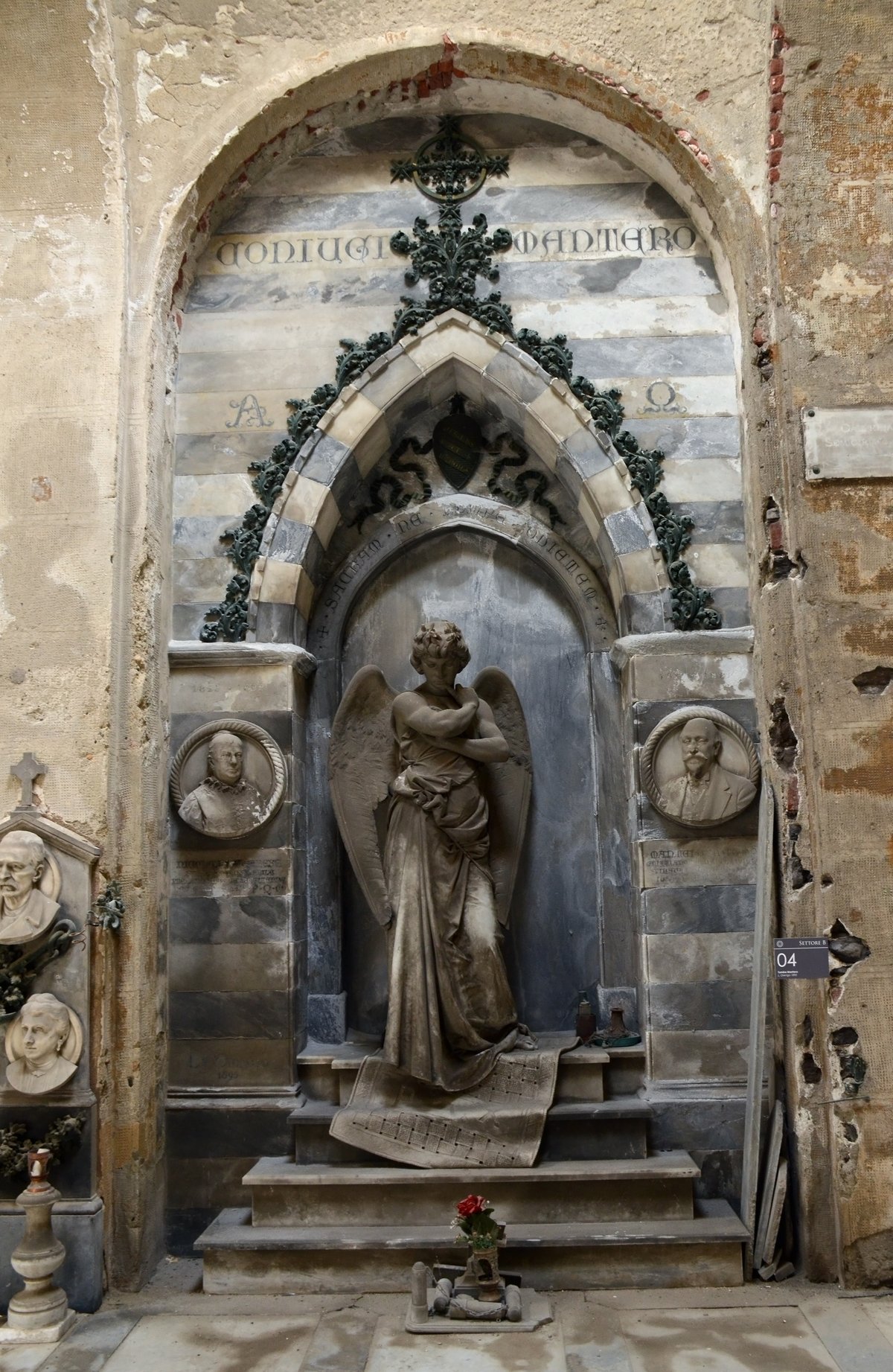
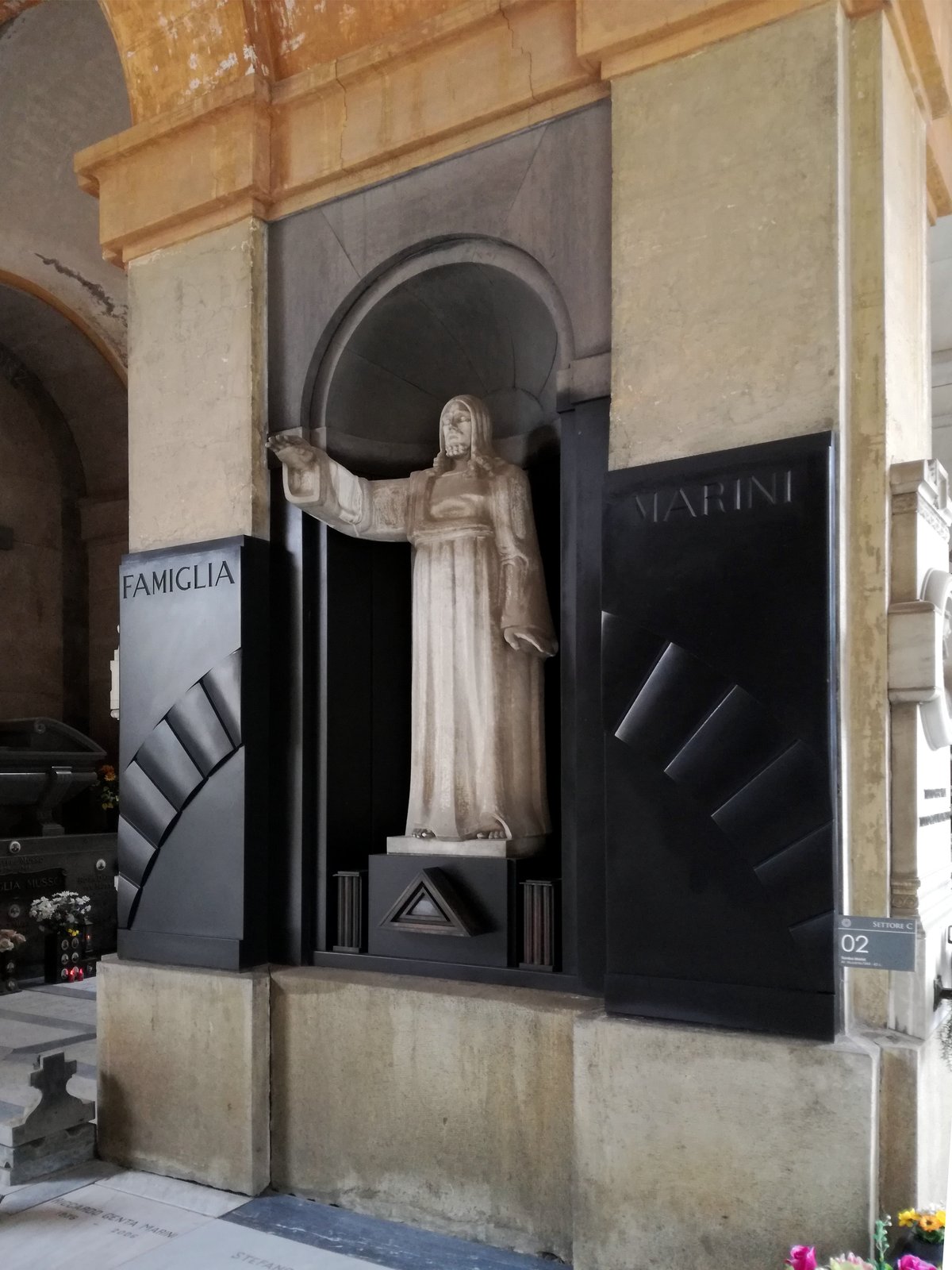
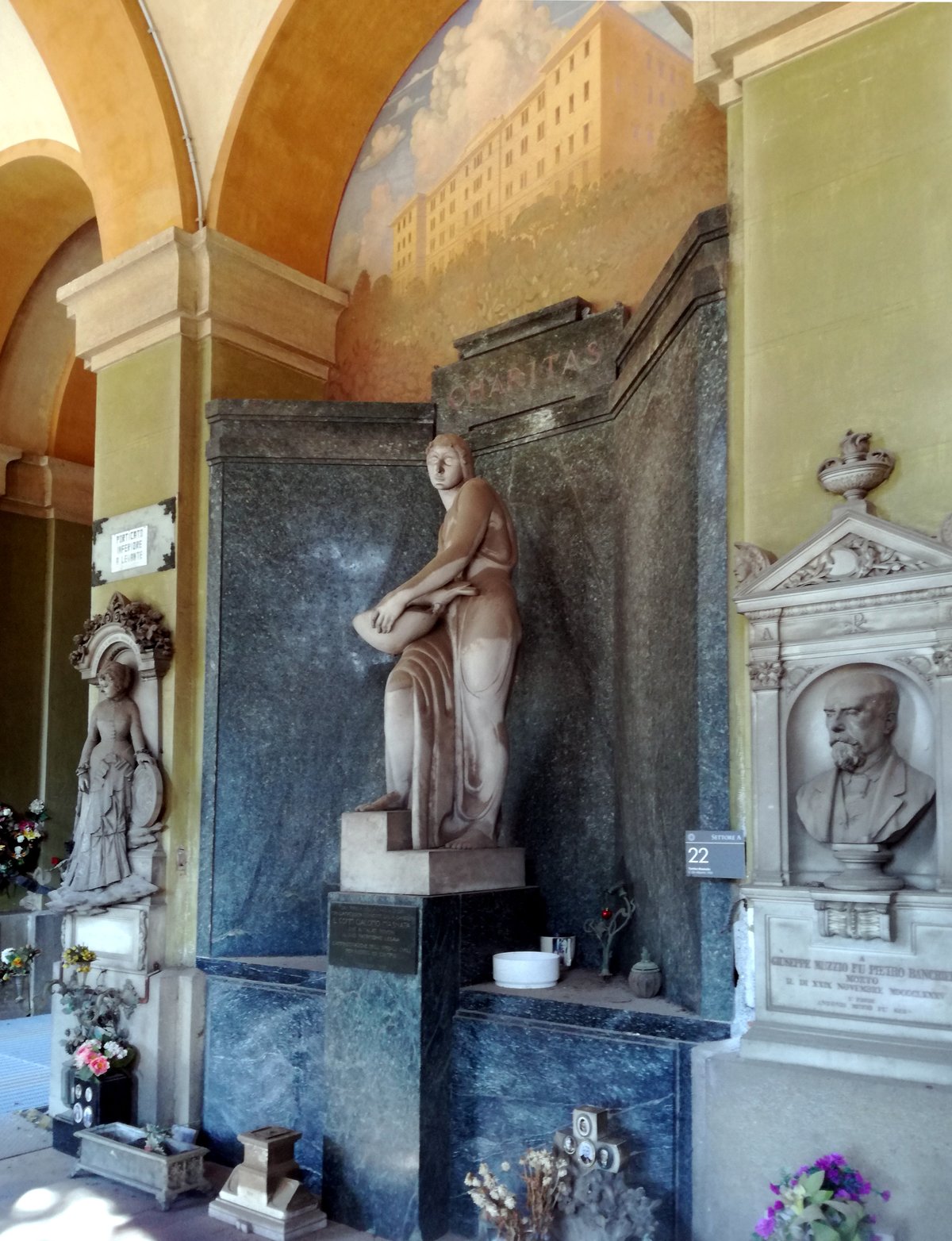
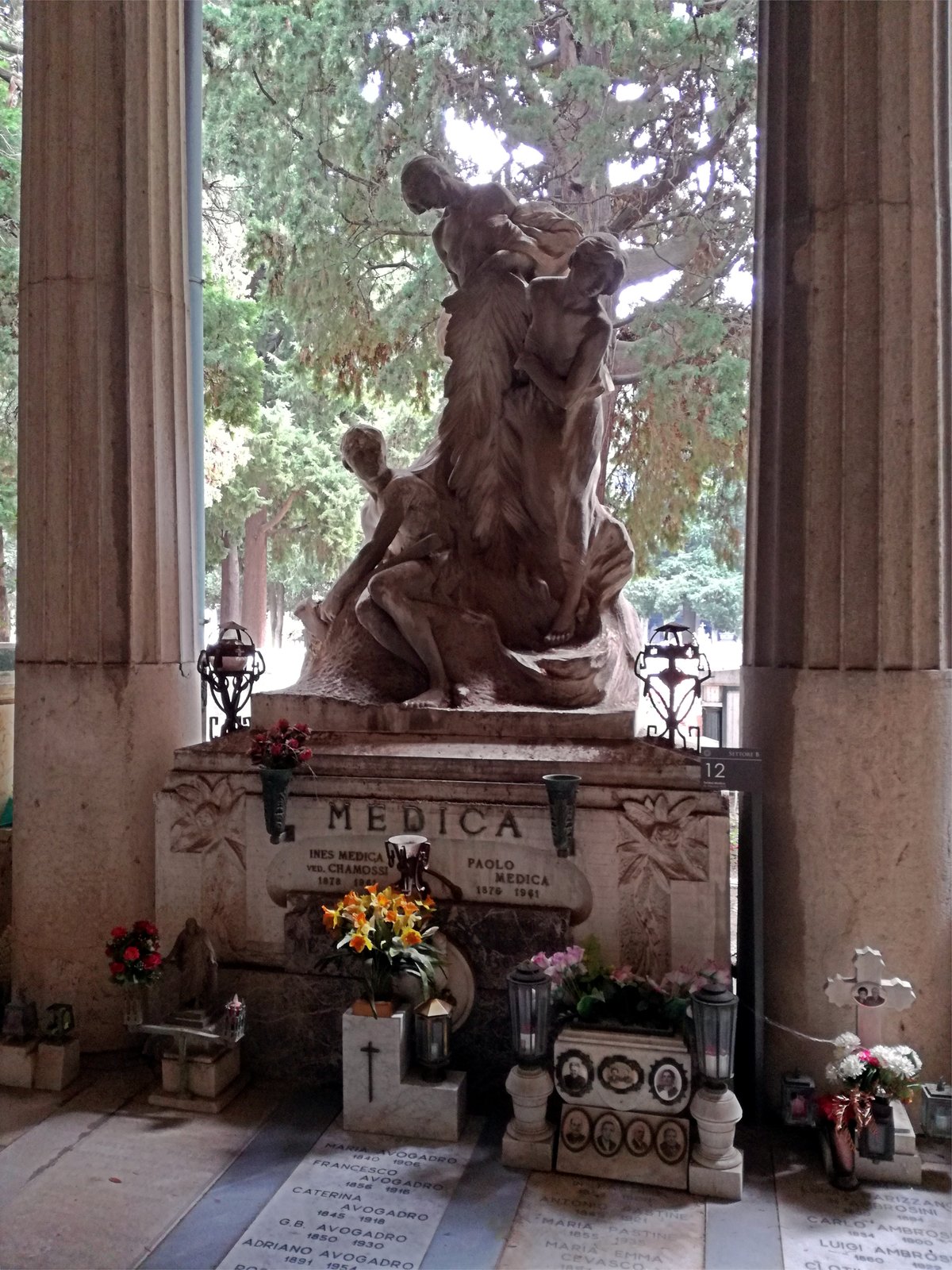
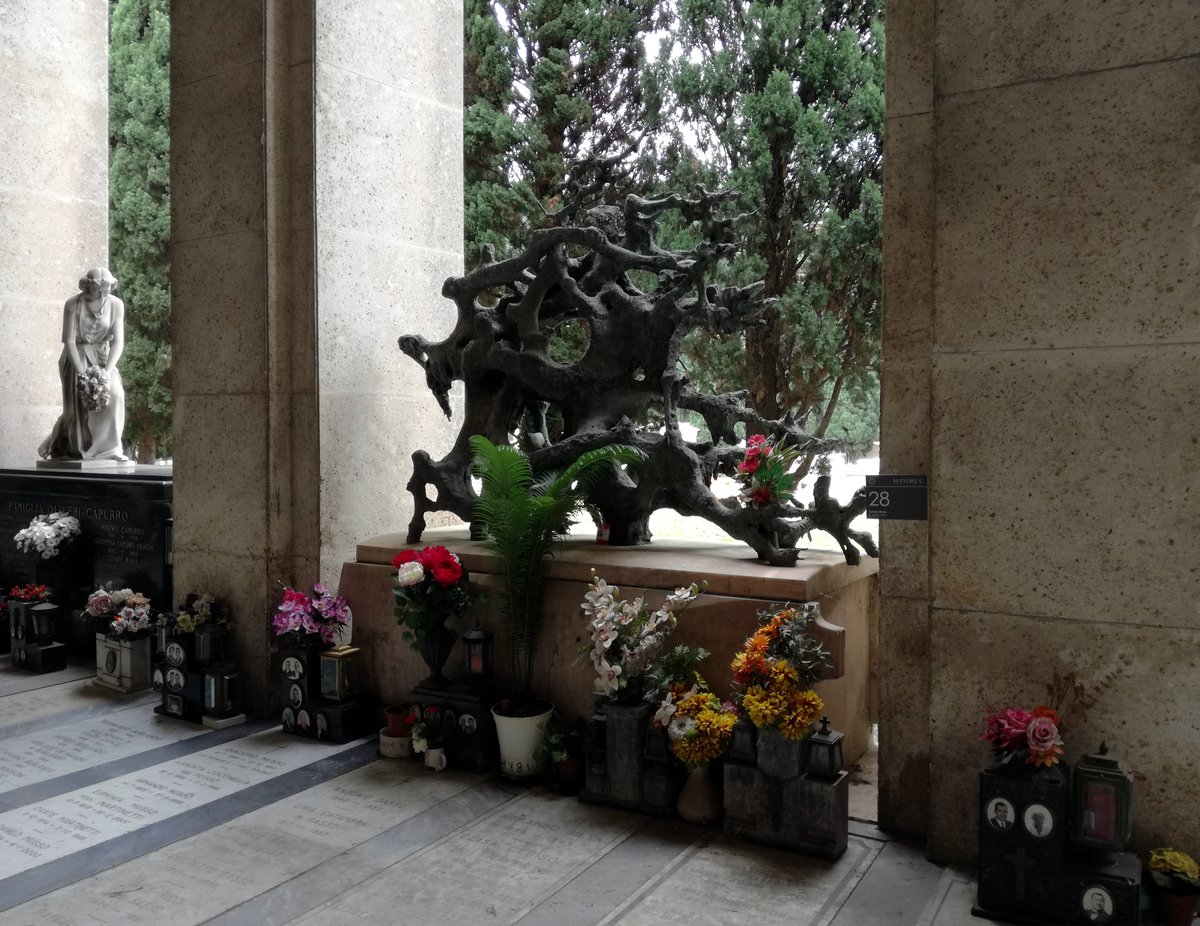
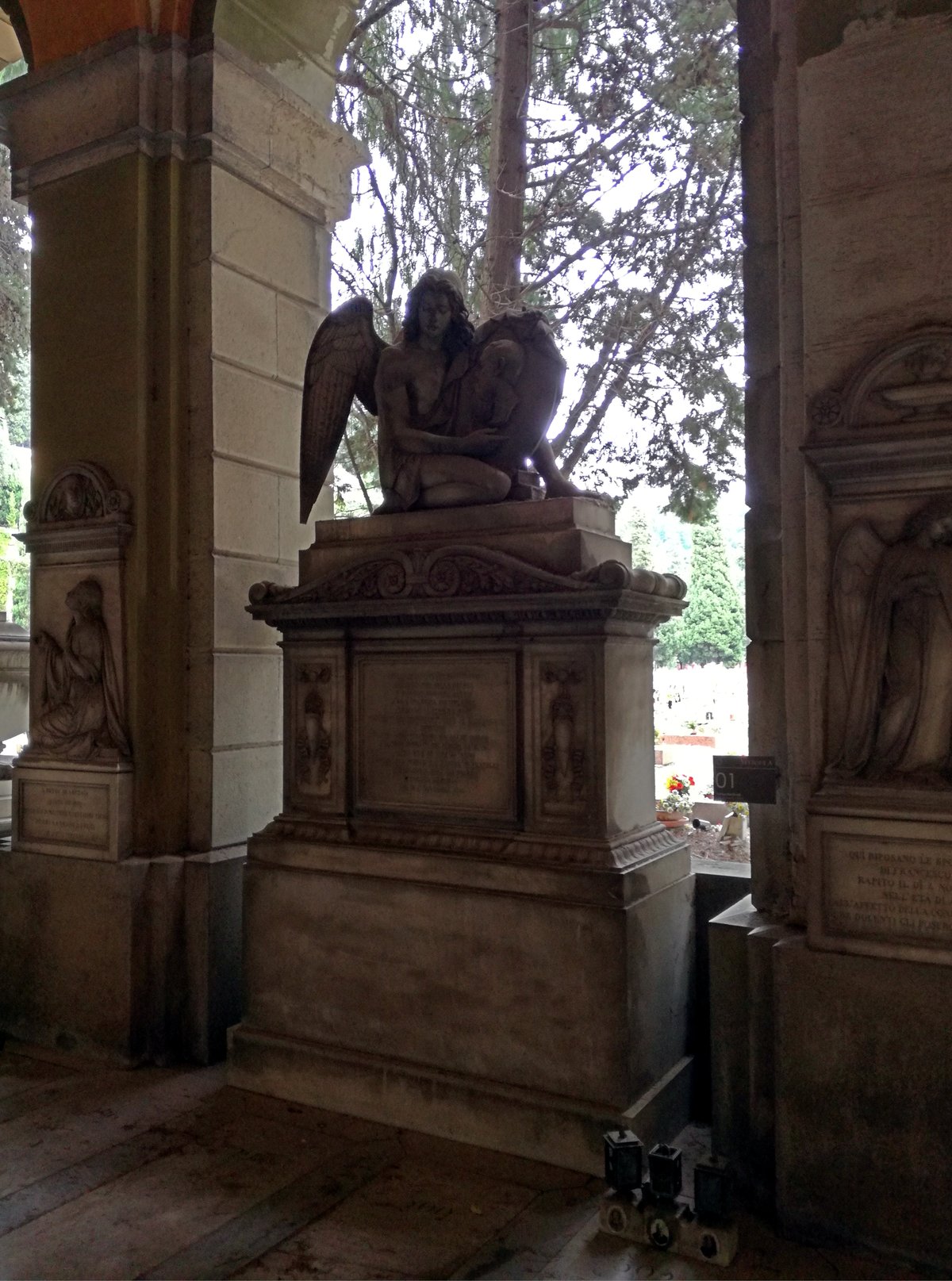
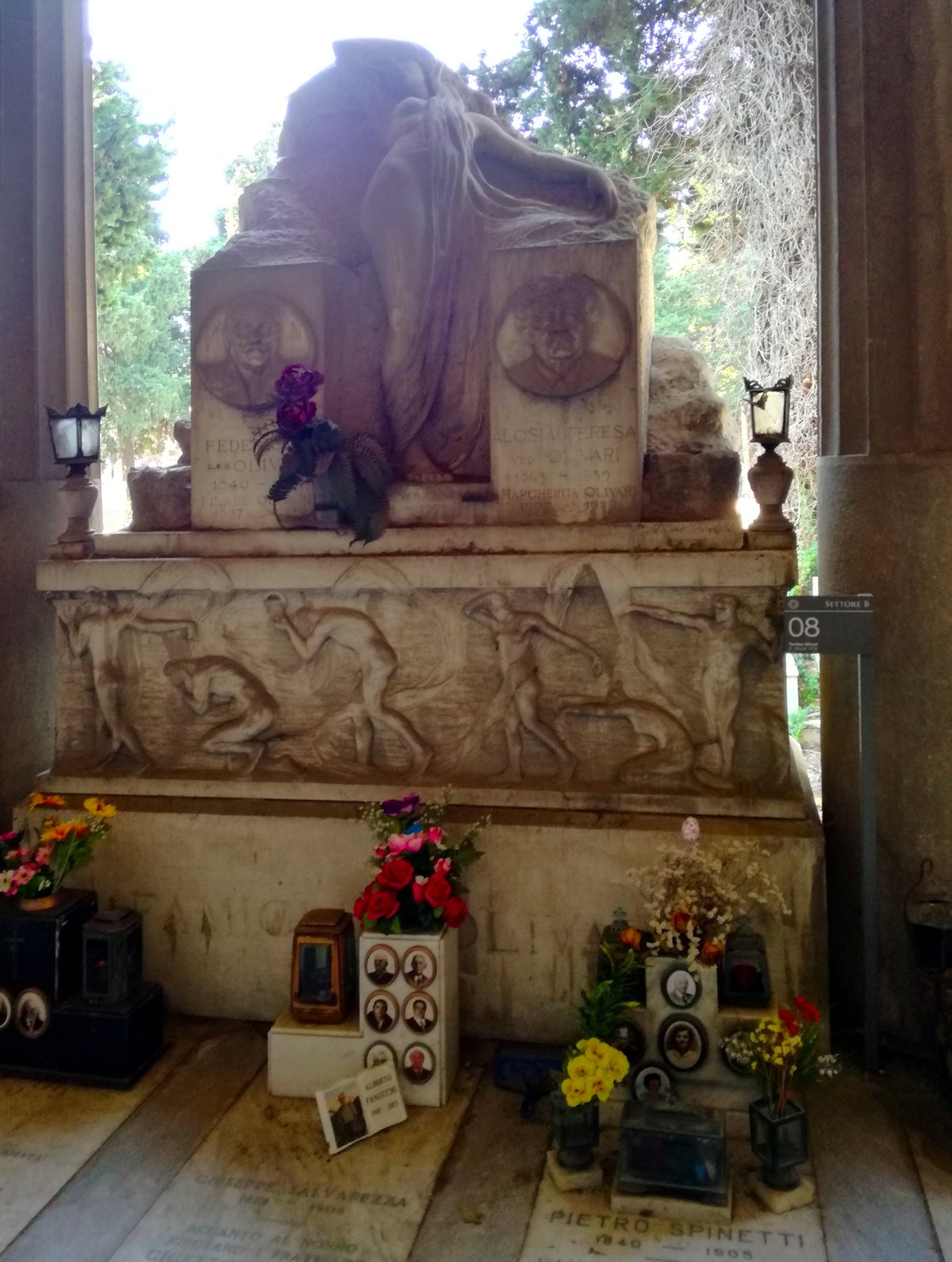
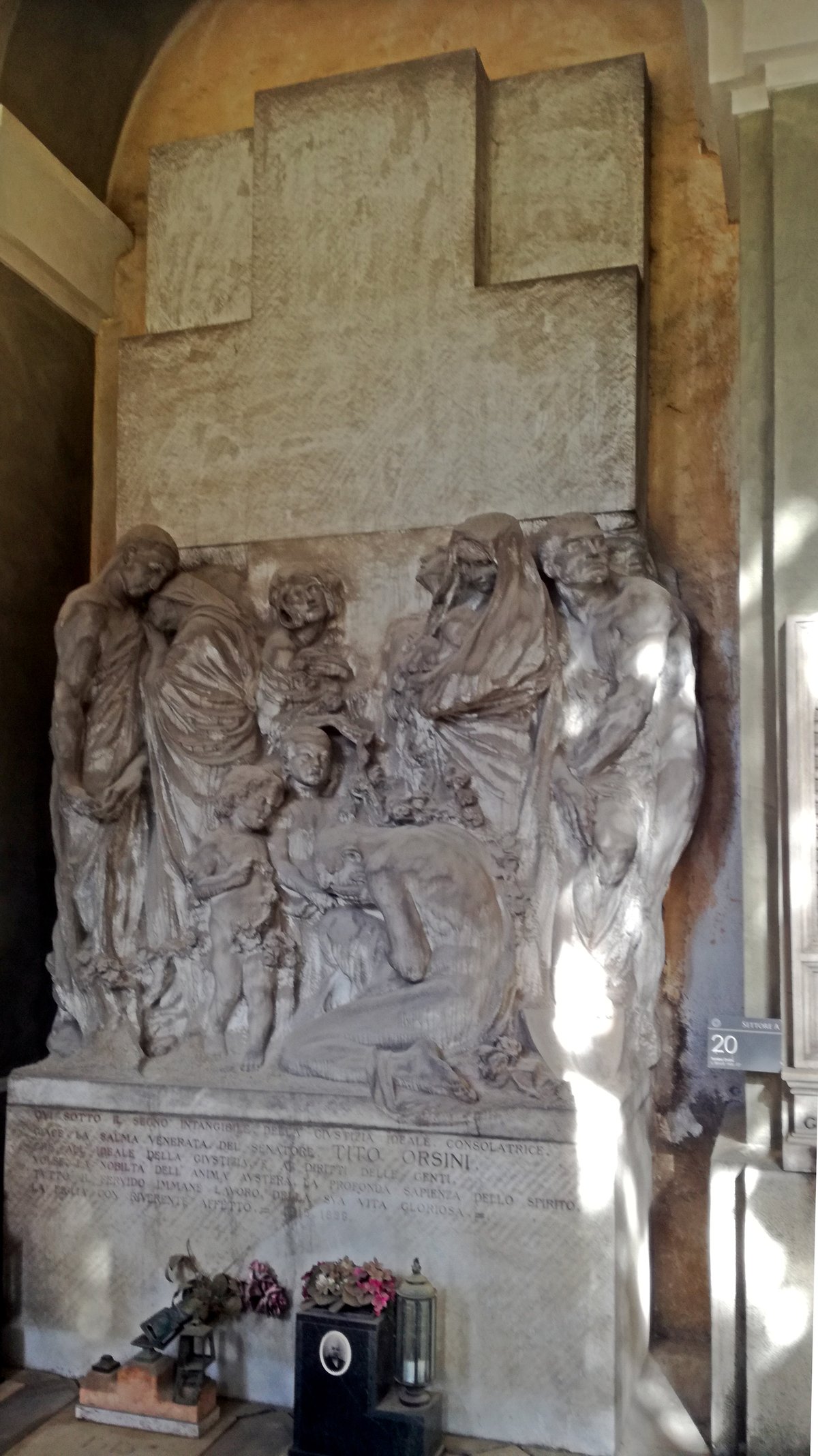
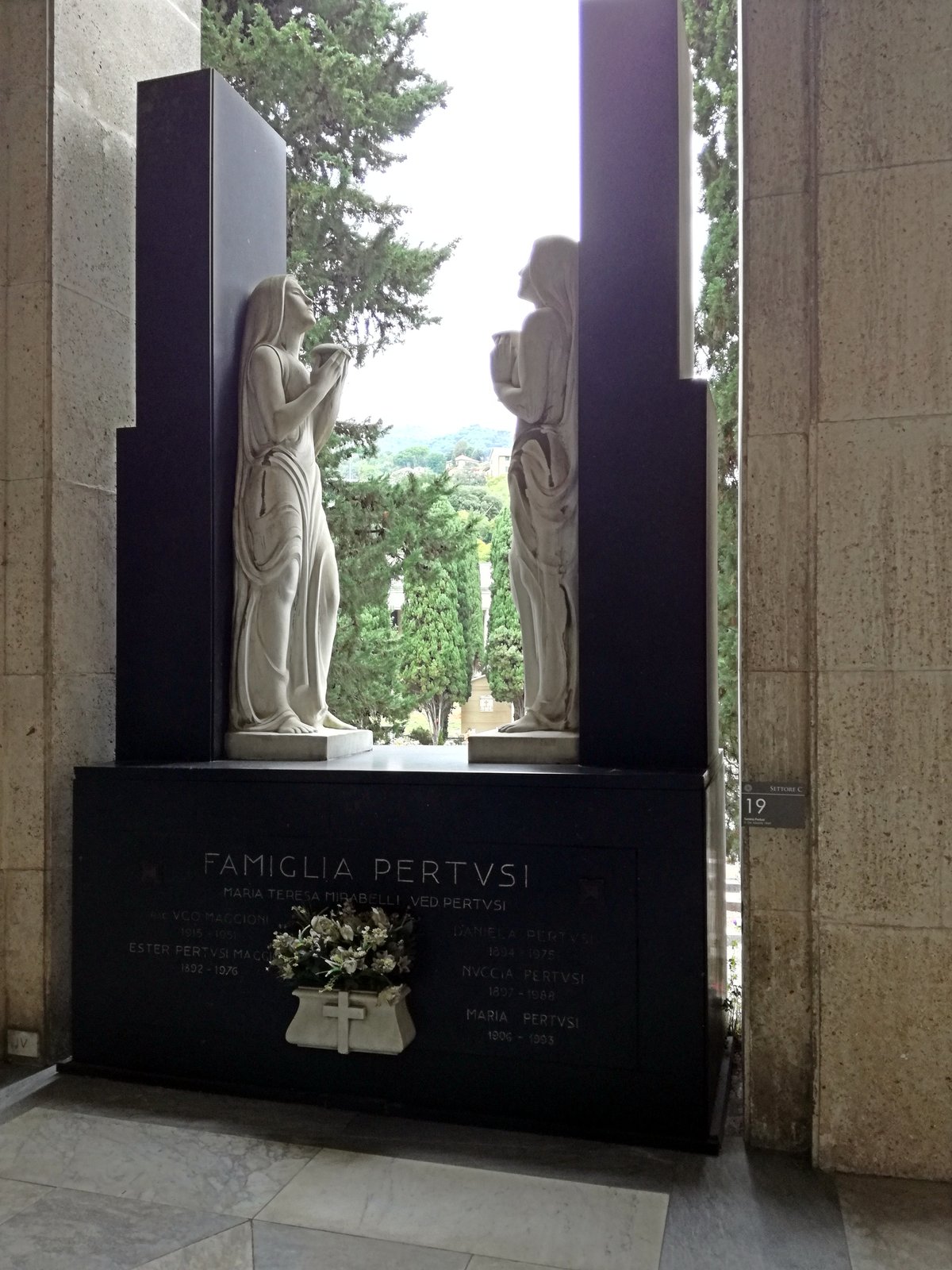
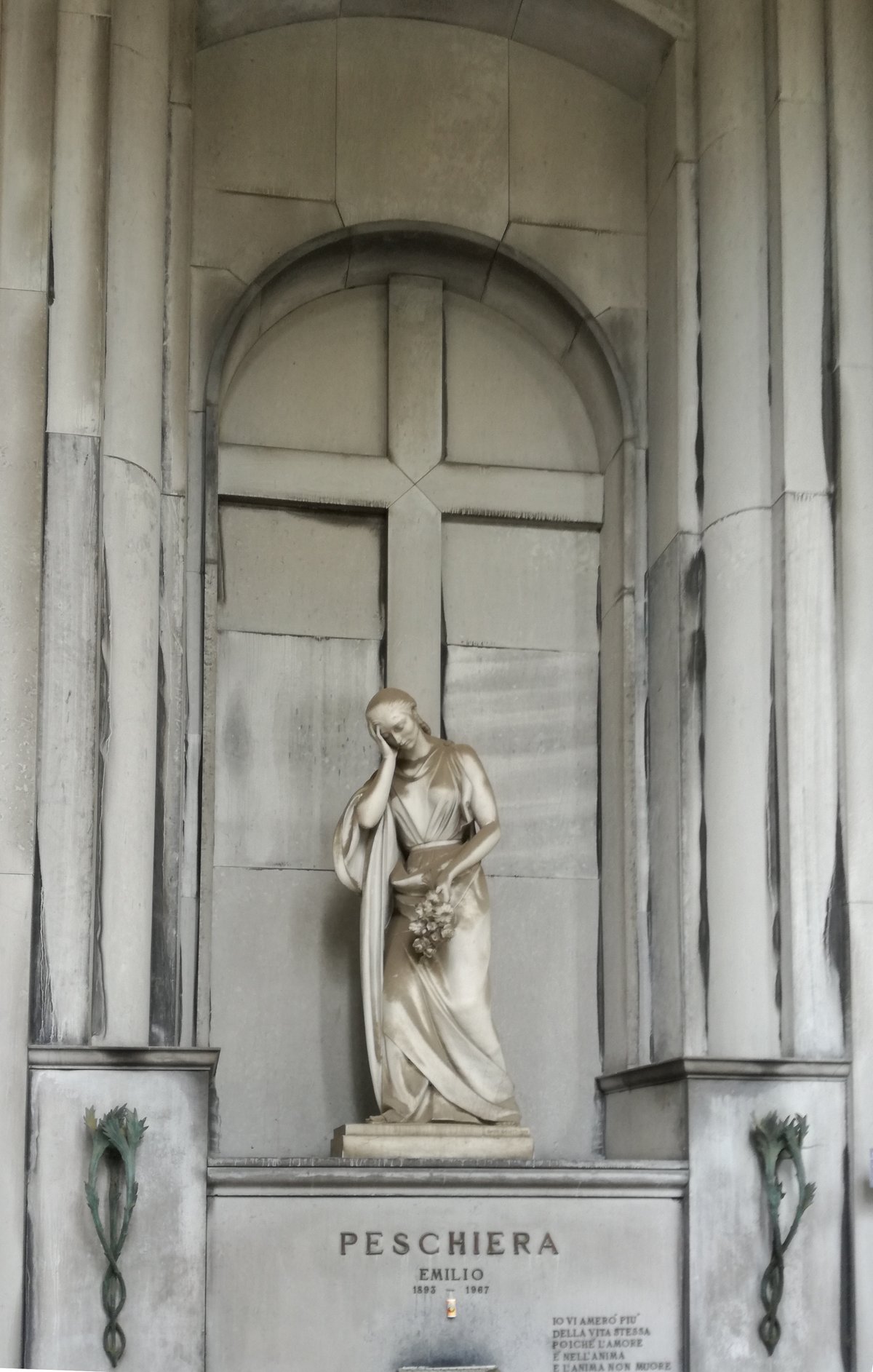
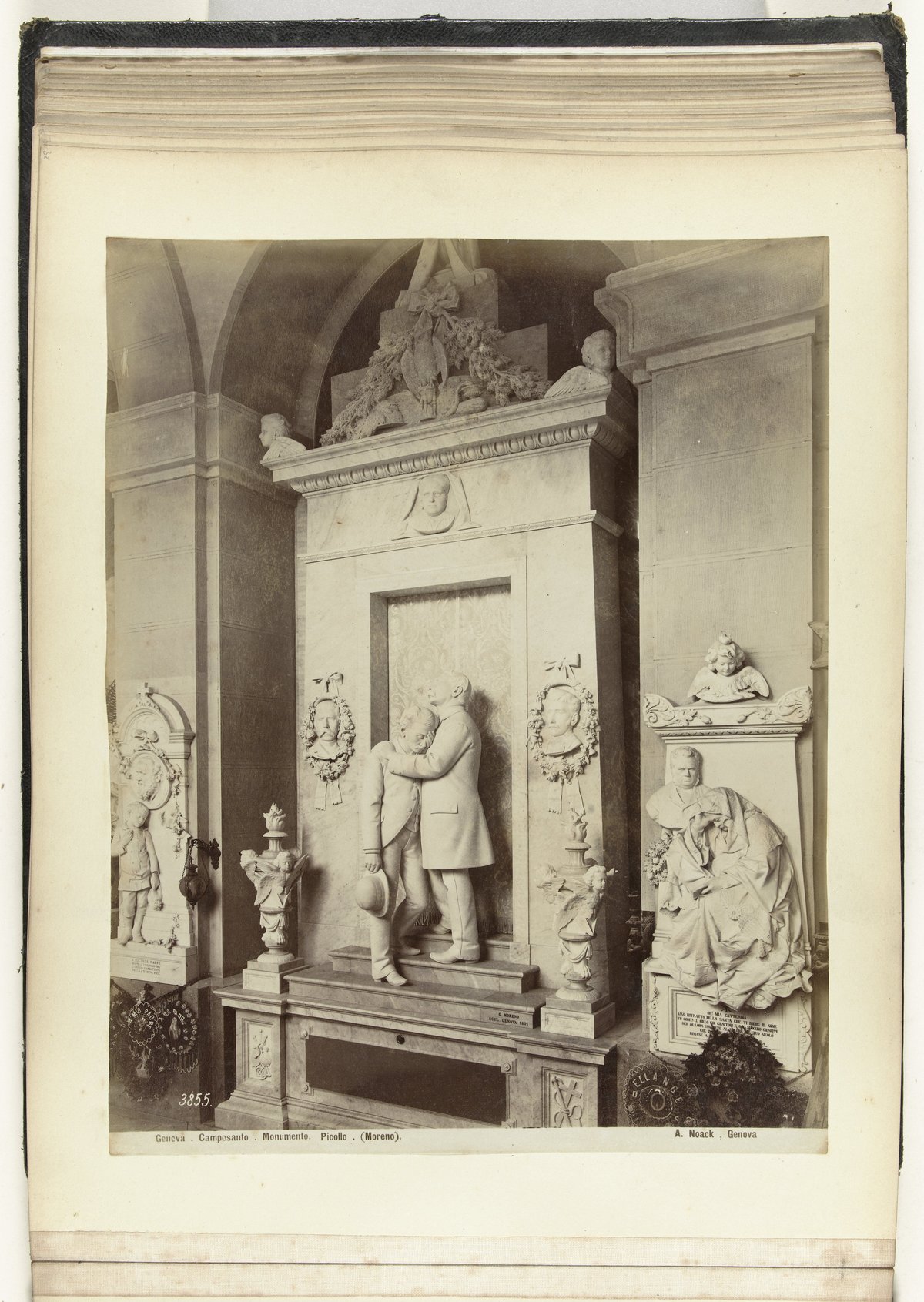
The cemetery is famed for its collection of funerary sculptures by artists such as Leonardo Bistolfi, Augusto Rivalta, and Giulio Monteverde (Wikipedia). Monuments like that of Caterina Campodonico and the Angel of the Ribaudo tomb are highlights.
Notable Visitors and Burials:
Staglieno has drawn international figures including Mark Twain and Friedrich Nietzsche and is the final resting place of Constance Lloyd (Oscar Wilde’s wife), Giuseppe Mazzini, and others (Visit Genoa).
Visitor Information: Hours, Tickets, and Accessibility
Hours:
Daily, 7:30 AM–5:00 PM, with last entry at 4:30 PM. Check Staglieno’s website for updates.
Tickets:
Entry is free. Guided tours can be booked at the Infopoint or online.
Accessibility:
Some areas are accessible; shuttles available for those with mobility challenges. Parking and public transport options are nearby (Wandering Jana).
Visitor Tips:
Wear comfortable shoes, bring insect repellent, and be respectful when photographing.
The Tomba Govi: Artistic Features and Cultural Context
The Tomba Govi, sculpted in white marble, features a lifelike statue of Govi in a contemplative pose, surrounded by theatrical motifs such as masks and scripts. This design reflects both his personal legacy and the traditions of Italian memorial art (Discover Genoa). The tomb’s placement amid Staglieno’s grand monuments reinforces its significance as a touchstone for Genoese culture.
Visiting Tomba Govi: Directions, Accessibility, and Guided Tours
- Location: Main section, easily accessed from the main entrance at Piazzale Resasco (Bimbe in Viaggio).
- Maps: Available at the entrance and online. Infopoint staff can assist with directions.
- Accessibility: Shuttle buses operate within the cemetery; check schedules at the infopoint.
- Guided Tours: Last about 90 minutes and can be booked onsite or through Genoa’s tourist offices (Discover Genoa).
Tips for a Meaningful Visit
- Visit on clear days for the best experience (Where’s Ben Been).
- Respect the solemnity of the site when taking photographs.
- Learn about Govi’s life beforehand to enrich your visit.
- Allocate time to explore other notable tombs and monuments.
For maps and tour schedules, consult the Visit Genoa guide.
Summary and Visitor Recommendations
A visit to Tomba Govi and the Monumental Cemetery of Staglieno is a profound way to engage with Genoa’s artistic heritage and civic pride. The tomb, with its evocative sculpture and theatrical motifs, highlights Govi’s importance in shaping Genoese identity. Staglieno’s open-air museum of funerary art offers a remarkable journey through history, art, and memory, accessible to all visitors. Complement your visit by exploring neighboring landmarks and cultural sites, and consider guided or audio tours for deeper insight. For planning assistance and the latest updates, consult the official Visit Genoa website.
Listen to the full story in the app
Your Personal Curator, in Your Pocket.
Audio guides for 1,100+ cities across 96 countries. History, stories, and local insight — offline ready.
Audiala App
Available on iOS & Android
Join 50k+ Curators
Sources
- verified
- verified
- verified
- verified
- verified
- verified
Last reviewed: