Introduction
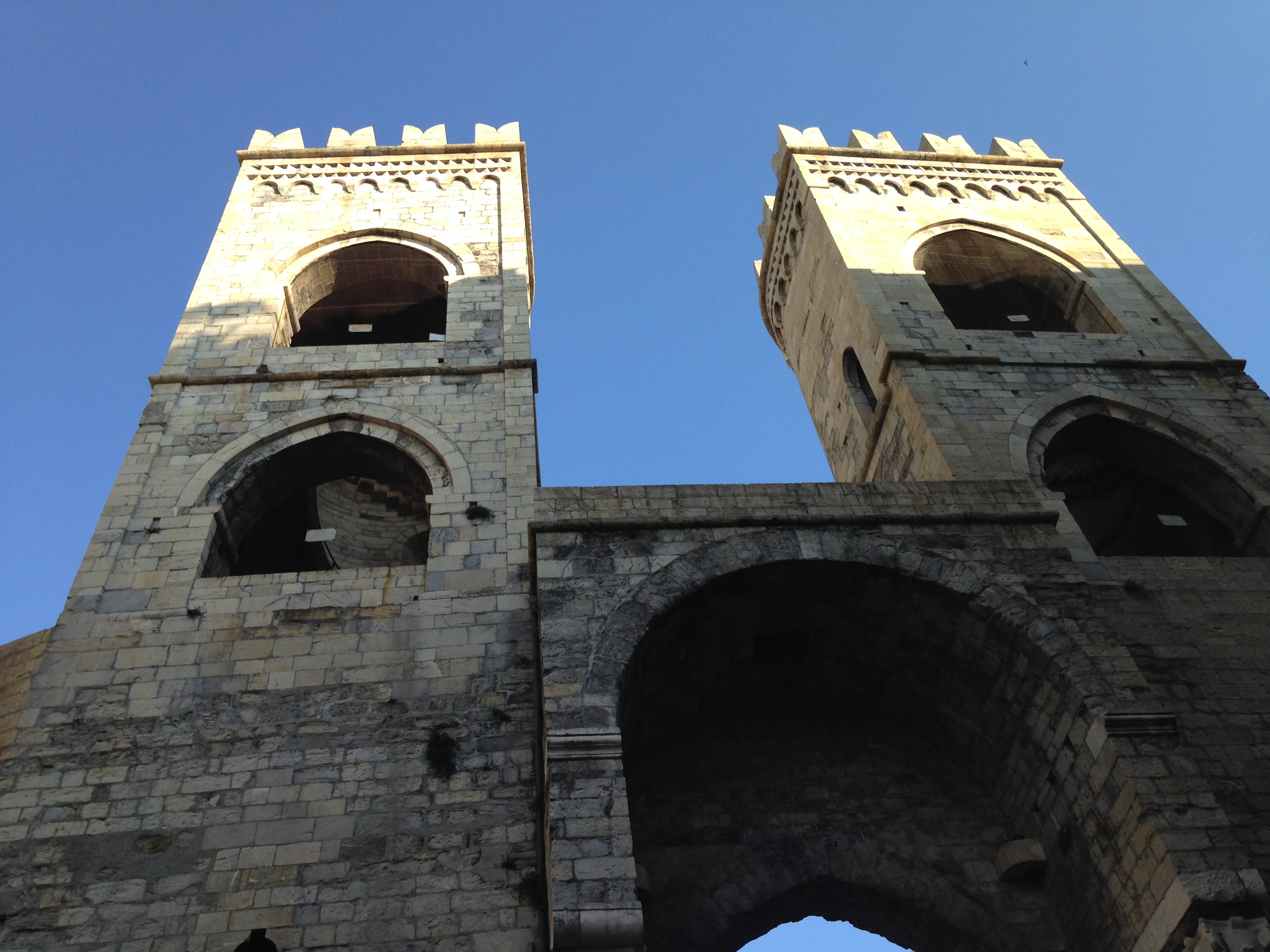
Nestled in the heart of Genoa’s historic San Fruttuoso district, the Ponte di Sant’Agata stands as a remarkable vestige of the city’s medieval and possibly Byzantine past. This ancient bridge, constructed to span the Bisagno River, once played a vital role in connecting Genoa to the eastern Ligurian territories, facilitating commerce, pilgrimage, and community life. Today, though much reduced from its original grandeur, the surviving arches of the Ponte di Sant’Agata offer a tangible link to centuries of Genoese history, resilience, and architectural ingenuity (FOSCA; Wikipedia - Chiesa di Sant'Agata).
This comprehensive guide provides you with a detailed overview of the bridge’s history, cultural significance, architectural features, practical visitor information, and tips for exploring this unique site within Genoa’s vibrant urban landscape.
Origins and Early History
The Ponte di Sant’Agata’s origins trace back to the medieval period, with the earliest documented reference in 1191 as "S. Agata de capite pontis Bisannis," highlighting its strategic importance as a crossing over the Bisagno River (Wikipedia - Chiesa di Sant'Agata). The bridge’s construction was likely influenced by Roman and Byzantine models, serving as an extension of the ancient Via Aurelia and possibly replacing or incorporating earlier Roman structures (FOSCA). Its proximity to the Sant’Agata church and hospice underscores the medieval practice of integrating infrastructure with religious and charitable functions.
Architectural Features and Evolution
Historically, the bridge boasted 28 stone arches stretching up to 400 meters, making it one of Genoa’s most significant engineering achievements (Il Secolo XIX). The arches were designed for flood resilience—a critical consideration given the Bisagno’s propensity for violent surges. Over the centuries, repeated floods, urban development, and infrastructure projects led to the gradual dismantling and burial of most of the bridge. By the late 20th century, only two arches remained visible, now stabilized with metal tie rods (FOSCA; Primocanale).
Cultural and Religious Significance
The bridge’s strategic location at the gateway to Genoa and its close ties with the Sant’Agata church imbued it with both practical and symbolic significance. It served as a vital artery for trade and travel along the Via Aurelia and as a focal point for religious and communal gatherings. The annual Fiera di Sant’Agata, a centuries-old fair held each February, continues to animate the area with processions, markets, and community celebrations (liguriaoggi.it).
Decline and Preservation
The bridge’s decline was accelerated by catastrophic floods—most notably in 1452, 1970, and the 1990s—as well as urban expansion that saw the Bisagno River redirected underground (Il Secolo XIX). Today, the remaining arches are preserved as historical artifacts, embedded within private property near Via Giuseppe De Paoli and visible from the public street.
Visiting Ponte di Sant’Agata
Visiting Hours and Tickets
- Public Access: The surviving arches of Ponte di Sant’Agata can be viewed freely from Via Giuseppe De Paoli and the adjacent church at any time of day. The remains are not part of a formal museum and do not require a ticket for viewing from public areas (visitgenoa.it).
- Limited Access: The arches are located within a private courtyard (used as a parking area); access inside is generally restricted except during special heritage events or guided tours (ilmugugnogenovese.it).
- Special Events: During the annual Fiera di Sant’Agata or local heritage days, temporary access may be allowed. Check with the Genoa tourism website or city tourist offices for event-specific details.
Accessibility
- Street Viewing: The arches can be seen from the street, accessible to most visitors.
- Mobility: Direct access to the arches may require navigating uneven surfaces and is not wheelchair-friendly.
- Transport: The site is a short walk from Genova Brignole train station, and well-served by city buses.
Travel Tips
- Best Time to Visit: Early morning or late afternoon offers ideal lighting for photographs.
- Combine Visits: Explore alongside the Chiesa di Sant’Agata and the Borgo Incrociati neighborhood.
- Festivals: Plan your visit during the Fiera di Sant’Agata in February for a vibrant cultural experience.
- Respect Private Property: Do not trespass in the courtyard unless part of an authorized tour.
Nearby Attractions
- Chiesa di Sant’Agata: Historic church with notable religious art and architecture.
- Borgo Incrociati: Traditional Genoese neighborhood with shops and eateries.
- Porto Antico: Genoa’s revitalized old port, rich with museums and restaurants.
- Palazzi dei Rolli: UNESCO-listed palaces in the city center.
Special Events and Guided Tours
- Fiera di Sant’Agata: Annual fair in February featuring 600+ market stalls, processions, and local culinary specialties (liguriaoggi.it).
- Guided Tours: Occasional tours by local operators or cultural associations grant closer access and deeper historical context (visitgenoa.it; mentelocale.it).
- Photography: The juxtaposition of medieval stonework and urban scenery makes the site appealing for photographers.
Preservation and Contemporary Relevance
Though the Ponte di Sant’Agata has largely vanished beneath Genoa’s modern cityscape, its surviving arches remain a symbol of resilience and historical continuity. Local heritage groups and municipal authorities continue to advocate for its preservation and greater public recognition (Primocanale). While no major restoration projects are currently underway, the bridge’s story is kept alive through community events, guided tours, and digital resources (C'era una volta Genova).
FAQ
Q: What are the visiting hours of Ponte di Sant’Agata?
A: The arches can be viewed from public streets at any time; special access inside the courtyard is limited to guided events.
Q: Is there an entry ticket?
A: No, viewing from public spaces is free and requires no ticket.
Q: Is the site wheelchair accessible?
A: Street viewing is possible, but direct access to the arches is not fully accessible.
Q: Are guided tours available?
A: Occasionally, especially during local festivals or heritage events. Check with the Genoa tourist office.
Q: What are the best times to visit?
A: During the Fiera di Sant’Agata in February, or during daylight hours for optimal visibility and photography.
Discover More
The Ponte di Sant’Agata offers a unique window into Genoa’s rich historical fabric, blending medieval engineering, religious tradition, and community life. Whether you’re exploring its remaining arches, attending a vibrant neighborhood fair, or tracing the echoes of ancient trade routes, this site invites you to experience the city’s living heritage.
Plan your visit today:
- Download the Audiala app for curated walking tours and up-to-date travel tips.
- Stay informed on guided tours and local events through the official Genoa tourism website.
- Respect the site, support local preservation efforts, and immerse yourself in Genoa’s storied past.
Listen to the full story in the app
Your Personal Curator, in Your Pocket.
Audio guides for 1,100+ cities across 96 countries. History, stories, and local insight — offline ready.
Audiala App
Available on iOS & Android
Join 50k+ Curators
Sources
- verified
- verified
- verified
- verified
- verified
- verified
Last reviewed: