Introduction
The Mausoleum for Giuseppe Mazzini in Genoa stands as a monumental tribute to one of Italy’s most influential patriots and a central figure in the Risorgimento—the 19th-century movement for Italian unification. Located in the Monumental Cemetery of Staglieno, a site renowned for its neoclassical and Art Nouveau funerary art, the mausoleum intertwines the stories of history, art, and national identity. Mazzini, a visionary who championed republicanism, liberty, and popular democracy, remains a pivotal figure in Italy’s political and cultural legacy. This comprehensive guide provides all the information you need about visiting hours, ticketing, accessibility, and travel tips, while also exploring the mausoleum’s historical and architectural significance within the broader context of Genoa and Italian heritage (discovergenoa.com, britannica.com, visitgenoa.it).
Photo Gallery
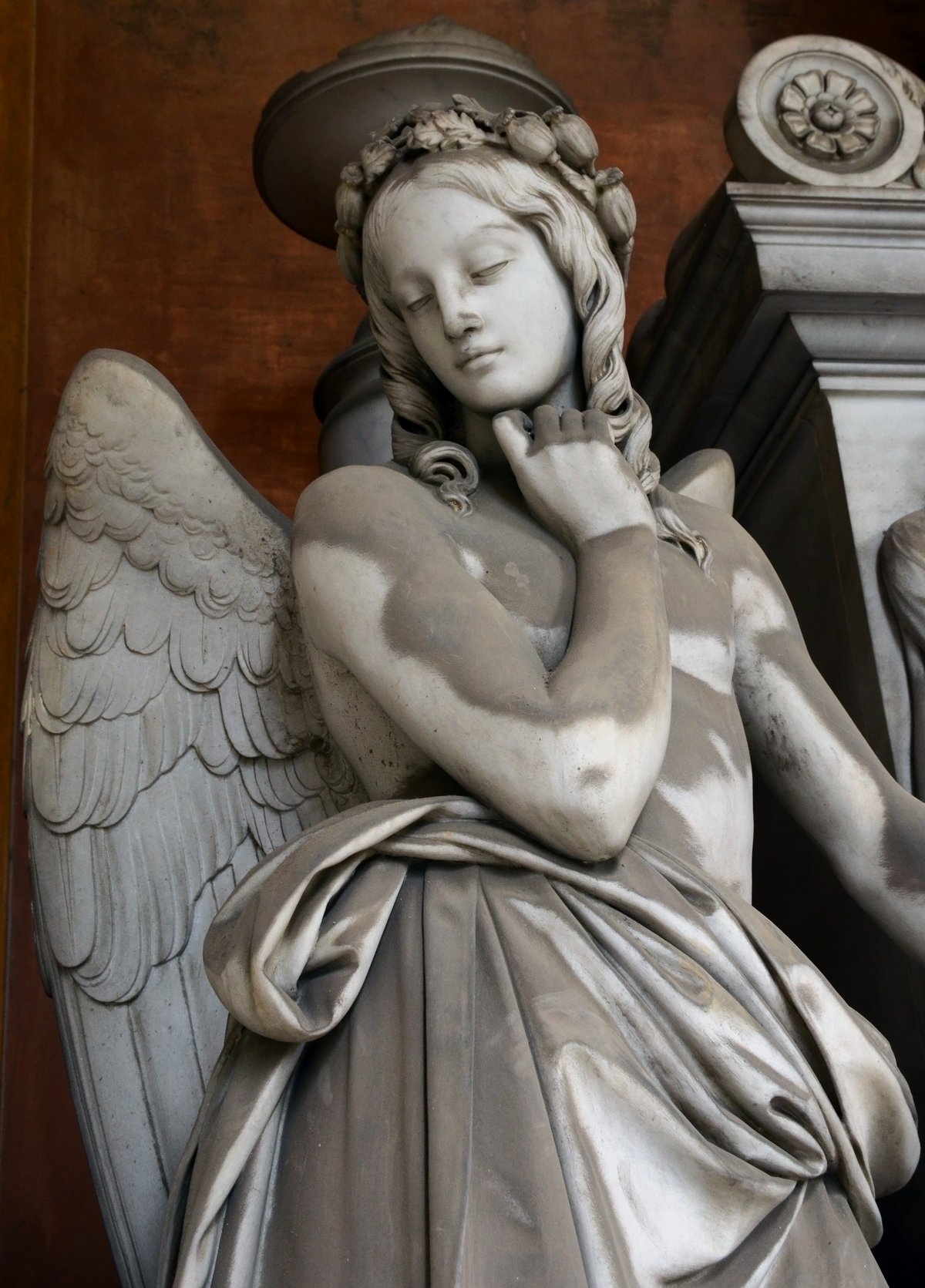
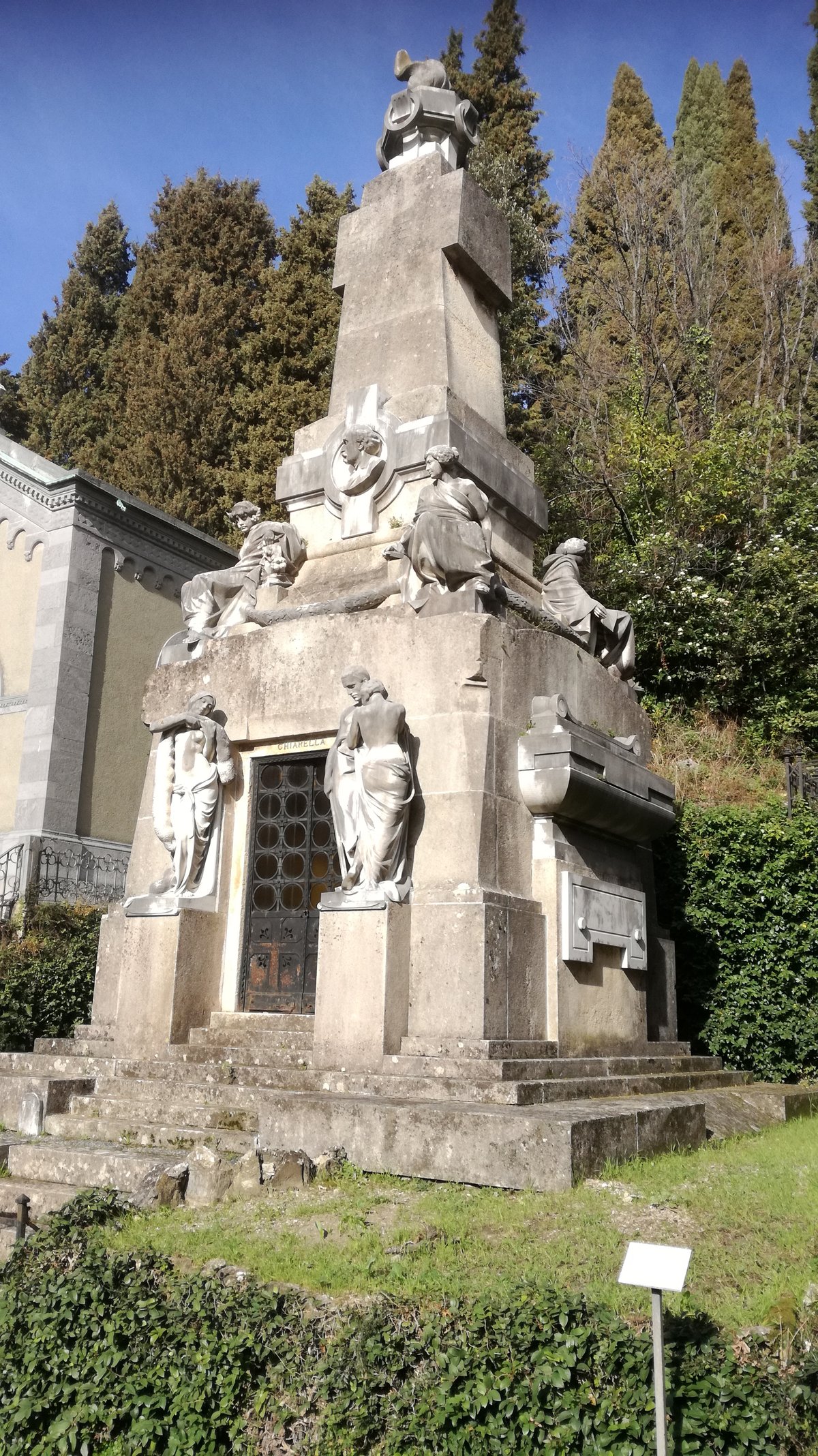
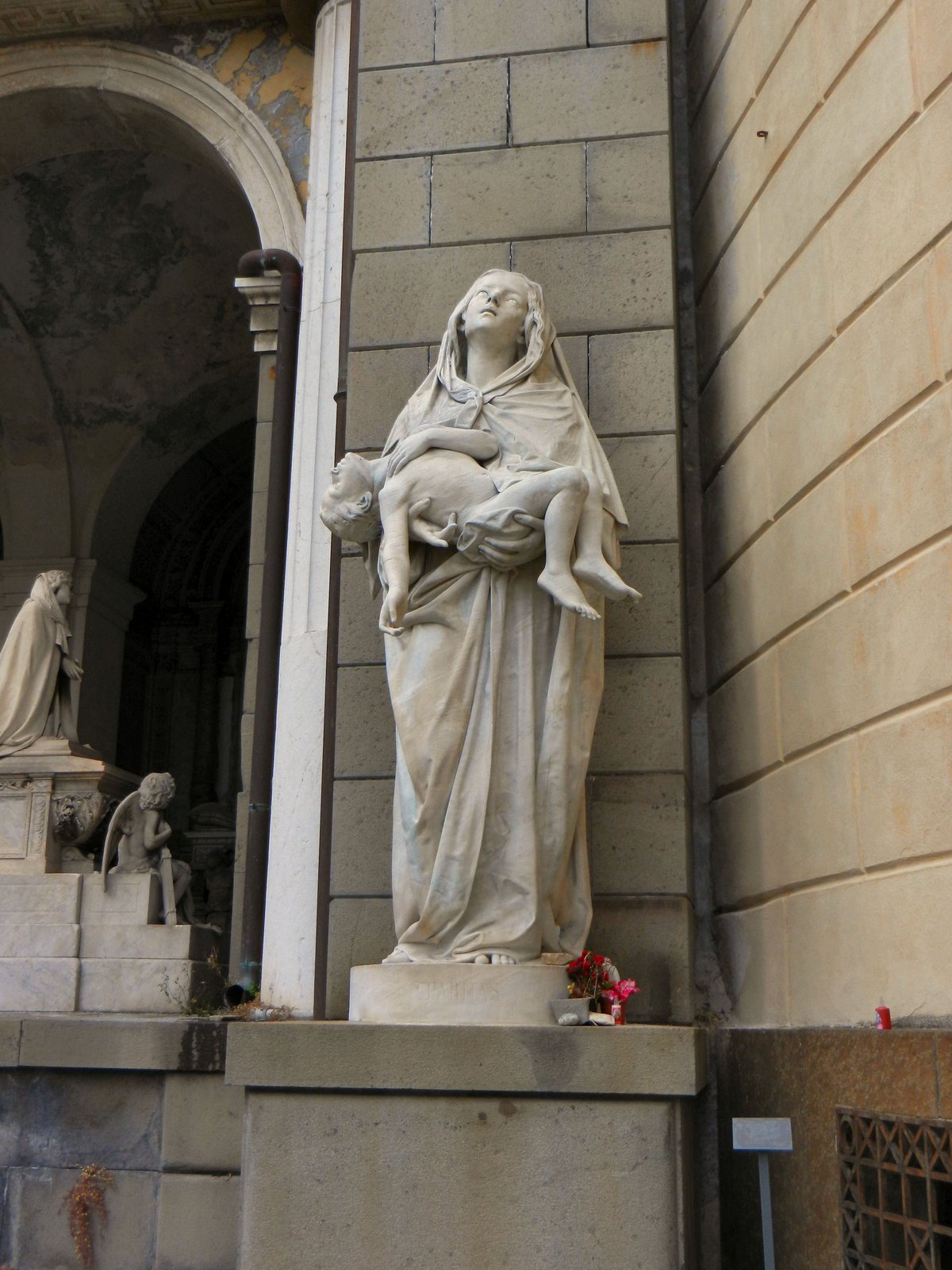
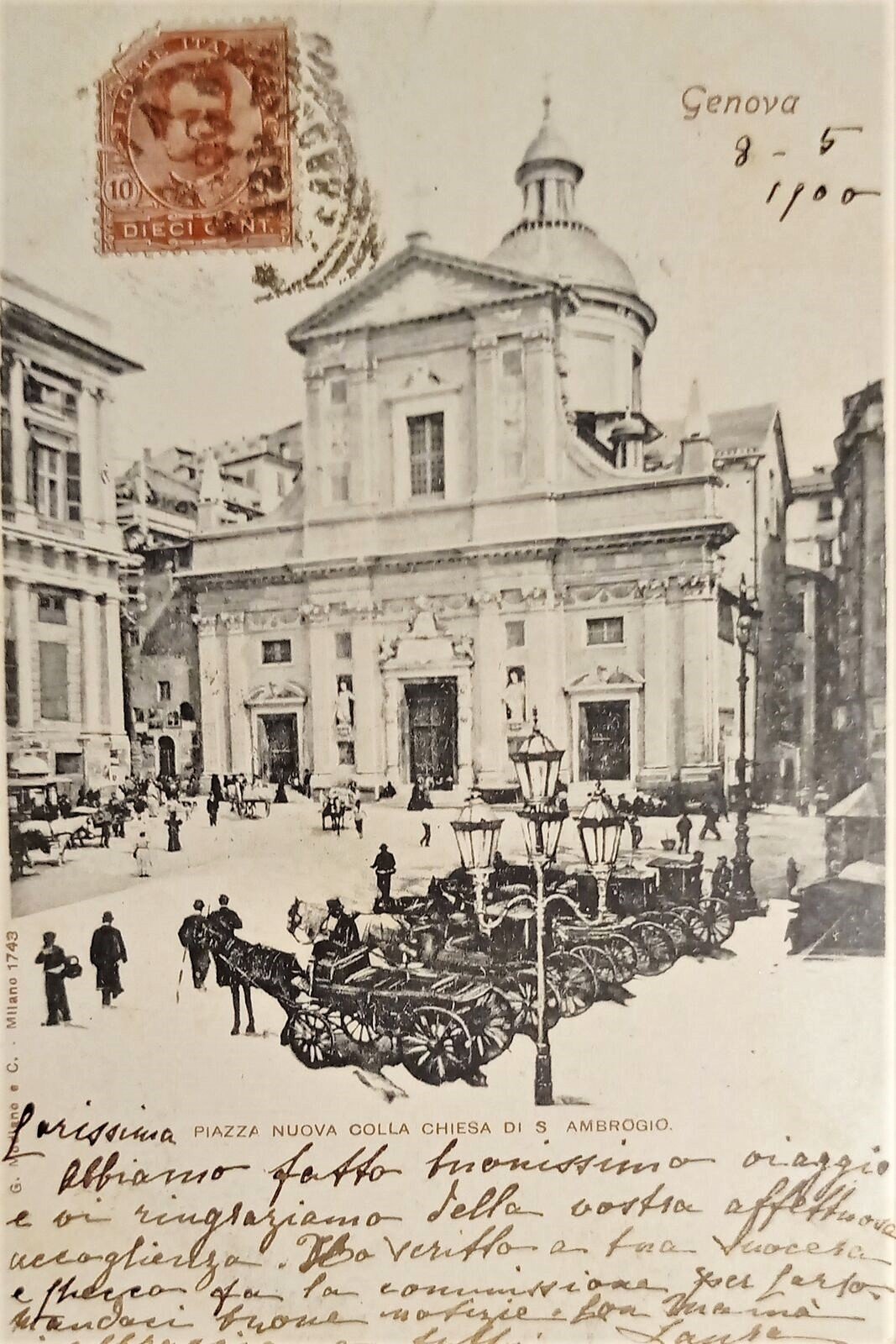
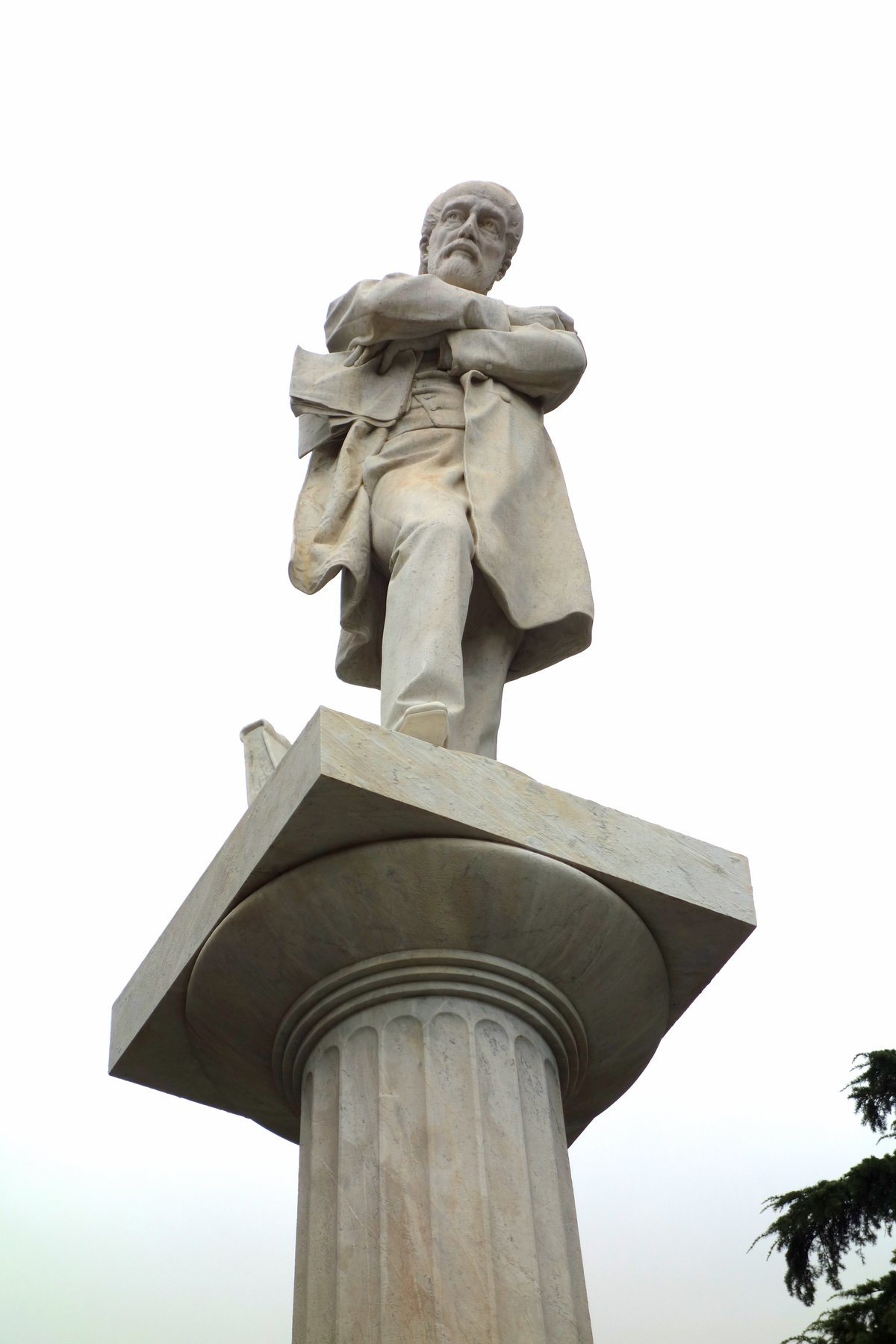
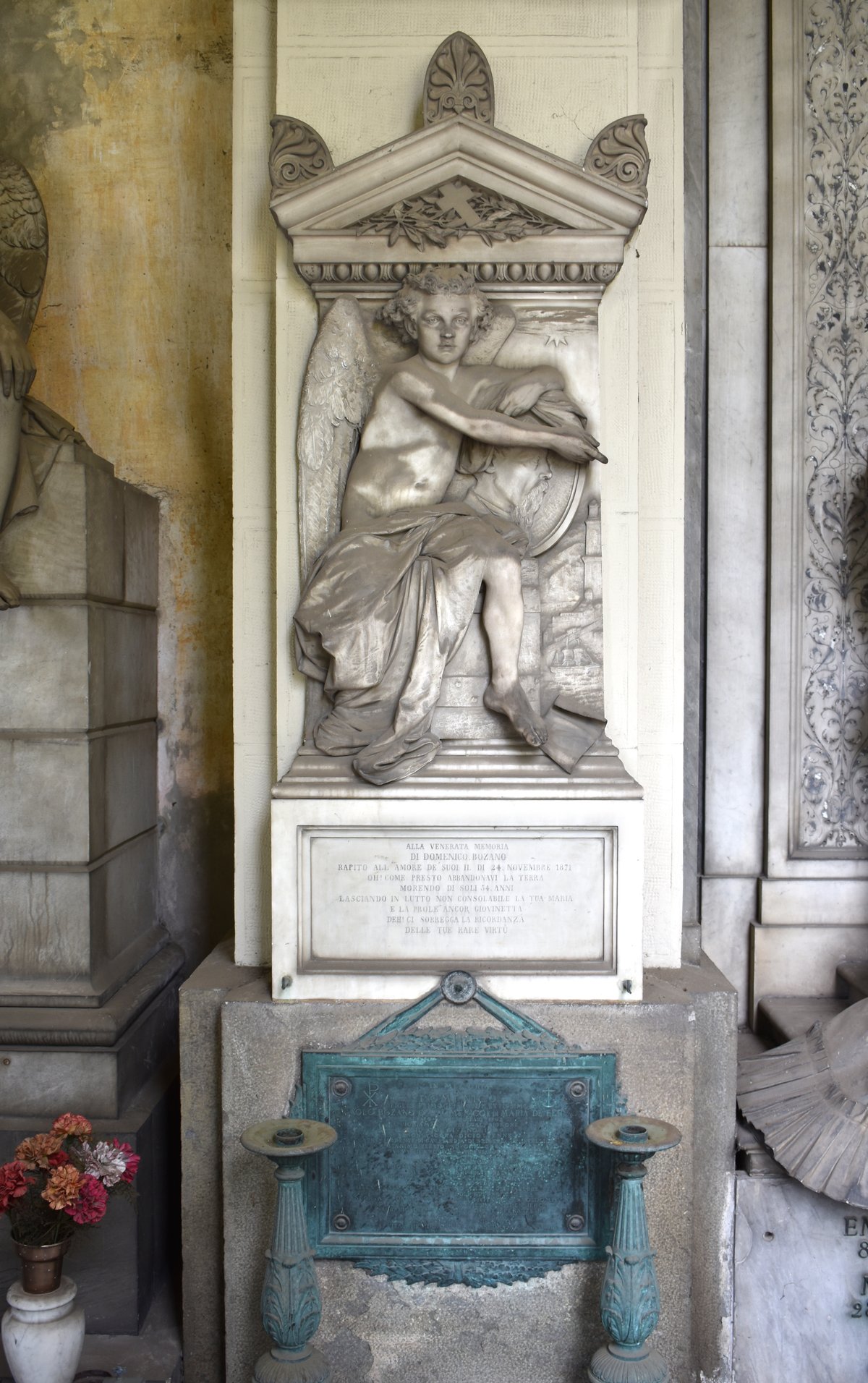
Explore Mausoleum for Giuseppe Mazzini in Pictures
Origins and Setting: The Mausoleum in the Monumental Cemetery of Staglieno
The Mausoleum for Giuseppe Mazzini is situated within the Monumental Cemetery of Staglieno, one of Europe’s largest and most artistically significant cemeteries. Established following Napoleon’s Edict of Saint-Cloud (1804), which mandated burials outside city limits, Staglieno opened in 1851 and quickly became acclaimed for its monumental neoclassical architecture and extensive collection of funerary art. The cemetery’s design, begun by Carlo Barabino and completed by Giovanni Battista Resasco, features grand porticoes, hillside landscaping, and a blend of styles that inspired similar cemeteries across Europe (discovergenoa.com).
Giuseppe Mazzini: Life, Legacy, and Resting Place
Born in Genoa in 1805, Giuseppe Mazzini was a philosopher, journalist, and activist who became a leading voice in the Italian Risorgimento. He founded the secret society Young Italy in 1832, advocating for a unified, republican Italy free from foreign rule (britannica.com). Mazzini’s political activism led to exile, notably in London, but his writings and actions inspired European nationalist movements and laid the ideological groundwork for modern Italy (italiaoutdoors.com). His death in 1872 was marked by a massive outpouring of public grief, and his funeral in Genoa drew an estimated 100,000 mourners (geniuses.club).
Creation and Symbolism of the Mausoleum
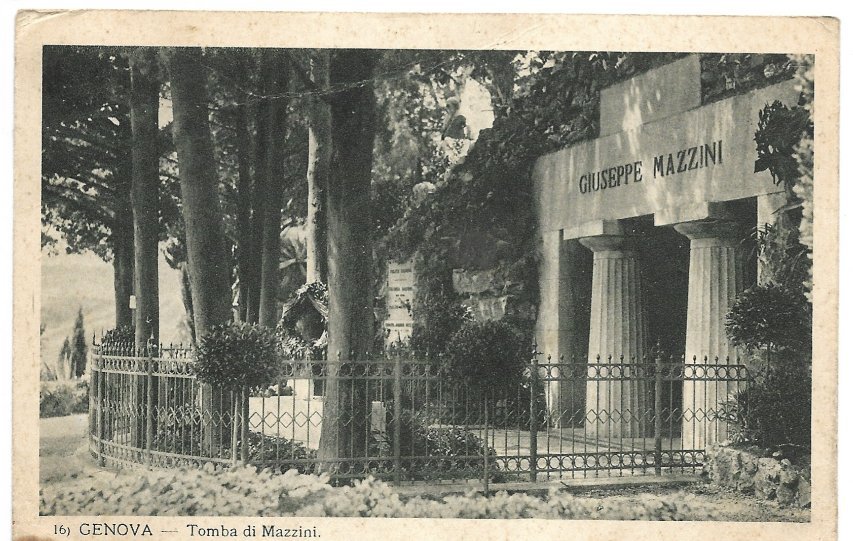
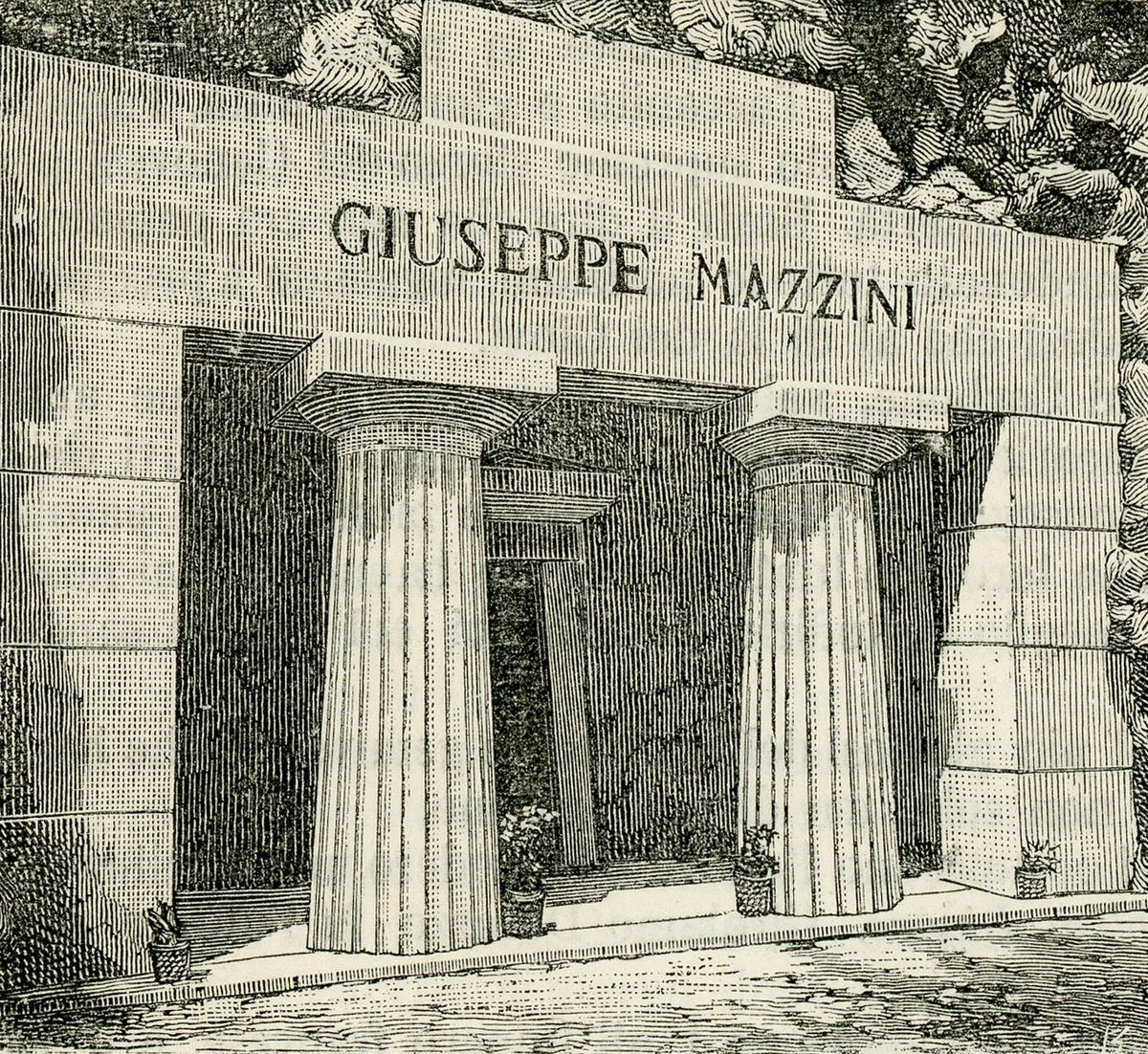
After Mazzini’s death in Pisa, his remains were returned to Genoa and interred at Staglieno Cemetery—chosen both for its prominence and its role as a pantheon for Italy’s national heroes. The mausoleum, designed by Gaetano Vittorio Grasso and completed in 1877, is a striking example of neoclassical architecture. Its severe simplicity, with two massive Doric columns and a granite lintel inscribed with “Giuseppe Mazzini,” reflects the gravity of the Risorgimento and the ideals Mazzini championed. A palm branch above the entrance symbolizes victory and peace, echoing Mazzini’s enduring legacy (visitgenoa.it PDF).
Inside the crypt, republican flags and commemorative plaques from international figures—including David Lloyd George, Giosuè Carducci, and Leo Tolstoy—attest to Mazzini’s broad influence. The adjacent tomb of Mazzini’s mother, Maria Drago, adds a personal dimension to the site.
Artistic and Architectural Context
Staglieno Cemetery is renowned for its extraordinary funerary art, with works by sculptors such as Leonardo Bistolfi and Giulio Monteverde (en.wikipedia.org). The Mazzini Mausoleum’s austere neoclassical lines stand in contrast to the more elaborate monuments nearby, highlighting its unique symbolic role. The cemetery as a whole merges art, history, and nature, making it a remarkable open-air museum (visitgenoa.it PDF).
The Mausoleum in the Context of the Risorgimento
Mazzini’s mausoleum is a physical manifestation of the Risorgimento’s ideals—liberty, unity, and republicanism. Alongside other memorials at Staglieno, it serves as a locus of national memory, commemorating the sacrifices of those who fought for a unified Italy. The Museum of the Risorgimento, housed in Mazzini’s birthplace, offers further context and artifacts related to this crucial period (museidigenova.it).
Visiting the Mausoleum: Hours, Tickets, and Access
Location and Getting There
The mausoleum is located within the Monumental Cemetery of Staglieno, in Genoa’s Staglieno district. It is accessible by public transportation—bus no. 14 from Brignole Station and bus no. 34 from Piazza Principe Station both stop nearby. Public transit is recommended as parking is limited.
Opening Hours
- The cemetery is generally open daily, from 8:00 AM to 6:00 PM, with seasonal variations.
- Some sources indicate the mausoleum may be open Tuesday to Sunday, 9:00 AM–6:00 PM, closed Mondays and certain holidays.
- Always check the official website or local tourist information for current hours.
Admission and Tickets
- Admission to the cemetery and mausoleum is typically free.
- Guided tours and special exhibitions may require tickets (usually around €5 for adults, with concessions for students and seniors).
- Tickets for tours can be purchased onsite or in advance via the official Genoa tourism website.
Accessibility
- Many paths are wheelchair accessible, but some older routes can be uneven or steep.
- Ramps and elevators are available in most areas; inquire ahead for the most accessible routes.
Visitor Tips
- Wear comfortable shoes as the cemetery covers a vast area with some steep terrain.
- Maps are available at the entrance; guided tours are highly recommended for historical context.
- Photography is allowed, but respectful behavior is expected—especially during ceremonies.
Nearby Attractions and Itinerary Suggestions
Combine your visit to the Mazzini Mausoleum with other Genoa landmarks for a full cultural experience. Nearby sites include:
- Museum of the Risorgimento – Institute Mazziniano
- Palazzo Ducale
- Aquarium of Genoa
- The Old Port
- Cathedral of San Lorenzo
Visuals and Media
Enhance your experience with virtual tours and high-quality images of the mausoleum’s neoclassical architecture and interior. Use descriptive alt tags such as “Giuseppe Mazzini Mausoleum in Genoa” and “Neoclassical architecture at Staglieno Cemetery.” Interactive maps are available online to help plan your visit.
Frequently Asked Questions (FAQ)
Q: What are the visiting hours for the Mazzini Mausoleum?
A: Generally, 8:00 AM–6:00 PM daily, with some seasonal variation. Check the official website for updates.
Q: Is there an entrance fee?
A: Admission is usually free; guided tours may have a fee.
Q: Are guided tours available?
A: Yes, tours are offered and recommended for in-depth context.
Q: Is the site wheelchair accessible?
A: The cemetery has accessible routes, but some areas are uneven—contact ahead for details.
Q: Can I take photos?
A: Photography is permitted; please be respectful, especially during ceremonies.
Q: Are there special events held at the mausoleum?
A: Yes, commemorations are held, especially around Italian national holidays. Check local listings for details.
Listen to the full story in the app
Your Personal Curator, in Your Pocket.
Audio guides for 1,100+ cities across 96 countries. History, stories, and local insight — offline ready.
Audiala App
Available on iOS & Android
Join 50k+ Curators
Sources
- verified
- verified
- verified
- verified
- verified
- verified
- verified
- verified
Last reviewed: