Plan and listen to Chiesa Di Santa Maria Di Castello with Audiala.
Audio guide in your pocket, itinerary in your browser. Built for the way you actually visit.
Introduction
Chiesa di Santa Maria di Castello, perched on Genoa’s historic Castello hill, stands as a testament to the city’s layered past. This Romanesque basilica weaves together centuries of religious, cultural, and artistic history, making it one of Genoa’s most important medieval landmarks. From its ancient origins and impressive architectural evolution to its remarkable collections of frescoes, sculptures, and Renaissance masterpieces, Santa Maria di Castello offers a comprehensive experience for history enthusiasts, art lovers, and travelers. This guide provides essential and up-to-date information on visiting hours, tickets, accessibility, key highlights, and travel tips to ensure a memorable visit to this jewel of Genoa’s historical crown. For official updates and in-depth resources, consult the Santa Maria di Castello website, Visit Genoa, and other recommended sources (giustiniani.info).
Origins and Early History
Santa Maria di Castello rises from one of Genoa’s oldest settlements, with evidence of pre-Roman, Roman, and Byzantine fortifications on the Castello hill (giustiniani.info). Tradition attributes the first Christian sanctuary here to the Lombard King Ariperto in 658 CE, though the earliest documentary mention dates to 1049. By the 9th and 10th centuries, the site had become a key religious center, housing the bishop’s palace and symbolizing ecclesiastical authority (progettostoriadellarte.it).
Architectural Evolution: Romanesque and Gothic Features
Romanesque Foundations
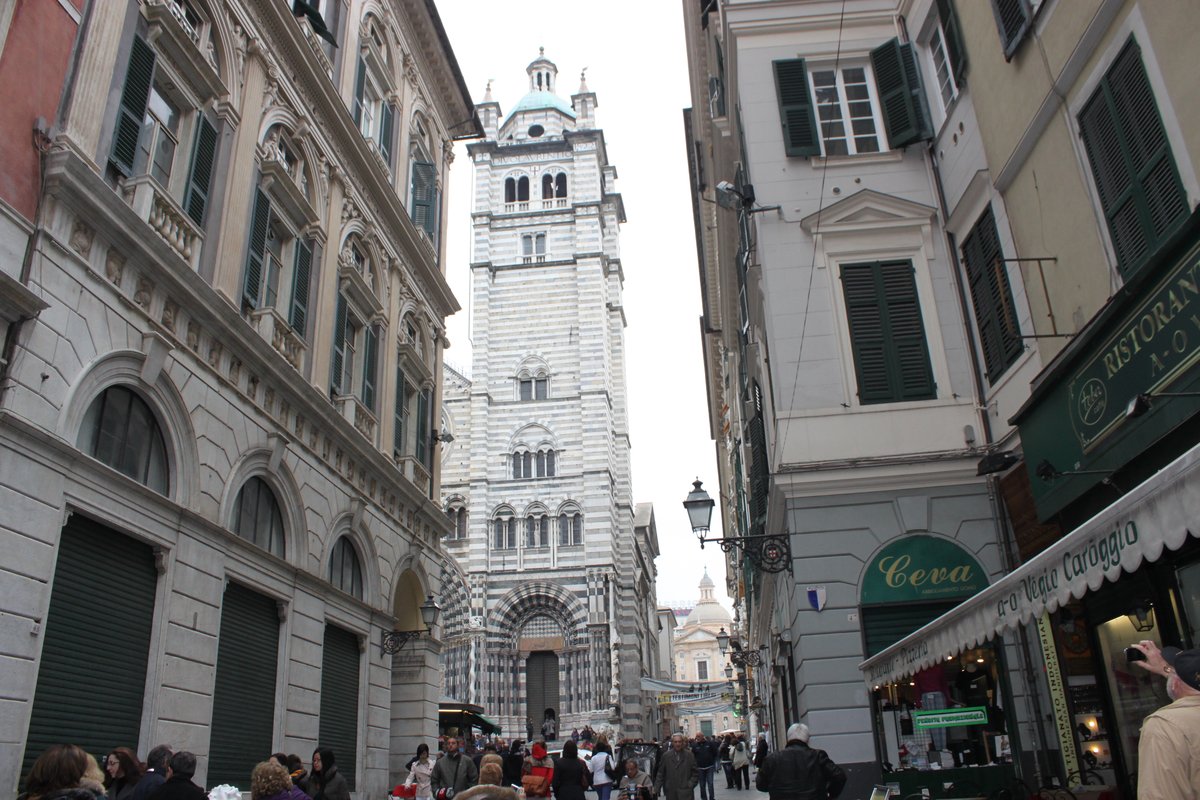
The church’s enduring Romanesque character emerged from major 12th-century construction by the Magistri Antelami, master builders from Lombardy. Their work features a three-nave basilica layout, a transept, and triple apses. The Romanesque façade, marked by alternating bands of white marble and dark slate, is both austere and harmonious, while the central portal displays a 3rd-century Roman lintel with acanthus leaves and griffins—an exceptional example of spolia (giustiniani.info, Italy Heritage).
Inside, sturdy columns and capitals—many repurposed from ancient Roman ruins—separate the nave and aisles. The semi-circular apse, thick walls, and small windows evoke the contemplative atmosphere typical of Romanesque ecclesiastical spaces.
Gothic Additions
In the 14th and 15th centuries, Santa Maria di Castello underwent significant Gothic modifications, most notably the construction of its 40-meter bell tower. This structure, with its pointed arches, mullioned windows, and decorative brickwork, signals a transition toward Gothic verticality and luminosity (Visit Genoa). Inside, ribbed vaults and pointed arches were introduced, especially in the presbytery and side chapels.
The Dominican Era and Renaissance Transformations
A major turning point occurred in 1442, when the complex was entrusted to the Dominican Order. The Dominicans expanded the convent, added new cloisters, and, with the support of the Grimaldi family, commissioned significant artistic and architectural enhancements (progettostoriadellarte.it). The church became a hub for humanist culture and a gathering place for Genoa’s intellectual elite.
Artistic Heritage: Notable Works and the Museum
Santa Maria di Castello boasts one of Liguria’s richest artistic heritages:
- Frescoes and Paintings: The chapels and cloisters feature frescoes by Giovanni Mazone, including the celebrated Annunciation (1451) in the first cloister, as well as works by Bernardo Castello, Aurelio Lomi, Grechetto, Domenico Piola, and the Carlone family (Musei di Genova).
- Sculptures: Renaissance and Baroque sculptures by artists such as Domenico Gagini, Leonardo Riccomanno, and the Parodi family.
- Majolica Tiles: Rare 16th-century painted tiles, a testament to Genoa’s ceramic tradition.
- Museum Collections: The Museo di Santa Maria di Castello, housed in the convent, displays archaeological finds from the 2nd century onwards, illuminated manuscripts, Russian icons, and Renaissance paintings by Ludovico Brea and others (spinola.it).
Cloisters and Monastic Life
The church complex includes three cloisters, spanning from the 12th to the 15th centuries. These arcaded spaces, adorned with columns and Renaissance frescoes, provided centers for monastic life and are now serene highlights for visitors. The cloisters connect to the chapter house, refectory, and museum, and offer a unique ambiance for contemplation and the enjoyment of art (Santa Maria di Castello Official).
Visiting Hours, Tickets, and Accessibility
- Opening Hours: Santa Maria di Castello is generally open from Tuesday to Sunday, 10:00 AM to 6:00 PM. It is closed on Mondays and public holidays. Always confirm times on the official website or Visit Genoa for updates, especially during religious services or special events.
- Tickets: General entry is often free, but tickets (€5–€8) may be required for guided tours, museum access, or special exhibitions. Concessions are available for seniors, students, and groups; children under 12 and Genoa residents may have free entry.
- Accessibility: The main entrance is equipped with ramps, but some historic areas and cloisters have uneven surfaces or steps. Contact the site in advance for assistance or to discuss accessibility needs.
Travel Tips and Nearby Attractions
- Getting There: The church is located in Genoa’s historic center at Piazza Santa Maria in Castello, 16123 Genova, Italy. It is accessible by local buses (lines 31, 36), and is within walking distance of the city center and Genova Piazza Principe railway station. Parking is limited; walking is recommended.
- Best Times to Visit: Weekday mornings or late afternoons offer a quieter, more contemplative experience.
- Dress Code: Modest attire is advised.
- Nearby Sights: Explore the Cathedral of San Lorenzo, Palazzo Ducale, Porto Antico, Via Garibaldi’s palaces, and the medieval “caruggi” alleys—all within easy reach.
Events and Photography
Santa Maria di Castello occasionally hosts concerts, art exhibitions, and cultural events, especially during Genoa’s festivals. Updates are available on the official tourism portal.
Photography is generally permitted (without flash), except during religious services or in certain chapels. The church’s façade, cloisters, and panoramic views of the city provide excellent photographic opportunities.
Frequently Asked Questions (FAQ)
Q: What are the opening hours of Santa Maria di Castello?
A: Tuesday to Sunday, 10:00 AM–6:00 PM; closed Mondays and public holidays. Always check the official website for updates.
Q: Is there an entry fee?
A: Entry to the church is usually free; museum and guided tours may require tickets (€5–€8), with concessions available.
Q: Is the site accessible for those with disabilities?
A: The main entrance is accessible, but some areas have uneven surfaces. Contact ahead for assistance.
Q: Are guided tours available?
A: Yes, guided tours are offered and recommended. Book in advance for groups or special interests.
Q: What other attractions are nearby?
A: Cathedral of San Lorenzo, Palazzo Ducale, Porto Antico, and Via Garibaldi are all within walking distance.
Discover More
Santa Maria di Castello encapsulates Genoa’s rich tapestry of history, faith, and artistic achievement. From its Romanesque roots and Gothic transformations to its Dominican legacy and Renaissance masterpieces, every corner tells a story. To make the most of your visit:
- Review current opening hours and ticket options on official sites.
- Consider booking a guided tour for deeper insight.
- Explore the museum and cloisters for a comprehensive experience.
- Combine your visit with other historical sites in Genoa’s old town.
- Download the Audiala app for audio guides and insider tips on Genoa’s heritage.
Whether you are drawn by the church’s architecture, art, or spiritual ambiance, Santa Maria di Castello promises an unforgettable journey into the heart of Genoa’s historical identity. Stay updated through official channels, and immerse yourself in one of Italy’s most evocative sacred spaces.
Listen to the full story in the app
The whole Chiesa Di Santa Maria Di Castello,
told well.
Audio guides for 1,100+ cities across 96 countries. History, stories, and local insight — offline ready.

Verified, and shown.
Researched and written by the Audiala editorial team from historical records, architectural archives, and local expertise.
Researched from Wikidata, Wikipedia & official sources · fact-checked · How we make our guides →