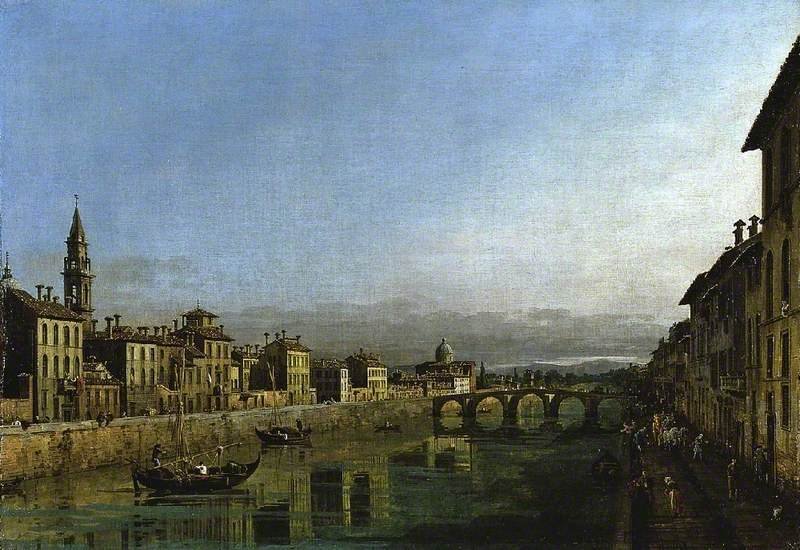
Introduction
Piazza della Repubblica is the vibrant heart of Florence, embodying the city’s rich historical evolution, artistic legacy, and lively urban culture. Positioned on the site of the ancient Roman forum, it has witnessed transformations from a medieval marketplace and Jewish ghetto to an elegant 19th-century square. Today, the piazza is a social and cultural hub, surrounded by iconic cafés, luxury shops, and family-friendly attractions like the vintage carousel. As an open public space accessible 24/7 and free to visit, it serves as a natural starting point for exploring Florence’s major landmarks, including the Duomo, Uffizi Gallery, and Ponte Vecchio. This comprehensive guide covers the piazza’s history, practical visitor information, accessibility, nearby attractions, events, and tips for making the most of your visit (Fantastic Florence; ItalyScapes; Florence Tips).
Photo Gallery
Explore Piazza Della Repubblica in Pictures
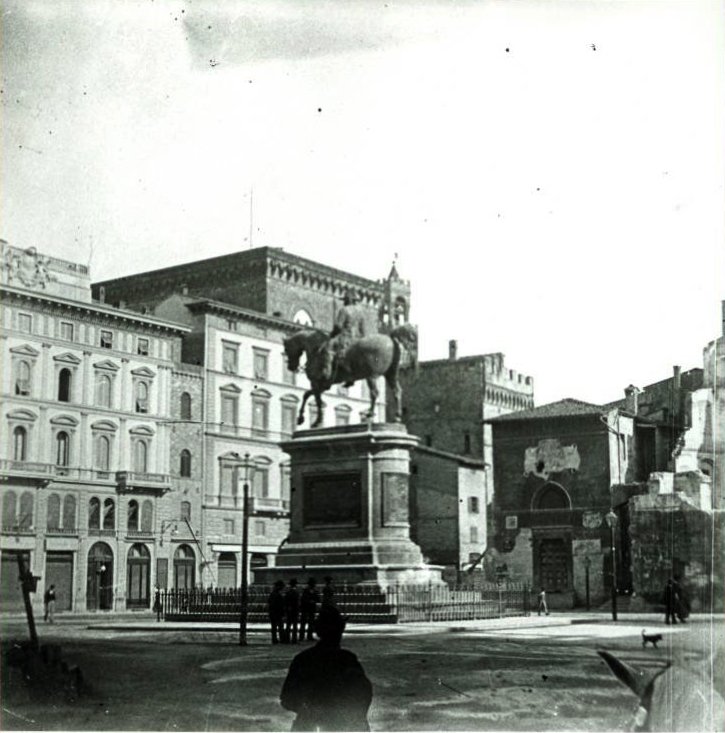
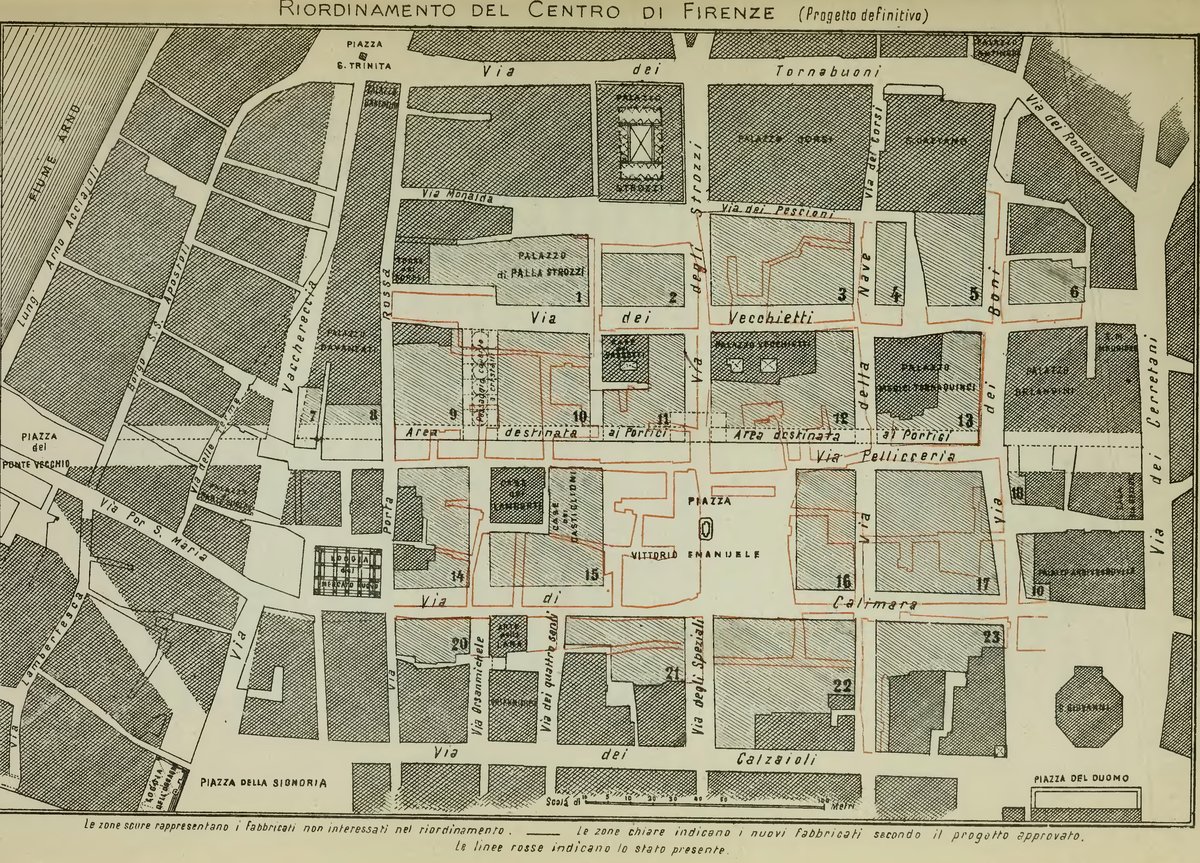
Vintage 1894-1895 illustration of Piazza Vittorio Emanuele featuring the Linaiuoli residence, showcasing historic architecture and city life.
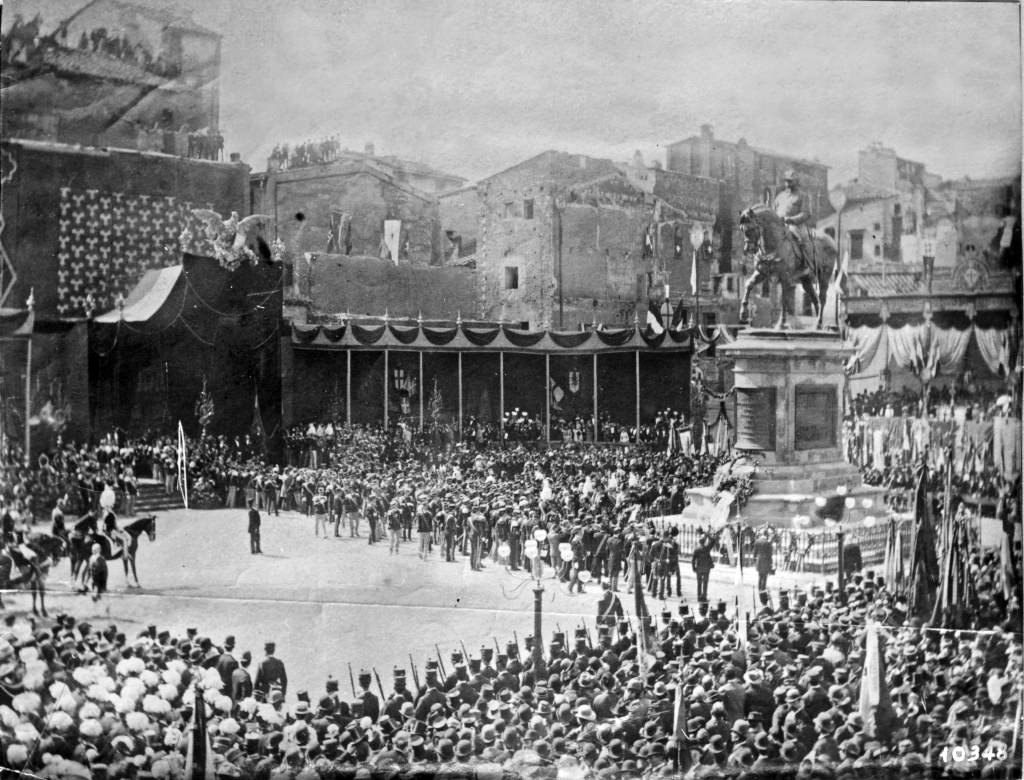
Detail of the equestrian statue unveiling ceremony held on 20 September 1890 in Piazza Vittorio Emanuele II, captured by Donato Pineider.
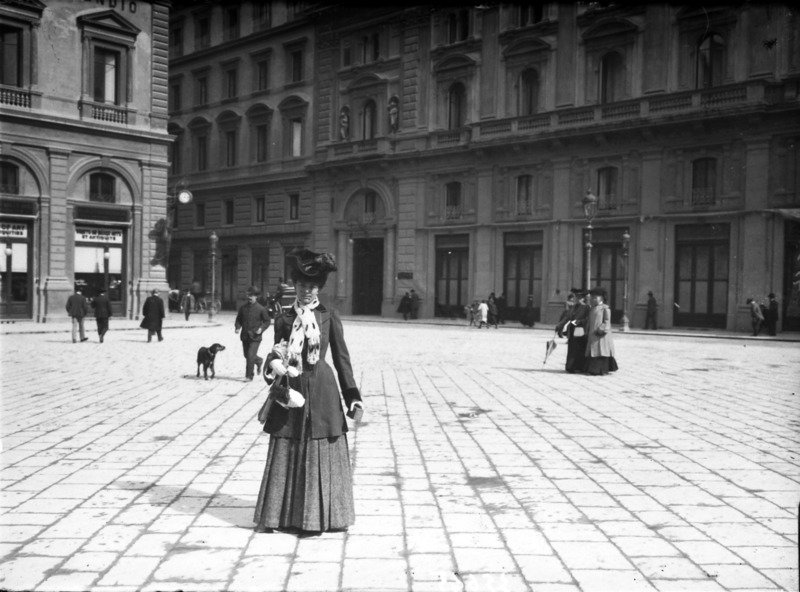
Piazza Vittorio Emanuele II in Firenze, showcasing its beautiful historical buildings and vibrant outdoor cafe seating area
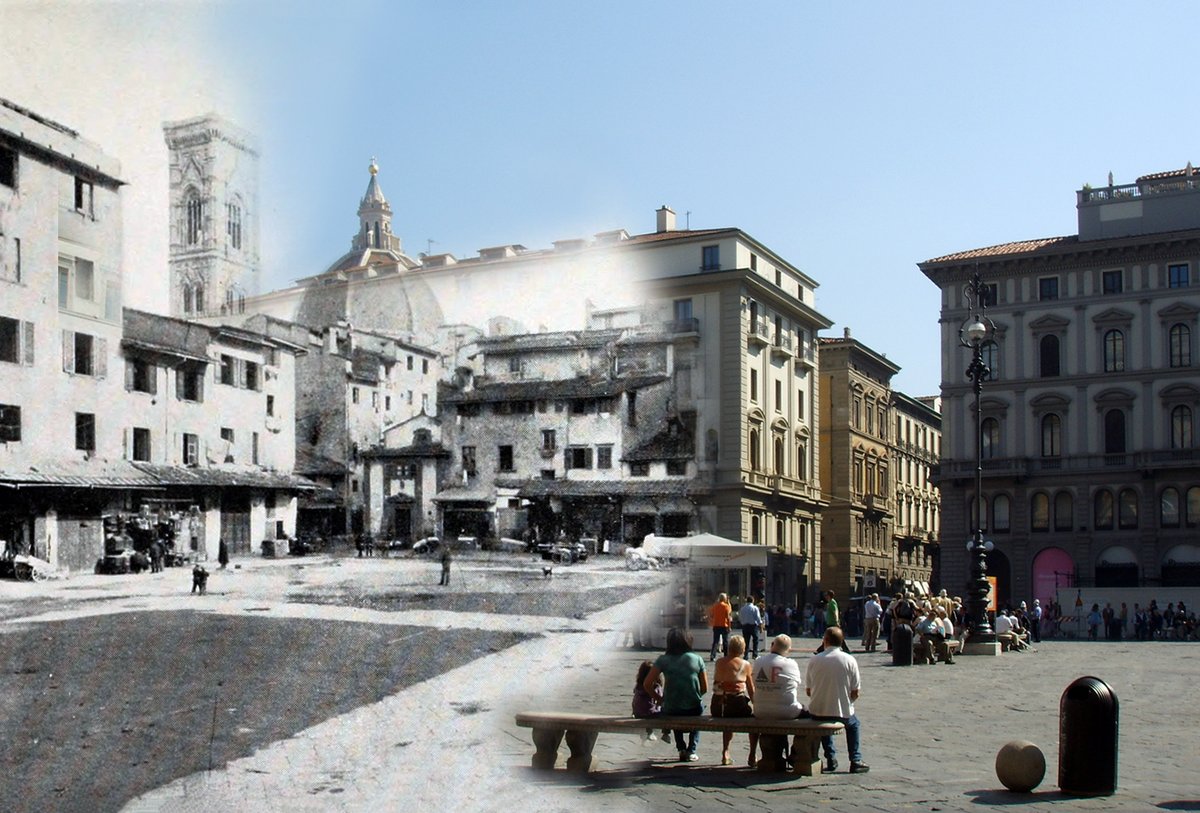
Banner image showcasing the historic cityscape of Florence with its iconic architectural landmarks.
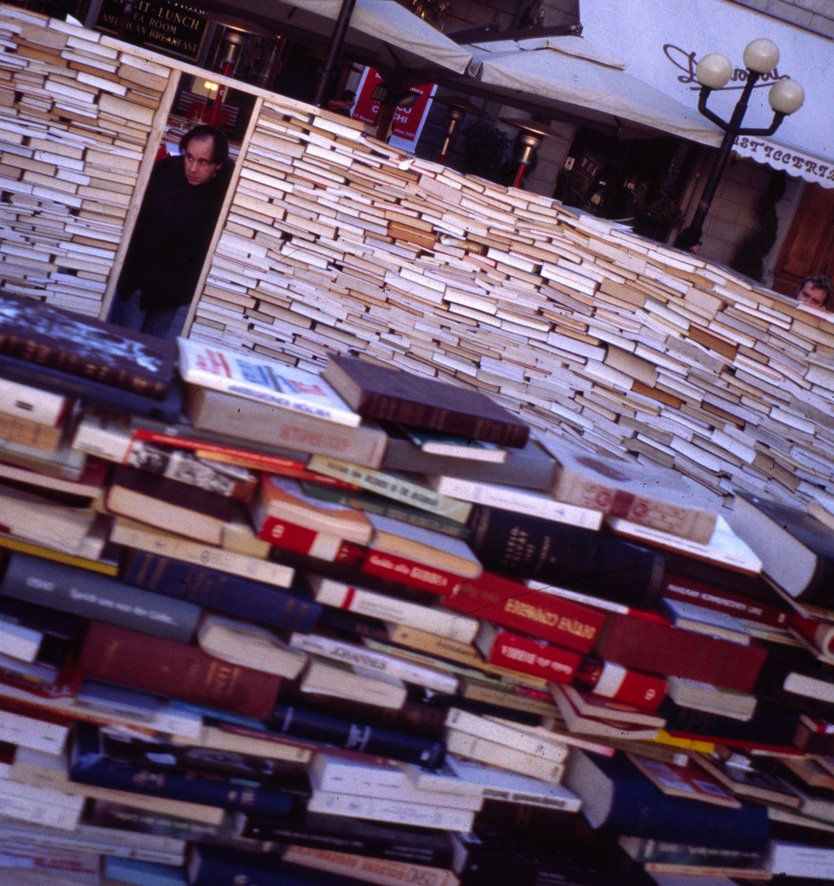
Photograph of Installation 1:2001, a contemporary art piece by Casagrande & Rintala showcased at the Firenze Biennale 2001, featuring abstract structural elements in an indoor exhibition setting.
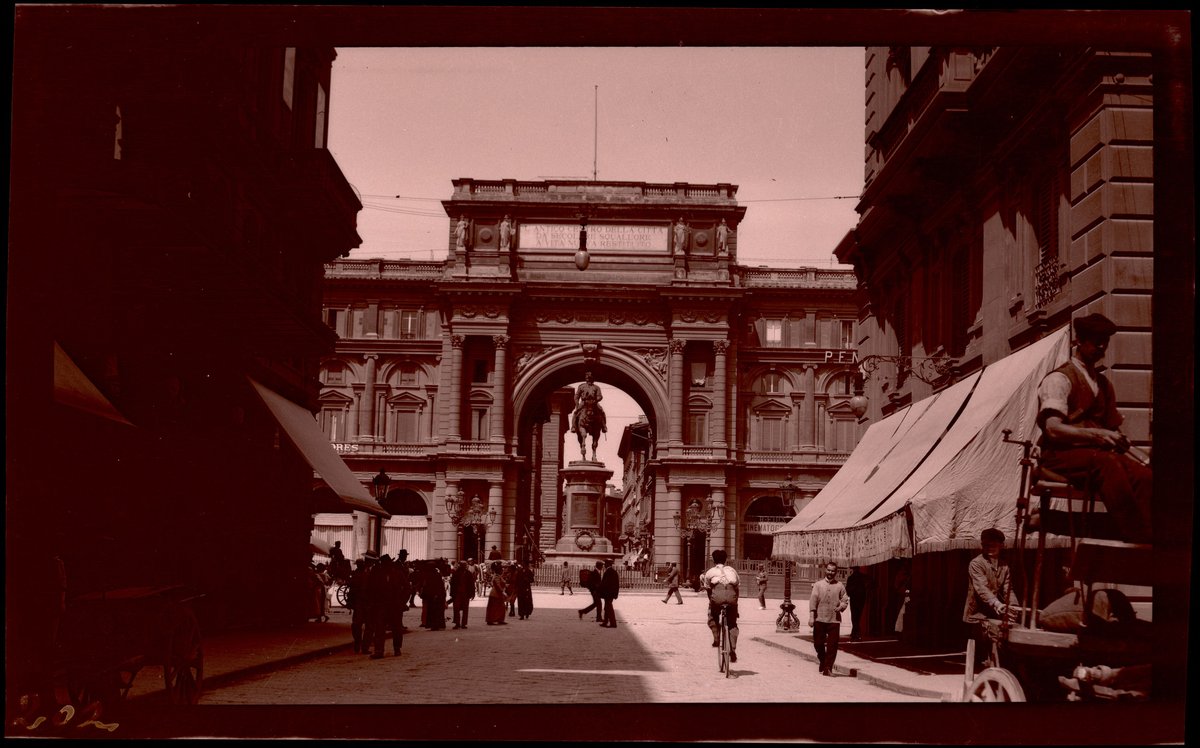
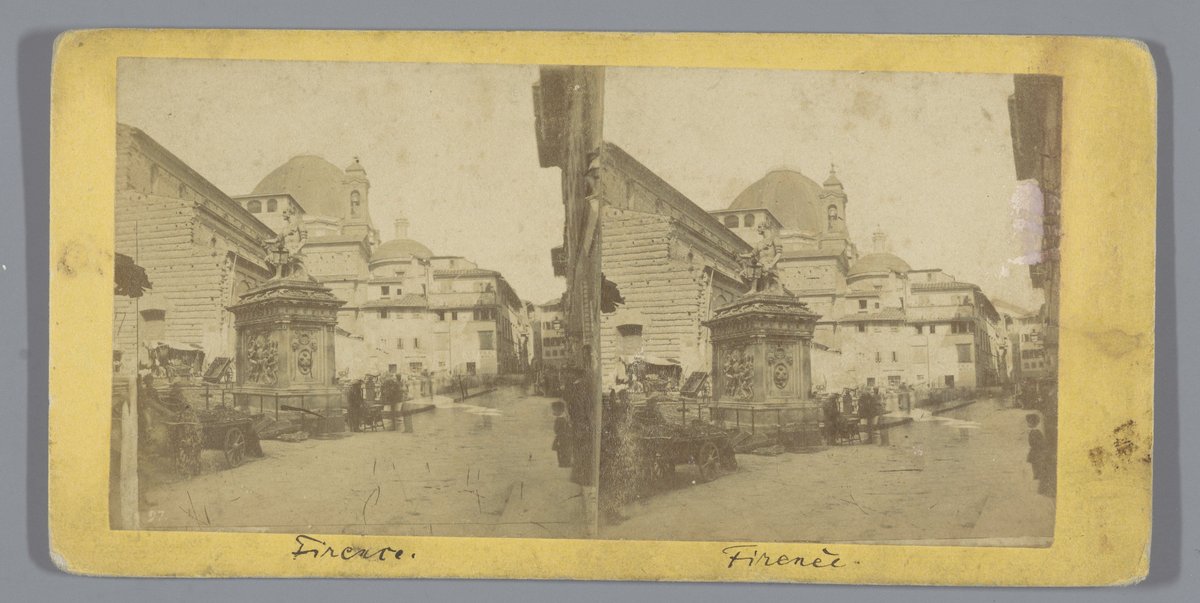
Busy Piazza della Repubblica in Florence featuring pedestrians passing under the arch with the monumental equestrian statue of Victor Emmanuel II, originally at the square and later moved to Casine Park. Image from the 1913 European tour by Edmund F. Arras and Elizabeth, capturing historical city sc
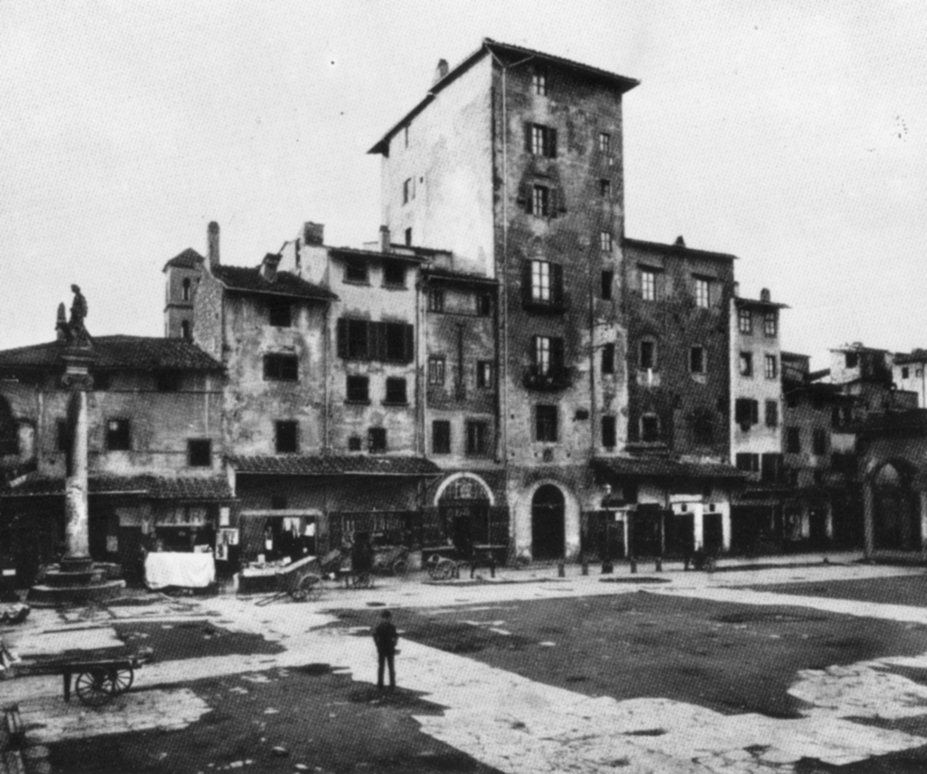
Vintage view of Piazza della Repubblica in 1883 featuring the Torre dei Caponsacchi, showcasing historic architecture and urban landscape.
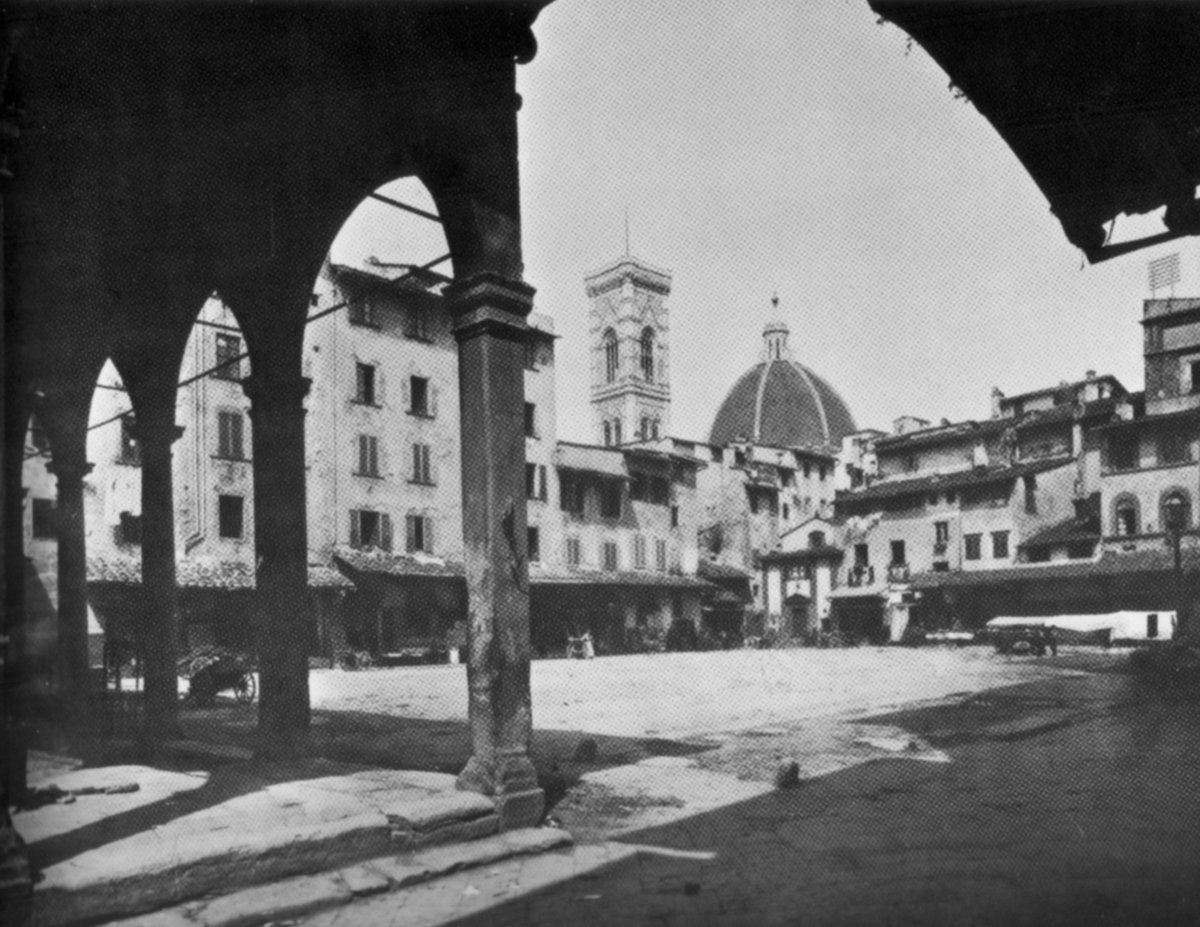
Historical black and white photograph of Piazza della Repubblica in Rome taken in the year 1893, showcasing vintage architecture and early urban design.
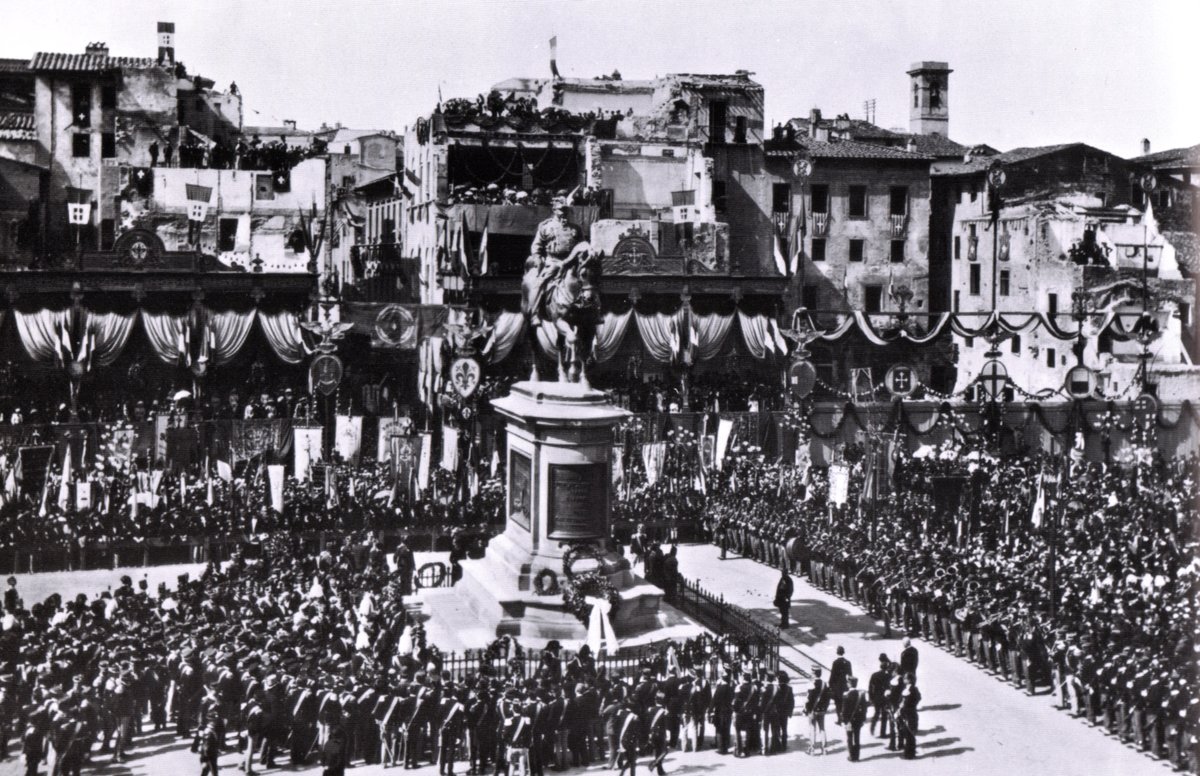
Historic photograph of Piazza della Repubblica taken on September 20, 1890, showing the square with early urban architecture and period details.
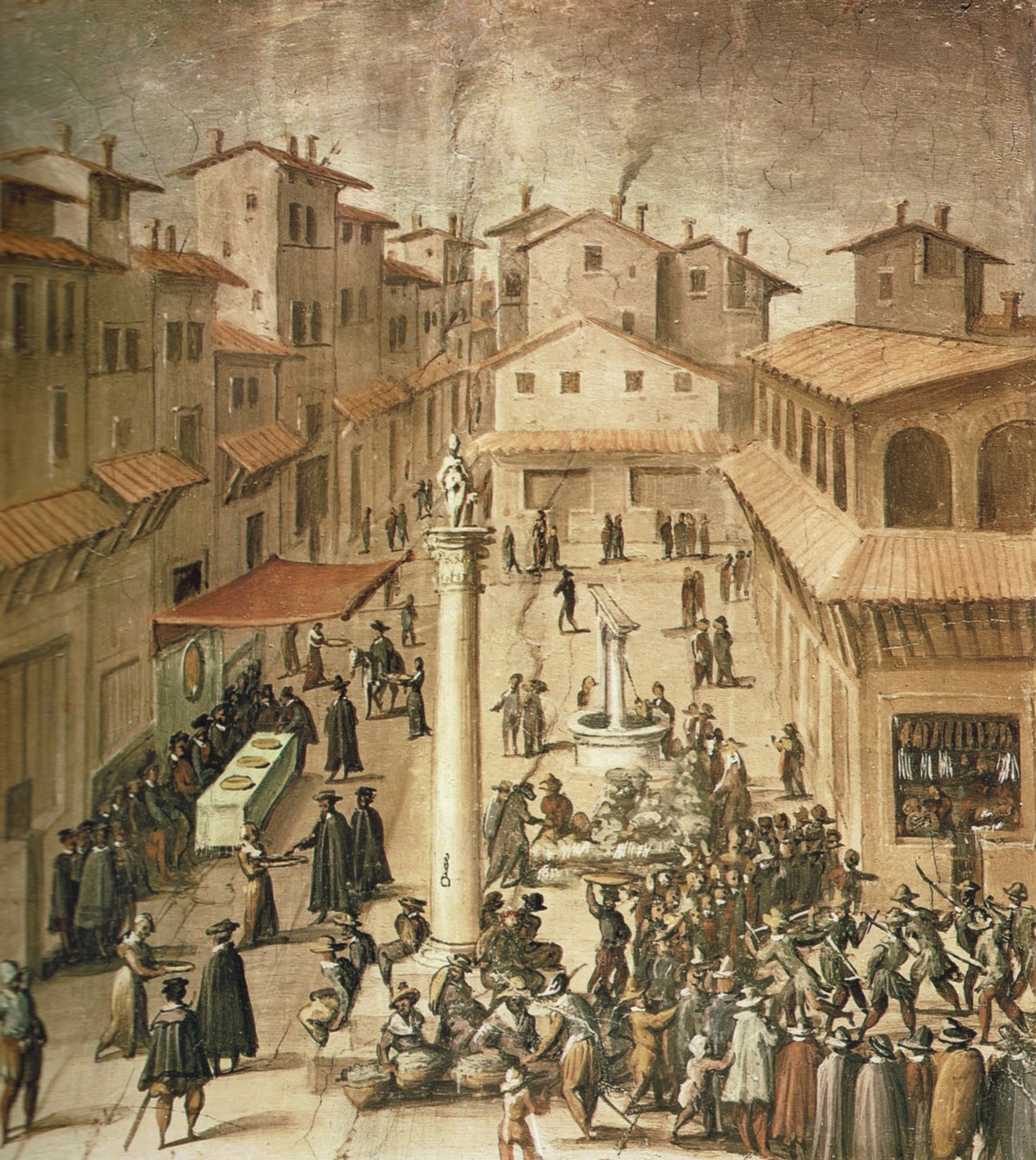
Detail of the column in Mercato Vecchio at the base of which sentences were executed, as depicted in the artwork by Jan van der Straet.
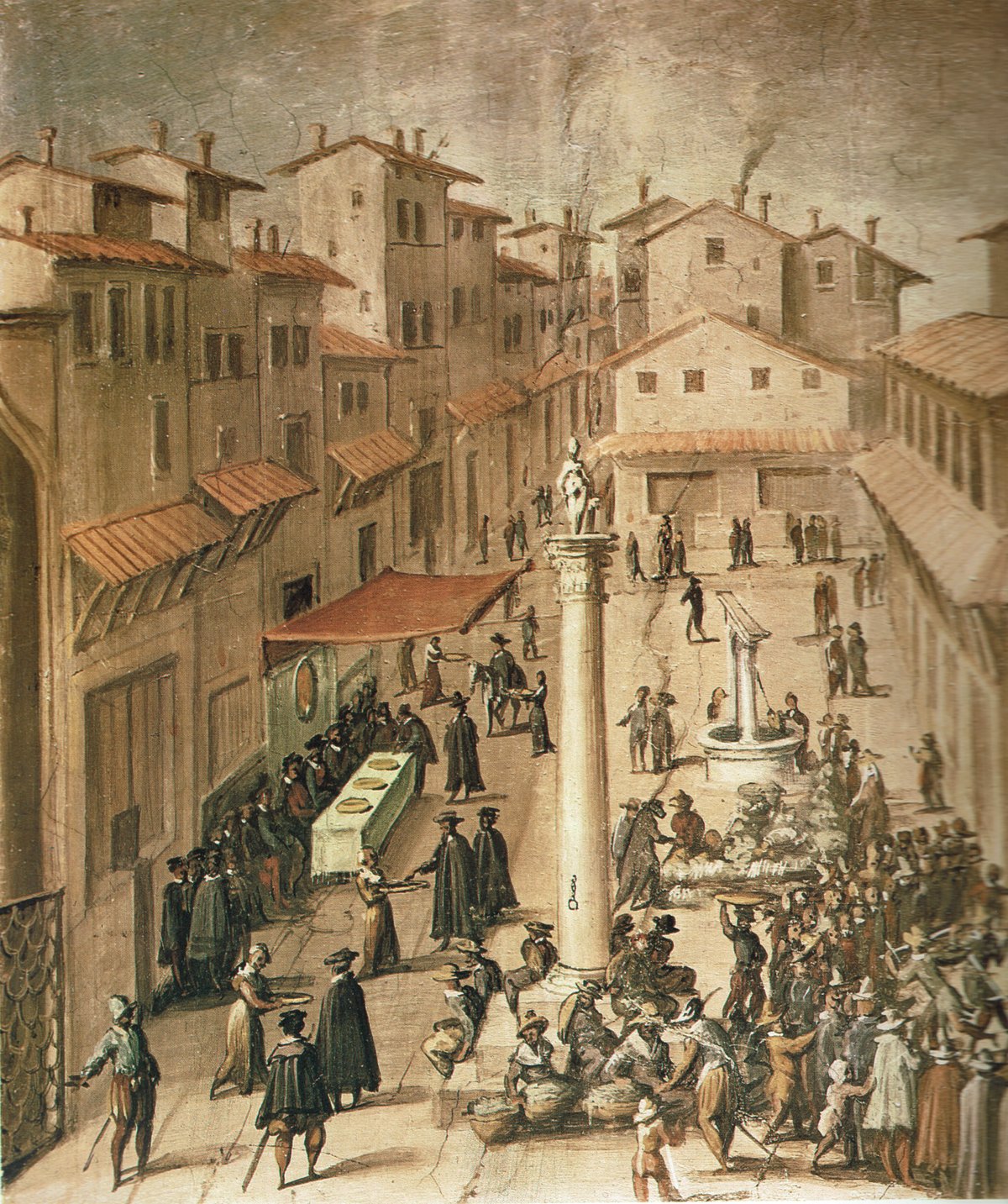
Close-up of Jan van der Straet's Mercato vecchio fresco, focusing on the central column in Sala di Gualdrada, historically used as the base where sentences were executed.
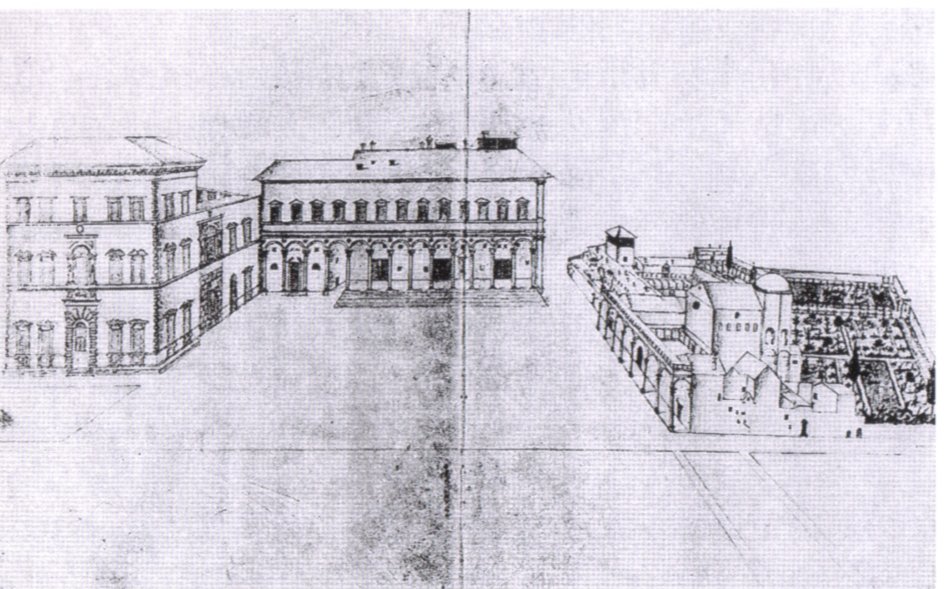
Map depicting the center of Florence around 1860, from page 7 of the book 'Studi storici sul centro di Firenze' published by the municipal historical archaeological commission in 1889 for the IV national historical congress.
Historical Evolution
Roman Origins and Early Development
Piazza della Repubblica stands atop the ancient Roman forum of Florentia, once the center of political, religious, and commercial life. This intersection of the cardo and decumanus—the two main Roman roads—was marked by a temple dedicated to the Capitoline Triad (Jupiter, Minerva, and Juno) (Wikipedia; Fantastic Florence). Archaeological discoveries, such as foundations and artifacts beneath the current square, reveal traces of this early settlement. Today, the 15th-century Colonna dell’Abbondanza (Column of Abundance) stands as a tangible reminder of the area’s ancient origins (ItalyScapes).
Medieval Marketplace and Urban Density
In the Middle Ages, the area evolved into the Mercato Vecchio (Old Market), Florence’s bustling commercial center. The square filled with crowded workshops, merchant houses, guild halls, and the Jewish Ghetto established under Cosimo I de’ Medici (History of EU; Florence Tips). The ghetto was home to a vibrant community, adding another layer of cultural complexity to the area (Fantastic Florence). The creation of the Loggia del Mercato Nuovo in the 16th century led to the original market being dubbed the Mercato Vecchio (ItalyScapes).
Decline and 19th-Century Risanamento
By the 18th and 19th centuries, the Mercato Vecchio and its surroundings had become overcrowded and unsanitary, prompting calls for urban renewal. Florence’s brief period as Italy’s capital (1865–1871) accelerated modernization efforts, culminating in the Risanamento. Extensive demolitions between 1865 and 1890 cleared medieval structures, the market, the ghetto, and historic buildings, making way for the neoclassical Piazza della Repubblica (A View on Cities; ItalyScapes; Florence Daily News). The Arcone, a monumental triumphal arch, was erected in 1895 with an inscription commemorating the city’s “restoration from age-old squalor to new life” (Florence Tips).
Modern Social and Cultural Hub
After its redevelopment, Piazza della Repubblica became the nucleus of Florence’s social and cultural life. Elegant cafés like Giubbe Rosse, Gilli, and Paszkowski attracted artists, writers, and intellectuals, especially during the early 20th century and Futurist movement (Wikipedia; My Florence Pass). The square remains a focal point for events, performances, and gatherings, with its architecture blending neoclassical, Renaissance, and Art Nouveau styles (The Florence Insider).
Visiting Information
Hours and Accessibility
- Open Access: Piazza della Repubblica is a public square, accessible 24 hours a day, seven days a week.
- Café & Shop Hours: Most establishments operate from 9:00 AM to midnight.
- Accessibility: The square has wide, flat pavements suitable for wheelchairs and strollers, though cobblestones on some nearby streets may require caution.
Tickets and Guided Tours
- Entry: There is no entrance fee to visit the piazza itself.
- Guided Tours: Many walking tours of Florence include Piazza della Repubblica. Booking in advance is recommended during peak seasons for in-depth historical insights and to combine visits with attractions like the Duomo and Uffizi Gallery.
Events and Photography Tips
Piazza della Repubblica regularly hosts open-air concerts, art exhibitions, and seasonal markets—especially during Christmas and summer. The Arcone and Colonna dell’Abbondanza are popular photography subjects, best captured in early morning or at sunset to avoid crowds and enjoy optimal lighting.
Things to See and Do
Historic Cafés
- Caffè Gilli: Florence’s oldest café (est. 1733), renowned for its ornate interiors and pastries.
- Caffè Paszkowski: Established in 1846, known for live music and a classic Florentine vibe.
- Caffè delle Giubbe Rosse: Legendary for its association with literary and artistic figures (The Florence Insider; Rosetta Stone Blog).
The Triumphal Arch and Carousel
- Arcone: The triumphal arch, built in 1895, is a neoclassical symbol of Florence’s renewal (ItalyGuides).
- Vintage Carousel: Operated by the Picci family, the early 20th-century carousel is open most days (typically 10:00 AM–10:00 PM) and costs €2–€3 per ride (Earth Trekkers).
Shopping and Markets
- Luxury Shopping: Via Roma and Via degli Strozzi radiate from the piazza, offering luxury boutiques and designer brands.
- Mercato Nuovo & Mercato Centrale: Nearby markets for leather goods, food, and souvenirs (Time Out Florence).
- Flower Market: The Mercato dei Fiori brightens the square on Thursdays (Rosetta Stone Blog).
Nearby Attractions
- Duomo di Firenze: Florence’s iconic cathedral is a 5-minute walk away, with ticketed access to the dome, baptistery, and bell tower.
- Uffizi Gallery: One of the world’s most famous art museums, a 7-minute stroll from the piazza.
- Ponte Vecchio: The city’s oldest bridge with historic goldsmith shops, about 8 minutes on foot.
- Palazzo Strozzi: Renaissance palace hosting contemporary exhibitions.
- Mercato Nuovo and Fontana del Porcellino: Famous for its bronze boar statue and local tradition.
- Piazza della Signoria & Palazzo Vecchio: Florence’s political heart with monumental sculpture and history.
Travel Tips and FAQs
Practical Tips
- Best Times to Visit: Early mornings and late evenings are quieter and ideal for photos.
- Getting There: 10-minute walk from Santa Maria Novella train station; well-served by city buses; taxi stands on the piazza’s edges.
- Safety: Generally safe with police presence; watch for pickpockets during crowded events.
- Dining & Services: Expect premium prices at cafés; restrooms available with purchase; many spots offer free Wi-Fi.
Frequently Asked Questions
Q: What are the visiting hours of Piazza della Repubblica?
A: Open 24/7 as a public space.
Q: Is there an entrance fee?
A: No; the square is free to visit. Carousel rides and museums nearby have separate charges.
Q: Are guided tours available?
A: Yes, many tours include Piazza della Repubblica; booking ahead is advised.
Q: Is it wheelchair accessible?
A: Yes, the piazza is accessible; some older attractions nearby may have limited access.
Q: Where can I buy tickets for nearby museums?
A: Purchase online in advance for popular sites like the Uffizi to avoid queues.
Q: What are nearby accommodations?
A: A range of hotels and guesthouses are within walking distance.
Related Articles
- Top Florence Museums to Visit
- Florence Walking Tours: A Complete Guide
- Best Places to Eat Near Piazza della Repubblica
Useful Links
- Nomadepicureans Florence Walking Tour
- The Trainline Piazza della Repubblica Guide
- Florencewise Festival Calendar
Listen to the full story in the app
Your Personal Curator, in Your Pocket.
Audio guides for 1,100+ cities across 96 countries. History, stories, and local insight — offline ready.
Audiala App
Available on iOS & Android
Join 50k+ Curators
Sources
- verified
- verified
- verified
- verified
- verified
Last reviewed: