Plan and listen to Pinacoteca Nazionale with Audiala.
Audio guide in your pocket, itinerary in your browser. Built for the way you actually visit.
Introduction
The Pinacoteca Nazionale di Ferrara, housed on the grand piano nobile of the Renaissance Palazzo dei Diamanti, is one of Italy’s premier art museums and a cornerstone of Ferrara’s cultural identity. Established in 1836, the museum preserves and showcases the artistic legacy nurtured under the Este dynasty, whose patronage transformed Ferrara into a Renaissance powerhouse. This in-depth guide explores the history, collections, visiting information, and practical travel tips to help you make the most of your experience at the Pinacoteca Nazionale di Ferrara (Wikipedia - Pinacoteca Nazionale (Ferrara); Palazzo dei Diamanti - About Us).

History and Significance
The Pinacoteca Nazionale di Ferrara originated in 1836 as Ferrara’s first public art collection, created to safeguard the city’s artistic heritage during the upheavals of the 19th century. Many of its earliest acquisitions were rescued from local churches and religious institutions during secularization, forming the foundation for a collection that now spans the 13th to the 18th centuries (Wikipedia - Pinacoteca Nazionale (Ferrara)).
In 1846, the collection was moved to the Palazzo dei Diamanti, a Renaissance architectural masterpiece acquired by the municipality in 1842 (Palazzo dei Diamanti - About Us). The museum received national status in 1958 and has since evolved into a dynamic institution dedicated to research, education, and public engagement. Since 2015, it has been part of the Gallerie Estensi museum complex (Gallerie Estensi).
The Este Dynasty and Ferrarese School
The Este Legacy
From the 13th to the late 16th century, Ferrara was ruled by the Este family, whose enlightened patronage fostered a flourishing of the arts, scholarship, and music. Under Dukes like Ercole I d’Este, Ferrara became a rival to Florence, attracting artists such as Cosmè Tura, Ercole de’ Roberti, and Dosso Dossi, who helped form the distinctive Ferrarese School (John Henderson Travel).
Artistic Identity
Works in the Pinacoteca exemplify the Ferrarese School’s expressive intensity, technical innovation, and blend of Gothic, Renaissance, and Mannerist influences. Key highlights include:
- Large-scale frescoes like Serafino da Modena’s Triumph of Saint Augustine
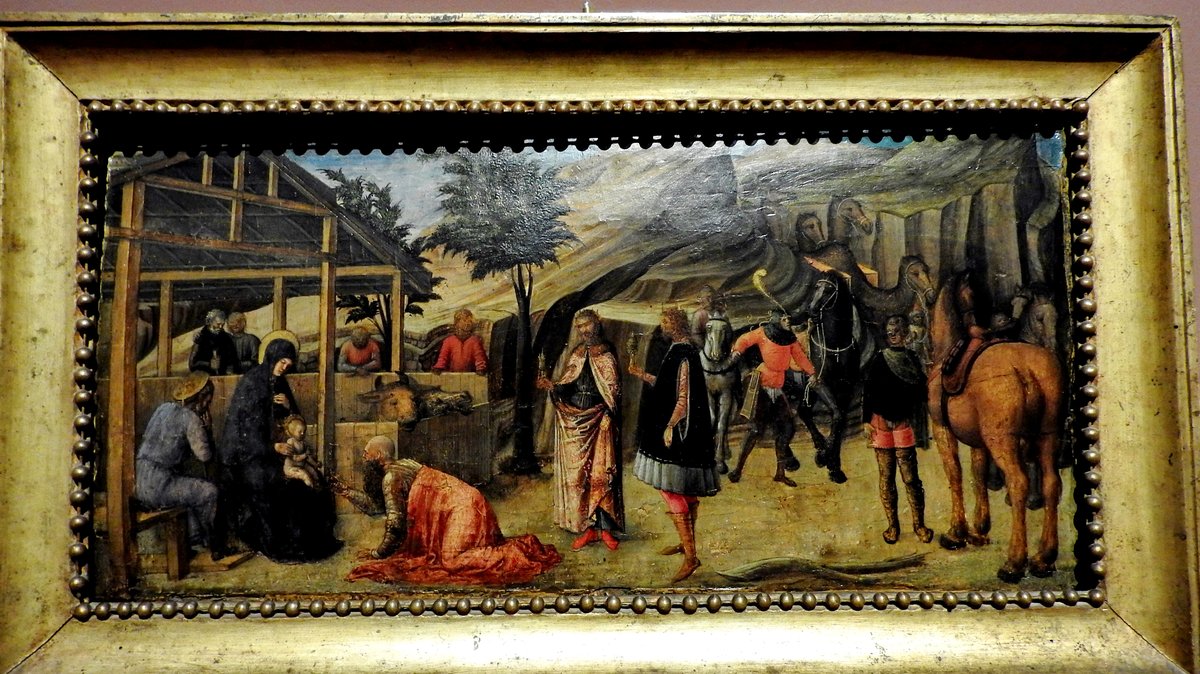
- Gold-ground panels by Gentile da Fabriano
- Masterpieces by Cosmè Tura, including The Judgment and Martyrdom of Saint Maurelius
- Este commissions such as Andrea Mantegna’s Christ with the Soul of the Virgin and allegorical muses from the Studiolo di Belfiore (Wikipedia - Pinacoteca Nazionale (Ferrara); Wikipedia - Palazzo dei Diamanti)
Collection Highlights
Medieval and Renaissance Treasures
- Fresco fragments from 14th-century local churches highlight the transition from Byzantine to Gothic art (Gallerie Estensi).
- Gentile da Fabriano’s Madonna and Child: An example of the International Gothic style.
- Cosmè Tura: Founder of the Ferrarese School, noted for angular figures and dramatic storytelling.
- Ercole de’ Roberti: Renowned for emotional intensity and realism.
- Francesco del Cossa: Delicate modeling and narrative skill, as seen in works like Saint Lucy and fragments of the Griffoni Polyptych (Elisabetta Gulino).
High Renaissance and Mannerist Masters
- Garofalo (Benvenuto Tisi): Combines Raphael’s clarity with Venetian color in works like The Annunciation.
- Dosso Dossi: Mythological scenes and courtly portraits.
- Ludovico Mazzolino: Detailed, intimate religious paintings.
Baroque and Later Works
- Scarsellino: Luminous colors bridging Renaissance and Baroque.
- Carlo Bononi: Dramatic biblical canvases.
- Guercino: Expressive figures and vigorous brushwork extending Ferrara’s artistic influence (Gallerie Estensi).
Este Commissions and Donated Collections
- Costabili Polyptych: Collaborative altarpiece by Garofalo and Dosso Dossi.
- Cassa di Risparmio di Ferrara Collection: Important modern addition (Inferrara - Pinacoteca Nazionale).
The Palazzo dei Diamanti
Constructed in 1493, the Palazzo dei Diamanti is famous for its façade of over 8,500 diamond-shaped marble blocks, a symbol of the Este family’s status and Ferrara’s Renaissance ambition (Palazzo dei Diamanti - About Us). The museum occupies the piano nobile, including the Salone d’Onore and Virginia de’ Medici’s apartments, both rich in historical detail and decorative art (Inferrara - Pinacoteca Nazionale).
Visiting Information
Address and Directions
- Address: Corso Ercole I d’Este, 21, Ferrara, Italy
- Getting There: 20-minute walk from Ferrara’s main train station; 5 minutes from Castello Estense. Bus lines 3 and 4 serve the route; nearest parking is Parcheggio Diamanti (Via Arianuova 25).
Opening Hours
- Tuesday to Sunday: 10:00 – 18:00 (last admission 17:30)
- Closed: Mondays (unless a public holiday), December 25, January 1
- Note: Hours may vary during special exhibitions—always check the official website before visiting.
Tickets and Admission
- Full price: €15
- Concessions (ages 6–18, over 65, university students, disability rating under 67%): €13
- Family ticket: €10 per person (adults + children aged 6–14)
- Young visitors under 26: €10 (also for university students on Mondays, excluding holidays)
- School groups: €5 per student; two teachers free per class
- Free Admission: Children under 6, visitors with disability rating over 67% (plus carer), accredited journalists, guides with valid ID, ICOM members, and the first Sundays from October–February.
- Combined tickets (including temporary exhibitions): €17–18
Reservations: Not required, but recommended for weekends and special exhibitions. Purchase tickets online for priority entrance or at the ticket office.
Accessibility and Visitor Services
- Full accessibility: Elevators, ramps, and barrier-free pathways accommodate visitors with disabilities.
- Audio guides: Free, smartphone-compatible, in multiple languages.
- Guided tours: Group and private tours, bookable in advance.
- Facilities: Bookshop, accessible restrooms, cloakroom.
- Photography: Non-flash photography for personal use is generally permitted; verify current policies on-site.
Nearby Attractions
- Castello Estense: Moated medieval fortress and symbol of Ferrara.
- Ferrara Cathedral: Romanesque-Gothic church in the city center.
- Palazzo Schifanoia: Renowned for Renaissance frescoes.
- Museo Archeologico Nazionale: Etruscan and Roman antiquities.
- Jewish Ghetto and MEIS: Explore Ferrara’s Jewish heritage.
- Parco Massari: Green space near the Palazzo dei Diamanti.
Combined tickets and close proximity make it easy to visit multiple sites in one day (ferraraterraeacqua.it; lonelyplanet.com).
Practical Tips
- Best times: Weekday mornings are less crowded.
- Duration: Allow 1.5–2.5 hours; art enthusiasts may wish to stay longer.
- Refreshments: No café on-site, but many options nearby.
- Special events: Check the museum calendar for festivals (e.g., “miXXer” music festival) and Notte Europea dei Musei (Estense.com).
- Combined visits: Consider combined tickets for savings and efficiency.
FAQs
Q: What are the opening hours?
A: Tuesday to Sunday, 10:00–18:00 (last admission 17:30). Closed Mondays and major holidays.
Q: How much are tickets?
A: Standard tickets €15, with discounts for various groups and free admission on designated days.
Q: Is the museum accessible?
A: Yes, with elevators, ramps, and accessible restrooms.
Q: Are guided tours available?
A: Yes, in multiple languages—advance booking recommended.
Q: Is photography allowed?
A: Non-flash photography for personal use is generally permitted; check for updates.
Q: Can I combine my visit with other attractions?
A: Yes, combined tickets are available for the Palazzo dei Diamanti and other museums.
Listen to the full story in the app
The whole Pinacoteca Nazionale,
told well.
Audio guides for 1,100+ cities across 96 countries. History, stories, and local insight — offline ready.
Verified, and shown.
Researched and written by the Audiala editorial team from historical records, architectural archives, and local expertise.
Researched from Wikidata, Wikipedia & official sources · fact-checked · How we make our guides →