


Rationalist Masterpieces
Terragni's Casa del Fascio (1936) and Sant'Elia kindergarten (1937) make Como Italy's most walkable open-air modernist museum. Grids of glass and marble float 200 meters from medieval walls.
The first thing you notice about Como isn't the lake—it's the way the lake notices you. Every narrow street spits you out onto water so suddenly that the light stings. Como, Italia isn't a postcard; it's a working city where silk looms still clatter in back rooms and the morning fish market happens under a 12th-century tower.
Curated from places in this city. Same price as official sites.
Prices shown are indicative — final pricing and availability are confirmed at checkout. Audiala may receive a commission from bookings made via these links.
CThe first thing you notice about Como isn't the lake—it's the way the lake notices you. Every narrow street spits you out onto water so suddenly that the light stings. Como, Italia isn't a postcard; it's a working city where silk looms still clatter in back rooms and the morning fish market happens under a 12th-century tower.
This city invented the battery, perfected the bicycle, and somehow convinced Mussolini's favorite architect to build a glass box that still embarrasses the cathedral. The rationalists called it Casa del Fascio. Locals call it 'that modern thing' and use it for parking tickets. You'll find Giuseppe Terragni's building locked—Guardia di Finanza still works inside—but walk around back and count the windows that don't align. Forty years ahead of its time, and nobody mentions it.
Between the 1396 Gothic cathedral and the 1936 rationalist masterpiece sits the Mercato Coperto, where zincarlin cheese smells like the mountains and the fishmonger knows exactly which family caught your lavarello. This is Como's real secret: it's not trying to be anything. It's just itself, a city that happened to grow up around the deepest lake in Italy.
What makes this place worth slowing down for.
Terragni's Casa del Fascio (1936) and Sant'Elia kindergarten (1937) make Como Italy's most walkable open-air modernist museum. Grids of glass and marble float 200 meters from medieval walls.
The Tempio Voltiano mausoleum and Libeskind's 16.5-meter Life Electric sculpture frame Europe's only active seaplane hangar, where silver-hulled aircraft still taxi straight into the lake.
From the Duomo square it's a 15-minute cable car ride to Brunate's lighthouse, plus 40 minutes more to reach Spina Verde park's WWI trenches and chestnut forests above the lake.
The Silk Educational Museum's 19th-century looms still clang, while MuST's 3,300 textile objects trace Como silk from Napoleonic stockings to 1970s disco shirts.
Not every monument, just the ones we'd walk you past ourselves.
Nestled in the vibrant heart of northern Italy, Como Cathedral, officially known as the Cathedral of Santa Maria Assunta, stands as a remarkable testament to…
Nestled on the picturesque shores of Lake Como, the Tempio Voltiano stands as a remarkable neoclassical monument dedicated to Alessandro Volta, the pioneering…

Nestled just outside the ancient city walls of Como, Italy, the Basilica of Sant’Abbondio stands as a remarkable testament to the region’s rich spiritual and…

Nestled within the historic heart of Como, Italy, the Basilica di San Fedele stands as a profound emblem of Lombard Romanesque architecture and religious…

Nestled on the serene shores of Lake Como, the Monument to Alessandro Volta and its associated sites form a compelling tribute to one of history’s most…

Stadio Giuseppe Sinigaglia, perched gracefully on the western shore of the iconic Lake Como, stands as a compelling blend of sporting heritage, architectural…
Nestled on the scenic western shore of Lake Como, Villa Olmo stands as a magnificent testament to neoclassical elegance and Como’s rich aristocratic heritage.
Where to wander, by quarter — each with its own rhythm.
Inside the medieval walls, every corner reveals another layer. The Duomo's marble facade stops you cold—440 years of construction visible in the stone. But turn down Via Vitani and you're in the silk district, where 19th-century industrial buildings house modern designers. The morning light hits San Fedele's Romanesque apse at exactly 8:47 AM. Locals know this; tourists don't.
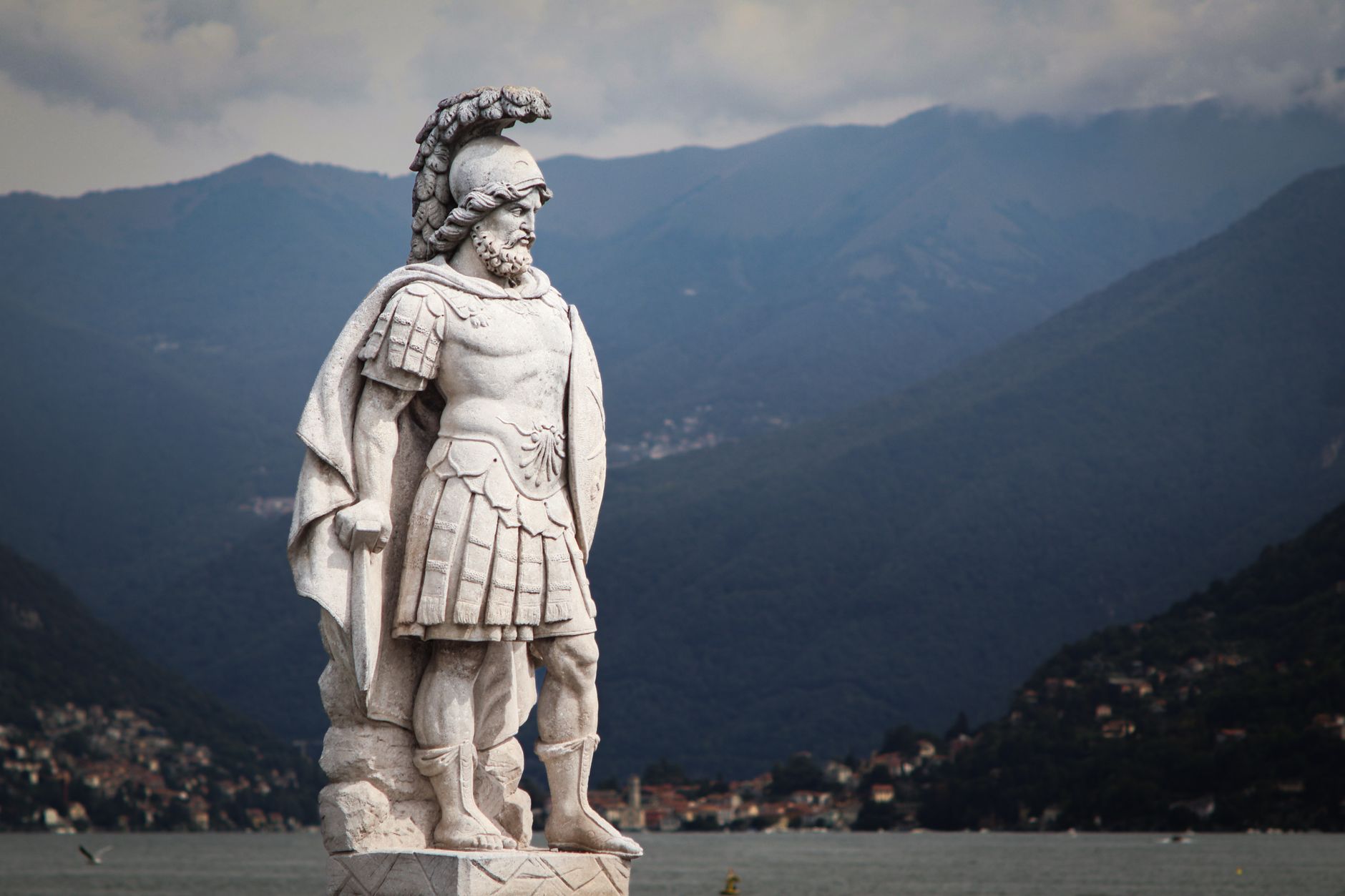
Como's evening heart beats in the square named for the man who invented the electric battery. The statue faces the lake like it's still waiting for lightning. Bars spill onto cobblestones where university students argue about architecture over negronis. By midnight, the only light comes from Spirit Cocktail Room's neon and the reflection of stars on water.
The western promenade strings together villas like pearls on a necklace worn by someone who doesn't care. Villa Gallia's pink facade needs repair. Villa Saporiti has bullet scars from 1945. The path curves for exactly 1.8 kilometers, just enough time to decide whether you're walking toward or away from something.
Between the lake and the funicular station, Terragni's ghost walks. Casa del Fascio's glass facade reflects the cathedral in fragments, as if breaking tradition into manageable pieces. Novocomum's curved corners feel like someone started drawing modernism and got distracted by the mountains. The architecture students sketching on the pavement know these buildings better than their own names.
Up the hill where tourists rarely wander, Saturday mornings belong to CortoBio market. Farmers from Val Cavargna sell buckwheat honey that tastes like altitude. The zincarlin here is the real thing—aged in mountain caves, sharp enough to make your tongue tingle. Spazio Gloria hosts concerts in a former factory where the acoustics depend on which windows you open.
From Bronze-Age pile dwellings to battery-powered modernity, Como keeps reinventing itself.
On the marshy shores of the lake, the Golasecca people lay out a grid of wooden piles and trade routes that will later become Via Regina. Their decorated bronze situlae already carry the swirl motifs you’ll still see on local ironwork. Como’s first skyline is a line of smoke rising from lakeside forges.
Julius Caesar plants 5,000 colonists on the plain and gives them Roman law. The new grid pushes the settlement off the hill and onto the lakefront, straight streets aligned with the Cardo that still slices through the medieval center. Latin inscriptions appear on the gateposts within a decade.
Gaius Plinius Secundus enters the world in a timbered house near what is now Via Giovio. He will grow up to catalogue volcanoes, whales, and Roman lake fleets, forever linking Como’s name to curiosity. Local legend says he learned to swim in the lake before he could walk.
Emperor Theodosius sanctions a cathedral on the site of San Fedele, making Como a diocesan capital. Felix, the first bishop, arrives with a retinue of masons who begin quarrying marble from the hills. Christianity is now the city’s operating system.
The Byzantine garrison on Baradello hill surrenders after a winter siege. Lombard warlords move into the Roman villas, their long-haired warriors demanding tolls on every mule train. Como becomes a border stronghold between the Duchy of Milan and the Alpine passes.
Pope Urban II climbs the hill himself to bless the new basilica, its twin bell towers cutting 60 m into the Alpine sky. Inside, the apse frescoes glow with ultramarine ground from Afghan lapis, paid for by Como’s wool guild. The church becomes the city’s spiritual compass for four centuries.
After a decade-long war, Milanese troops breach the walls and burn everything that will catch fire. The cathedral’s wooden roof crashes into the nave; the smell of scorched timber drifts across the lake. Survivors shelter inside San Fedele’s thick Romanesque shell, vowing revenge.
Frederick I grants Como imperial funds and stone from the quarries of Candoglia. Within months, new walls rise 11 m high, crowned by the 40 m Porta Torre. The city’s coat of arms—an eagle clutching a sword—appears on every new block, announcing Ghibelline loyalty.
Azzone Visconti rides through Porta Torre without a fight; the commune’s independence ends overnight. The silk looms in the new ducal workshops begin clacking day and night, dyeing the waters of the lake indigo. Como trades swords for spindles.
Masons lay the first white marble block of a cathedral that will take 340 years to finish. The late-Gothic façade will eventually swallow an entire city block, its spires tall enough to snag passing clouds. Como decides to build eternity in stone.
The future historian first sees light in a palazzo overlooking the fish market. He will collect faces—Raphael’s, Luther’s, Leo X’s—in his lakeside museum and coin the word “museum” itself. Como exports stories as silkily as it exports cloth.
A Tyrolean merchant coughs in the tavern; within weeks 5,000 citizens lie in mass graves outside Porta Torre. The silk mills fall silent, their looms draped in black crepe. Survivors vow an annual procession to the Madonna del Soccorso—still held every June.
The future inventor arrives in a candle-lit room on Via Donizetti, 200 m from the lake he will one day electrify. As a boy he skips Mass to fly silk-paper kites during thunderstorms, hunting sparks. Como’s most famous son will turn lightning into language.
French troops parade beneath the unfinished cathedral dome, tricolor cockades pinned to their shakos. Como becomes capital of the Lario department; metric measurements appear on shop counters overnight. The silk barons learn to quote prices in francs.
Red-shirted volunteers march through Porta Torre while Austrian officers retreat toward Chiasso. Citizens tear down the double-headed eagle and hoist the tricolor from the cathedral scaffold. Como votes itself into Italy within the month.
The first locomotive whistles across the new iron bridge, its pistons dripping lake water. Milan is now 60 minutes away; Como’s silk reaches Parisian fashion houses overnight. The station clock sets the city’s heartbeat to industrial time.
The boy who will draw cities of steel and glass takes his first breath in a stone apartment overlooking the funicular. His sketchbooks will imagine stepped skyscrapers powered by electricity—blueprints for a future Como hasn’t yet built. The lake wind rattles his cradle like a propeller.
A neoclassical pavilion rises on the waterfront to house Volta’s original batteries, their copper discs still green with lake air. Mussolini salutes the crowd; schoolchildren recite the unit of measurement that bears their hometown’s name. Como rebrands itself as the city that tamed lightning.
Giuseppe Terragni locks the last sheet of glass into a grid of white Pietra di Aurisina. The rationalist cube—four stories, 33 windows, zero ornament—faces the medieval Broletto like a philosophical argument in stone. Como becomes a required pilgrimage for modernist architects.
The Duce’s convoy speeds past the Tempio Voltiano at dawn, heading for the Swiss border he will never reach. Partisans barricade the old Roman bridge; bullets chip the marble saints on the cathedral façade. Como wakes up liberated and half-ruined, its silk warehouses empty.
Daniel Libeskind’s 16.5 m stainless-steel arc fizzles to life on the breakwater, its LEDs powered—of course—by Volta’s descendants. The sculpture catches sunset like a lightning bolt frozen mid-arc. Como’s skyline now balances a 12th-century tower against a 21st-century spark.
The people who shaped the city — and were shaped by it.
He created the first electric battery in his garden workshop behind what is now the Tempio Voltiano. Today the lakefront sculpture Life Electric crackles with selfie sticks—he’d probably grin at the spark he still generates.
His letters describe villas dotted along these same bends of the lake. Stand on the old harbour wall at sunset and you’ll recognise the watercolour light he wrote about—only the traffic hum replaces the oars.
His sketches of skyscraper cities pre-date Metropolis and hang inside Villa Olmo. The rationalist Casa del Fascio that rose after his death looks like one of his drawings stepped off the page.
He turned his lakeside villa into a portrait gallery of the powerful—an Instagram wall 500 years early. Those same faces still stare down from Comos Pinacoteca Civica, a little smug about surviving the algorithm.
He learned to pull an oar on these waters and went on to win Henley’s Diamond Challenge Sculls. The rowing club still keeps his shell hanging above the bar—locals touch it for luck before races.
Where locals actually book dinner — not the tourist menus.
Small things that change how the city treats you.
The 18th-century villa is still closed for restoration and the park is only half-open. Save the walk; stay lakeside and use the time for the nearby Chilometro della Conoscenza instead.
Libeskind’s steel sculpture faces east; early light turns the lake copper and you’ll have the breakwater to yourself. Tripods are allowed—no permit needed before 8 AM.
Kitchen, the only Michelin-star in town, serves a limited catch from the lake each day. Locals book the 19:30 slot to be sure of the risotto con pesce persico—after 20:30 it’s usually gone.
As of April 2026 the Brunate funicular runs again but the lighthouse summit is shut for works. Ride up for the view, then walk 15 min to the Belvedere di Brunate café—same panorama, open terrace.
Most Como restaurants list a €2–4 cover charge (‘coperto’) on the menu. You don’t need to add more unless service was exceptional—rounding up the total is enough.
A €15 ‘giornaliero’ ticket lets you hop all public boats in the first basin until sunset. Cernobbio–Moltrasio–Torno in one afternoon costs less than a single round-trip taxi.
A few films to set the scene before you go.
The city, as it actually looks.

A picturesque historic villa sits perched on the rocky shoreline of Lake Como, surrounded by lush gardens and dramatic mountain scenery.
Fleur van Deijck on Pexels

Historic pastel-colored buildings line the picturesque waterfront of Como, Italia, set against a backdrop of lush, forested hills.
Earth Photart on Pexels

A picturesque historic villa perched on the rocky banks of Lake Como, Italia, surrounded by lush greenery and misty mountain peaks.
Emmanuel HENAFF on Pexels

A passenger ferry glides across the serene waters of Lake Como, Italia, set against a backdrop of historic hillside architecture and dramatic mountain peaks.
Sergio Scandroglio on Pexels

A peaceful day at the harbor in Como, Italia, where rows of docked boats rest against a backdrop of historic hillside architecture.
Earth Photart on Pexels
Como rewards at least two days. Beyond the postcard lakefront you get one of Italy’s densest Rationalist quarters, a still-working silk industry you can tour, and Roman gates with wagon ruts in the stone. Milan is 55 min away—close enough to combine, far enough that Como keeps its evening pace.
Two full days covers the historic centre, a silk museum, a boat hop to Cernobbio and the Rationalist architecture trail. Add a third if you want to hike Spina Verde park or take the slow ferry to Varenna and Villa Monastero.
Yes—20 flat minutes along the west-shore promenade. But the villa itself is closed for restoration until at least 2027; only the park is partly open. Continue 10 min further to Villa del Grumello for gardens that are actually accessible.
It reopened 1 April 2026 after winter maintenance. Trains leave every 15 min, take 7 min uphill, €3.50 one way. Note: Faro Voltiano lighthouse at the top is still closed; stay on the paved path to the alternate viewpoint café.
Buy the €15 all-day public-boat pass and stay within the first basin. You’ll clock six villages—Cernobbio, Moltrasio, Torno, Blevio, Pognana, Torno—without paying the €30+ single fares to Bellagio.
Very. The walled historic core is small, well-lit, and full of late-bar foot traffic until about 1 a.m. Normal city caution applies around the station after midnight, but violent crime is rare.
Ready to book?
Curated from places in this city. Same price as official sites.
Prices shown are indicative — final pricing and availability are confirmed at checkout. Audiala may receive a commission from bookings made via these links.
Milan Malpensa (MXP) sits 50 minutes by Flibco shuttle (€8.99). Milan Linate (LIN) needs metro M4 + train. Bergamo Orio al Serio (BGY) requires shuttle to Milano Centrale then Trenord to Como San Giovanni (40 min, €5.20).
Como has no metro. ASF buses radiate from Piazza Matteotti; urban day pass covers city and funicular. Lake boats sail from Lungo Lario Trento. 2026's SwipeOnLake contactless tap system charges best daily rate automatically.
Spring peaks at 19°C in May with 122 mm rain. Summer hits 26°C but August brings 143 mm storms. Autumn cools to 21°C in September with only 74 mm rain—the sweet spot. Winter dips to 0°C with January's dry 34 mm.
Italian only on local buses; English works at hotels and ticket counters. Euro cash and contactless cards accepted everywhere. Tipping 10% is welcome but never required.
28 places, one continuous walking route. Free with your first city.
28 places to discover