History and Significance of the Monument
Sandro Pertini: A Legacy of Democracy and Resilience
Sandro Pertini, born Alessandro Pertini on September 25, 1896, in Stella San Giovanni, Italy, was a prominent figure in Italian politics and a symbol of resilience and hope during a turbulent period in Italy's history. Serving as the seventh President of the Italian Republic from 1978 to 1985, Pertini left an indelible mark on the nation's collective memory. His life journey, from a humble beginning in a small village to the presidency, is a testament to the power of resilience, determination, and a steadfast commitment to democratic principles (Understanding Italy).
Architectural Design by Aldo Rossi
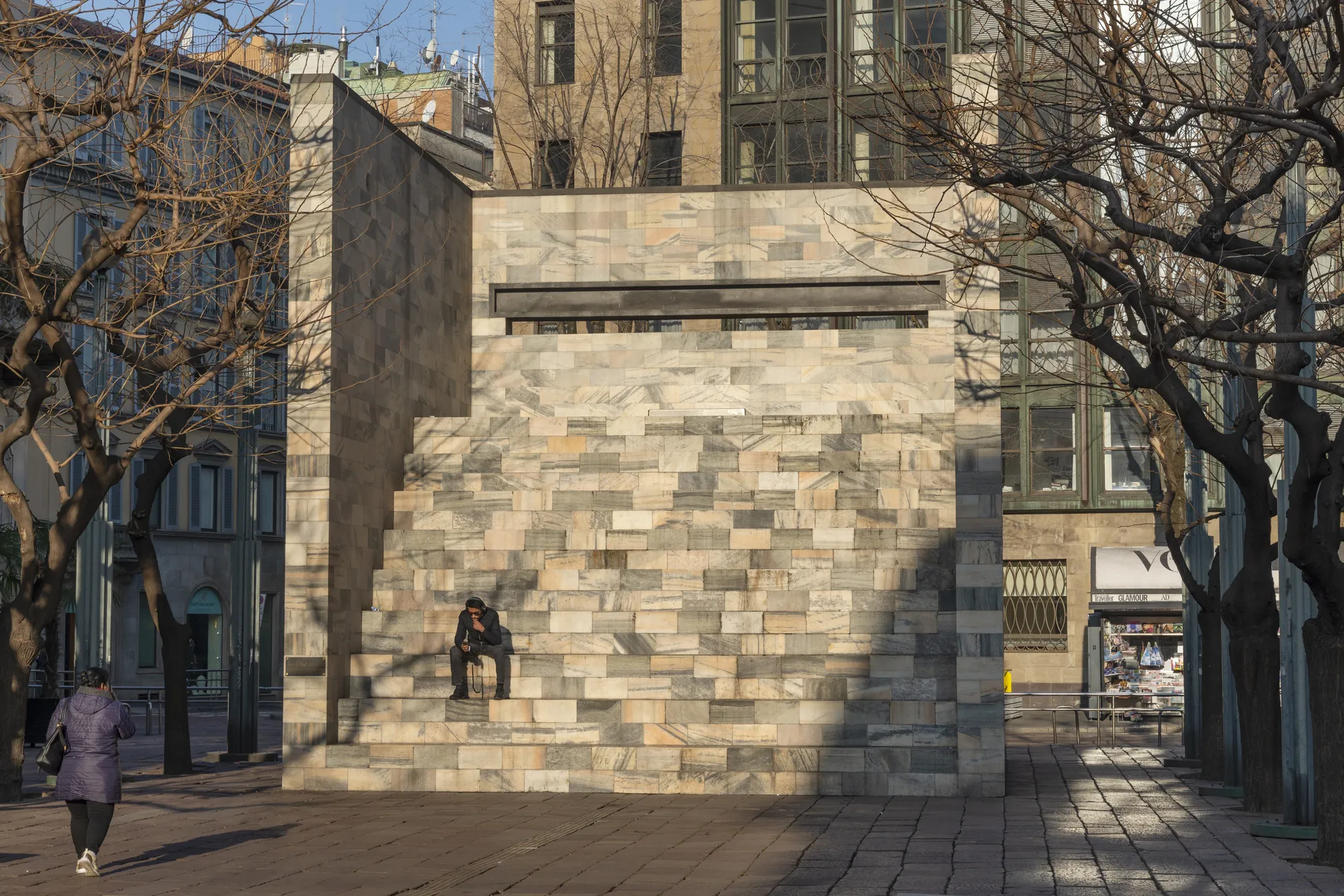
The Monumento a Sandro Pertini, located at the intersection of Via Monte Napoleone and Via Manzoni in Milan, was designed by the renowned architect Aldo Rossi. The monument was inaugurated on May 1, 1990, coinciding with the inauguration of the Linea Gialla of the Milanese Underground. The design of the monument is a hollow cube, eight meters on each side, with one side punctuated by a triangular fountain and a slit-like opening, which can be reached from the inside via a staircase. The monument is clad in alternating blocks of grey and pink stone, including the same Candoglia marble used on the facade of Milan Cathedral (Milano da Vedere).
Symbolism and Public Reaction
The monument captures the essence of Pertini's legacy, his unyielding fight for freedom, and his deep love for the Italian Republic. It is more than a statue; it is a conversation with history, a handshake across generations, reminding us that the fight for justice and liberty is always contemporary (Questo App). Despite initial heated and sometimes negative reactions from the public, the monument has become a landmark in Milan, celebrated for its architectural significance and the values it represents (Mudec).
Restoration and Preservation Efforts
Since its inauguration, the monument has undergone several restoration efforts to preserve its structural integrity and aesthetic appeal. In 2012, the monument was cleaned and restored, which included the renewal of the fountain system, consolidation and refurbishment of the seals, and cleaning, protection, and patination of the architectural elements (Milano da Vedere). These efforts were crucial in maintaining the monument as a symbol of Pertini's enduring legacy and the values he stood for.
Location and Accessibility
The Monumento a Sandro Pertini is strategically located in Piazza Croce Rossa, a typically "quiet little Lombard piazza" designed by Aldo Rossi. The piazza faces out over Via Manzoni and is easily accessible to both locals and tourists. The location is significant as it is situated at the intersection of two important Milanese streets, Via Monte Napoleone and Via Manzoni, which are now centers of commerce and tourism (Percorsi Case Museo).
Cultural and Historical Context
The monument is not just a tribute to Sandro Pertini but also a reflection of Milan's rich cultural and historical heritage. The use of Candoglia marble, the same material used in the construction of the Milan Cathedral, ties the monument to the city's architectural history. The design elements, such as the triangular fountain and the slit-like opening, evoke a sense of continuity between the past and the present, making the monument a focal point for reflection on the values that shape society (Milano da Vedere).
Visitor Experience
The monument and its inspiring message can be appreciated year-round, offering a moment of reflection amid the city's perpetual motion. Visitors can climb the staircase inside the hollow cube to reach a belvedere, from where they can observe the piazza through a long horizontal slit. This unique design element allows visitors to engage with the monument in a personal and contemplative manner (Questo App).
Controversies and Public Support
Since its installation, the monument has been the subject of various controversies, including debates about its aesthetic value and functionality. In 2010, there were discussions about its potential removal, which were ultimately thwarted by a petition signed by numerous architects and public figures who supported the monument's preservation. This public support underscores the monument's significance as a cultural and historical landmark in Milan (Milano da Vedere).
Visitor Information
Visiting Hours
The Monumento a Sandro Pertini is accessible 24/7. However, for a more immersive experience, it's recommended to visit during daylight hours when the details of the architecture can be fully appreciated.
Tickets
There is no admission fee to visit the Monumento a Sandro Pertini, making it an accessible destination for all visitors.
Travel Tips
- Best Time to Visit Early morning or late afternoon to avoid the crowds.
- Nearby Attractions The monument is close to other Milanese landmarks such as the Milan Cathedral, Galleria Vittorio Emanuele II, and La Scala Opera House.
- Accessibility The site is wheelchair accessible, and there are nearby public transportation options, including the Milanese Underground Linea Gialla.
FAQ Section
Q: What are the visiting hours for the Monumento a Sandro Pertini?
A: The monument is accessible 24/7, but it is best visited during daylight hours.
Q: Is there an admission fee to visit the monument?
A: No, there is no admission fee.
Q: Are there any guided tours available?
A: While there are no official guided tours, many local tour companies include the monument in their city tours.
Q: What are some nearby attractions?
A: Nearby attractions include the Milan Cathedral, Galleria Vittorio Emanuele II, and La Scala Opera House.
Visuals and Media

Map: Location of the Monumento a Sandro Pertini in Milan.
For more interactive content, consider taking a virtual tour of the monument available on our website.