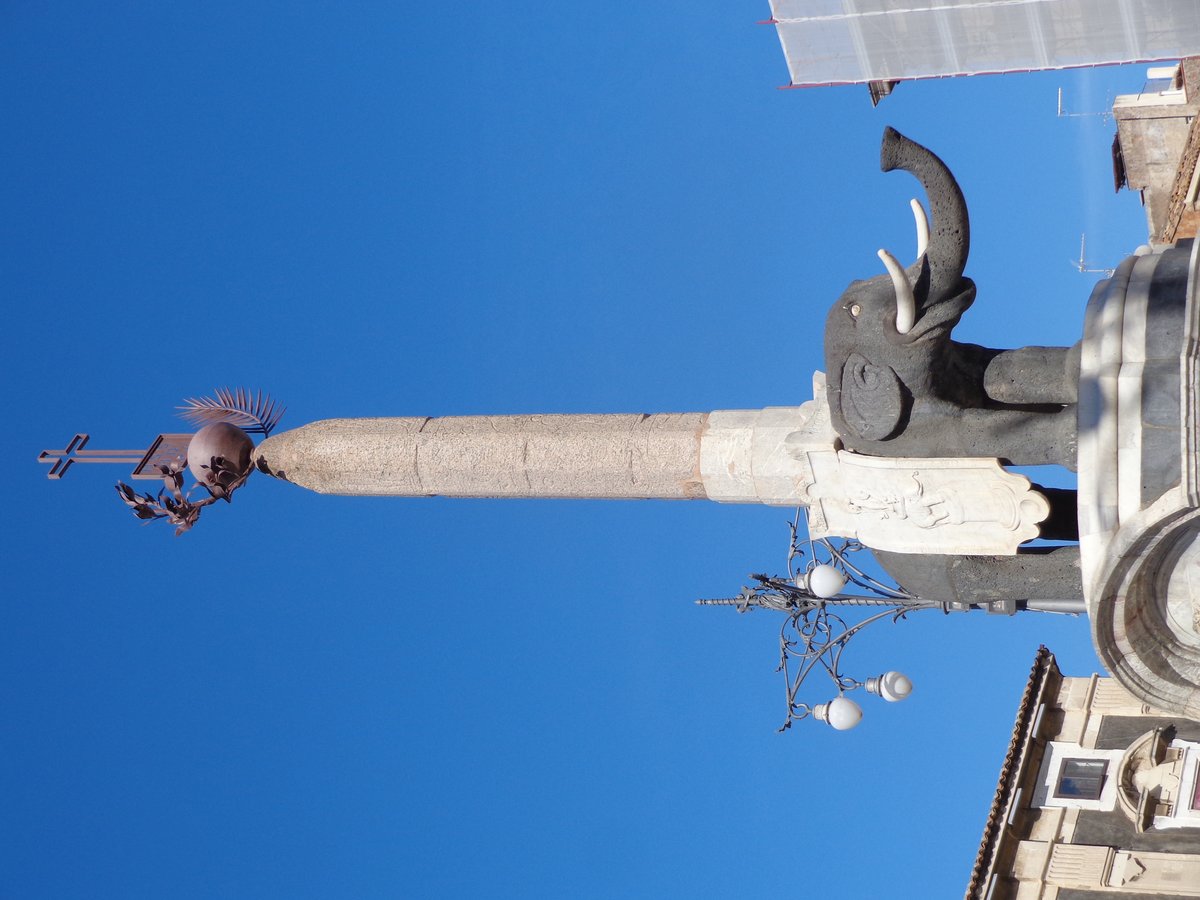
Plan and listen to Roman Amphitheatre Of Catania with Audiala.
Audio guide in your pocket, itinerary in your browser. Built for the way you actually visit.
Introduction: An Icon of Catania's Ancient Heritage
The Roman Amphitheatre of Catania stands as one of Sicily’s grandest and most evocative ancient landmarks. Erected in the 2nd century AD, during the reigns of Hadrian and Antoninus Pius, it was once the largest amphitheatre on the island and among the most significant in the Roman Empire, surpassed only by Rome’s Colosseum. Built primarily from the distinctive black lava stone of Mount Etna and adorned with marble, the amphitheatre was the stage for gladiatorial games, animal hunts, and even staged naval battles, reflecting Catania’s prominence in ancient Roman society (vidan.org; everythingzany.com).
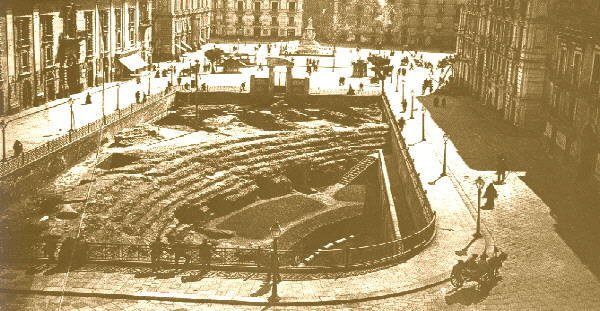
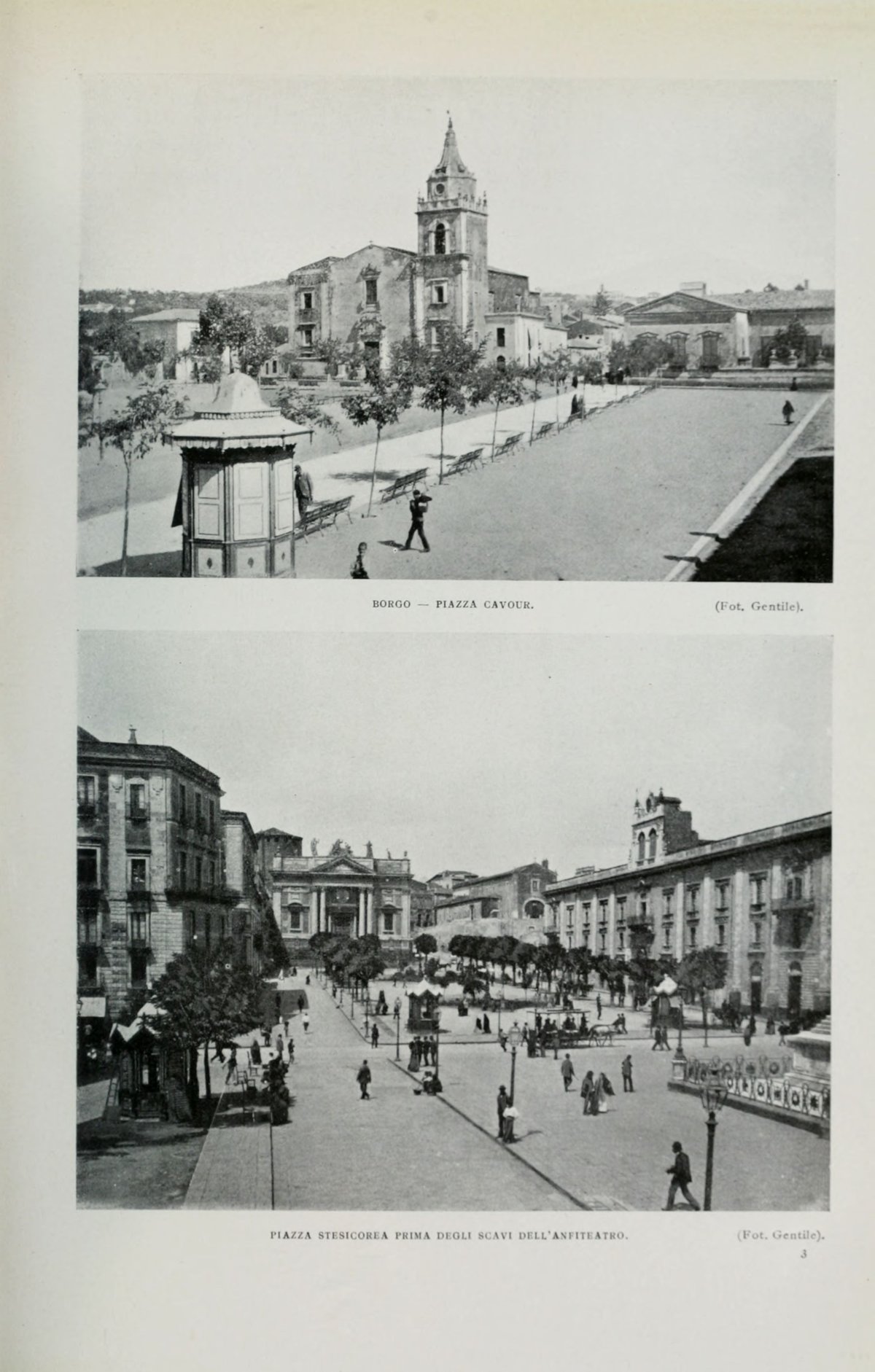
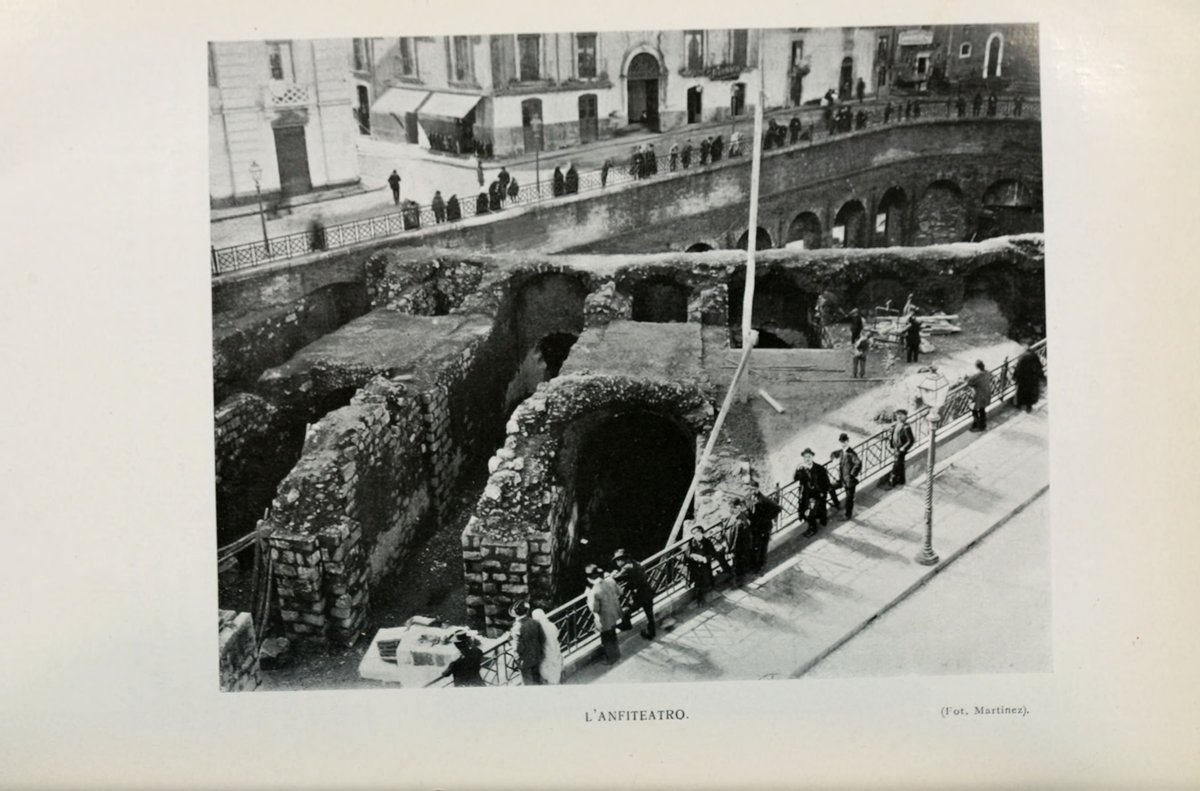
Today, the amphitheatre lies beneath the bustling Piazza Stesicoro, offering a striking juxtaposition of antiquity and modernity. Visitors can explore evocative ruins, embark on guided tours, and attend cultural events, all while gaining insight into the city’s enduring resilience and artistry (finestresullarte.info; Italian Traditions).
- Introduction
- Origins and Construction
- Functions and Social Role
- Decline, Burial, and Rediscovery
- Restoration and Preservation
- Visitor Information: Hours, Tickets, and Accessibility
- Architectural Features
- Cultural Significance & Urban Setting
- Visitor Tips and Nearby Attractions
- Visual and Interactive Resources
- Frequently Asked Questions (FAQ)
- Conclusion & Call to Action
- References

1. Origins and Construction
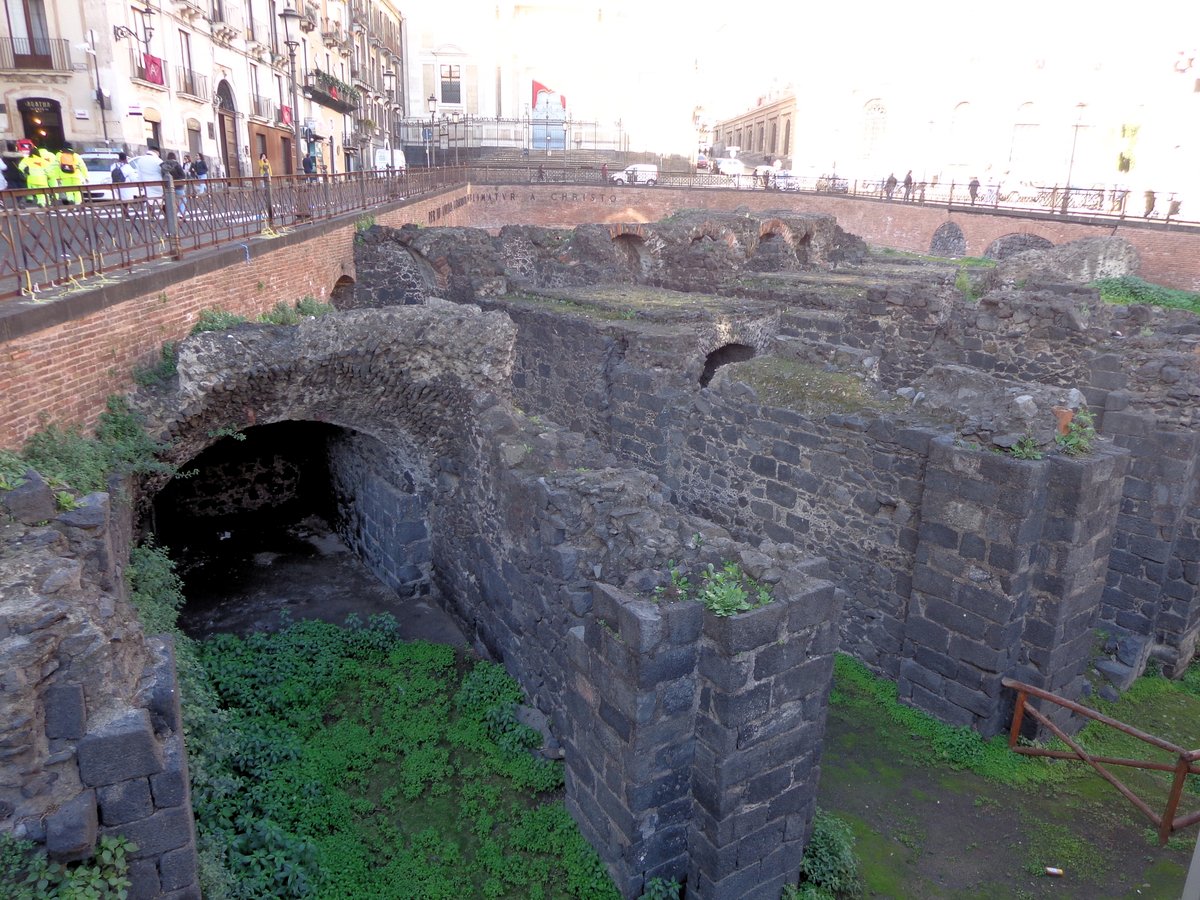
The Roman Amphitheatre of Catania was constructed on the edge of the ancient city, commanding the landscape with its elliptical form and grand scale (vidan.org). Its primary building material, dark lava stone from Mount Etna, not only gave the structure durability but also its iconic appearance. Marble and granite were used for decorative elements, underlining the city’s wealth and Roman identity.
At its peak, the arena could accommodate 15,000 to 20,000 spectators, with some sources indicating capacities as high as 30,000, including temporary wooden stands (travelingitalian.com; everythingzany.com). The amphitheatre’s design included features such as a 14-step cavea (seating area) for optimal visibility and acoustics, multiple entrances (vomitoria) for efficient crowd flow, and subterranean tunnels used to transport gladiators and animals (vidan.org).
2. Functions and Social Role
In Roman times, the amphitheatre was a focal point for public entertainment and civic life. It hosted gladiatorial games, animal hunts, and naumachiae—naval battle reenactments that used an ancient aqueduct to flood the arena (everythingzany.com). These events reinforced social cohesion and Roman authority, offering communal spectacle and celebration.
As the centuries passed, the amphitheatre’s role evolved. Portions of its structure were incorporated into commercial and communal spaces, and its stones were often repurposed for new buildings (vidan.org).
3. Decline, Burial, and Rediscovery
Following the fall of the Roman Empire, the amphitheatre gradually fell into disuse. Natural disasters, including repeated eruptions from Mount Etna and devastating earthquakes, contributed to its deterioration and partial burial (travelingitalian.com). Over the Middle Ages, the amphitheatre's stones were extensively quarried for new construction, a practice that continued for centuries (Italyscapes).
Significant rediscovery began in the 18th and 19th centuries, with archaeological investigations revealing intricate tunnel networks and remarkable artifacts. Many of these underground passages can be visited today, offering a glimpse into the engineering marvels of ancient Rome (everythingzany.com).
4. Restoration and Preservation
Modern restoration efforts have sought to stabilize the site, open it to the public, and protect it from further decay. After a lengthy closure, the amphitheatre reopened in July 2024, following collaboration between municipal authorities and the Regional Archaeological Park (finestresullarte.info). Recent conservation projects have also used 3D modeling and non-invasive techniques to guide preservation and enhance visitor interpretation (Italian Traditions).
5. Visitor Information: Hours, Tickets, and Accessibility
Location: Piazza Stesicoro, 95100 Catania CT, Italy
Visiting Hours:
- Tuesday to Saturday: 9:00 AM – 1:00 PM & 3:00 PM – 5:00 PM
- Sunday: 9:00 AM – 1:00 PM
- Closed on Mondays
- Note: Hours may vary seasonally; always verify on the official website or with local tourist offices.
Tickets:
- Full ticket: €3
- Reduced ticket: €1.50 (see Parchi Archeologici Sicilia)
- Tickets are available on-site; guided tours are recommended for an in-depth experience.
Accessibility:
The site is partially accessible, with some ramps and adapted paths. However, uneven surfaces and stairs, especially in underground sections, may pose challenges. Contact the site in advance for detailed accessibility information.
Guided Tours & Events:
Regular guided tours (available in multiple languages) provide access to restricted areas, such as the subterranean tunnels. Educational programs and cultural events are frequently offered (finestresullarte.info).
6. Architectural Features
- Elliptical Layout: Arena approx. 70m in diameter; overall structure about 125x105m.
- Cavea (Seating): Up to 32 rows, arranged in social tiers; optimal visibility and acoustics.
- Arena & Substructures: Protective podium wall, adaptable wooden floor, and extensive tunnels beneath for logistics.
- Entrances (Vomitoria): Multiple access points for rapid crowd management.
- Materials: Black lava stone, marble, granite, and brick; the contrasting color palette creates dramatic visuals.
7. Cultural Significance & Urban Setting
The amphitheatre is a cornerstone of Catania’s historical identity, physically and symbolically connecting the past and present. Its “archaeological trench” configuration—below street level in Piazza Stesicoro—creates a striking urban landmark but also presents challenges for integration and visibility (Academia.edu). Restoration and digital engagement efforts aim to bring the monument closer to residents and visitors, bridging the gap between its ancient origins and contemporary life.
The amphitheatre’s stones have been repurposed for later buildings, including the Cathedral of Sant’Agata and the Church of San Biagio, further intertwining its history with that of the city (Italyscapes).
8. Visitor Tips and Nearby Attractions
- Arrive Early: Beat the crowds and enjoy cooler temperatures.
- Wear Comfortable Shoes: Surfaces are uneven, especially underground.
- Combine Your Visit: The Cathedral of Sant’Agata, Via Etnea, and Castello Ursino are within walking distance.
- Photography: Allowed for personal use; professional equipment requires permission.
- Respect Barriers: Some areas are restricted for safety and preservation.
10. Frequently Asked Questions (FAQ)
Q: What are the visiting hours?
A: Generally Tuesday-Saturday 9:00 AM – 1:00 PM & 3:00 PM – 5:00 PM; Sunday 9:00 AM – 1:00 PM. Closed Mondays. Check for seasonal changes.
Q: How much do tickets cost?
A: €3 full, €1.50 reduced. Some events or exhibitions may have different pricing.
Q: Are guided tours available?
A: Yes, in several languages. Advance booking is recommended.
Q: Is the site accessible?
A: Partially. Some tunnels and levels are difficult for those with mobility issues.
Q: What are nearby attractions?
A: Piazza Stesicoro, Cathedral of Sant’Agata, Via Etnea, and Castello Ursino.
Discover More
The Roman Amphitheatre of Catania is not just an archaeological site; it is a vivid testament to the city’s resilience and its layered, multicultural history. From its origins as a Roman spectacle arena to its rediscovery and revival as a centerpiece of urban identity, the amphitheatre invites visitors to step into a living dialogue between past and present.
Plan your visit today to explore this extraordinary monument. For up-to-date information, guided tours, and virtual experiences, download the Audiala app and follow us on social media. Continue your journey by discovering Catania’s other ancient sites and sharing in the city’s enduring legacy.
Tickets & tours.
These are guided options from our partners — same price as booking direct.
Prices are indicative — final pricing and availability are confirmed at checkout. Audiala may earn a commission from bookings made through these links.
Listen to the full story in the app
The whole Roman Amphitheatre Of Catania,
told well.
Audio guides for 1,100+ cities across 96 countries. History, stories, and local insight — offline ready.
Verified, and shown.
Researched and written by the Audiala editorial team from historical records, architectural archives, and local expertise.
Researched from Wikidata, Wikipedia & official sources · fact-checked · How we make our guides →