What Villa Caldogno is
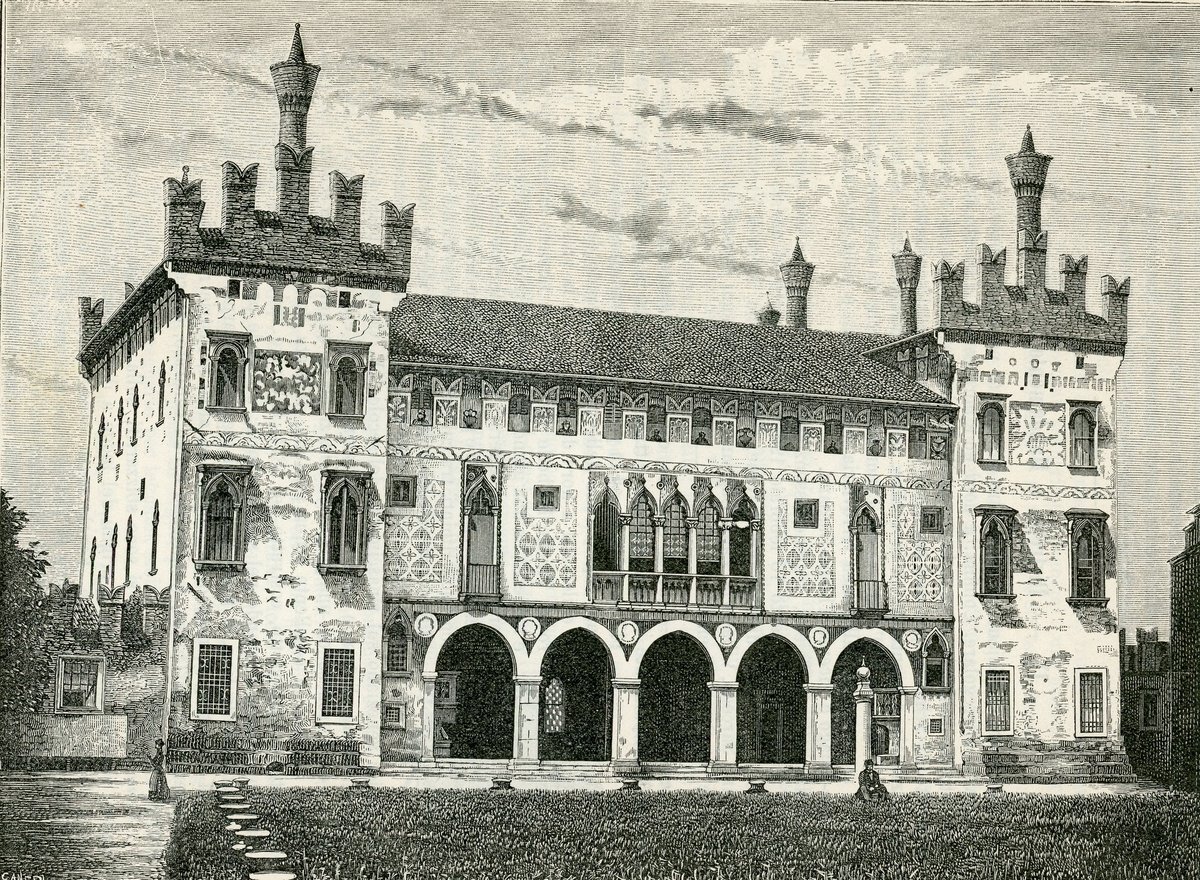
In Caldogno, about 10 km north of Vicenza, Villa Caldogno is a Renaissance country villa attributed to Andrea Palladio. It combines a central loggia, classically proportioned rooms and frescoes with the practical layout of a working estate. Its interiors include fresco cycles by Venetian Renaissance artists Giovan Antonio (also known as Giovanni Antonio) Fasolo and Giovanni Battista (also given as Giovan Battista) Zelotti.
The villa is included in the UNESCO World Heritage listing “City of Vicenza and the Palladian Villas of the Veneto,” recognized in 1996. The listing reflects the importance of Palladio’s villas as cultural heritage (vicenzavillepalladio.it; italia.it).
Caldogno lies in the fertile plains of the Veneto. The Timonchio and Bacchiglione rivers shape the surrounding landscape, which has a humid subtropical climate and seasonal changes including spring blossoms and autumn foliage. Protected cycle paths, including routes at Risorgive del Bacchiglione, provide opportunities for cycling and birdwatching (audiala.com; mycornerofitaly.com).
History
Caldogno’s history reaches back to Roman times; archaeological remains and ancient roads point to the area’s early importance. The town later experienced Venetian and Austrian rule while retaining its rural character and cultural traditions (audiala.com).
The villa’s story is closely connected to the Caldogno family, a prominent Vicentine aristocratic lineage. Losco Caldogno acquired the estate in 1541 through a series of inheritances and divisions. Construction, attributed to Palladio, began around 1545. By about 1565, the villa had become the country residence of Losco’s son Angelo Caldogno. An inscription above the main loggia reads “Angelus Calidonius Luschi filius” MDLXX, indicating completion of the villa and its extensive fresco decoration by 1570. The family retained the property for more than three centuries (vicenzavillepalladio.it; villacaldogno.it).
After Pier Angelo Caldogno, the last male heir, died, the villa passed to his sister in 1867. In the 1930s, Dr. Ettore Nordera bought the property and established an institute for children in need. In 1944, the German army requisitioned the complex and built a reinforced-concrete bunker beneath the barchesse, or farm wings. Located six metres below ground, it served as a military hospital and command post, with facilities for treating wounded people and performing surgery. Its entrance was disguised as a vegetated artificial hill (villacaldogno.it).
The Municipality of Caldogno acquired the villa in 1987 and began a major restoration campaign in 1994. By 2016, restoration of the villa, frescoes, cellars and park was complete. Today the municipality owns the property, which is used for tours and cultural events (vicenzavillepalladio.it).
What to see
Architecture and interiors
Although Villa Caldogno does not appear in Palladio’s I quattro libri dell’architettura (The Four Books of Architecture), scholars attribute its design to him. The case rests on stylistic similarities to Villa Saraceno, Villa Zeno and Villa Pisani, and to Palladio’s study drawings for Villa Poiana. The façade’s central section, window framing, base and staircase also reflect his architectural vocabulary (vicenzavillepalladio.it).
The villa has a linear plan with a central loggia, symmetrical wings and a broad approach staircase. Its proportions include some irregularities, while the overall arrangement reflects Renaissance ideals of balance and functional elegance. The barchesse originally served agricultural and domestic functions; according to a map dated 1685, they were moved to the opposite side of the estate in the 17th century.
The façade is articulated with pilasters and classical cornices. Changes made in the 17th and 18th centuries included exterior frescoes, of which fragments remain, and alterations to the rear elevation.
The piano nobile, or main floor, contains frescoes completed between 1569 and 1570 by Fasolo and Zelotti. Allegorical and mythological scenes, depictions of daily life and architectural trompe-l’œil decorate the rooms. The cycles are known for their vibrant colours, dynamic compositions and integration of painted architecture with the villa’s actual spaces. Further decoration was added in the mid-17th and early 18th centuries.
The central hall, frescoed side rooms and gardens are among the villa’s notable features. The grounds offer views of the surrounding countryside and settings for cultural events and walks.
The wartime bunker
Behind the villa’s barchessa, the bunker is a striking contrast to the Renaissance building. A permanent exhibition there presents aspects of local wartime history (mycornerofitaly.com).
Cultural and community life
The villa hosts cultural events, exhibitions, workshops and educational activities. Programs described for the site include guided tours, lectures, fresco-painting workshops, historical reenactments in period costumes, concerts, theatrical performances and art installations. Seasonal events may include wine tastings. The villa also participates in regional “Ville Venete” open days. The annual Festa della Villa is described as a festival featuring music, food and traditional crafts (ilTurista.info; Eventbrite: Community Events in Caldogno).
Local authorities, heritage organizations, volunteers and residents are involved in preservation efforts, including maintenance, research, public campaigns and fundraising. The villa is a source of community pride and features in civic events and promotional materials. Its visitors also contribute to local hotels, restaurants and artisan shops; tourism packages may combine villa visits with wine tastings and other Palladian sites. The villa has hosted international delegations of architects, historians and students, and collaborations with universities support architectural study and conservation training.
Practical visiting information
Opening hours
The supplied visitor information gives different schedules:
- One schedule lists Tuesday to Sunday, 10:00 AM–6:00 PM, with closure on Mondays and certain public holidays.
- Another describes seasonal opening, typically from March through November: Saturday, 9:00 AM–12:00 PM and 3:00 PM–6:00 PM; Sunday, 9:00 AM–12:00 PM.
- A further schedule also lists Tuesday to Sunday, 10:00 AM–6:00 PM, and closure on Mondays and public holidays.
Hours may change because of season, holidays, private events or weddings. Check the latest information through the official Vicenza tourism portal, the Vicenza events calendar, the villa, or the tourist office. The tourist office contact details given are [email protected] and +39 0444 99 47 70.
Tickets and tours
Ticket information also varies among the supplied accounts:
- Standard adult admission is listed as approximately €8, and elsewhere as €8.
- A reduced ticket of €5 is listed for students and seniors.
- Free admission is listed for children under 12 in one account, and for children under 18 in another; students and Caldogno residents are also listed as eligible for free or reduced entry.
- Group discounts, family packages and group bookings are available or can be arranged in advance. Prices may vary by season, exhibition or event.
Tickets may be bought online through the villa’s official website or at the entrance. Online purchases are also listed through Ticketlandia. Advance booking is recommended for peak periods, groups and guided visits. Cash is suggested in case card payment is not available.
The Vicenza Tourist Information Office is at Piazza Matteotti, 12, and is listed as open daily from 09:00–17:30. Tickets for Villa Caldogno and other Vicenza attractions are also listed as available there. Combined options such as the Vicenza Silver Card and Gold Card are mentioned for visits to multiple attractions.
Guided tours cover the villa’s history, architecture and frescoes, and may include the gardens and bunker exhibition. Some accounts describe tours as daily; others emphasize group visits, special events or reservations. Tours in multiple languages are reported, while English-language tours may be available at some times. Reservations can be made through the Vicenza tourism office, directly with the villa, or through Pro Loco Caldogno. Special openings, themed tours and events may be scheduled during local festivals and spring holidays.
Accessibility and facilities
The villa is described as partially accessible. The main floor is generally or mostly accessible, but some areas have steps or uneven surfaces; the upper floors and bunker may have limited access. Assistance and accommodations for visitors with mobility challenges are mentioned. Contact the villa or tourist office in advance to discuss specific access needs.
Basic restrooms are available on site. Parking is described variously as ample on site, free on site, free or low-cost nearby, and potentially limited during busy periods or special events.
Tips
- Confirm opening hours before travelling, particularly because the listed schedules differ and events may affect public access.
- Weekday mornings and early Saturdays are described as quieter. Spring (April–June) and autumn (September–October) are also suggested for mild weather, seasonal scenery and cultural events; avoid dates when private events restrict public access.
- Bring water and snacks, as refreshment options at the villa are limited. Cafés are available in Caldogno.
- Comfortable shoes are useful for gravel paths and uneven floors. Modest dress is suggested when visiting nearby religious or historic sites.
- Photography is generally allowed for personal use, but flash and tripods may be restricted, especially in frescoed rooms. Confirm the rules with staff.
- Italian is the primary language spoken; some staff speak English. A translation app or basic Italian phrases may be useful.
- Keep children supervised around the artworks, maintain quiet in frescoed rooms and note that smoking is prohibited inside and around most of the villa.
Nearby places
In Caldogno
- Parco della Rimembranza A landscaped park for walks, picnics and relaxation (touristplaces.guide).
- Risorgive del Bacchiglione Protected cycle paths near the river springs, with opportunities for cycling and birdwatching (mycornerofitaly.com).
- Arco delle Scalette An architectural landmark and photography spot (touristplaces.guide).
- Church of San Michele Also referred to as the Longobards Church, it is described as the town’s oldest church and is located in the Caldogno cemetery (mycornerofitaly.com).
- Villa Fogazzaro-Arnaldi The former summer home of writer Antonio Fogazzaro, occasionally open for tours (mycornerofitaly.com).
Molin Vecio serves traditional Vicentine cuisine in a historic 16th-century mill setting and has a lakeside terrace. It is also mentioned as a photographic spot. Local food options include cafés and artisanal bakeries such as Dolci di Zenere. Caldogno’s cuisine and the surrounding area are associated with baccalà alla vicentina, bigoli pasta, cheeses, cured meats, and wines from Colli Berici and Soave (mycornerofitaly.com).
Accommodation options mentioned include boutique hotels, agriturismi and Villa Solatia, which features wellness facilities and a bio-lake. Early booking is advised during festivals and high season (mycornerofitaly.com).
Vicenza and the Veneto
From Villa Caldogno, visitors can explore other Palladian villas, including Villa Valmarana, Villa La Rotonda (also called Villa Rotonda), Villa Godi Malinverni, Villa Pisani Bonetti, Villa Saraceno, Villa Zeno and Villa Pisani. Vicenza’s historic centre, a UNESCO-listed site, includes Teatro Olimpico. Vicenza’s Palladian architecture and other cultural sites are recommended as part of a wider visit (vicenzae.org; Eventbrite: Things to Do Around Caldogno).
Bus No. 9 connects Vicenza’s Piazza Matteotti with Via Zanella Fronte Civico 38 in Caldogno in approximately 26 minutes. A GREEN bus card is required and should be purchased before boarding (dong.world). A taxi from Vicenza train station or city centre is listed at around €20. Caldogno is also accessible by car, and local buses connect it with Vicenza and nearby towns. Dedicated cycle paths run through the town.
The wider Veneto region includes Venice, Verona and Padua, as well as Adriatic lagoons, the Po Valley and the foothills of the Dolomites. Palladio’s villas were designed as both working agricultural estates and refined residences, and his approach influenced architects in Europe and the Americas (tours-italy.com; venicetraveltips.com).
Further information
- Villa Caldogno: Visiting Hours, Tickets & Exploring Vicenza's Historic Palladian Villa, 2025, Andrea Palladio Foundation
- Official Villa Caldogno Website, 2025
- Villa Caldogno Visiting Hours, Tickets & Visitor Guide, 2025, Vicenza Tourism
- Villa Caldogno Visiting Hours, Tickets, and Cultural Significance in Caldogno, 2025, ilTurista.info and Eventbrite, https://www.eventbrite.com/d/italy--caldogno-rettorgole-cresole/community--events--this-month/
- Villa Caldogno and Caldogno Historical Sites: Visiting Hours, Tickets, and Travel Guide, 2025, Audiala and My Corner of Italy, https://www.mycornerofitaly.com/what-to-see-in-caldogno/
- venetoway.com
- touristplaces.guide
- prolococaldogno.it
- ilTurista.info
- Eventbrite: Community Events in Caldogno
Frequently Asked Questions (FAQ)
What are Villa Caldogno’s visiting hours?
The supplied schedules differ: one lists Tuesday to Sunday, 10:00 AM–6:00 PM, while another lists seasonal opening from March through November, with Saturday hours of 9:00 AM–12:00 PM and 3:00 PM–6:00 PM and Sunday hours of 9:00 AM–12:00 PM. The villa is also described as closed on Mondays and certain public holidays. Check the latest schedule before visiting.
How much are tickets?
Adult admission is listed as approximately €8 or €8. A reduced €5 ticket is listed for students and seniors. Free entry is reported for children under 12 in one account and children under 18 in another; students and Caldogno residents are also listed for free or reduced admission.
Are guided tours available, including in English?
Yes. Tours are described as daily, regularly offered, or available especially for groups and special events. Multiple-language tours are mentioned, and English-language tours may sometimes be available. Advance reservations are recommended.
Is the villa accessible to visitors with disabilities?
The villa is partially accessible, with the main floor generally accessible. Steps, uneven surfaces, the upper floors and bunker may limit access. Contact the villa or tourist office about accommodations.
Can I buy a combined ticket?
The Vicenza Silver Card and Gold Card are listed as combined options for visiting multiple attractions.
Is photography allowed inside?
Photography is generally allowed for personal use, but flash and tripods may be restricted in frescoed rooms. Confirm the rules with staff.
What nearby sites can I visit?
Nearby options include other Palladian villas, Vicenza’s UNESCO-listed historic centre and Teatro Olimpico, as well as Caldogno’s Parco della Rimembranza, Arco delle Scalette, Church of San Michele and Villa Fogazzaro-Arnaldi.