Plan and listen to Towers Of Bologna with Audiala.
Audio guide in your pocket, itinerary in your browser. Built for the way you actually visit.
Introduction: The Towers of Bologna—History and Cultural Significance
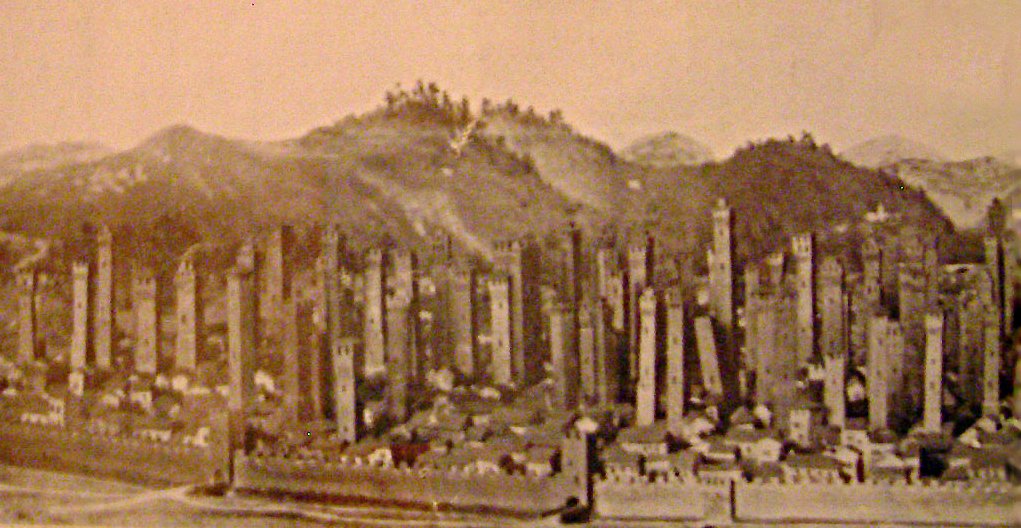
Bologna’s medieval towers are extraordinary architectural relics that bear witness to the city’s vibrant history and cultural evolution. Once known as “the Manhattan of the Middle Ages,” Bologna’s skyline was characterized by a dense cluster of up to 180 towers constructed by noble families between the 11th and 13th centuries. These structures served as both defensive fortifications and potent symbols of social status. Today, about 20 towers endure, with the Torre degli Asinelli and Torre Garisenda standing as the city’s most iconic landmarks. This guide explores the origins, architectural features, social context, and visitor information essential for experiencing Bologna’s towers, including up-to-date details on opening hours, ticketing, accessibility, and nearby attractions.
For more in-depth information on Bologna’s towers and practical resources for visitors, consult Bologna Welcome, Earthly Mission, and bolognatour.eu.

Medieval Origins and Proliferation of the Towers
Between the 11th and 13th centuries, Bologna experienced a unique architectural phenomenon: the rapid construction of towers by noble families. These towers, numbering as many as 180 at their peak, reflected both the need for defense during periods of social upheaval and the desire for prestige (Earthly Mission; The History Insider). The rivalry among families, influenced by the broader Guelph-Ghibelline conflict, spurred this vertical arms race.
Construction Techniques and Architectural Features
Bologna’s towers were feats of medieval engineering, typically square in cross-section with deep foundations reinforced with selenite stone and lime. Builders used the “a sacco” masonry technique, creating a thick inner wall, thinner outer wall, and a core of rubble and mortar. Construction could last several years and involved hundreds of workers (Earthly Mission). The tallest towers reached nearly 100 meters, making them some of the most imposing structures in medieval Europe.
Social and Political Significance
The proliferation of towers was deeply intertwined with Bologna’s political and social structures. Tower height was a visible declaration of family power and wealth, and these buildings often doubled as fortresses during feuds. As urban needs changed, many towers were incorporated into residential or commercial buildings, or repurposed for civic use (The History Insider).
The Two Towers: Asinelli and Garisenda
Torre degli Asinelli
- Height: 97.2 meters (319 feet)
- History: Built in the late 11th century, likely by the Asinelli family, it is Italy’s tallest original medieval tower. The base has hosted shops since the 13th century.
- Climbing Experience: Ascend 498 wooden steps for panoramic views of Bologna and the surrounding hills.
- Cultural Impact: Referenced in Dante’s “Inferno.”
Torre Garisenda
- Height: Originally taller, now 47–48 meters (154–157 feet)
- Notable Feature: Pronounced lean (more than Pisa’s famous tower), result of ground subsidence; closed to the public for safety.
- Cultural Impact: Also cited in Dante’s works and admired for its dramatic tilt.
(bolognatour.eu)
Preservation, Restoration, and Modern Use
Ongoing restoration and monitoring preserve Bologna’s towers for future generations. The Asinelli Tower has been adapted and restored multiple times, while the Garisenda Tower is currently closed for structural reasons (bolognatour.eu). These efforts highlight Bologna’s commitment to safeguarding its architectural heritage.
Visiting Hours, Tickets & Accessibility
Torre degli Asinelli
- Opening Hours: Generally open daily, 9:30 am–7:30 pm in summer; reduced hours in winter. Last entry 30 minutes before closing.
- Tickets: €5–€8 for adults. Reduced rates for students, children, and seniors.
- Booking: Strongly recommended to book online due to limited capacity (The Travel Folk).
- Accessibility: 498 steep, narrow steps; not wheelchair accessible; not suitable for children under 6 or visitors with mobility impairments.
Torre Garisenda
- Access: Not open to the public due to its lean and ongoing restoration. Visible and photographable from the square below.
Travel Tips and Cultural Advice
- Best Times: Spring and autumn offer mild weather and lighter crowds. Early mornings and late afternoons provide ideal light for photography.
- Dress: Wear comfortable, closed-toe shoes for climbing.
- Facilities: No restrooms inside the towers; use nearby public facilities.
- Children: Under 6 not permitted to climb. Older children should be supervised.
- Respect: Maintain quiet and avoid littering in these historic sites.
Other Surviving Towers: Visiting Information
Torre Prendiparte
- Height: 60 meters
- Location: Piazza Sant’Alo
- Public Access: Open Sundays, 10:00 am–5:00 pm; €5 entry; advance booking recommended (My Adventures Across the World).
- Special Experience: Also operates as a unique B&B.
Torre Azzoguidi
- Height: 61 meters
- Location: Via Altabella
- Access: Not open for climbing; viewable from the street (The Common Wanderer).
Torre Galluzzi
- Height: 30 meters
- Location: Via D’Azeglio
- Access: Not open to the public; accessible courtyard (In Bologna).
Additional Notable Towers
- Torre Uguzzoni: 32 meters, Via Rizzoli
- Torre Scappi: 39 meters, Via Indipendenza
- Torre Guidozagni: Via Albiroli
- Torre Carrari: 22 meters
- Torre Alberici: Via Santo Stefano
- Torre Accursio (Arengo): Piazza Maggiore; occasionally open for special events (Culture Themes; In Bologna)
Most towers are integrated into city buildings and are not open for interior visits, but many can be enjoyed as part of a self-guided walking tour.
Practical Tips for Exploring Bologna Towers
- Tower Walks: Start at Piazza di Porta Ravegnana and explore the historic center on foot.
- Photography: Best in early morning or late afternoon (My Adventures Across the World).
- Guided Tours: Available for those seeking deeper historical context.
- Nearby Sites: Piazza Maggiore, Basilica di San Petronio, and the Quadrilatero market are all within walking distance.
Frequently Asked Questions (FAQ)
Q: What are the Asinelli Tower visiting hours?
A: Typically 9:30 am–7:30 pm in summer; shorter in winter. Check official sites for updates.
Q: How much do tickets cost?
A: €5–€8 for adults; reduced rates available.
Q: Can I climb both towers?
A: Only Torre degli Asinelli is open for climbing; Garisenda is closed.
Q: Are the towers wheelchair accessible?
A: No, due to narrow medieval staircases.
Q: Which other towers can I climb?
A: Torre Prendiparte is open for climbs on Sundays by advance booking.
Q: Are guided tours available?
A: Yes, local operators offer specialized tower tours.
Discover More
Plan your Bologna adventure today! For updated visiting hours, ticket information, and restoration news, download the Audiala app and follow us on social media. Explore more about Bologna’s landmarks, food tours, and medieval architecture in our related articles.
Related Articles
- Discover Bologna’s UNESCO-listed Porticoes
- Top Historical Sites to Visit in Bologna
- A Food Lover’s Guide to Bologna’s Quadrilatero Market
Summary and Visitor Tips
Bologna’s towers are living monuments to the city’s medieval past, offering visitors a remarkable blend of history, architecture, and panoramic vistas. The Asinelli Tower’s climb rewards travelers with sweeping views, while the Garisenda Tower’s dramatic lean remains a compelling sight. Preservation efforts ensure these landmarks will continue to inspire for generations to come. For the latest updates, consult Bologna Welcome and related official resources. Enhance your visit with the Audiala app, and immerse yourself in the fascinating narrative of Bologna’s medieval towers (The History Insider; Savoring Italy).
Listen to the full story in the app
The whole Towers Of Bologna,
told well.
Audio guides for 1,100+ cities across 96 countries. History, stories, and local insight — offline ready.
Verified, and shown.
Researched and written by the Audiala editorial team from historical records, architectural archives, and local expertise.
Researched from Wikidata, Wikipedia & official sources · fact-checked · How we make our guides →