Origins and Construction
Palazzo Magnani was commissioned in 1577 by Lorenzo Magnani, a newly appointed senator, to reflect the family’s rise in Bolognese society. The initial design was by Domenico Tibaldi, a key figure in Renaissance architecture in Bologna. After Tibaldi’s death in 1583, Floriano Ambrosini took over and completed the project (BolognaBO; Wikipedia). Situated at Via Zamboni 20, the palace’s location underscores the family’s prominence and aligns with the city’s late 16th-century urban development.
Architectural Features and Artistic Masterpieces
The Carracci Frieze
The palace’s crowning artistic achievement is the “Storie della fondazione di Roma” fresco cycle, created in 1590 by the Carracci brothers. Celebrated for its dynamic composition and vibrant color, the cycle weaves mythological and historical tales of Rome’s origins and marks a turning point in early Baroque narrative painting (BolognaBO; Wikipedia).
Monumental Fireplace and Sculptural Program
A monumental fireplace by Floriano Ambrosini, adorned with statues of Mars and Minerva by Gabriele Fiorini, symbolizes the family’s virtues. The “Ludi Lupercali” fresco by Annibale Carracci above the fireplace further strengthens the palace’s classical theme.
The Courtyard and the Statue of Hercules
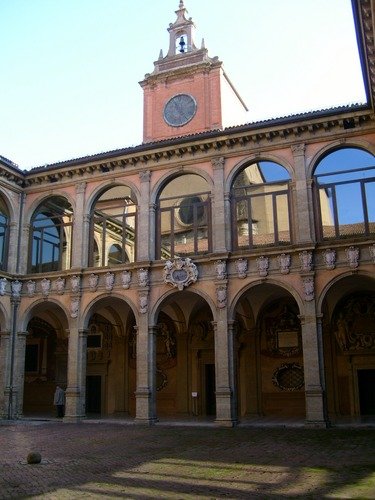
In the internal courtyard stands the statue of Hercules Priapus by Fiorini, whose face is modeled after Lorenzo Magnani. This blend of personal legacy and mythological symbolism epitomizes Renaissance ideals (BolognaBO).
Changes in Ownership and Later History
After the extinction of the Magnani male line in 1797, the palace passed to the Guidotti family, then to the Malvezzi Campeggi family in the 19th century. The Malvezzi Campeggi coat of arms remains on the façade as a testament to this layered heritage (Wikipedia; BolognaBO). Today, UniCredit maintains the palace, preserving its interiors and art collection, and the Quadreria is open to the public on select days (BolognaBO).
The Quadreria di Palazzo Magnani
The Quadreria is a distinguished gallery featuring works by prominent Bolognese and Italian artists, including Dosso Dossi, Guercino, Giorgio Morandi, and more. The collection, reflecting centuries of artistic patronage, is displayed within the palace’s historic rooms, creating a unique dialogue between architecture and art (Wikipedia).
Visiting Palazzo Magnani: Hours, Tickets, and Visitor Information
Visiting Hours
- Standard Opening The Quadreria is open Monday to Friday, 9:00 AM – 5:30 PM, excluding public holidays.
- Sala dei Carracci Public access is typically limited to special events such as International Museum Day or upon advance arrangement (Bologna Welcome).
Tickets and Reservations
- Admission Free for the Quadreria.
- Booking Advance reservation is required. Email [email protected] or call +39 051 2962504.
- Cancellations Notify by 5:00 PM on the previous day (Bologna Welcome).
Accessibility and Travel Tips
- Location Via Zamboni 20, Bologna, Santo Stefano district. Central, near major attractions.
- Getting There Short walk from Bologna Centrale train station; accessible by public transit (Tper); the area is in the ZTL (limited traffic zone).
- Mobility The palace has partial accessibility due to its historical structure; contact in advance for specific needs.
Guided Tours and Special Events
Guided tours and cultural events are periodically organized, offering deeper insights into the art and history of Palazzo Magnani. Information and event schedules can be found on the official website and local tourism portals.
Photographic Opportunities
Photography is permitted in most areas, except where restricted to preserve artworks. No flash or tripods allowed. Key photo spots include the Carracci frieze, monumental fireplace, and Hercules statue.
Location and Urban Context
Palazzo Magnani’s central location in the Santo Stefano district places it within walking distance of the Two Towers, University of Bologna, and other key Bologna historical sites. The palace is part of a vibrant urban landscape rich in culture, gastronomy, and history.
Legacy and Historical Significance
Palazzo Magnani encapsulates the ambitions and achievements of Bologna’s patrician families. Its architecture, art, and ongoing adaptation reflect the city’s evolving identity. The palace continues to bridge the past and present through preservation, education, and public engagement (Wikipedia; BolognaBO).
Frequently Asked Questions (FAQ)
Q: What are the visiting hours for Palazzo Magnani?
A: The Quadreria is open Monday to Friday, 9:00 AM – 5:30 PM, excluding public holidays. The Sala dei Carracci is open on special occasions or by prior arrangement.
Q: Is there an admission fee?
A: Admission to the Quadreria is free, but reservations are mandatory.
Q: How do I book a visit?
A: Email [email protected] or call +39 051 2962504 in advance.
Q: Is the palace accessible for people with disabilities?
A: The building is partially accessible; contact in advance for details.
Q: Are guided tours available?
A: Yes, during special events or by arrangement. Check the official site for details.
Q: Can I take photographs inside?
A: Photography is allowed in most areas without flash or tripods.
Internal Links
External Links
- Official Palazzo Magnani page on BolognaBO
- Quadreria di Palazzo Magnani reservation
- Tper Public Transit for Bologna
- Wikipedia: Palazzo Magnani
- Fondazione Palazzo Magnani
- Haltadefinizione: Digitalization of the Sala dei Carracci
- Artemagazine: Sala dei Carracci in Alta Definizione
- Bologna Portici Festival: Palazzo Magnani Visits
- The Travel Folk: Is Bologna Worth Visiting?
For the latest updates, event news, and travel tips, follow Palazzo Magnani and Bologna cultural channels on social media, and download the Audiala app for audio guides and exclusive content. Plan your visit today and immerse yourself in the timeless elegance of Palazzo Magnani, a true jewel among Bologna historical sites.
Audiala2024