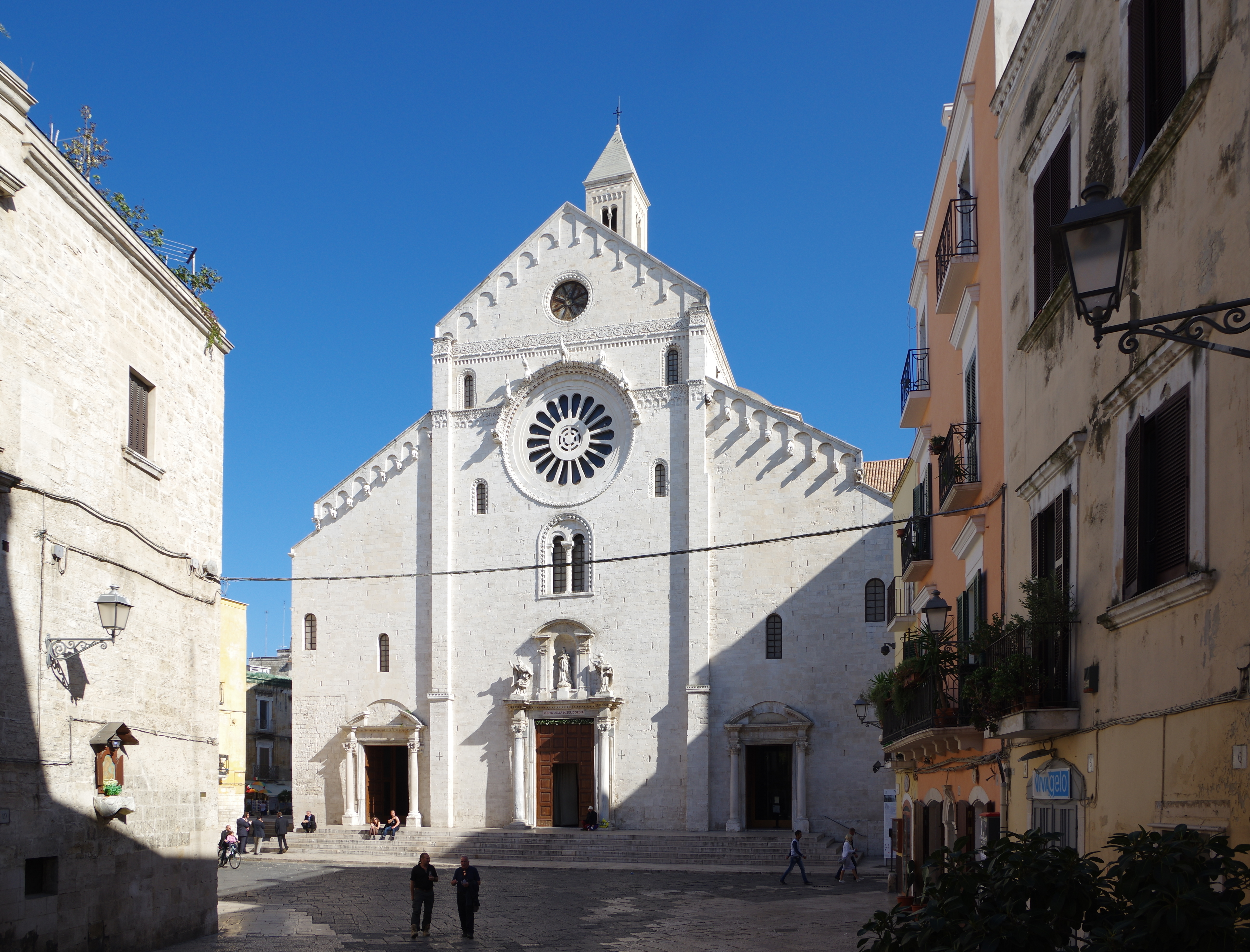
Plan and listen to Cathedral Of San Sabino with Audiala.
Audio guide in your pocket, itinerary in your browser. Built for the way you actually visit.
Introduction
The Cathedral of San Sabino (Cattedrale di San Sabino) is a central landmark in Bari Vecchia, the atmospheric old town of Bari, Italy. Revered for its Apulian Romanesque architecture, the cathedral is not only a place of worship but also a historical monument layered with centuries of religious, cultural, and artistic significance. This comprehensive guide details the cathedral’s history, notable features, visiting hours, ticketing, accessibility, and nearby attractions to help you plan an unforgettable visit. For further planning, consult official tourism resources like the Catholic Shrine Basilica website and Puglia Tourism.
Early Christian and Byzantine Foundations
The site of the Cathedral of San Sabino traces its origins to early Christianity in southern Italy. Archaeological discoveries beneath the current church reveal remnants of a Byzantine-era structure, complete with mosaic pavements and an apse—evidence of a thriving Christian community as early as the 4th century. These layers highlight the site’s importance long before the current Romanesque structure stood.
Norman and Romanesque Reconstruction
The cathedral as it stands today was constructed between the late 12th and 13th centuries, after the destruction of an earlier church by William I of Sicily in 1156. Drawing inspiration from the nearby Basilica di San Nicola, its builders utilized Apulian Romanesque forms—massive limestone blocks, semi-circular arches, and a symbolic rose window. The cathedral was consecrated in 1292 and has served as the seat of the Archbishop of Bari-Bitonto ever since.
Modern Restorations and Archaeological Layers
In the 18th century, Baroque modifications adorned the cathedral’s interior, but 20th-century restorations removed these additions to restore its Romanesque clarity. The crypt and subterranean itinerary (Bari Sotterranea) reveal Roman streets, Byzantine mosaics, and traces of the earliest Christian worship in Bari.
Architectural Highlights
Facade and Bell Tower
The cathedral’s white-grey limestone facade is divided into three sections by pilasters, with three 11th-century portals crowned by a rose window—its geometric tracery symbolizing divine light. The 69-meter bell tower, rebuilt to preserve the original’s style, features Moorish-inspired domes and mullioned windows, reflecting the region’s diverse influences (catholicshrinebasilica.com).
Interior and Crypt
Inside, three aisles are separated by slender columns—many spolia from earlier Roman and Byzantine structures. The crypt, beneath the main altar, is supported by a forest of columns and contains the relics of Saint Sabinus, Saint Columba, and sacred artifacts. The crypt’s frescoes and atmospheric lighting offer a profound spiritual experience (tripsandleisure.com).
Artistic Details
Notable features include the intricately carved lintels above the portals, a treasury (Tesoro) housing relics and artifacts, and a mosaic depicting peacocks and doves behind the main altar. The cathedral’s pulpit, reconstructed from original fragments, and the presence of ancient sarcophagi further enrich the visitor experience (slowtravelnews.com).
The Summer Solstice Phenomenon
Each year, at midday during the summer solstice, sunlight streams through the rose window, casting a dramatic light pattern onto the altar mosaic—a rare event that highlights the builders’ astronomical and artistic mastery (puglia.com).
Visitor Information
Visiting Hours
- Monday to Saturday: 8:30 AM – 12:30 PM, 4:30 PM – 7:00 PM
- Sunday and Holidays: 9:00 AM – 1:00 PM, 4:00 PM – 7:30 PM
- Check the official website for seasonal updates and holiday variations.
Tickets and Admission
- Main Cathedral: Free entry.
- Crypt: Modest fee (approx. €1); included in most guided tours.
- Donations are welcome to support cathedral maintenance (Cestee).
Accessibility
- The main entrance and nave are wheelchair accessible.
- The crypt and underground areas involve steps and uneven surfaces—contact the cathedral in advance for assistance if you have mobility needs.
Dress Code and Etiquette
- Modest attire required (shoulders and knees covered).
- Silence is appreciated, especially during services.
- Photography is allowed in most areas, but without flash or tripods.
Guided Tours & Special Events
Guided Tours
- Available through local agencies or at the cathedral; advanced booking is recommended during peak periods.
- Combined tours with the Basilica di San Nicola and Castello Normanno-Svevo offer an in-depth experience of Bari’s historical and religious sites (asinglewomantraveling.com).
Special Events
- Religious Festivals: Especially during the feast of Saint Sabinus (February 9th), Easter, and Christmas.
- Summer Solstice Light Show: Late June at midday, a unique astronomical and spiritual event.
- Concerts and Cultural Events: Held periodically—check event calendars for details.
Nearby Attractions & Travel Tips
- Basilica di San Nicola: A Romanesque masterpiece and pilgrimage site, 5-minute walk.
- Castello Normanno-Svevo: 11th-century fortress and museum, nearby.
- Museo Diocesano di Bari: Religious art and artifacts (mapcarta.com).
- Museo del Succorpo della Cattedrale: Archaeological remains beneath the cathedral (Lonely Planet).
- Wear comfortable shoes for exploring Bari Vecchia’s cobblestone streets.
- Early morning or late afternoon visits are quieter and offer the best lighting for photography.
Frequently Asked Questions (FAQ)
Q: What are the Cathedral of San Sabino’s opening hours?
A: Monday to Saturday: 8:30 AM–12:30 PM, 4:30 PM–7:00 PM; Sunday/holidays: 9:00 AM–1:00 PM, 4:00 PM–7:30 PM.
Q: Is there a ticket fee?
A: Entry to the cathedral is free; crypt access costs about €1.
Q: Are guided tours available?
A: Yes, through local agencies and the cathedral.
Q: Is the cathedral accessible to people with disabilities?
A: The main areas are accessible; crypt access may be limited.
Q: Can I take photos inside?
A: Yes, without flash or tripods.
Q: What nearby attractions should I visit?
A: Basilica di San Nicola, Castello Normanno-Svevo, Museo Diocesano.
Listen to the full story in the app
The whole Cathedral Of San Sabino,
told well.
Audio guides for 1,100+ cities across 96 countries. History, stories, and local insight — offline ready.

Verified, and shown.
Researched and written by the Audiala editorial team from historical records, architectural archives, and local expertise.
Last reviewed
Researched from Wikidata, Wikipedia & official sources · fact-checked · How we make our guides →


