Plan and listen to Saint Anthony Maronite Church, Jaffa with Audiala.
Audio guide in your pocket, itinerary in your browser. Built for the way you actually visit.
Introduction
Saint Anthony Maronite Church, situated in the heart of historic Jaffa, Tel Aviv, is a remarkable destination for travelers interested in religious heritage, architecture, and cultural diversity. As the spiritual center for the Maronite Christian community in the area, the church offers visitors a chance to explore its Neo-Gothic beauty, participate in multicultural Masses, and access nearby attractions that reflect the rich tapestry of Jaffa’s history. This comprehensive guide details the church’s history, religious and architectural significance, practical visitor information—including up-to-date hours and accessibility—and highlights key sites to enhance your visit. For further information and virtual exploration, consult trusted tourism and travel platforms. (Saint Anthony Maronite Church - ibnbattutatravel.com, Timeout Israel, Miss Tourist)

Historical Background
Maronite Roots and Heritage
The Maronite Church, one of the oldest Eastern Catholic communities, traces its origins to Saint Maron, a 4th-century ascetic monk whose followers established a distinct Christian tradition. After Saint Maron’s passing in 410 AD, the Beth-Maron Monastery became the movement’s spiritual center. The Maronite Church’s alignment with Chalcedonian Christianity and its resilience through centuries of upheaval—spreading especially to Lebanon and the Levant—cemented its unique identity.
The Maronite Community in Jaffa
Following the Muslim conquest of Syria in the 7th century, Maronite Christians migrated to various parts of the Holy Land, including Jaffa. Over time, Jaffa evolved into a cosmopolitan city, providing a home for Maronite settlers who contributed to its diverse religious landscape. Today, Saint Anthony Maronite Church stands as a living symbol of their enduring faith and cultural presence.
Foundation and Development
While the precise date of the church’s founding is not widely documented, Saint Anthony Maronite Church was completed in 1932 and named after Saint Anthony of Padua, reflecting the Maronite Church’s communion with the wider Catholic tradition. The church serves as a vital hub for the local Maronite community, offering regular worship, spiritual support, and cultural activities.
Religious Significance
Liturgical Life and Spiritual Identity
The church celebrates the West Syriac Rite, preserving ancient liturgical traditions while embracing local cultural expressions. Services are held in multiple languages including Arabic, English, Konkani, Tagalog, and Hebrew, reflecting the church’s multicultural congregation. Iconography and inscriptions in Syriac and Arabic adorn the sanctuary, connecting worshippers to their heritage.
Community Role
Beyond its liturgical functions, Saint Anthony Maronite Church is a focal point for social cohesion and interfaith dialogue in Jaffa. It hosts religious festivals, community gatherings, and charitable initiatives, fostering inclusion and solidarity among diverse groups.
Architectural Features
Exterior and Façade
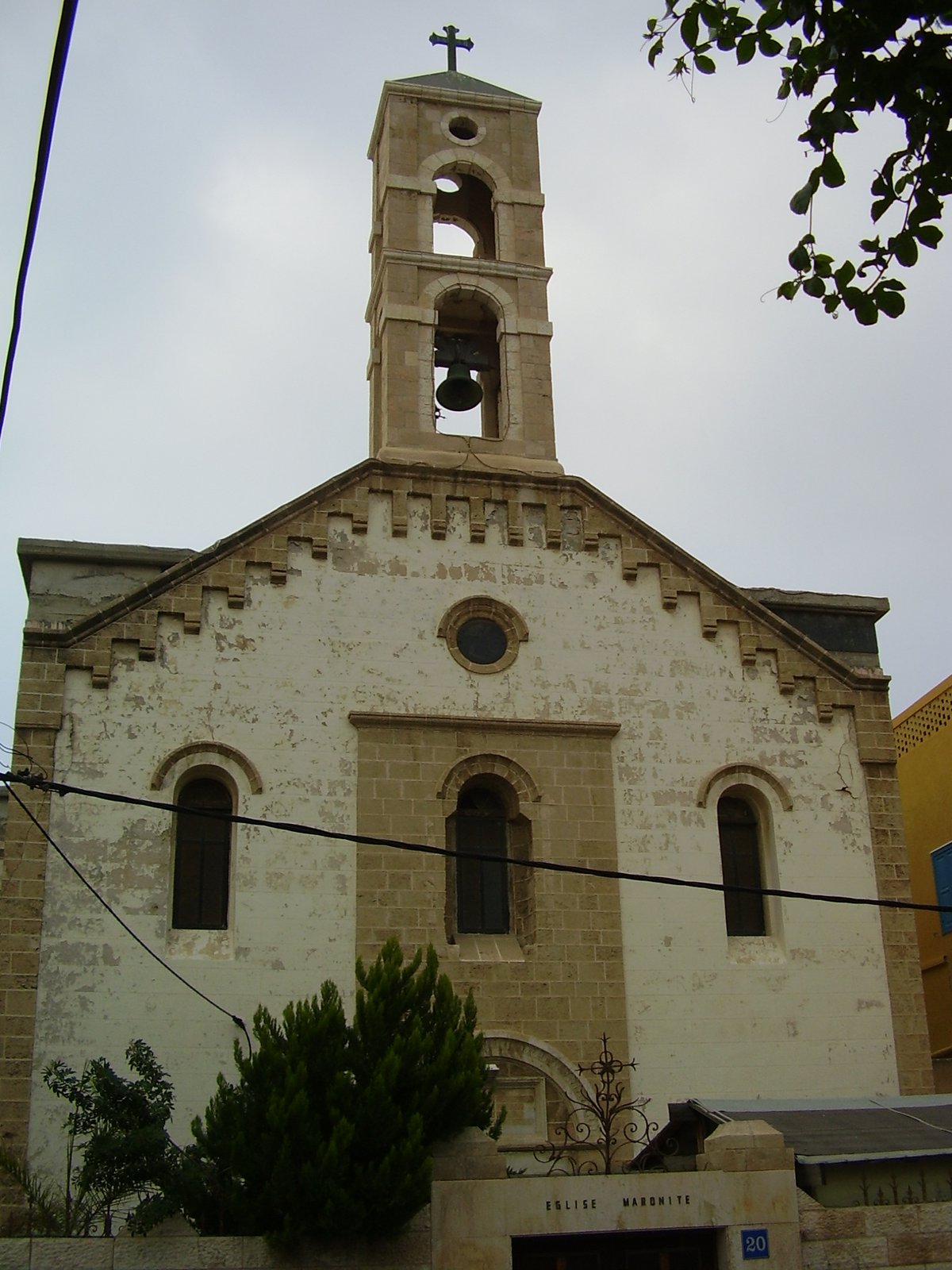
Saint Anthony Maronite Church features Neo-Gothic architecture with pointed arches, vertical lines, and intricate limestone stonework. Its prominent clock tower, adorned with lancet windows and decorative pinnacles, is a recognizable landmark along Yefet Street. The light-colored stone and structural buttresses create a luminous and rhythmic appearance, distinguishing the church from surrounding Ottoman and Mediterranean buildings. (ibnbattutatravel.com; timeout.com)
Interior Layout
Inside, the church boasts a spacious nave and side aisles separated by pointed arches and slender columns, maximizing acoustics and communal space. High vaulted ceilings with ribbed vaults draw the eye upward, fostering a sense of spiritual elevation. (trek.zone)
Stained Glass and Decoration
Stained-glass windows depict biblical scenes, saints, and symbols of Saint Anthony, casting vibrant patterns across the sanctuary. The altar is framed by ornate woodwork and Christian motifs, contributing to a reverent atmosphere. (timeout.com)
Clock Tower
The clock tower is both functional and symbolic, serving as a neighborhood focal point with four clock faces visible from multiple directions. Its Gothic elements and louvered bell openings add artistic flair. (ibnbattutatravel.com; trek.zone)
Artistic Furnishings
The church is furnished with carved wooden pews, an ornate pulpit, and a baptismal font near the entrance. Liturgical objects, often crafted from precious materials, further enhance the sacred environment. (timeout.com)
Visitor Information
Location and Access
- Address: 51 Yefet Street, Jaffa, Tel Aviv, Israel, 6108301
- Public Transport: Easily accessible by bus, taxi, or foot from Old Jaffa. Light rail and shared scooters are also available in the area.
- Parking: Limited street parking; public lots nearby. Public transport is recommended due to narrow streets.
Visiting Hours and Admission
- Hours: Open to visitors Monday–Saturday, 9:00 AM–6:00 PM; Sunday, 7:00 AM–1:00 PM. The church is also open during scheduled Mass times.
- Admission: Free. Donations are welcomed for church maintenance and community programs.
- Guided Tours: Available upon request; contact the parish office in advance for arrangements.
Mass Schedule (as of July 2025)
- Weekdays:
- Mon, Tue, Thu: 7:00 AM (Arabic)
- Wed: 8:00 PM (English)
- Fri: 6:00 PM (Arabic)
- Saturday:
- 9:00 AM (Konkani)
- 11:00 AM (English)
- Sunday:
- 4:00 PM (Vigil, Hebrew)
- 5:00 PM (Vigil, Tagalog)
- 7:30 PM (Vigil, English)
- 9:00 AM (Arabic)
- 10:30 AM (English)
- 7:00 PM (Arabic)
Accessibility and Facilities
- Wheelchair Access: Ramps at the entrance; accessible restrooms available.
- Restrooms: Public facilities nearby (Saint Peter’s Church, Jaffa Clock Tower).
- Dress Code: Modest attire required; shoulders and knees covered; hats removed inside.
Visitor Etiquette
- Silence and Respect: Speak softly; silence mobile devices.
- Photography: Permitted outside; inside only with permission and never during services.
- Communion: Non-Catholics welcome at services, but should not receive Communion.
Safety and Security
Jaffa is generally safe and well-patrolled, especially during religious events. Remain vigilant with personal belongings in crowded areas.
Nearby Attractions
- Jaffa Clock Tower: Iconic city landmark.
- Saint Peter’s Church: Notable for its history and views.
- Jaffa Flea Market: Antique shops, crafts, and food.
- Jaffa Port: Scenic harbor with cafes and art galleries.
- Mahmoudiya Mosque: Largest mosque in Jaffa, open for tours.
- Jaffa Sea Promenade: Picturesque coastal walkway.
- Art Galleries and Museums: Explore local and international art.
Practical Travel Tips
- Getting There: Use public transport or ride-sharing apps; parking is limited.
- Currency: Israeli New Shekel (NIS); credit cards widely accepted.
- Language: Hebrew and Arabic are official; English is widely spoken.
- Weather: Spring and autumn are best; summers can be hot.
- What to Pack: Comfortable shoes, modest clothing, sun protection.
Frequently Asked Questions (FAQ)
Q: What are the visiting hours?
A: Generally open Monday–Saturday 9:00 AM–6:00 PM; Sunday 7:00 AM–1:00 PM.
Q: Is there an entrance fee?
A: No, entry is free; donations are appreciated.
Q: Are guided tours offered?
A: Yes, by advance arrangement with the church.
Q: Is the church accessible for visitors with disabilities?
A: Yes, ramps are available, but some areas have cobblestones.
Q: Is photography allowed?
A: Outside, yes. Inside, only with permission and not during services.
Q: Are non-Catholics welcome at Mass?
A: Yes, all are welcome, but only Catholics may receive Communion.
Media and Contact Information
- Contact: +972 3 5133800 / [email protected]
- Parish Priest: Fr. Augustine
- Official Tourism Site: Tel Aviv-Jaffa Tourism
- Saint Anthony Maronite Church on ibnbattutatravel.com: Visit Page
For the latest updates, contact the parish directly or consult local Catholic information centers.
Listen to the full story in the app
The whole Saint Anthony Maronite Church, Jaffa,
told well.
Audio guides for 1,100+ cities across 96 countries. History, stories, and local insight — offline ready.
Verified, and shown.
Researched and written by the Audiala editorial team from historical records, architectural archives, and local expertise.
Researched from Wikidata, Wikipedia & official sources · fact-checked · How we make our guides →