
Place
Israel Updated Apr 2026
The first time you turn a corner in Jerusalem and catch the smell of cardamom coffee drifting from one doorway while fresh-baked ka'ak sesame rings pass in the opposite direction, you understand why this single square kilometer has been fought over for three thousand years. In Israel, no other place compresses so many conflicting realities into such a small space. One minute you're watching ultra-Orthodox men press notes into the Western Wall's ancient stones; the next you're standing under the golden Dome of the Rock watching the call to prayer ripple across the same valley where Roman legions once camped.
 Photo: Zeev Hazenfratz / Pexels
Built from cited sources · see the method · How we make our guides →
The Old City remains the undisputed heart. Its four quarters Jewish, Muslim, Christian and Armenian sit inside 16th-century walls that are wider than a London bus is long. Here the Church of the Holy Sepulchre's incense-heavy air competes with the metallic ring of coppersmiths in the souk. Yet the city's layers stretch far beyond those walls. Walk south and you enter the City of David where archaeologists still dig through 2,800-year-old water systems you can actually wade through.
What surprises most visitors is how ordinary life continues. Friday mornings see Mahane Yehuda Market throb with shoppers loading up on Yerushalmi kugel before everything shuts for Shabbat. By Saturday night the same stalls become bars where young Israelis dance between crates of tomatoes. The contradictions don't resolve. They coexist, sometimes uneasily, often beautifully.
Spend enough time here and your understanding shifts. Jerusalem stops being a checklist of holy sites and starts feeling like the world's most contested living room one where every family claims the same couch, yet somehow everyone still makes another pot of Turkish coffee.
Not every monument, just the ones we'd walk you past ourselves.
Where to wander, by quarter — each with its own rhythm.
Before you go
From a Jebusite spring to a city claimed by three faiths and twenty-six peoples
Egyptian execration texts scratch the name Rušalimum onto a pottery bowl. The city already sat beside the Gihon Spring, its water worth more than gold in the hills of Judah. Walls of 4-ton boulders soon rose on the eastern slope. Even then Jerusalem was a prize.
The shepherd-king stormed the Jebusite citadel and made it his capital. He brought the Ark of the Covenant up the slope with dancing and shouting. From this moment the city stopped being just another hill fortress. It became the heart of a kingdom.
Cedar beams from Lebanon met local stone on Mount Moriah. The finished Temple smelled of fresh-cut wood, incense, and sacrifice. For the first time the God of the Israelites had a fixed address. Pilgrims would remember the smell for a thousand years.
Nebuchadnezzar’s soldiers smashed the walls, torched the cedar beams, and marched the elite east in chains. The smoke hung over the valley for days. A small people lost their central symbol yet somehow kept their identity. Exile began the long habit of remembering Jerusalem from afar.
Returned exiles laid new stones on the old foundations under Persian permission. The new building felt smaller, the glory dimmer. Yet it stood. Jews would worship here for the next five centuries, arguing, praying, and waiting for something greater.
The Idumean king doubled the platform, added retaining walls that still stand today, and plated the sanctuary in gold. Pilgrims approaching from the south saw the white stone glow against the sky. Even his enemies admitted the architecture was magnificent.
Roman soldiers nailed a Galilean preacher to a cross on a small rise called Golgotha. The sky darkened, or so the accounts claim. Within a generation his followers would transform that death into the central story of a new faith. Jerusalem gained another claimant.
After a brutal siege the legions breached the walls and set the Second Temple ablaze. Josephus claims the fire was so hot the gold melted and ran between the stones. The destruction scattered the Jewish people and left only the Western Wall as witness.
Constantine’s engineers cleared the rubble of Hadrian’s temple to Venus and built a domed basilica over the claimed site of Christ’s tomb. The air inside smelled of incense and wet plaster. Christian pilgrims now had a physical center to match the Jewish Western Wall.
The Byzantine garrison surrendered without a massacre. Umar refused to pray inside the Church of the Holy Sepulchre so Muslims would not later claim it. Instead he swept the Temple Mount clean with his own hands. Three faiths now shared the same few acres of limestone.
Umayyad craftsmen finished the octagonal shrine on the rock where Muslims believe Muhammad ascended. Its golden dome caught the sun long before the call to prayer rang out. The building still dominates every photograph of the Old City. It changed the skyline forever.
Knights waded through blood up to their ankles after storming the walls. Jews and Muslims alike were slaughtered in the streets. The Dome of the Rock became a church. For eighty-eight years Latin kings ruled from David’s city while the call to prayer fell silent.
After the Battle of Hattin, Saladin’s army entered through the same gates the Crusaders had used. This time the surrender was negotiated. Christians were allowed to ransom themselves. The golden cross came off the Dome and the call to prayer returned.
Ottoman engineers raised the limestone ramparts visitors still walk today. The sultan repaired the Dome’s tiles and gave the city its present silhouette. For four centuries Jerusalem slumbered as a quiet provincial town of perhaps fifteen thousand souls.
The Lithuanian linguist settled in Jerusalem determined to make Hebrew a living language again. His son Itamar was the first child in centuries raised speaking only Hebrew. Neighbors called the boy a freak. Within decades the streets outside Ben-Yehuda’s house echoed with the ancient tongue reborn.
British General Edmund Allenby dismounted at Jaffa Gate and walked into the Old City rather than ride triumphantly. After four hundred years of Ottoman rule the city changed hands with surprising quiet. A new map was being drawn in the sand.
Jordanian forces captured the Old City and expelled its Jewish residents. The Western Wall stood behind barbed wire. For nineteen years Jews could only gaze at the Temple Mount through binoculars from distant rooftops. The city that had been conquered forty-four times was now physically divided.
On the third day of the Six-Day War, Israeli soldiers entered the Old City through Lion’s Gate. Colonel Motta Gur’s voice cracked over the radio: “The Temple Mount is in our hands.” Young soldiers wept at the Wall while radios played Hatikvah. Access returned after nineteen years of absence.
The Knesset passed the Jerusalem Law asserting the city’s complete and united status. Most nations refused to move their embassies. The law changed little on the ground yet everything in diplomatic language. The argument continues.
The Nobel laureate who made the city’s narrow lanes and quarrels immortal had died thirty years earlier, but his house in Talpiot remained exactly as he left it. Visitors still hear the clatter of typewriters and smell strong coffee. The literature outlived the man.
Lexicographer · 1858–1922
Lived here 1881–1922
He moved to Jerusalem in 1881 with one obsession: make Hebrew a living language again. His son became the first native Hebrew speaker in centuries. Walk down Ben Yehuda Street today and you'll see his stubborn dream functioning as everyday speech in shops and arguments alike.
Actress · born 1981
Born here
Born Neta-Lee Hershlag in Jerusalem in 1981, she left for America at age three. The city claims her anyway. Her Hebrew name still appears on local lists of famous natives, a small reminder that even Oscar winners start somewhere in these hills.
Statesman · 1922–1995
Born and raised here
Born in Jerusalem, Rabin became the soldier who later shook hands with Arafat on the White House lawn. The city named squares and streets after him after his assassination. Standing at his grave on Mount Herzl, you feel how personal the country's contradictions remain.
Writer · 1888–1970
Lived here 1924–1970
Agnon settled in Talpiot in 1924 and rarely left. His novels turn Jerusalem's stone streets and quarrels into literature that won him the Nobel. His house is now a museum where the books still smell of the city he refused to romanticise.
Where locals actually book dinner — not the tourist menus.
Fried eggplant, hard-boiled egg, amba mango sauce and Israeli salad stuffed into a pita. Iraqi-Jewish street food at its finest. Grab one at Machneyuda stall in Mahane Yehuda before the crowds descend.
Chicken hearts, livers and spleen grilled with turmeric and cumin, served in laffa bread with pickles. The real version appears after midnight in the Muslim Quarter. Oily, intense, unforgettable.
Shredded pastry soaked in syrup with melting cheese, served warm from the tray at this 60-year-old Damascus Gate institution. The texture contrast between crunchy top and soft centre is perfect at 10 pm.
Creamy hummus topped with slow-cooked fava beans at Abu Shukri in the Christian Quarter. Order with fresh pita that arrives ballooned from the oven. Nothing else needed.
Anise-flavoured spirit poured over ice that turns milky white. At Mahane Yehuda after dark, locals drink it alongside plates of grilled eggplant and fresh herbs. The ritual matters as much as the taste.
Small things that change how the city treats you.
The city, as it actually looks.
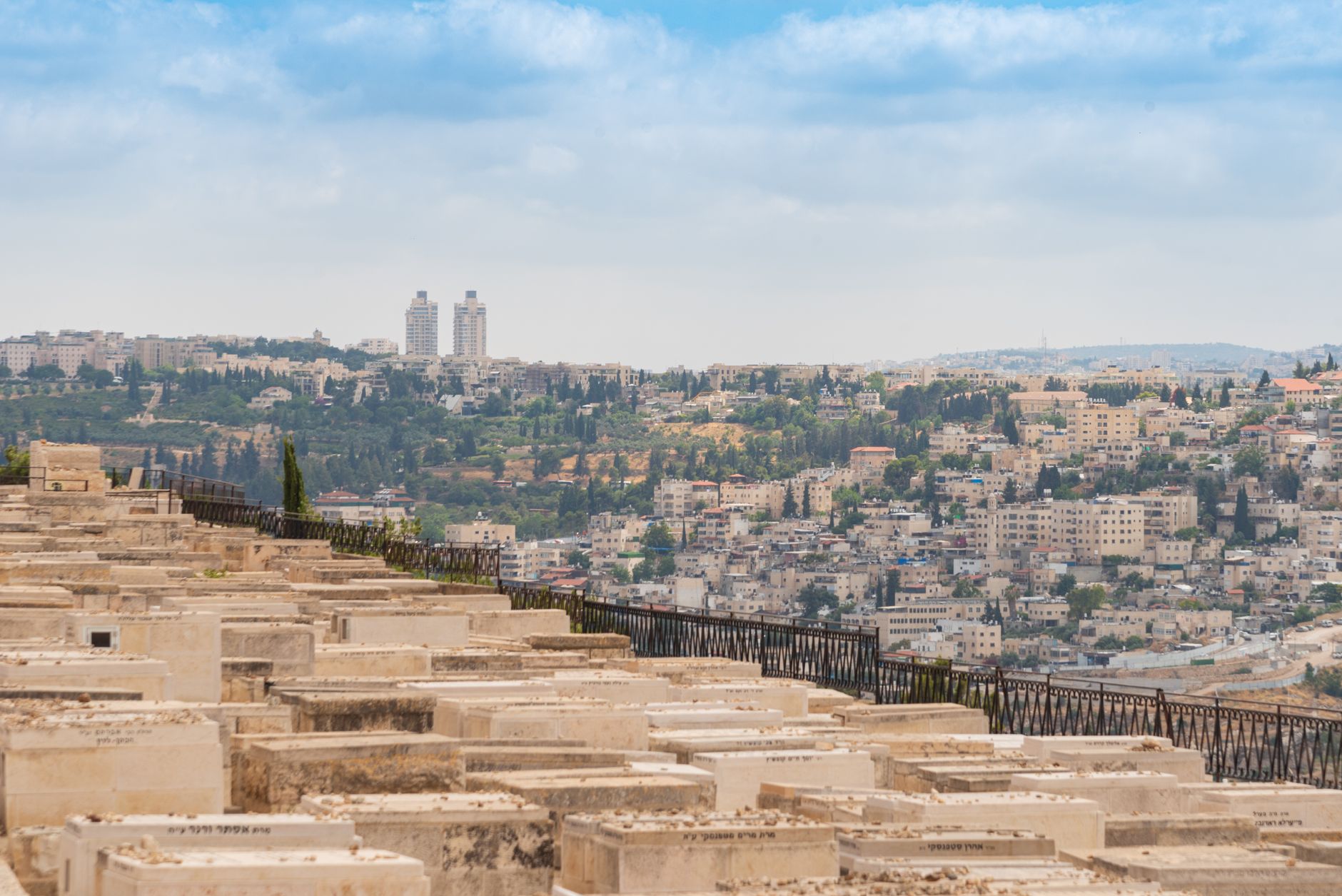

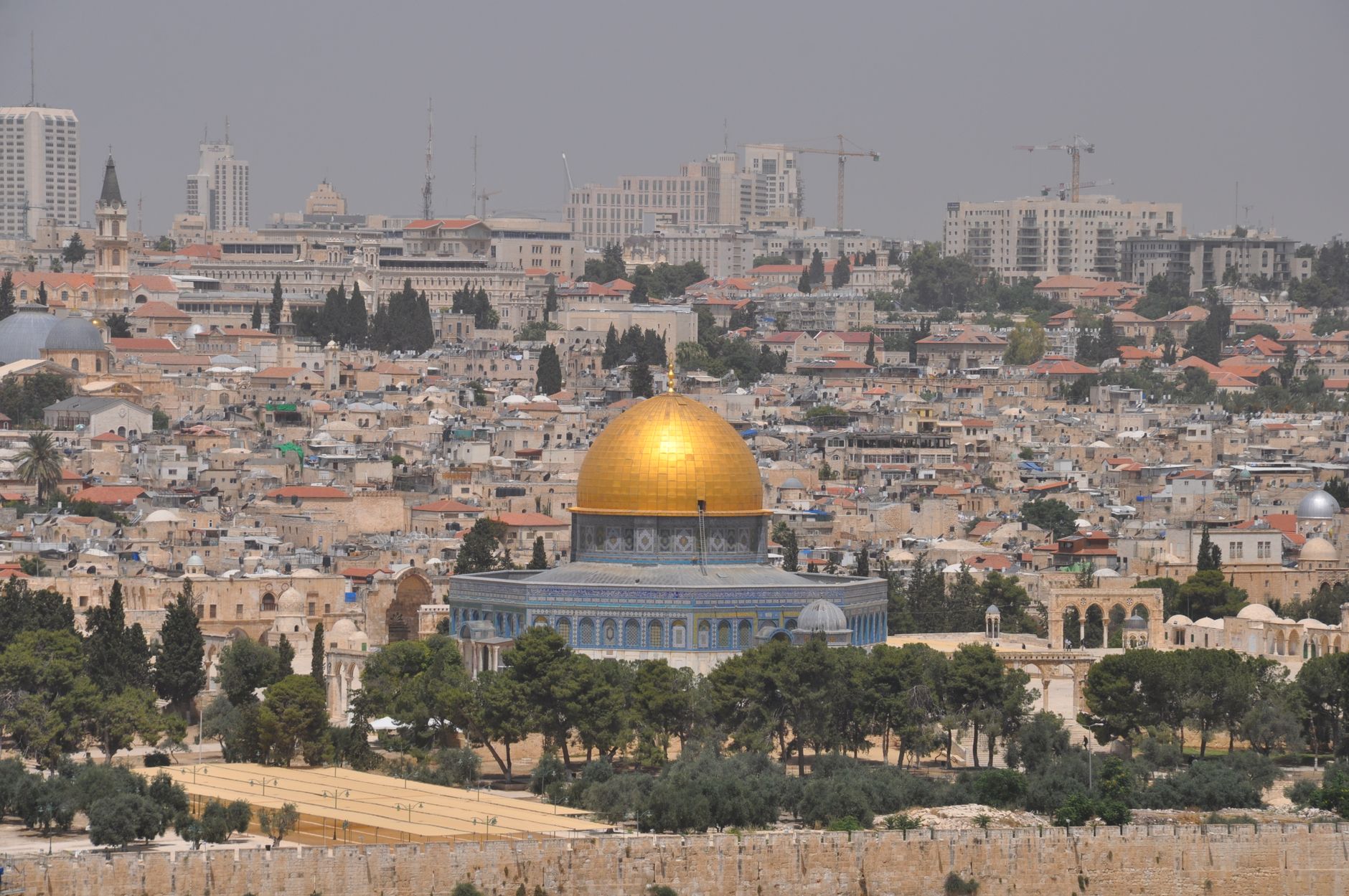
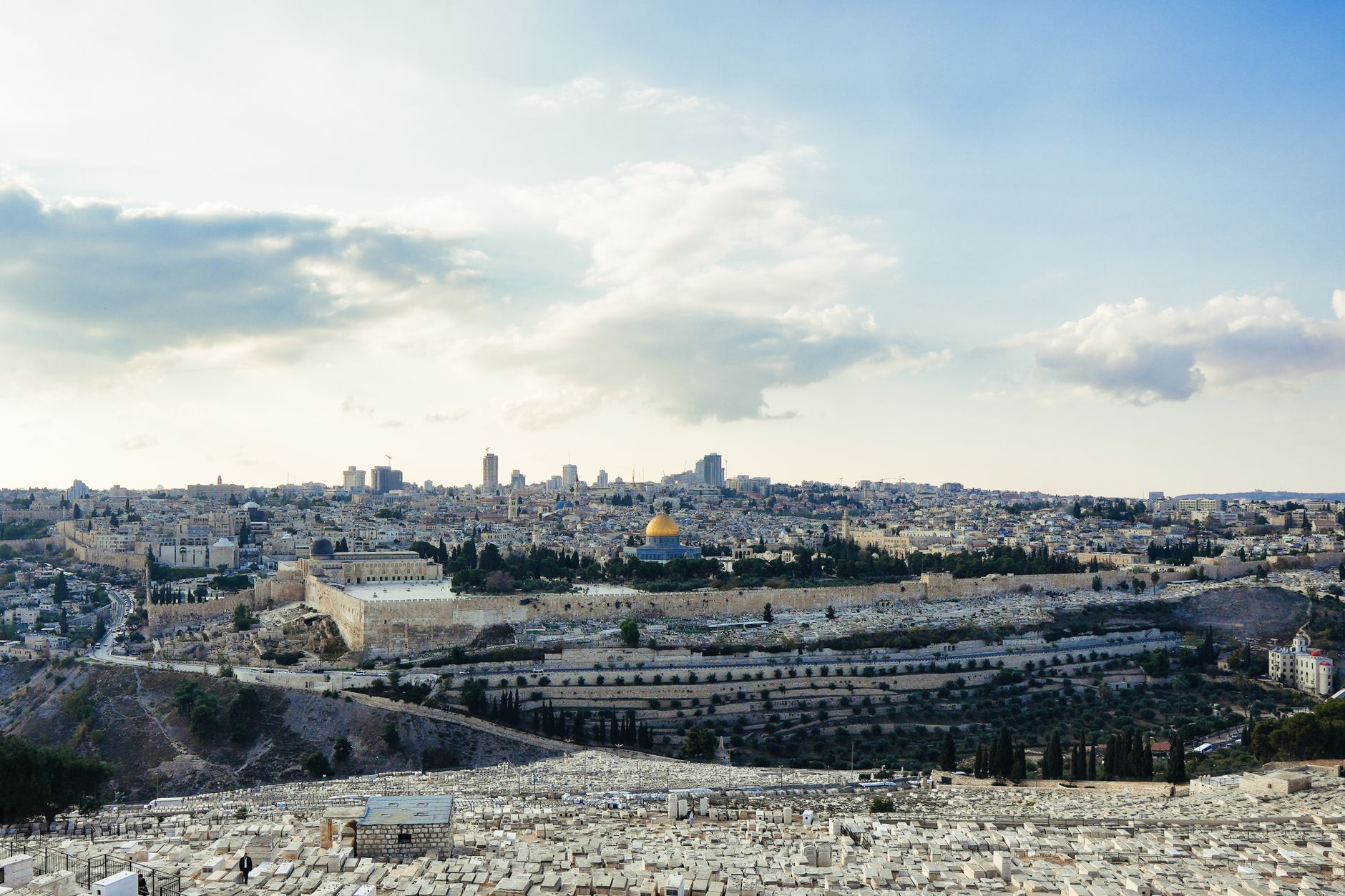


Yes, but only if you accept its contradictions. One square kilometre of the Old City holds the Western Wall, Dome of the Rock, and Church of the Holy Sepulchre within a few hundred metres of each other. The city's density of history and tension is unmatched.
Four days works for most people. Two days for the Old City quarters and holy sites, one for the Israel Museum and Yad Vashem, and one for Mahane Yehuda Market plus Ein Karem. Five days lets you add the City of David tunnels without rushing.
The high-speed train from Ben-Gurion Airport reaches Jerusalem's Yitzhak Navon station in 25-30 minutes for about NIS 30. Sherut shared vans cost NIS 66 and drop at your hotel door. Avoid private taxis unless you want to pay NIS 280.
The main tourist areas of the Old City and West Jerusalem are generally safe with visible security. East Jerusalem around Damascus Gate can feel tense during periods of unrest. Check your government's travel advice and avoid photographing soldiers.
Non-Muslims can visit the compound but not enter the Dome of the Rock or Al-Aqsa Mosque. Access is only via the Mughrabi Gate with restricted hours that change frequently. The site closes to non-Muslims on Fridays and during Muslim prayer times.
April and October offer the best weather. April brings mild 22°C temperatures and spring flowers while October follows the intense summer heat with quieter streets after the Jewish holidays end. Avoid July and August.
Saved and recently read places — kept on this device only.
Photos may have been resized or cropped.