
The statue
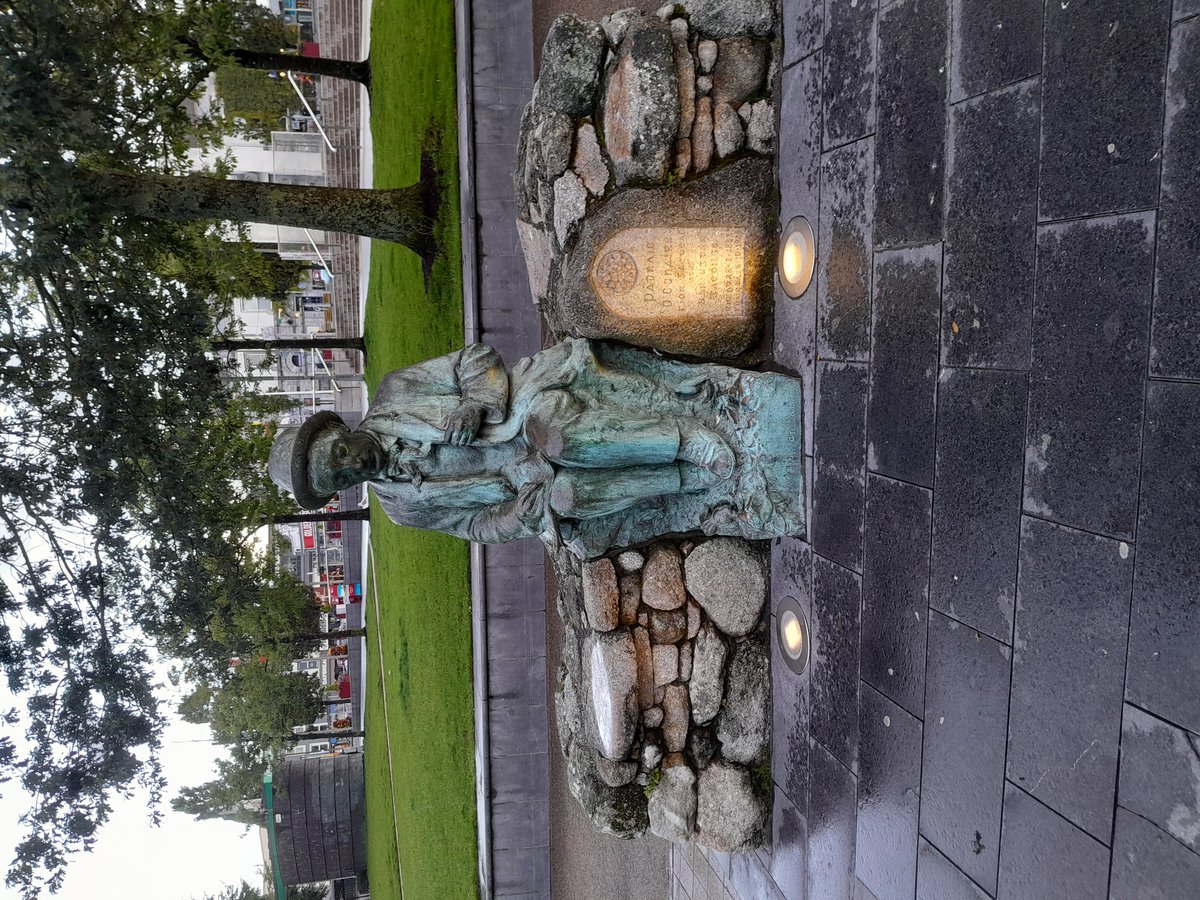
The Pádraic Ó Conaire Statue stands in Eyre Square, also known as John F. Kennedy Memorial Park, in Galway city centre. It honours one of Ireland’s most celebrated Irish-language writers and is a landmark of Galway’s literary and cultural heritage.
The bronze statue is a popular meeting point and photo spot, as well as a place for reflection amid the city’s bustle. The square is lively, especially during festivals and weekends.
History and significance
Pádraic Ó Conaire (1882–1928) was a pioneering writer of modern Irish-language prose, known for vivid portrayals of rural Irish life and psychological realism. After his death, the Gaelic League began a fundraising campaign to commemorate him, leading to the commissioning of a statue by sculptor Albert Power (Galway Advertiser). The project celebrated Ó Conaire’s literary achievements and the wider Gaelic Revival and Ireland’s growing cultural identity.
Power’s final design shows Ó Conaire seated on a Connemara stone wall, a reference to his roots in the west of Ireland. Its realistic approach echoes the authenticity of Ó Conaire’s characters, while a bird and rabbit at his feet place the figure in the Irish landscape (Galway Advertiser).
Unveiled in 1935 by Éamon de Valera, the statue was the first artistic, non-religious outdoor monument in Connacht (RTÉ Archives). It became a much-loved local landmark and gathering point, affectionately known as “Sean-Phádraic.”
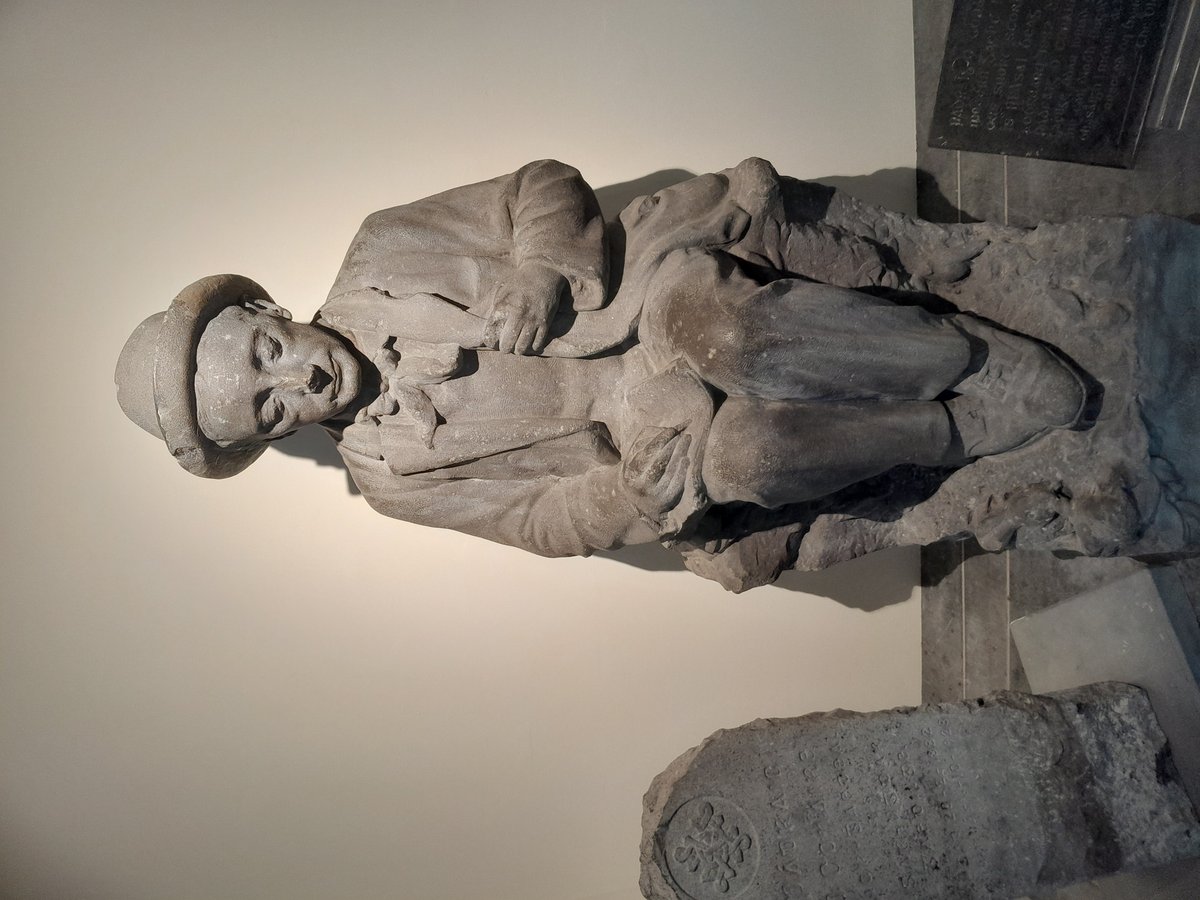
The original limestone statue was removed from Eyre Square in 2004 because of wear and tear from decades of interaction, and moved to Galway City Museum for preservation (Galway Advertiser). In 2017, a bronze replica was installed in the square, made from original drawings and a mould to remain faithful to Power’s design (Transceltic). The granite wall beneath it includes stone from Garafin House in Rosmuc, Ó Conaire’s childhood home. The monument’s history, from controversy over its placement to its conservation, reflects Ireland’s evolving sense of national identity and pride in its language and literature.
Ó Conaire’s output included 26 books, nearly 500 short stories, and numerous essays and plays (Christopher Deliso). His works, including Deoraíocht (Exile), remain staples of Irish-language education. As a central figure in the Gaelic Revival, he brought folk traditions together with modernist sensibilities and wrote about Ireland’s changing society.
What to see
The bronze replica closely follows Power’s lifelike design. The statue has limited signage, but Galway City Museum, a 10-minute walk away, hosts exhibitions about Ó Conaire (Galway City Museum). The museum also holds the original limestone statue.
Practical visiting information
Location and getting there
- Address Eyre Square (John F. Kennedy Memorial Park), Galway City Centre
- GPS coordinates 53.274384, -9.049276
Eyre Square is a central hub, a 5-minute walk from Galway Train and Bus Stations. Nearby parking is available at Eyre Square Car Park, approximately €2/hour (Evendo).
Hours and admission
Eyre Square and the statue are open 24/7, year-round. Admission is free and no tickets are required.
Accessibility and amenities
Eyre Square has paved walkways and level ground, and is accessible for wheelchair users and visitors with mobility needs. The area immediately around the statue is open and suitable for all visitors.
Public restrooms are available at nearby shopping centres and Galway City Museum. Cafés and restaurants surround the square, while shops and ATMs are located in adjacent shopping districts.
Safety
Eyre Square is generally safe, with regular Garda (police) presence and good lighting. Standard precautions with personal belongings are advised, especially during busy events.
Tips
- Galway weather is variable, so bring a rain jacket and dress in layers.
- Summer offers mild weather and festivals. Early mornings and late afternoons are quieter and are good times for a visit and photography.
- Soft morning or late-afternoon light brings out details in the bronze. For classic photographs, frame the statue against Eyre Square’s greenery; visiting early or late can also mean fewer crowds.
- Locals hold the statue in high regard. Avoid climbing or damaging the monument, and respect any event-related restrictions.
Nearby places
- Galway City Museum Home to the original limestone statue and exhibitions on Galway history.
- Spanish Arch A 16th-century riverside landmark.
- Lynch’s Castle A medieval building on Shop Street.
- Shop Street and Latin Quarter Bustling pedestrian areas with shops, pubs and street performers.
- The Browne Doorway A historic city gate at the edge of Eyre Square.
Frequently asked questions
What are the visiting hours of the Pádraic Ó Conaire Statue?
The statue in Eyre Square is accessible 24/7, year-round.
Is there an entrance fee or ticket required?
No. Visiting the statue and Eyre Square is free.
Are guided tours available?
Yes. Galway City Museum and local tour operators offer tours, especially during festivals and Heritage Week.
Is the statue accessible for wheelchair users?
Yes. Eyre Square has paved paths and level ground.
Can I see the original statue?
Yes. It is displayed at Galway City Museum, which is free to enter.
Are restrooms and amenities available nearby?
Yes. Nearby shopping centres and Galway City Museum have public restrooms, and the area around Eyre Square has shops, cafés and other amenities.