
Origins and Planning
St Ita’s Hospital, initially named Portrane Asylum, was planned in the 1890s during a period of reform in psychiatric care. The Donabate Peninsula’s Portrane Demesne was chosen for its seclusion, sea air, and therapeutic landscape. The project was awarded to George Coppinger Ashlin, whose ‘echelon’ plan—an arrowhead layout—maximized light, ventilation, and separation by patient gender and condition (Fingal County Council, 2013).
Construction and Architectural Features
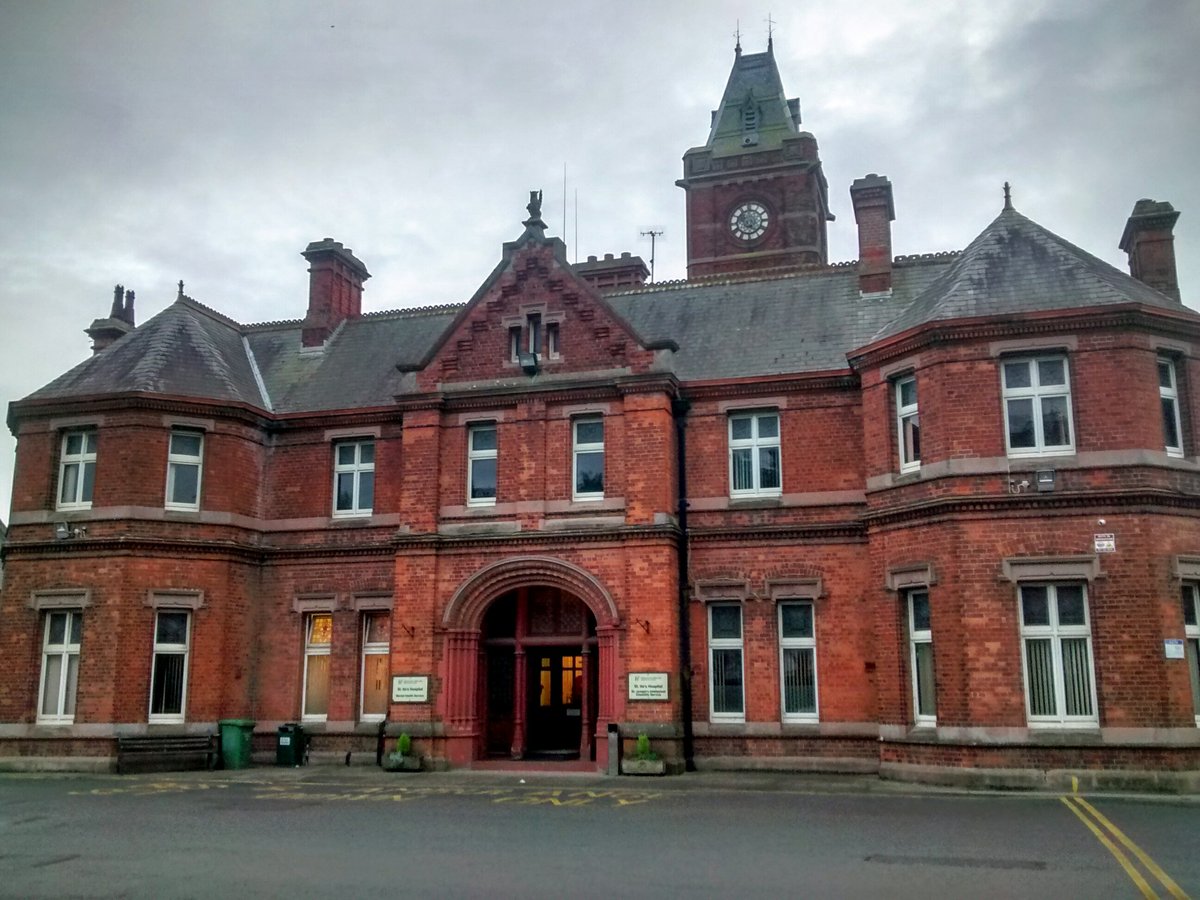
Construction began in 1896 and was completed in 1903, making it Ireland’s largest building project at the time (Fingal County Council, 2013; carrig.ie). The hospital’s remarkable red-brick buildings—arranged in a diagonal arrowhead formation—are visible for miles across the Malahide Estuary. The design features chapels, dining halls, a clock tower, and technical innovations such as tinted concrete to mimic terracotta.
The scale was extraordinary: built on a 460-acre estate, it was intended for 1,200 patients and 300 staff. The project’s final cost, £378,100, exceeded the original budget by over 57% and was the most expensive government building in Ireland at the time (irishtimes.com).
Early Operation and Community Life
At its peak, St Ita’s operated as a model of self-sufficiency, housing up to 2,000 patients and 300 staff. The institution featured strict gender segregation, two chapels, a bakery, butcher, tailor, laundry, and even its own fire station. A 300-acre farm and gardens supplied food and therapeutic work for patients, reflecting the prevailing belief in occupational therapy (Fingal County Council, 2013).
Despite its utopian aspirations, St Ita’s—like similar institutions across Ireland—was marked by social isolation. Patients were often separated from families and communities, reflecting the broader stigmas and attitudes of the era (irishtimes.com).
Evolution of Psychiatric Care and Deinstitutionalization
From the mid-20th century onward, changing professional attitudes and public concern led to a slow move away from institutional care. The late 20th century saw reports of overcrowding and degrading conditions, particularly for intellectually disabled residents (historyworkshop.org.uk). By the 1980s and 1990s, national policy shifted toward deinstitutionalization and community-based care.
In 2010, the Mental Health Commission ordered an end to acute admissions, citing “entirely unacceptable and inhumane conditions” (independent.ie). The hospital closed to inpatients in 2011 and to outpatients in 2014 (wikipedia.org). Its closure became emblematic of Ireland’s broader transformation in mental health care.
Heritage Designation and Conservation
Recognizing its historical, architectural, and social significance, Fingal County Council designated the hospital and Portrane Demesne as an Architectural Conservation Area (Fingal County Council, 2013). Conservation efforts have focused on maintaining the site’s unique red-brick architecture and landscape. The hospital’s records, some preserved in the National Archives, provide valuable insight into the social and medical history of Ireland (History Ireland).
Notable Events, Cultural Legacy, and Paranormal Interest
St Ita’s features prominently in Irish cultural memory. The RTÉ documentary “The Asylum” brought national attention to life inside its walls (wikipedia.org). Local folklore, including tales of a spectral nun and former patients’ spirits, has contributed to its mystique (Spirited Isle). The hospital’s story is explored in literature, documentaries, and memoirs, capturing the complex legacy of institutional care in Ireland.
The site continues to inspire community engagement and heritage preservation efforts. The recent relocation of the Central Mental Hospital to the former St Ita’s site marks a new chapter in its long history.
Visiting St Ita’s Hospital: Hours, Tickets, and Tours
Visiting Hours and Entry
- Grounds Access The hospital grounds are generally open to the public during daylight hours (approximately 9:00 AM to 5:00 PM).
- Building Access Entry to the hospital buildings is restricted for safety and privacy reasons. Visitors must not attempt to enter any structures without express permission.
Tickets and Guided Tours
- Entry Fee Visits to the hospital grounds are free of charge. There is no ticket requirement for casual visits to the exterior.
- Guided Tours Organized guided tours may be offered by local heritage groups during special events. Check community websites or contact local historical societies for updates (Carrig Conservation).
Photography
- Permitted Exterior photography is permitted for personal use. Please respect privacy and avoid photographing individuals or restricted areas.
Accessibility
- Grounds The grounds are extensive and may have uneven terrain. Some paths are suitable for wheelchairs, but accessibility varies.
- Buildings Due to preservation and safety concerns, interior access is not currently available.
Getting There and Nearby Attractions
Location
- Address Portrane, North County Dublin, approximately 25 km from Dublin city centre.
- Car Accessible via the M1 motorway; parking is available in designated areas.
- Public Transport Dublin Bus serves Donabate, with local transport options to Portrane. Donabate train station also connects to central Dublin.
Nearby Attractions
- Donabate Beach Sandy stretch ideal for walking and birdwatching.
- Newbridge House and Farm Georgian mansion and working farm open to visitors.
- Lambay Island Visible from the hospital grounds, visits by special arrangement.
- Malahide Castle and Gardens Historic castle and botanical gardens nearby.
- Rogerstown Estuary Nature Reserve Scenic area for nature walks and birdwatching.
Visitor Etiquette
- Remain on designated paths and respect all signage.
- Do not enter buildings or restricted areas.
- Maintain a respectful demeanor—this site has a sensitive history.
- Avoid intrusive photography, especially of staff, visitors, or ongoing activities.
Frequently Asked Questions (FAQ)
Q: What are the visiting hours at St Ita’s Hospital?
A: The grounds are open during daylight hours (approx. 9:00 AM to 5:00 PM). There is no interior access.
Q: Are tickets required to visit St Ita’s Hospital?
A: No, there is no entry fee or ticket requirement for the grounds.
Q: Can I enter the hospital buildings?
A: No, building access is restricted for safety and privacy.
Q: Are guided tours available?
A: Occasionally, local heritage groups offer guided tours during special events. Check community resources for updates.
Q: Is the site accessible for people with mobility issues?
A: Some paths are accessible, but uneven terrain exists. Contact local groups for the latest advice.
Q: Is photography allowed?
A: Exterior photography is permitted; avoid photographing individuals or restricted areas.
Q: What attractions are nearby?
A: Donabate Beach, Newbridge House and Farm, Lambay Island, Malahide Castle, and Rogerstown Estuary.