
Discover the Irish Houses of Parliament: A Must-Visit Dublin Historical Site
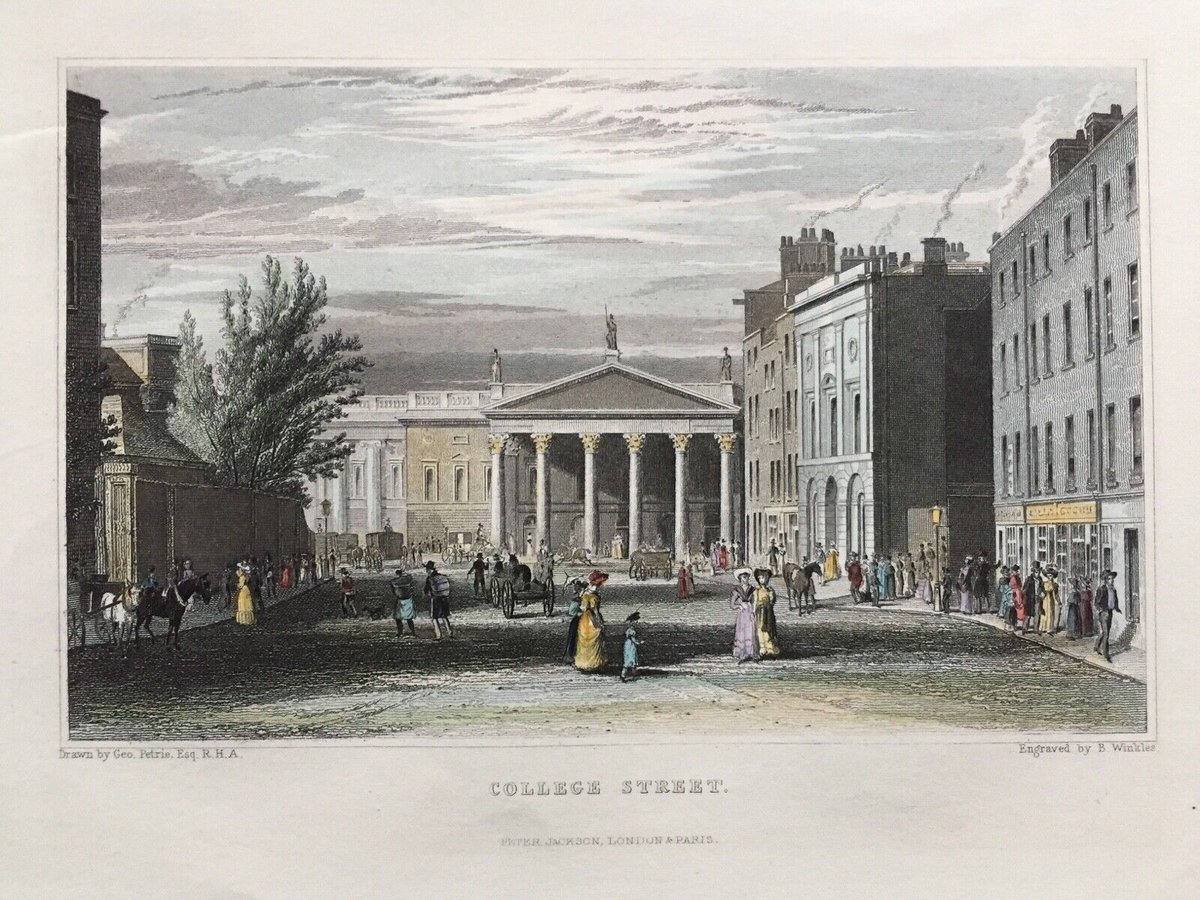
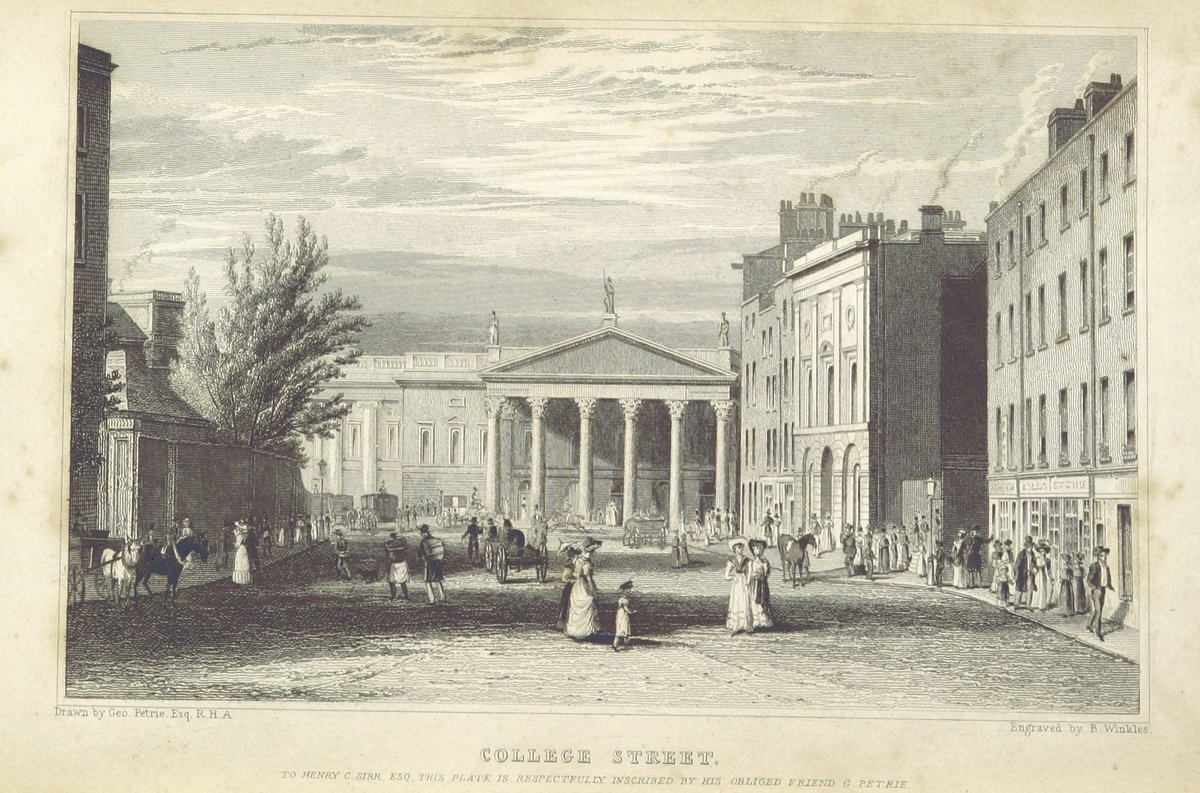
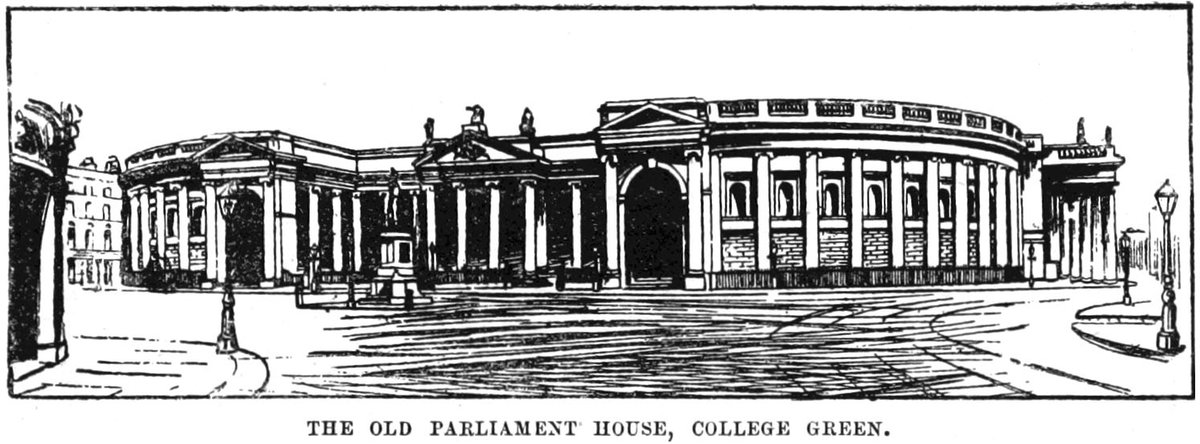
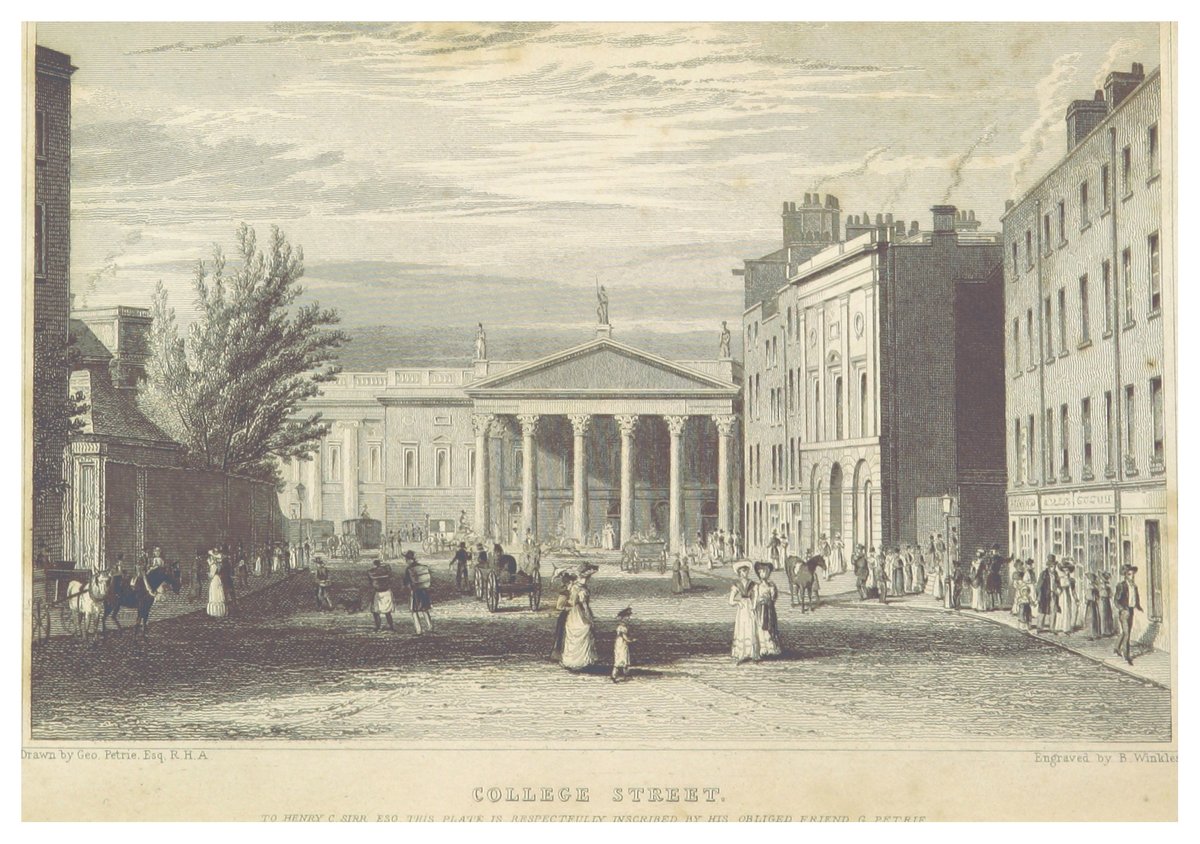
The Irish Houses of Parliament stand on College Green in central Dublin, close to Trinity College and the city’s major cultural institutions. Designed by Sir Edward Lovett Pearce, the building was the world’s first purpose-built two-chamber parliamentary building and is an outstanding example of Georgian architecture (Oireachtas.ie; Wikipedia).
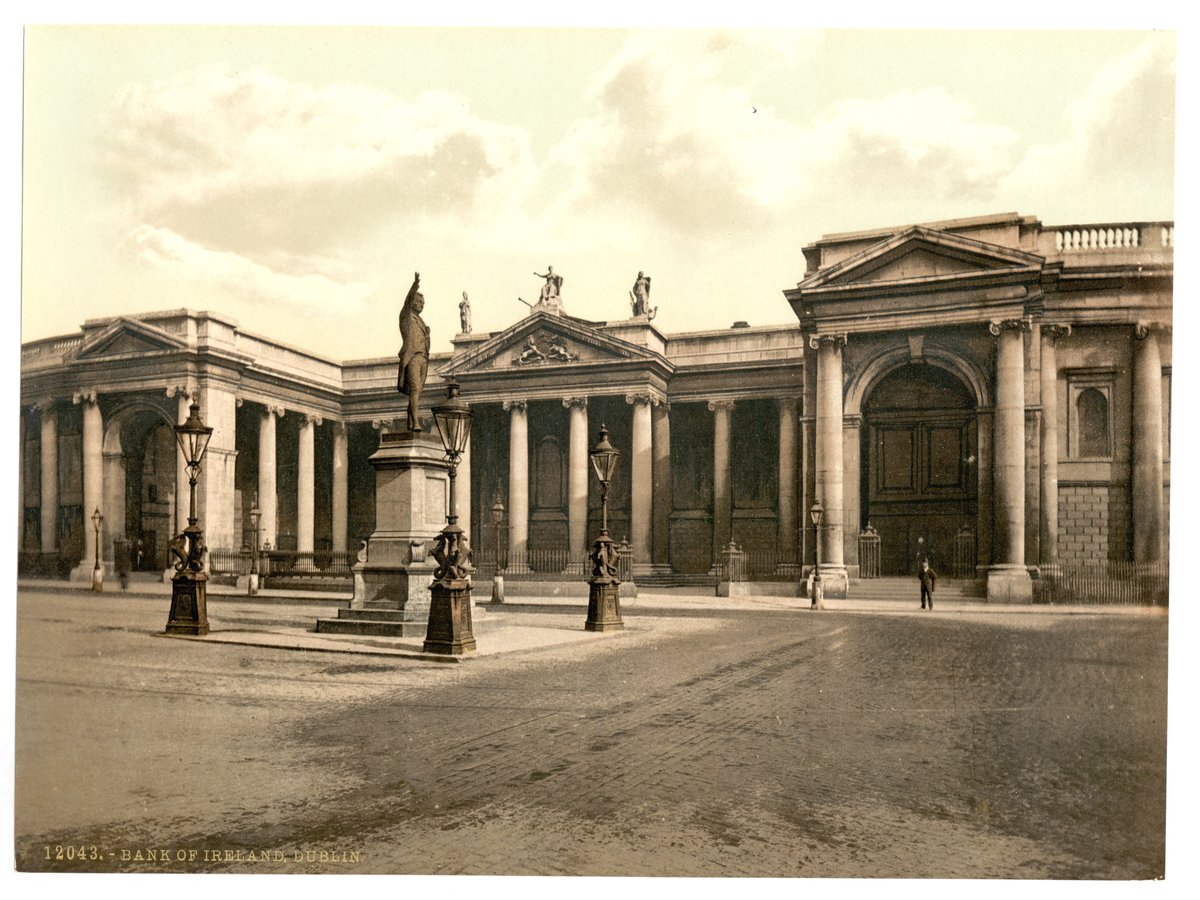
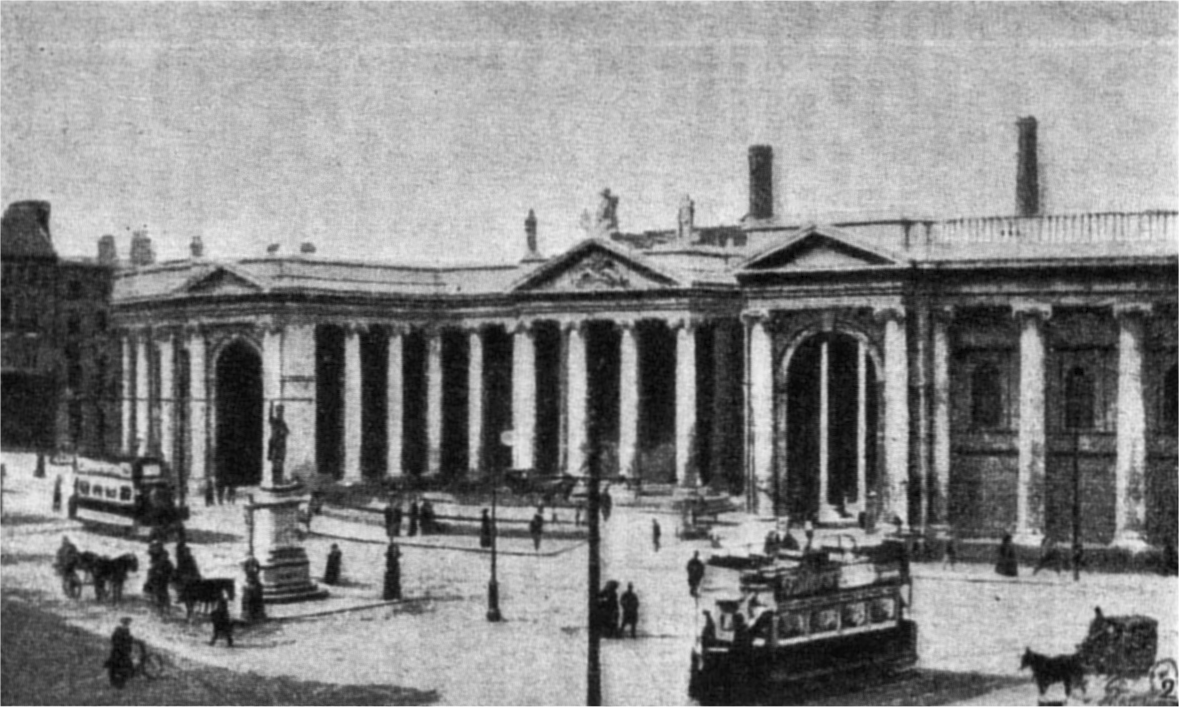
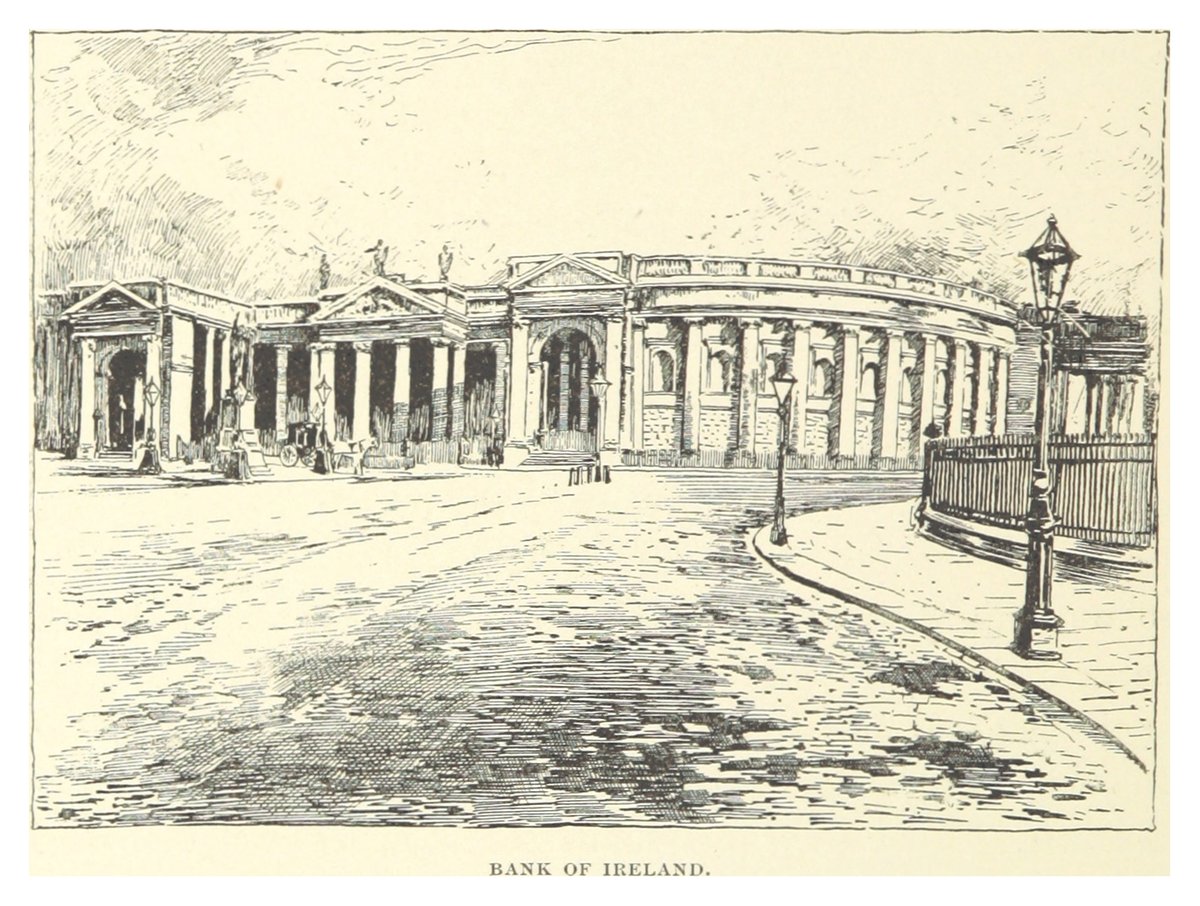
The original Parliament House is no longer the seat of government. It was sold to the Bank of Ireland in 1803, but its stately façade and preserved House of Lords chamber remain important features of the site (Andrew Cusack; Courtauld).
Origins and Early Development of the Irish Parliament
The Irish Parliament’s roots date to the 13th century. Its first recorded assembly took place at Castledermot in 1264. Initially, it was a gathering of Anglo-Norman landowners and clergy, concerned mainly with judicial and administrative matters. Its role expanded over time, and by the late 17th century it had become integral to the governance of Ireland. A purpose-built home was needed by the early 18th century (Oireachtas.ie).
Key Historical Events and Political Milestones
Grattan’s Parliament and the Age of Legislative Independence
In the late 18th century, Henry Grattan led the movement for Irish legislative independence. The Constitution of 1782 gave the Irish Parliament the right to legislate autonomously, beginning a period of political and social vibrancy (Dáil100.ie).
The Act of Union and the Closure of the Irish Parliament
The Act of Union was passed in 1800 and took effect from 1801, dissolving the Irish Parliament and merging it with the Parliament of Great Britain. The closure ended Ireland’s legislative independence and changed Dublin’s political and economic landscape, as the city lost its status as a parliamentary capital (Oireachtas.ie).
The Parliament’s Role in Irish History
Parliament House was the site of important debates and legislation concerning religious reforms, economic policies and the rise of nationalist sentiment. The closure of the parliament contributed to later campaigns for independence, culminating in the foundation of Dáil Éireann in 1919 (Oireachtas.ie).
Transformation and Preservation
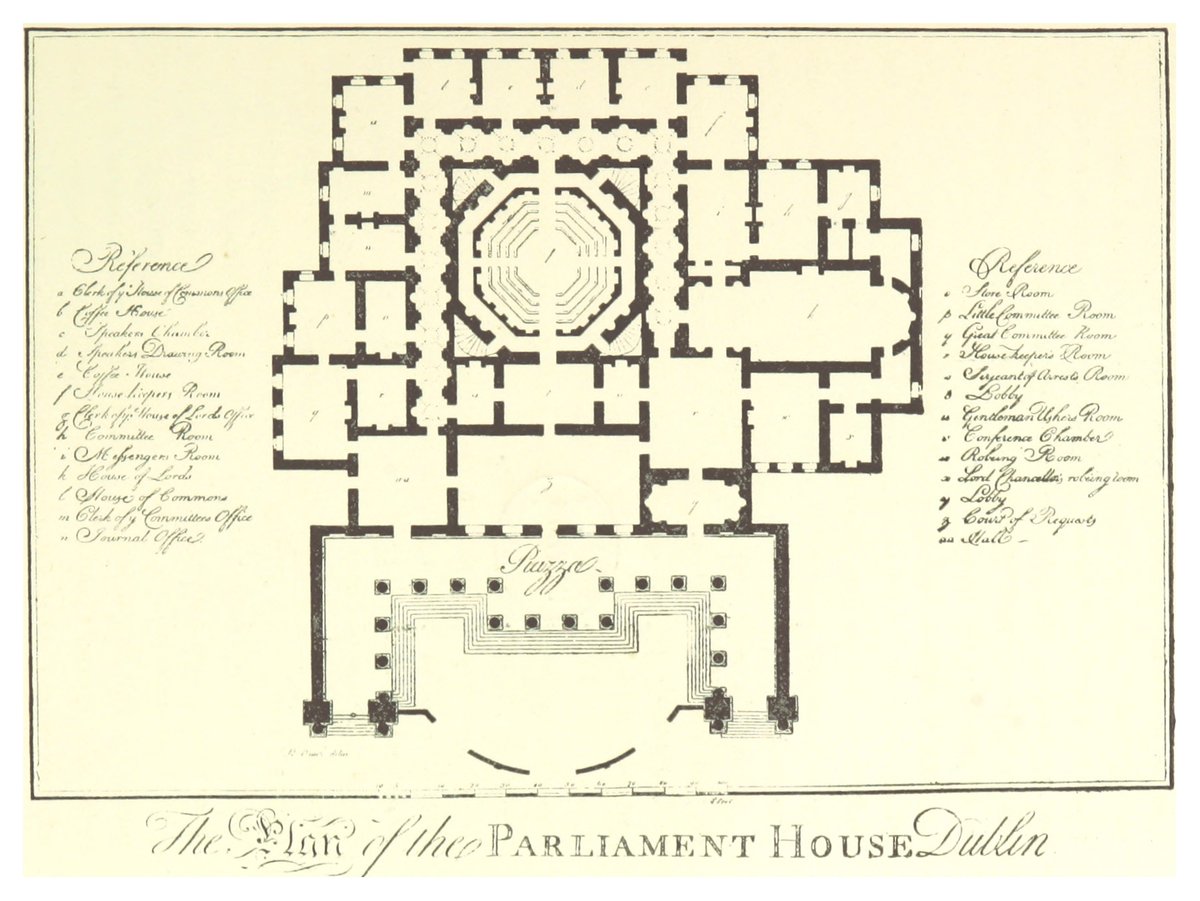
After the parliament was abolished, Parliament House was sold to the Bank of Ireland in 1803. The House of Commons chamber was demolished to make way for a banking hall, while the House of Lords chamber was preserved. The building underwent significant interior changes, but the exterior and House of Lords chamber have been largely preserved. Public access to the chamber is occasional, including during heritage events (Andrew Cusack; DoDublin).
Cultural Insights and Significance
The building reflects Ireland’s political evolution, from colonial subjugation to independence. Its continued presence on College Green is a reminder of Ireland’s democratic journey and forms part of the city’s civic identity (Oireachtas.ie).
Architectural Significance: The World’s First Purpose-Built Two-Chamber Parliament
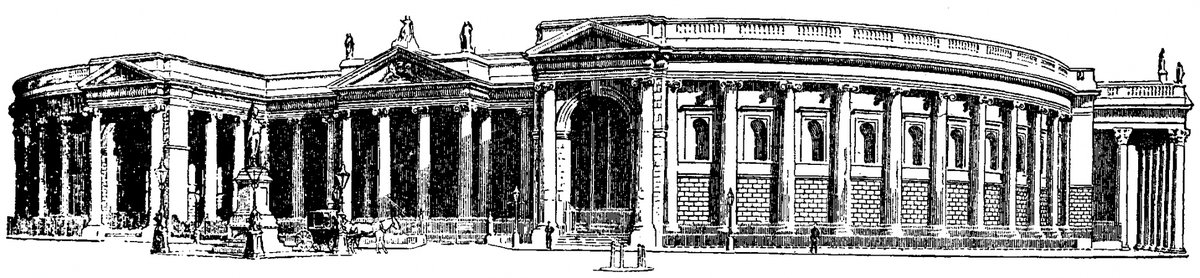
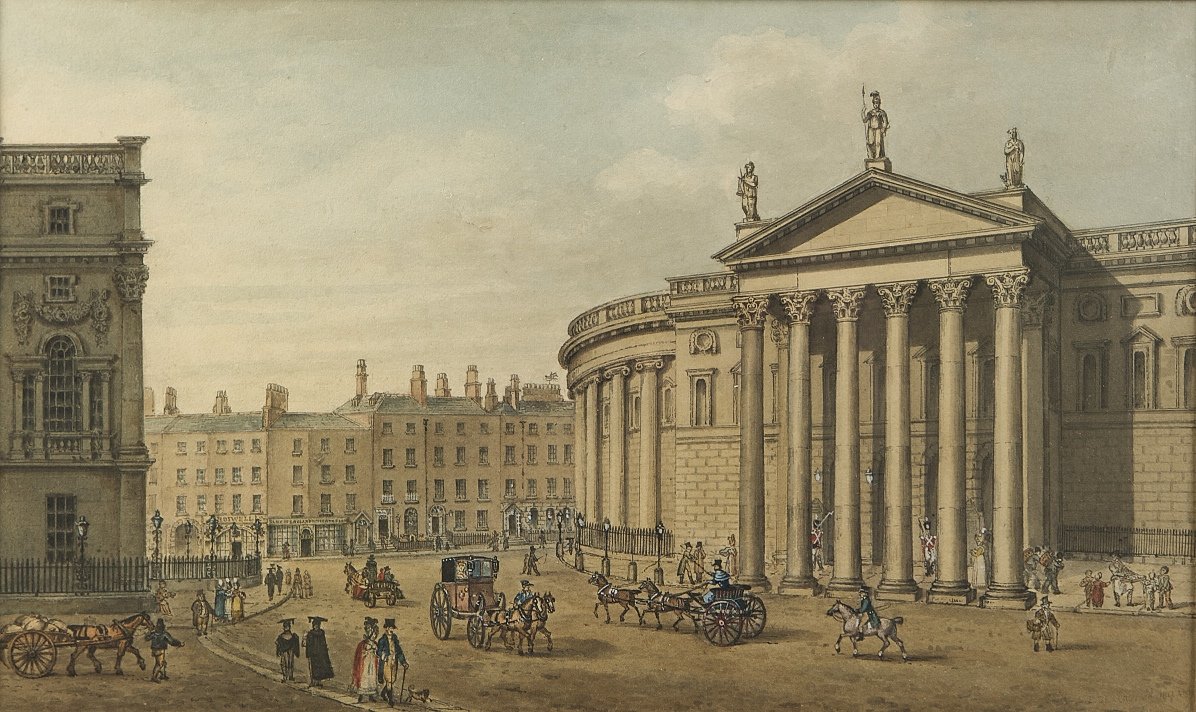
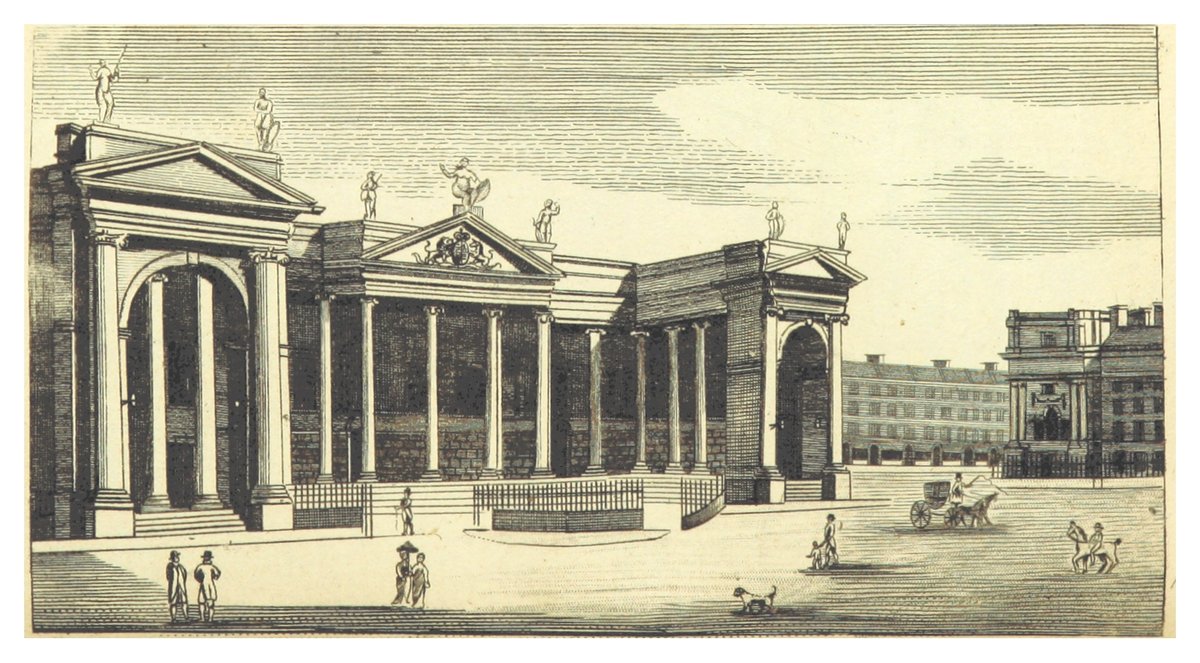
Construction began in 1729 and was completed in 1733. Pearce’s design created the world’s first purpose-built bicameral legislature. Its grand portico, Corinthian columns and harmonious Georgian proportions influenced later parliamentary buildings around the world (Wikipedia; Local Histories).
The building’s open layout contrasted with the fortress-like style of Dublin Castle and represented a new era of accessible governance (Courtauld).
Architectural Innovation and Symbolism
Parliament House is an example of Palladian classicism, with a grand colonnade, pedimented pavilions and sculptural details by Edward Smyth. Its classical elements evoke civic virtue and republican government and express the aspirations of the 18th-century Protestant Ascendancy (Courtauld).
The façade has a notable near-total absence of windows. In response to the glass tax of the era, builders filled in planned windows, creating the building’s distinctive solid appearance (TravelCurious).
Influence on Dublin’s Urban Identity
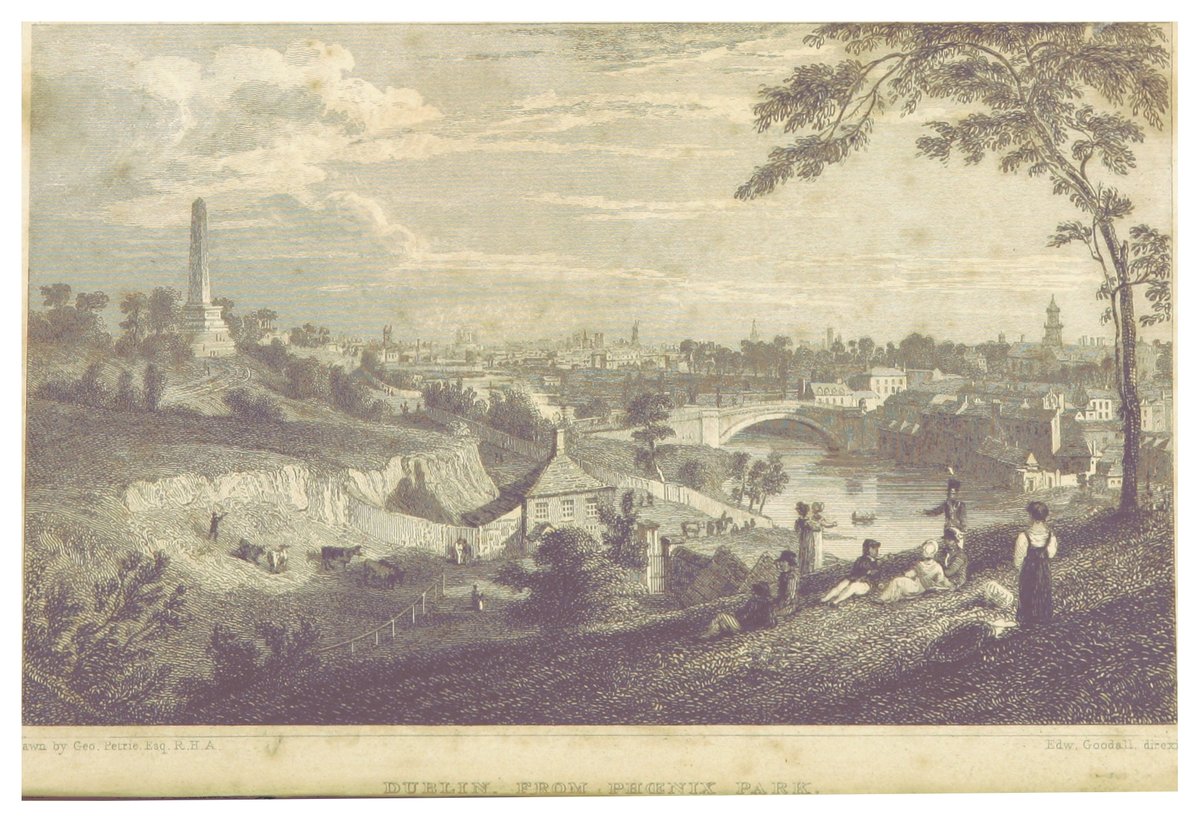
Parliament House helped establish College Green as Dublin’s civic core and influenced the design of later public buildings. Its axis with Trinity College and nearby monuments created a setting for public assembly and political expression (Courtauld).
Experiencing Irish Parliamentary Heritage Today
The preserved House of Lords chamber offers a view of 18th-century parliamentary life. The current Irish Parliament, the Oireachtas, meets at nearby Leinster House, which offers tours to the public (Oireachtas Visitor Information).
Images and Virtual Tour
For a virtual experience, check Dublin tourism websites or the Bank of Ireland’s official resources.
Practical Visitor Information: Visiting Hours, Tickets, and Tours
Location and Access
- Address 2 College Green, Dublin 2, Ireland.
- Nearby transport Luas tram (Dawson stop), DART rail (Pearse Station) and several Dublin Bus routes (Oireachtas).
- Bicycle parking Available on Molesworth Street and nearby.
Visiting Hours and Tickets
- Opening hours Monday to Friday, 10:00 am–4:00 pm (Dublin Places to Visit).
- Guided tours Tuesdays only, at 10:30 am, 11:30 am and 1:45 pm.
- Admission Free. No tickets are required for general entry; guided tours are also free but may require early arrival.
- Access Entry to the House of Lords chamber may be restricted during private events or restoration works. Extensive restoration was scheduled to begin in 2024.
Visiting the Irish Parliament at Leinster House: Hours, Tours & Dublin Historical Sites
Leinster House is the current seat of the Oireachtas, Ireland’s national legislature. This 18th-century building on Kildare Street has been the center of Irish democracy since 1922 and is open to the public for tours (Oireachtas.ie).
- Opening hours Weekdays, 10:00 AM–4:00 PM, subject to the parliamentary schedule.
- Admission Free.
- Booking Advance booking is strongly advised. Reserve via the Oireachtas visitor portal.
- Tours and access Guided tours explain parliamentary procedures and history. Public galleries may be open during debates.
- Accessibility The building is wheelchair accessible; notify staff in advance about specific needs.
Summary of Visiting Tips and Key Highlights
- Arrive early for Tuesday tours of the House of Lords chamber, as spaces are limited.
- Check for closures due to restoration or bank functions.
- Photography is permitted outside; interior photography policies may vary.
- For mobility support at Parliament House, contact ahead (Oireachtas).
- The Audiala app provides real-time updates and virtual tours.
Nearby Places
Trinity College, the National Museum of Ireland and the National Library are within walking distance. Leinster House is also nearby.