
Historical Background and Naming
Origins and Planning
The idea for a central bus station in Dublin emerged in the late 1930s, prompted by the inadequacy of existing riverside bus stops. After evaluating several locations, Store Street was chosen for its proximity to major transport routes and affordability. The site was acquired for £13,000, reflecting the city’s ambitions for modern infrastructure (Wikipedia).
Design and Construction
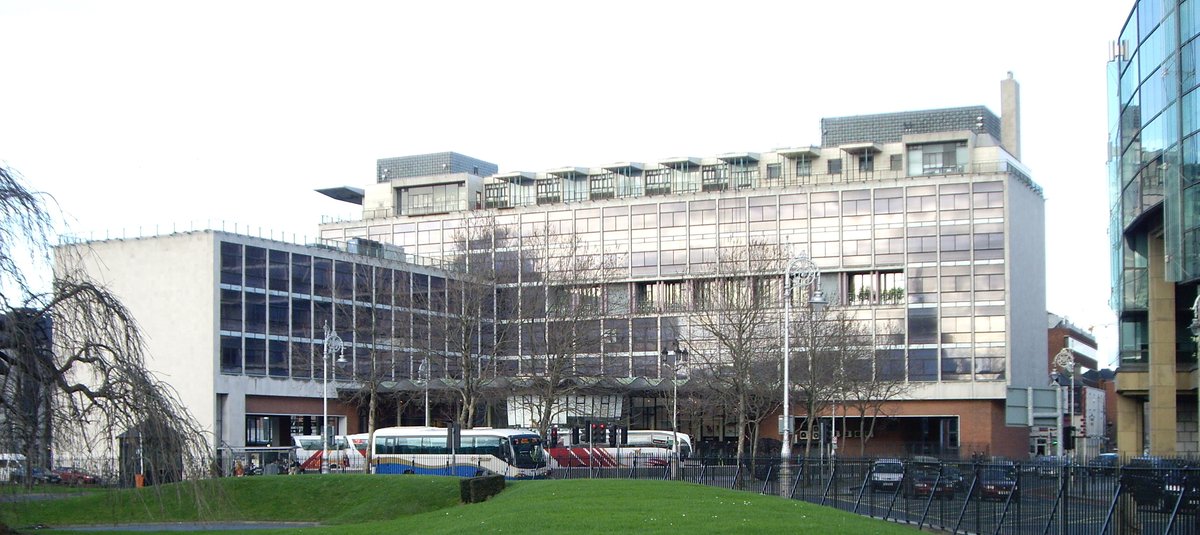
A design competition in 1944 selected Michael Scott—renowned for his International Modernist work—as the architect. His L-shaped design, realized with engineer Ove Arup, featured reinforced concrete, Portland stone, and innovative glass facades. Construction began in the mid-1940s but stalled due to financial constraints, resuming in 1951. The station officially opened on October 19, 1953, at a cost exceeding one million pounds, and became a symbol of Ireland’s post-war optimism (RTÉ; Archiseek).
Naming
“Busáras” blends the Irish words for "bus" and "building," underlining its role as Dublin’s main bus terminal. Officially, it is named Áras Mhic Dhiarmada after Seán Mac Diarmada, a leader of the 1916 Easter Rising, linking the building to Ireland’s national memory (Wikipedia).
Visiting Busáras: Practical Information
Location and Contact
- Address Store Street, Dublin 1, D01 P6V6
- Contact +353 1 836 6111
- Official Bus Éireann Website
Operating Hours
- General Access Daily, 5:00 AM – midnight (aligned with bus operations)
- Ticket Office
- Mon–Fri: 7:00 AM – 7:00 PM
- Sat: 8:00 AM – 6:00 PM
- Sun & Holidays: 10:00 AM – 6:00 PM
- More details
Ticketing
- In-Person Ticket office and self-service machines inside Busáras
- Online Bus Éireann ticket portal
- Leap Card Dublin’s integrated payment smartcard; accepted for city, Luas, and some regional buses
- No Entry Ticket There is no entrance fee for Busáras itself; tickets are only required for bus travel
Accessibility
- Step-free access, ramps, elevators, and accessible restrooms
- Visual and auditory aids, including tactile signage and audio announcements
- Staff assistance available with advance notice; guide dogs welcome
- Accessibility information
Facilities and Amenities
- Spacious waiting areas, café, convenience store, vending machines
- Free Wi-Fi and limited charging points
- Public toilets, including accessible facilities
- Luggage lockers and left-luggage services (€5–€12/day)
- Security personnel and CCTV monitoring
Getting There
- Public Transport
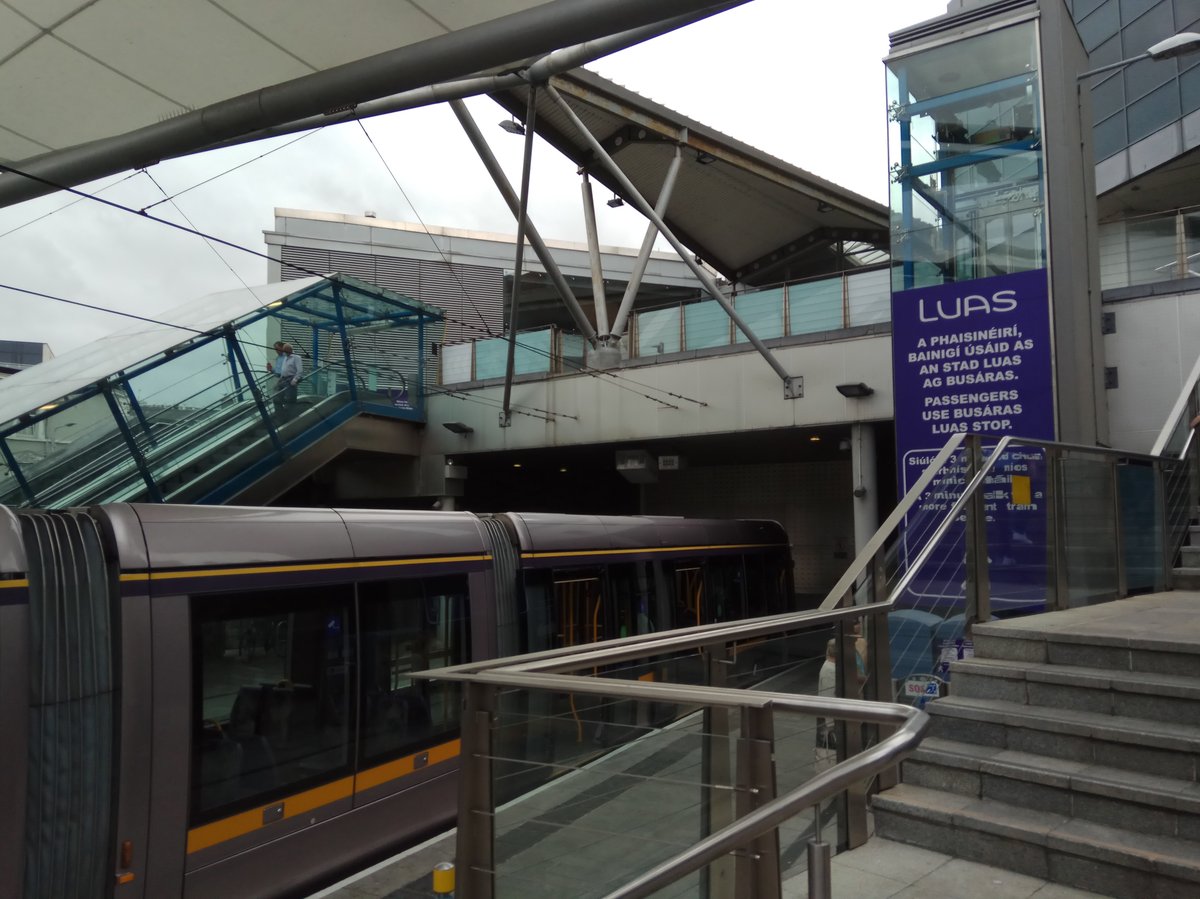
- Luas Red Line (stops directly outside)
- Connolly Station (DART, commuter rail, intercity trains)
- Dublin Bus and long-distance Expressway services
- Airport Buses 24-hour routes (41, C1, C2, C5, C6) to/from Dublin Airport
- Taxis and Rideshares Taxi ranks and rideshare zones available outside
Architectural and Cultural Significance
Busáras is a milestone in Irish architecture, introducing International Modernism to Dublin’s cityscape. Designed by Michael Scott, the building is characterized by its L-shaped layout, glass facades, Portland stone, and a signature wavy concrete canopy by engineer Ove Arup. Its integration of public art—such as Patrick Scott’s mosaics—and use of durable materials like bronze and oak highlight a commitment to both functionality and aesthetics.
Winning the Royal Institute of the Architects of Ireland (RIAI) Triennial Gold Medal in 1955, Busáras was hailed as “Europe’s first postwar office building.” Initially controversial, it is now celebrated for its vision and influence (RTÉ; Irish Times).
Interior Features and Multifunctional Use
Inside, Busáras boasts:
- Irish oak flooring and terrazzo stairways
- A circular concourse and original mosaic artworks
- Multi-functional spaces: originally included a restaurant, nightclub, and the Eblana Theatre (cultural venue until 1995)
- Upper floors house government offices (Department of Social Protection)
The building was ahead of its time in combining transit, civic, and cultural functions (History Ireland).
Visitor Experience and Nearby Attractions
Highlights to Explore
- Modernist Façade Admire the wavy concrete canopy and glass-clad exteriors
- Public Art Patrick Scott’s mosaics and sculptural elements
- Historic Interiors Observe original materials and design details
Nearby Attractions
- The Custom House Iconic 18th-century building across the street
- River Liffey Quays Scenic walks and photo spots
- EPIC The Irish Emigration Museum 10-minute walk
- Temple Bar Dublin’s cultural quarter, within walking distance
Practical Tips
- Arrive early during peak hours (7:00–9:30 AM, 4:00–7:00 PM)
- Use public transport due to limited parking
- Carry rain gear—Dublin’s weather is changeable
- Explore the area on foot for easy access to major landmarks
Special Events and Tours
- Guided Tours Occasional architectural and heritage tours—check Bus Éireann or Visit Dublin for schedules
- Cultural Events Busáras sometimes hosts exhibitions and public events, especially marking significant anniversaries or during Open House Dublin
Preservation and Recent Developments
Busáras underwent restoration in 2007 to preserve its unique features. Recent redevelopment plans by Bus Éireann focus on modernizing passenger facilities while maintaining architectural integrity (Irish Star).
Frequently Asked Questions (FAQ)
Q: What are the visiting hours?
A: Busáras is open daily from 5:00 AM to midnight, with ticket offices operating during core hours.
Q: Is there an entry fee?
A: No entry fee is required; tickets are only for bus travel.
Q: Is Busáras wheelchair accessible?
A: Yes, with ramps, elevators, and accessible toilets throughout.
Q: How can I buy tickets?
A: At the ticket office, self-service machines, online, or via Leap Card.
Q: Are guided tours available?
A: Occasionally, especially during Open House Dublin or by arrangement with local heritage groups.
Q: What are nearby attractions?
A: Custom House, River Liffey, Temple Bar, EPIC Museum, and more.