Plan and listen to Al-Kadhimiya Mosque with Audiala.
Audio guide in your pocket, itinerary in your browser. Built for the way you actually visit.
Introduction
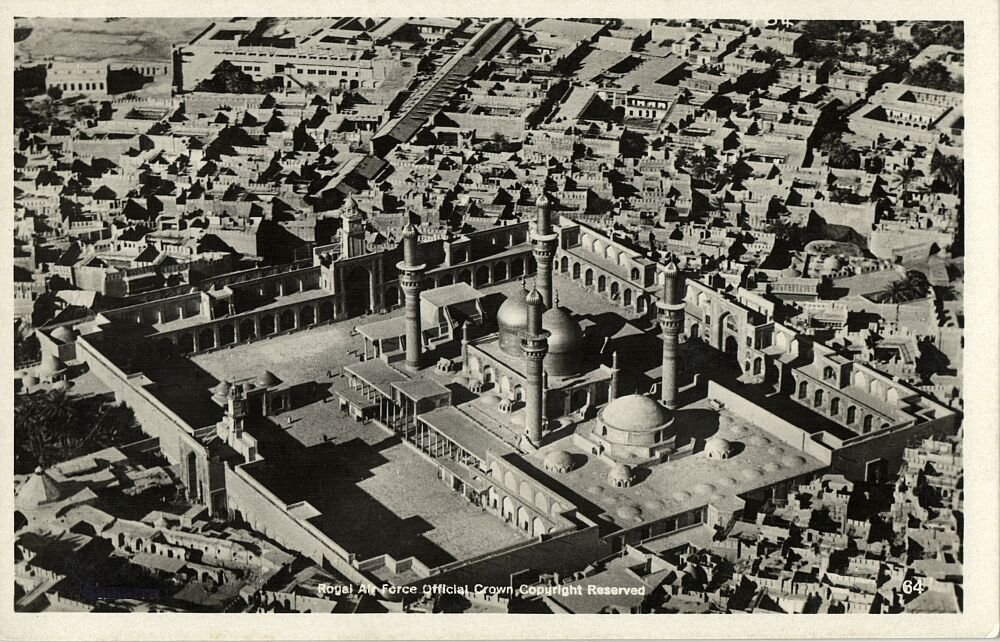
The Al-Kadhimiya Mosque, also referred to as the Al-Kadhimain Shrine, is one of Baghdad’s most important spiritual and architectural treasures. Situated in the historic Al-Kadhimiya district, northwest of the city center, this sacred mosque is revered as the burial site of two prominent Shia Imams—Imam Musa al-Kadhim and Imam Muhammad al-Jawad. Over centuries, it has evolved into a central hub for religious pilgrimage, theological scholarship, and cultural life. Distinguished by its gilded domes, intricate tilework, and ornate minarets, the mosque stands as a testament to the artistic and spiritual legacy of Iraq (Official Al-Kadhimiya Shrine Website; Heritage of Iraq Organization; assignmentpoint.com).
This guide offers an in-depth look at Al-Kadhimiya Mosque’s history, religious significance, architectural features, visiting hours, ticketing information, travel tips, and nearby attractions to help you plan a meaningful and well-informed visit.

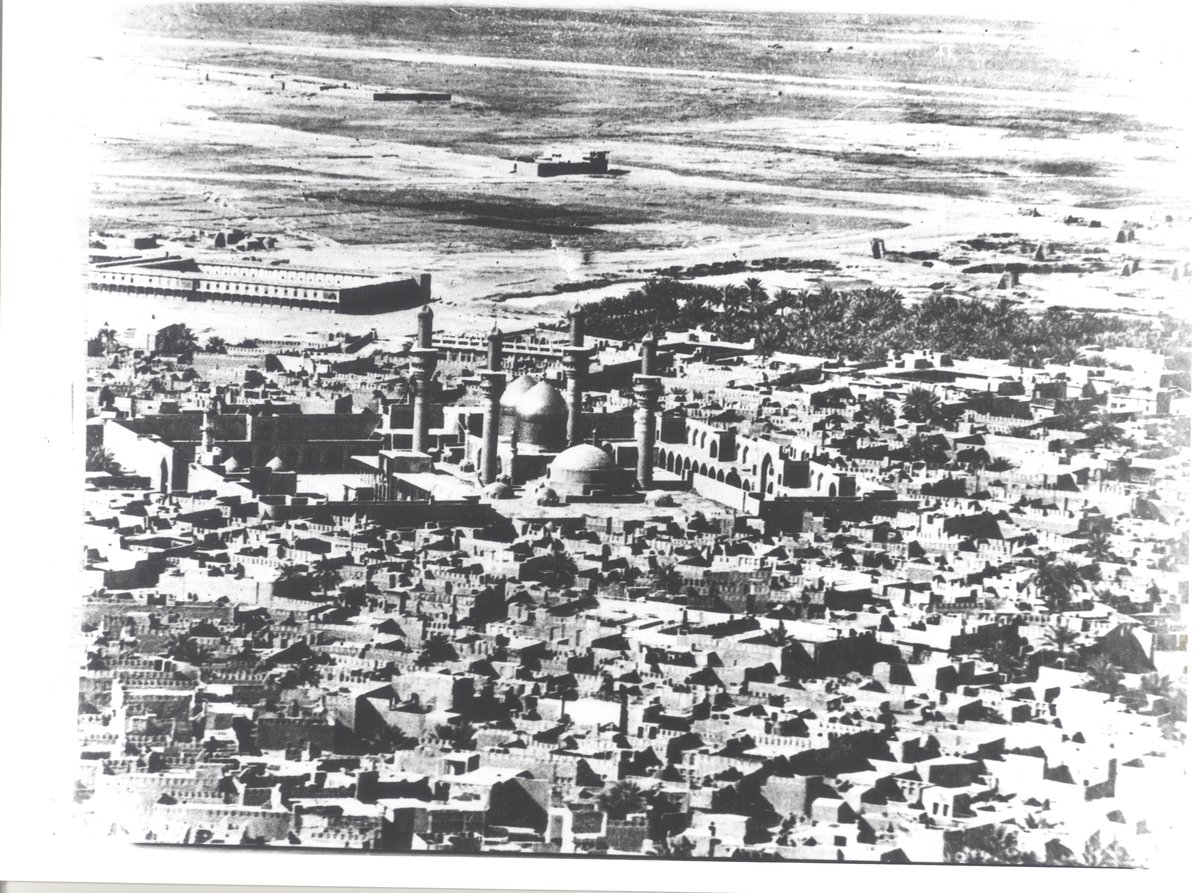
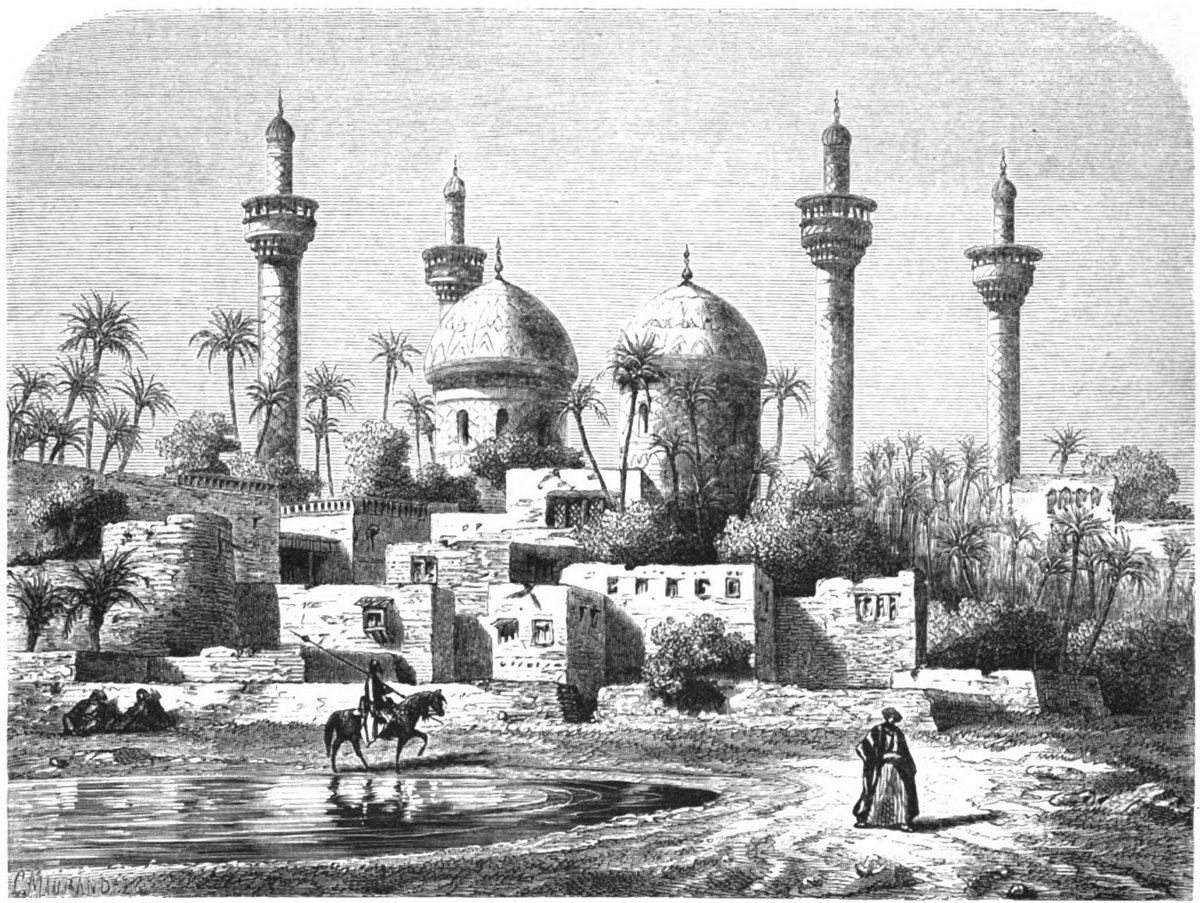
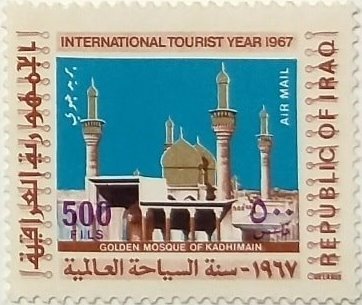
Historical Background
Foundations and Abbasid Era
The origins of Al-Kadhimiya Mosque date to the Abbasid Caliphate in the 8th century. The area was initially a burial ground for the Quraysh tribe and gained immense religious significance as the final resting place of Imam Musa al-Kadhim (d. 799 CE) and his grandson, Imam Muhammad al-Jawad (d. 834 CE) (Official Al-Kadhimiya Shrine Website). Their tombs transformed the site into a major pilgrimage destination for Shia Muslims.
Ottoman and Safavid Patronage
During the 16th century, the Ottomans undertook major expansions, constructing the mosque’s famed golden domes and distinctive minarets. Ottoman and Safavid artistic influences are evident in the detailed tilework, calligraphy, and decorative elements throughout the complex (Heritage of Iraq Organization).
Modern Era and Restoration
Through the 20th and 21st centuries, the mosque has endured periods of political upheaval and conflict, including damage during the Iraq War. Significant restoration efforts have preserved and enhanced the structure, ensuring its continued role as a spiritual and cultural landmark (Iraqi Ministry of Culture).
Religious and Cultural Significance
Shrine of the Two Imams
The mosque houses the tombs of Imam Musa al-Kadhim and Imam Muhammad al-Jawad, both direct descendants of the Prophet Muhammad and central to Shia theology. Pilgrims from around the world visit to perform Ziyarat (pilgrimage), seeking blessings and spiritual fulfillment (assignmentpoint.com; spirit-travelers.com).
Burial Place of Scholars
The mosque complex also contains the graves of renowned Islamic scholars such as Shaykh Mufid and Shaykh Nasir al-Din al-Tusi, as well as the brothers Shaykh Radhi and Shaykh Murtadha, further enhancing its religious and intellectual stature.
Community and Interfaith Role
Al-Kadhimiya Mosque is not just a religious site but also a center for community, charity, and interfaith dialogue—a testament to Baghdad’s historic multiculturalism (spirit-travelers.com).
Architectural Features
Layout
The mosque complex is anchored by a central prayer hall, surrounded by spacious courtyards, administrative offices, and madrasas. The main axis is oriented towards Mecca, with multiple entrances, including the Bāb al-Fāṭimah gate designated for female visitors (Pineqone).
Golden Domes and Minarets
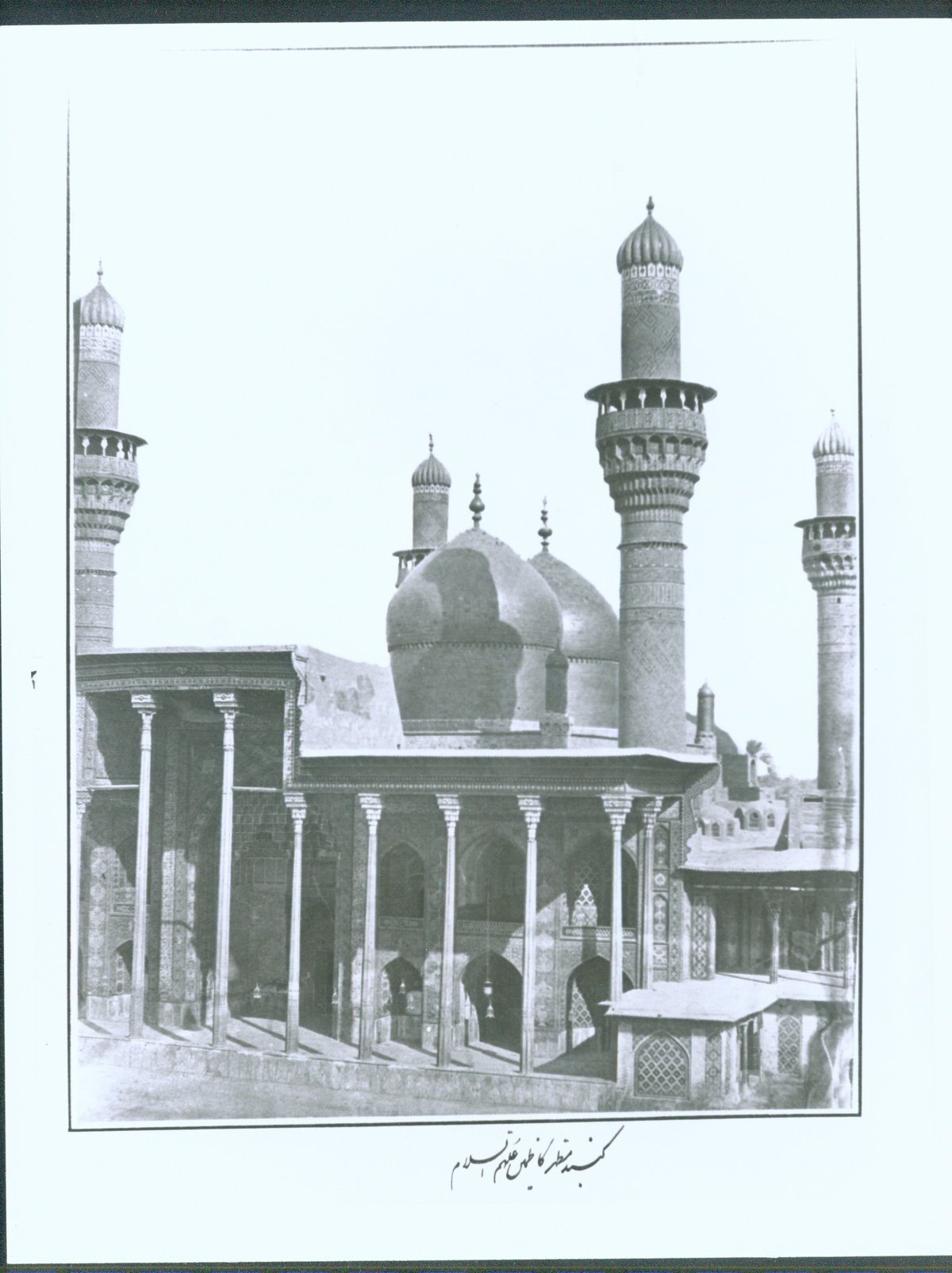
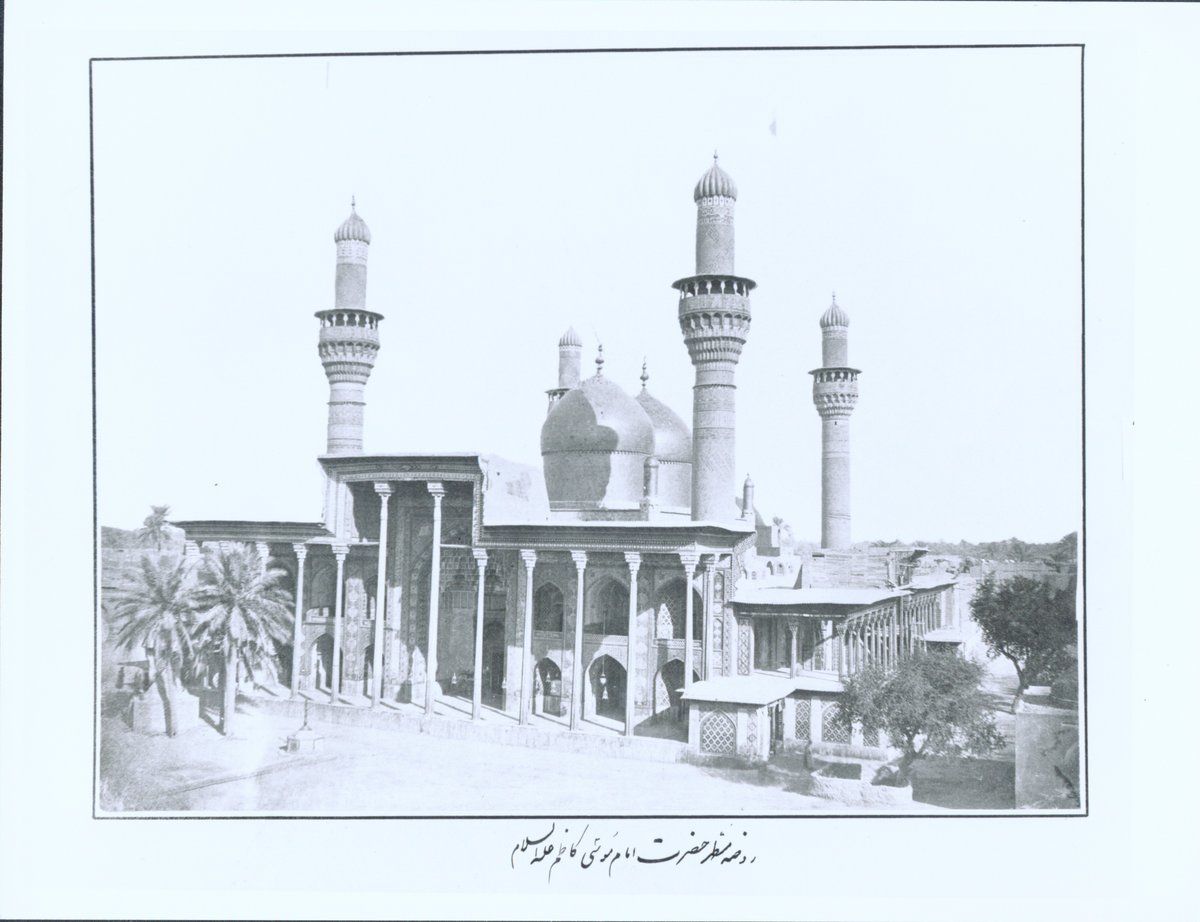
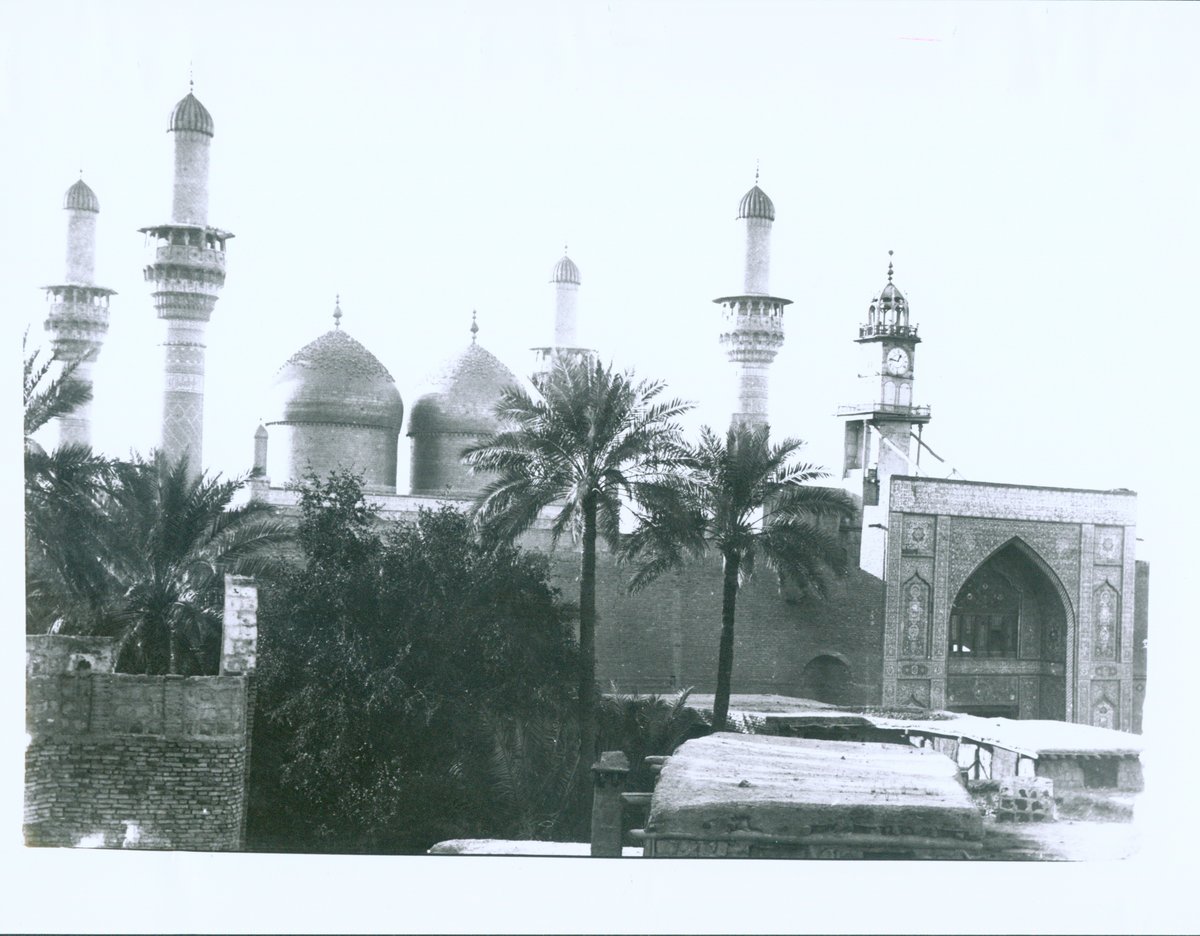
The mosque’s two prominent domes are clad in gold leaf, a striking feature visible across Baghdad’s skyline. Four slender minarets, also gilded and adorned with blue-green tilework, mark the mosque’s profile (Travel2Iraq).
Tilework and Ornamentation
Elaborate glazed tiles in blues, greens, and whites decorate the mosque’s façades and iwans. Kufic and Thuluth calligraphy, along with floral and geometric motifs, embellish the walls and ceilings.
Interior Spaces
The main prayer hall is vast, with mirrored mosaics, crystal chandeliers, and a marble-inlaid mihrab. The shrines of the Imams are enclosed by ornate silver and gold zarih screens, creating a space of reverence and beauty.
Lighting and Ambience
Natural light pours in through windows and domes, while at night, chandeliers and lamps create a warm, inviting atmosphere, particularly during festivals.
Visitor Information: Hours, Tickets, and Travel Tips
Visiting Hours
- General Hours: Open daily from early morning until late evening, typically from 7:00 AM to 9:00 PM, with extended hours during major religious events (adequatetravel.com).
- 24/7 Access: The mosque is accessible at all hours for worshippers, though certain areas may be restricted during prayers or maintenance (adequatetravel.com).
Tickets and Entry
- Admission: Free entry for all visitors. Donations are appreciated and contribute to ongoing maintenance and charitable works.
- Guided Tours: Available through the mosque’s visitor center or local tour operators; fees may apply for specialized tours.
Getting There
The mosque is located in the Al-Kadhimiya district, north of central Baghdad along the Tigris River (100hala-iq.com). Accessible by taxi or bus, though traffic can be heavy during peak times and religious holidays (iraqinews.com).
Accessibility and Etiquette
Accessibility
- Entrances: Multiple gates, with ramps and wide pathways for wheelchair users.
- Facilities: Separate ablution and restroom areas for men and women.
Dress Code
- Men: Clothing covering arms and legs; no shorts or sleeveless shirts.
- Women: Headscarf and attire covering arms and legs; abayas may be provided at the entrance (travel2iraq.co.uk).
Conduct
- Shoes: Remove before entering prayer halls.
- Behavior: Maintain a quiet, respectful demeanor. Physical contact between men and women is discouraged in public.
- Non-Muslim Visitors: Welcome, but should respect religious practices and sensitivities.
Security and Safety
- Checkpoints: Bag checks and metal detectors are standard (indroyc.com).
- Prohibited Items: Large bags, sharp objects, and some electronics.
- Photography: Forbidden inside shrine and prayer halls; exterior photos may be allowed with permission.
Facilities and Amenities
- Restrooms and Ablution Areas: Available within the mosque complex.
- Bazaars: Nearby markets sell religious souvenirs, books, and local handicrafts (travelsetu.com).
- Dining: Numerous cafes and restaurants offer traditional Iraqi cuisine.
- Accommodation: Limited in the immediate vicinity; hotels are available in central Baghdad (iraqinews.com). Book in advance during major events.
Nearby Attractions
- Al-Kadhimiya Market: Colorful bazaars with sweets, spices, and crafts.
- Abbasid Palace Ruins: Historical site nearby.
- Baghdad Museum of Islamic Art: Displays artifacts from Baghdad’s rich history.
- Tigris River: Offers scenic walks and views.
Frequently Asked Questions (FAQ)
Q: What are the visiting hours?
A: Open daily, generally from 7:00 AM to 9:00 PM, with extended hours during religious festivals. Some areas may close during prayers or events.
Q: Is there an entrance fee?
A: No, entry is free. Donations are welcome.
Q: Are guided tours available?
A: Yes, through the mosque’s visitor center or local agencies.
Q: Is the mosque wheelchair accessible?
A: Yes, ramps and wide pathways are provided.
Q: Can I take photos inside the mosque?
A: Photography inside prayer halls and shrines is prohibited; exterior photography may be permitted with approval.
Q: What is the dress code?
A: Modest attire is required; women must wear headscarves.
Listen to the full story in the app
The whole Al-Kadhimiya Mosque,
told well.
Listen to sourced travel stories with local history and practical context — ready offline.
Verified, and shown.
Researched and written by the Audiala editorial team from historical records, architectural archives, and local expertise.
A Visit to a Historical Place: Building Al-Kadhimiya Mosque, Iraq
Visit Baghdad
Walls of Baghdad: A Spiritual and Cultural Exploration
Top 10 Tourist Attractions in Baghdad
Al-Kadhimiya Mosque in Iraq: History, Architecture, Visiting Hours, Travel Information
How to Respect Local Customs and Traditions While Visiting Iraq
Al-Kadhimiya 5th Division Area Project
Built from cited sources · see the method · How we make our guides →