Tehran
Iran Updated Apr 2026
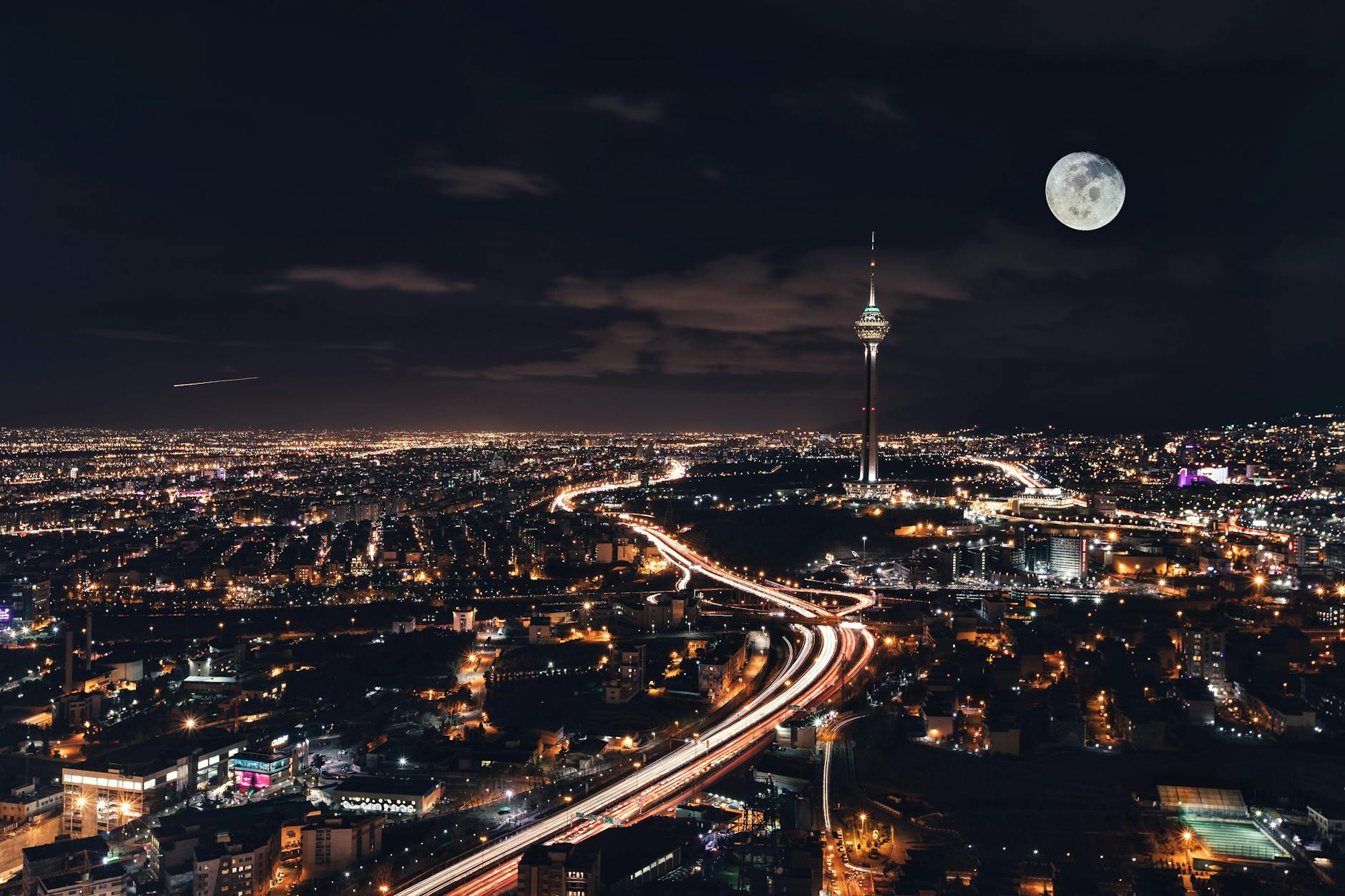
The call to prayer drifts over a city where women in black chadors haggle for saffron in 10-kilometre-long bazaar alleys while, 17 kilometres north, skiers carve fresh powder on the slopes of the Alborz. Tehran, Iran surprises anyone expecting only concrete and ideology. Beneath the smog and traffic lies one of the most alive capitals in the Middle East, where 250-year-old palaces stand in the shadow of 1970s modernist towers and every street corner seems to hide another teahouse argument about poetry.
 Photo: Aref Sarkhosh / Pexels
- Attractions
- 8
- Trip length
- 4-5 days
- Best season
- Spring (April) and Autumn (October)
Why Tehran
Built from cited sources · see the method · How we make our guides →
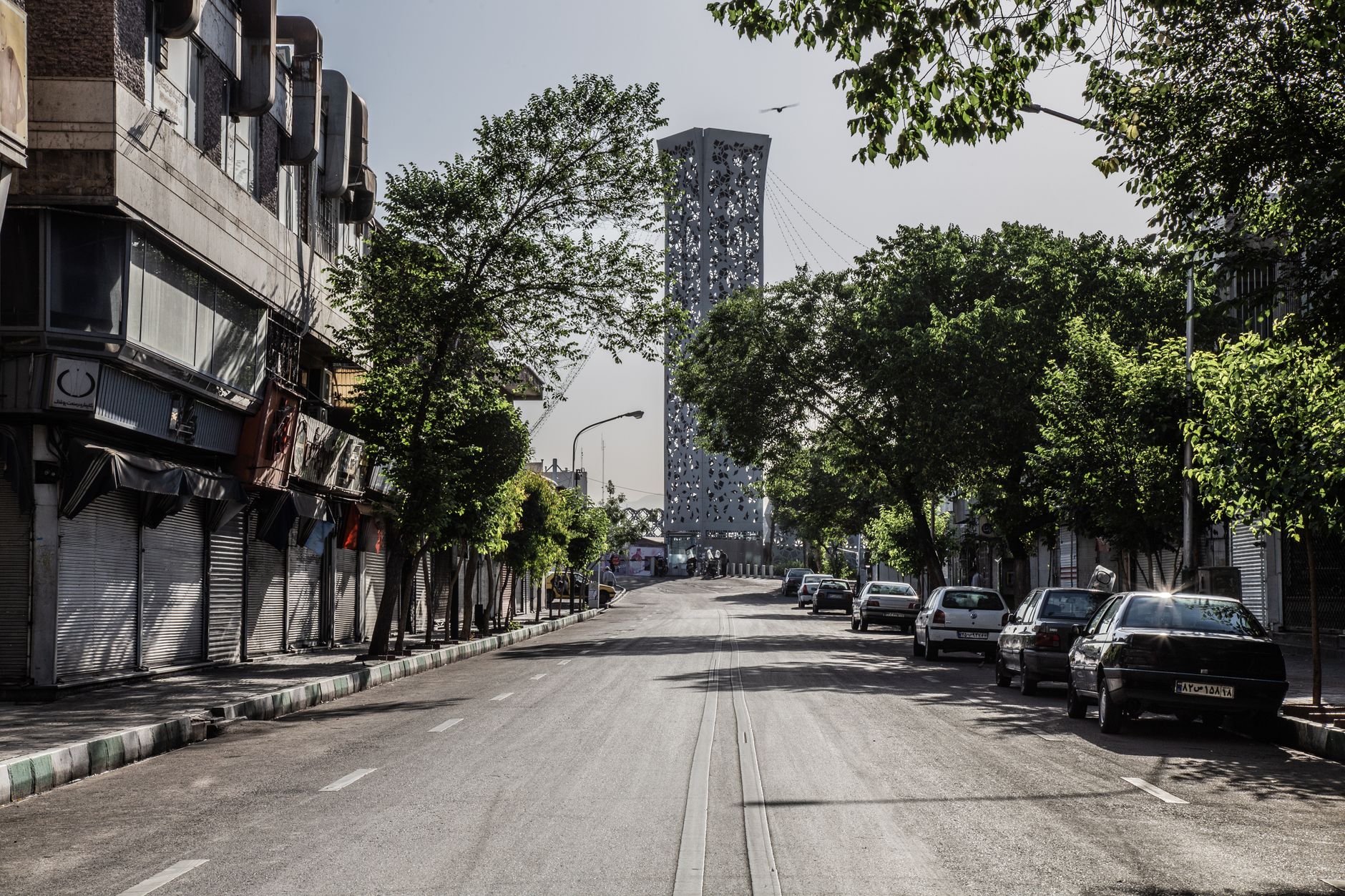
The city became Iran's capital in 1796 almost by accident when the Qajar dynasty needed a strategic spot between their tribal territories. What they built still shapes daily life. Walk the length of Vali-e Asr Street, 17.2 kilometres of plane trees running from the baking southern plains to the cooler mountain districts, and you pass through every era of modern Iranian history in a single taxi ride.
North Tehran feels like another country. Tajrish and Darband sit at 1,615 metres with gardens, hiking trails, and riverside teahouses where locals grill liver skewers and stretch fruit leather in the sun. South Tehran keeps the old heartbeat. The Grand Bazaar smells of cardamom and rosewater. Its narrow lanes lead to the tiny Haj Ali Darvish Teahouse and the carpet merchants who still judge a rug by running their hands across it the same way their grandfathers did.
The art scene thrives in private galleries along the same streets where state museums hold one of the finest collections of Western modern art outside Europe and America. Tehran doesn't ask for your love. It simply refuses to be reduced to any single story. Spend a week here and your understanding of Iran will never be the same again.
Qajar Opulence
Golestan Palace still carries the scent of rosewater and old books. Its 17 mirrored halls and marble throne rooms show exactly how the Qajars imagined power in the 19th century, every surface shouting wealth louder than the last.Mountain Air
North Tehran climbs straight into the Alborz. In Darband the sound of the river drowns out the city below while old men grill liver on charcoal and hikers drink tea at 1,800 metres. The temperature drops ten degrees in twenty minutes.Unexpected Modernism
The Tehran Museum of Contemporary Art hides a collection that would make most European capitals jealous. Built in 1977, its brutalist concrete shell now holds Rothkos and Pollocks bought before the revolution, lit by the same north-facing skylights the architects fought for.Vali-e Asr Spine
17.2 kilometres of plane trees run from the Grand Bazaar to the mountains. Sit on any bench between 6 and 8 pm and watch the entire social geography of Tehran parade past: grandmothers, students, soldiers, and the man selling sour-cherry juice from a copper tank.
Neighborhoods
Where to wander, by quarter — each with its own rhythm.
South Tehran
The historic core pulses with commerce and tradition. The Grand Bazaar stretches over 10 kilometres of covered lanes thick with the scent of spices, saffron, and grilled liver. Here you'll find the 19th-century Golestan Palace complex with its mirrored halls, the tiny Haj Ali Darvish Teahouse, and the constant shuffle of locals who treat the district like one extended living room.Vali-e Asr Street
The city's literal and cultural spine runs 17.2 kilometres from the southern plains to Tajrish Square in the north. Planted with plane trees in 1891, it functions as Tehran's main artery for commerce, evening strolls, and arguments about politics. Cafes and galleries cluster along its length like beads on a string.Darband
At the very foot of the Alborz Mountains, this northern district marks where the city finally gives up and becomes wilderness. A river tumbles past teahouses and kebab joints. Hikers set off for mountain trails while everyone else eats lavashak fruit leather and watches the sun drop behind 4,000-metre peaks. The air alone feels worth the Snapp ride.Tajrish
Wealthier, cooler, and greener than the rest of Tehran, this northern square sits at 1,615 metres. The area mixes old money, lush gardens, and easy access to mountain trails. Locals come for the produce market, the shrine, and the sense that summer never quite arrives at this altitude.Central Tehran
Home to the Tehran Museum of Contemporary Art with its world-class collection, the Seyhoun Gallery opened in 1966, and countless private spaces like Aaran and Dastan. This is where Iran's contemporary art scene actually happens. The light through the museum's distinctive concrete domes shifts dramatically across the galleries in the late afternoon.
Plan your trip
Before you go
- Getting There
- Imam Khomeini International Airport (IKA) lies 30 km southwest of the centre. Metro Line 1 now runs directly from the airport to central stations in about 50 minutes. Official airport taxis charge the equivalent of $25–45 USD; use the clearly marked stands outside arrivals.
- Getting Around
- The Tehran Metro has seven lines and runs until 10:30 pm. Buy paper tickets at any station; a single journey costs about 10,000 tomans. Snapp, the local ride-hailing app, is the easiest way to reach Darband or Lavasan in 2026. Avoid buses unless you read Persian.
- Climate & Best Time
- April sees 3–26 °C with clear mountain views. October mirrors it at 5–25 °C. Summers hit 35 °C with thick pollution; winters drop below freezing and trap smog. Visit in April or October. Air quality worsens dramatically from December to February.
- Money & Cards
- Visa and Mastercard do not work in 2026. Bring crisp USD or EUR and exchange at authorised bureaux. Most locals use tomans (divide rials by ten). The Iran Tourist Debit Card from Mah Card lets you load foreign currency and pay like a local without carrying thick wads of notes.
A Village That Swallowed an Empire
From dusty foothill settlement to capital of revolutions
- c. 6000 BCE
Ray Emerges in the Shadow
The ancient city of Ray already thrived for millennia when Tehran was still an unnamed cluster of mud houses at its edge. Snowmelt from the Alborz mountains fed its fields through joob channels that would later define Tehran's north-south spine. The contrast was always there: Ray carried the weight of empires while Tehran stayed quiet. That silence would not last.
- 11th Century
Tehran First Appears in Writing
A scribe finally bothered to name the village. Tehran. The word slipped into records almost as an afterthought. Locals already knew its cool breezes and bitter almonds. Few suspected this modest settlement at the foot of the mountains would one day eclipse its far older neighbor.
- 1553
Safavids Wall the Village
Shah Tahmasb ordered bazaar stalls and defensive walls built around the settlement. Four thousand men worked the mud bricks under a merciless sun. The smell of wet earth and baking clay filled the air for months. Tehran ceased being accidental that year.
- 1786
Qajar Declares It Capital
Agha Mohammad Khan Qajar made the unfashionable choice to plant his throne in Tehran instead of Isfahan or Shiraz. The decision baffled courtiers. Yet the city's position at the crossroads of trade routes and its proximity to the Alborz water proved smarter than anyone admitted at the time.
- 1797
Agha Mohammad Khan Assassinated
The man who forced Tehran into prominence was murdered in his sleep by two servants seeking revenge. His unburied body was paraded through the streets he had elevated. The new capital learned early that power here would always taste of blood and betrayal.
- 1830
The Great Earthquake Strikes
The ground convulsed for minutes that felt like hours. Entire quarters collapsed into dust. Survivors spoke of the Alborz mountains roaring back. Tehran rebuilt with the stubbornness that would define it through every later catastrophe.
Show the full timeline (20 moments)
- 1873
Naser al-Din Shah Visits Europe
The Qajar ruler returned from Paris and London with new obsessions. Gas lamps, wide boulevards, and cameras followed him home. He ordered the first photographs taken of Tehran at dawn when the light hits the mountains just right. The city began its awkward dance with modernity.
- c. 1875
Golestan Palace Reimagined
Naser al-Din Shah transformed the royal compound with mirrored halls and European crystal. Sunlight fractured endlessly across tiles and glass. The palace became a fever dream of East-meets-West excess that still feels slightly unreal when you stand inside it today.
- 1902
Bahá'u'lláh Born in Tehran
The founder of the Bahá'í Faith entered the world in a Tehran house that no longer exists. The city gave him both his earliest followers and his first persecutions. Every time you pass certain quiet corners in the old quarter, you feel the echo of that complicated inheritance.
- 1925
Pahlavi Dynasty Seizes Power
Reza Khan ended the Qajar reign in a swift coup. Tehran suddenly wore military uniforms and ambitious building plans. The old bazaar families watched warily as the new regime tore down city walls to make way for avenues wide enough for tanks.
- 1926
Ali Javan Enters the World
Born in Tehran, the boy who would later invent the gas laser grew up under Reza Shah's modernization drive. The city's new schools and laboratories shaped his mind. Years later he admitted the clarity of Alborz light influenced how he thought about photons.
- 1935
Forough Farrokhzad Born
The future poet arrived in a Tehran still shaking off its medieval dust. Her verses would later scandalize the same conservative quarters that raised her. The tension between mountain traditions and urban rebellion runs through every line she wrote.
- 1943
The Big Three Meet Here
Churchill, Roosevelt and Stalin gathered in Tehran for four freezing December days. They redrew the world's map while the smell of samovars and Russian cigarettes filled the conference rooms. The city briefly became the unlikely center of global power.
- 1953
Mosaddegh Overthrown
The prime minister who nationalized Iranian oil was toppled in a coup orchestrated from outside. Tehran erupted in protests that left bodies in the streets near the bazaar. The event taught a generation that revolutions here rarely end as intended.
- 1979
Revolution Sweeps the City
Millions filled the streets chanting against the Shah. The smell of tear gas mixed with rosewater from street vendors who kept selling even as history unfolded around them. When the monarchy fell, Tehran became capital of a new order almost overnight.
- 1980-1988
Bombs Fall During the Long War
Iraqi aircraft targeted the city repeatedly. Residents learned to distinguish the sound of different missiles. The mausoleum of Khomeini rose in the south even as buildings crumbled in the north. Resilience became the only permanent architecture.
- 1989
Khomeini Dies
The leader of the revolution was buried south of the city in a shrine that grew massive enough to swallow entire hillsides. Millions walked through the heat to reach his grave. The air carried dust, grief, and the faint scent of rose petals thrown by mourners.
- 2007
Milad Tower Completed
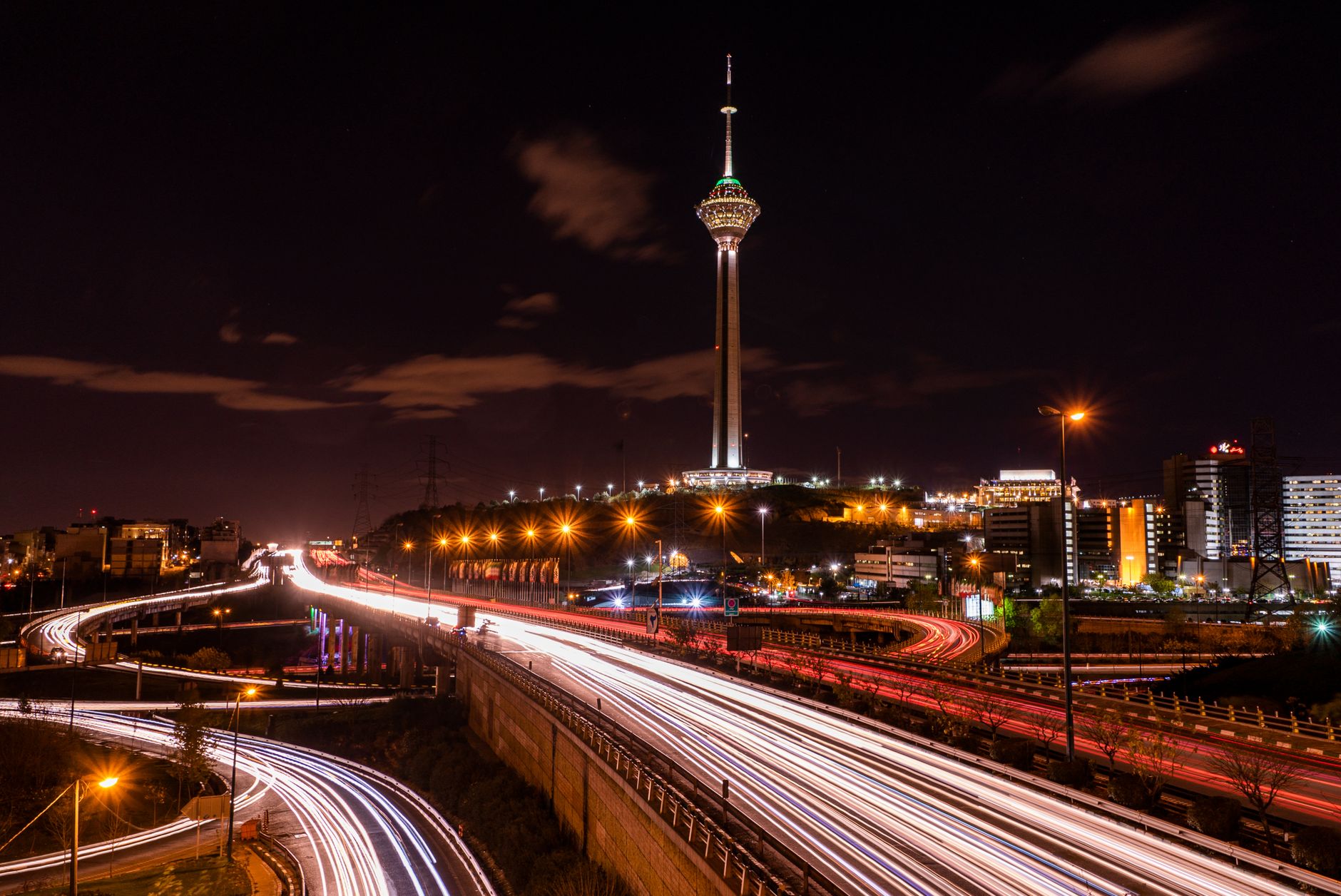
The 435-meter telecommunications tower finally pierced Tehran's skyline after years of delays. Its revolving restaurant offered views that made even cynical locals pause. For the first time the city could literally look down on itself.
- 2013
Golestan Joins UNESCO List
The palace complex where Qajar kings once held court received official world heritage status. The recognition came 227 years after Tehran became capital. Some locals joked it was the slowest promotion in bureaucratic history.
- 2014
Tabiat Bridge Opens
The three-level pedestrian bridge designed by Leila Araghian connected two parks across a highway. Tehranis immediately claimed it as their own, filling it with evening strollers and lovers. Concrete and steel somehow managed to feel gentle.
Who lived here
-
Founder of the Bahá'í Faith · 1817–1892
Bahá'u'lláh
Born in Tehran
Born into a noble family in 1817, he grew up in the city’s wealthy districts before renouncing privilege. The house where he first declared his mission still stands, though visitors rarely find it. Today’s Tehran, with its restless energy and quiet searches for meaning in crowded cafés, might feel strangely familiar to him.
-
Poet and filmmaker · 1935–1967
Forough Farrokhzad
Born and lived in Tehran
She walked these same streets writing verses that shattered polite silence about love, bodies and freedom. Her camera captured the raw faces of Tehran’s poor in The House is Black. Standing on Tabiat Bridge watching young couples ignore the dress code, you sense her rebellion quietly won.
-
Writer · 1903–1951
Sadegh Hedayat
Born and lived in Tehran
Hedayat wandered the Grand Bazaar’s covered lanes and sat in teahouses listening to storytellers while writing The Blind Owl. He saw the city’s contradictions earlier than most. The Tehran of 2026, still layering new concrete over old pains, continues the conversation he started.
-
Prime Minister and political leader · 1882–1967
Mohammad Mosaddegh
Born in Tehran
From his Tehran home he nationalized Iran’s oil and briefly gave the country its voice. The coup that removed him in 1953 still echoes in local conversations about sovereignty. Walking past the old parliament buildings, you can almost hear the crowds that once filled these streets for him.
Where to Eat
Where locals actually book dinner — not the tourist menus.
Insider tips
Small things that change how the city treats you.
Cash and Toman
Bring USD or EUR in crisp $100 bills. Exchange at the airport then clarify every quoted price in Toman, not Rial. One Toman equals ten Rial; locals drop a zero in conversation.VPN Before Arrival
Install a reliable VPN before landing. Internet censorship blocks Google, Instagram and WhatsApp without it. Tehran’s cafés stay open late but connectivity dies without this.Metro Over Traffic
Buy paper tickets at any station. Line 1 runs from Imam Khomeini Airport straight into the city and connects south bazaar to northern Darband in under an hour. Far cheaper and faster than Snapp during rush hour.Visit in April
April delivers 15–24 °C days and minimal pollution before summer heat and winter smog arrive. Nowruz crowds thin by mid-month, leaving Golestan Palace and Tabiat Bridge comfortably walkable.Order Dizi Right
At Dizi Sara ask for sangak bread and raw onion. Mash the lamb, chickpeas and broth together in the stone crock exactly as locals do. The rhythm of pestle on crock is half the meal.Darband at Sunset
Take a Snapp to Darband’s trailhead as light softens on the Alborz. Follow the river path 30 minutes to teahouses serving sour-cherry tea and lavashak. The mountain air smells of wild herbs.Photograph Discreetly
Skip government buildings and military sites entirely. Inside Golestan Palace the soft afternoon light through stained-glass windows creates jewel-like patterns on tiles worth any wait.
Gallery
The city, as it actually looks.




Watch


Frequently asked
Is Tehran worth visiting?
Yes, if you want to see Iran beyond the postcards. The city’s 17.2 km Vali-e Asr Street stitches together 200 years of architectural experiments while locals treat parks and cafés like living rooms. Once you accept the contradictions it becomes strangely addictive.
How many days do you need in Tehran?
Four days works for most people. Two for the historic core (Golestan Palace, Grand Bazaar, museums), one for north Tehran’s mountains and cafés, one for contemporary art galleries or a day trip to Saad Abad. Five days lets you slow down and people-watch on Tabiat Bridge at night.
How do you get from Imam Khomeini Airport to Tehran city center?
Take Metro Line 1 directly from the airport station. It costs almost nothing and drops you near the Grand Bazaar in about 50 minutes. Official airport taxis quoted at the stand run $25–45 equivalent while pre-booked private transfers start around $35.
Is Tehran safe for tourists in 2026?
Day-to-day safety is high for visitors who avoid political gatherings. Air pollution in winter poses a bigger health risk than street crime. Carry a passport photocopy, dress modestly, and use ride apps after dark. Hospitality usually outweighs official tensions.
How expensive is Tehran for travelers?
Very budget-friendly once you arrive. A metro ride costs pennies, a proper chelo kebab lunch under $4, and a night in a clean guesthouse around $25. The main cost is getting there and bringing enough cash since foreign cards don’t work.
Do I need a VPN in Tehran?
Yes. Install one before you land. Many everyday apps are throttled or blocked. Cafés rely on them too. A good VPN also protects against the occasional network sniffing that still happens.
Pick up where you left off
Saved and recently read places — kept on this device only.
Photo credits (12)
- Aref Sarkhosh — Pexels License (https://www.pexels.com/license/) — Source: https://www.pexels.com/photo/16386082/
- Kamran Gholami — Pexels License (https://www.pexels.com/license/) — Source: https://www.pexels.com/photo/3799176/
- Mehdi Salehi — Pexels License (https://www.pexels.com/license/) — Source: https://www.pexels.com/photo/31262146/
- Mehdi Khoshnejad — Pexels License (https://www.pexels.com/license/) — Source: https://www.pexels.com/photo/33716553/
- Mehdi Salehi — Pexels License (https://www.pexels.com/license/) — Source: https://www.pexels.com/photo/31468385/
- Majid Masajedi — Pexels License (https://www.pexels.com/license/) — Source: https://www.pexels.com/photo/9156149/
- Fariborz MP — Pexels License (https://www.pexels.com/license/) — Source: https://www.pexels.com/photo/10069745/
- Mehdi Salehi — Pexels License (https://www.pexels.com/license/) — Source: https://www.pexels.com/photo/31468394/
- Masih Shahbazi — Pexels License (https://www.pexels.com/license/) — Source: https://www.pexels.com/photo/8177153/
- Necati Ömer Karpuzoğlu — Pexels License (https://www.pexels.com/license/) — Source: https://www.pexels.com/photo/29786929/
- Nikki kian — Pexels License (https://www.pexels.com/license/) — Source: https://www.pexels.com/photo/29395714/
- Mehdi Salehi — Pexels License (https://www.pexels.com/license/) — Source: https://www.pexels.com/photo/31468386/
Photos may have been resized or cropped.