Discovering Susa: Iran's Ancient Gem
World Wonders
15 min
5K
ShushIran 32° N · 48° E Updated May 2026
Susa rises from 6,000 years of layered earth, where Elamite mounds, Achaemenid ruins, and Daniel's shrine still share one working city.
 Photo: Carole Raddato from Frankfurt, Germany · CC BY-SA 2.0
How does a city survive being burned, buried, rebuilt, and argued over for six thousand years? Susa in Shush, Iran, answers that question with low mounds of packed earth, broken column bases, and a river plain that still smells faintly of wet soil after rain. Visit because few places on earth let you stand where Elamite priests, Persian kings, Jewish storytellers, and modern pilgrims all tried to claim the same ground.
The first surprise is scale. UNESCO records show 27 layers of settlement stacked here from the late 5th millennium BCE to the 13th century CE, a vertical city history deeper than a ten-storey building is tall.
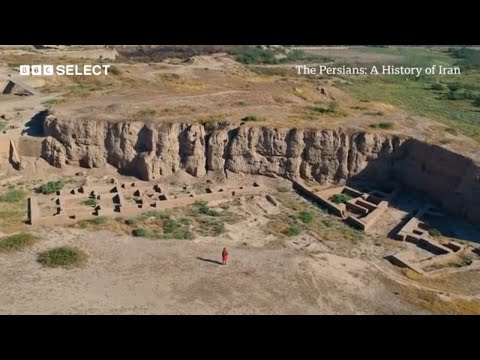
Walk the Apadana terrace and the site feels stripped down to essentials: sun on pale brick, wind moving across open excavations, silence broken by school groups and the call to prayer from modern Shush. Then your eye catches the geometry of column bases, each one a reminder that Darius I did not found Susa so much as seize an older sacred city and write himself into it.
And that is why Susa matters. This was never just an imperial capital or a biblical backdrop; it was a place people kept returning to when they needed power to look ancient, holy, and undeniable.
History
Records show Susa began as an important center in the late 5th millennium BCE, and the reason people kept coming back was almost embarrassingly simple: this patch of Khuzestan controlled a meeting point between Mesopotamia and the Iranian plateau. Trade came through, armies came through, and gods did not stay in their own districts for long.
What endured was the habit of treating this ground as a place where authority needed sacred backing. Elamite rulers tied the city to Inshushinak, Darius I raised his winter capital over older holy ground, and pilgrims in Shush still cross town to pray at the Tomb of Daniel, where devotion has continued since at least the early Islamic period according to local tradition and later written accounts.
The turning point
At first glance, tourists often take the Apadana ruins as the beginning of the story: Persian columns, royal scale, Darius the Great announcing empire in baked brick and stone. That version suits the king nicely. It makes Susa look like a polished Achaemenid stage set built for ceremony.
But the dates refuse to cooperate. Records show people lived here around two thousand years before Darius, and excavators found Elamite layers beneath the Persian platform; even Darius's own foundation texts describe leveling earlier structures. Something older stood in his way.
The revelation is political. Darius had seized the throne after a succession crisis, and legitimacy was personal for him, not abstract, so he chose an already sacred and ancient city rather than an empty field. He ordered workers and materials from across the empire — cedar from Lebanon, lapis from Sogdia, ivory from Kush, craftsmen from Ionia, Lydia, Egypt, and Elam — and the turning point came between 521 and 515 BCE, when he buried foundation tablets under the corners of the new hall as if staking a legal claim in the earth itself.
Once you know that, the broken columns change expression. You are not looking at the birth of Susa; you are looking at one ruler's argument with deep time, built on a platform as wide as a city block and meant to make a fragile king seem eternal.
Yes, if 6,000 years of urban history means more to you than polished ruins. Susa stacks 27 settlement layers from the late 5th millennium BCE to the 13th century CE, and Darius I built his Apadana right over older Elamite sacred ground. Go expecting column bases, wind over dust, and the odd thrill of standing where empires kept rewriting the same patch of earth.
Give Susa 3 to 4 hours if you want more than a hurried lap. That gives you time for the Apadana ruins, the museum, the French Castle area, and the Tomb of Daniel, all clustered within roughly 1 to 1.5 kilometers, about the length of a 15-minute city stroll. Pair it with Chogha Zanbil and the day is gone.
The easiest route from Ahvaz to Susa is by road, about 115 kilometers or roughly 1.5 hours. Shared taxis, buses, and private cars run the route, while the nearest major air link is Ahvaz Airport and the rail corridor connects through Shush as well. Once you arrive, the main ruins and shrine sit close enough to walk between.
Autumn, winter, and spring are best, with March to May and October to November giving you the kindest light and air. Summer in Khuzestan often climbs above 45°C, hot enough to turn a long archaeological visit into a survival exercise, so locals aim for dawn or late afternoon. After rain, the mudbrick layers darken and the site reads more clearly.
Usually no, and you should expect a small ticket fee for the archaeological site and museum. Recent visitor reports put foreign entry around $2 to $5 USD, while no recurring free-entry day appears in published site guidance. The Tomb of Daniel works differently because it functions as a living shrine, not just a ticketed ruin field.
Do not miss the Apadana platform, the museum’s glazed Achaemenid fragments, and the Tomb of Daniel. The Apadana once held 36 columns about 20 meters high, roughly a six-story building in cedar and stone, and the surviving bases still carry the weight of that vanished scale. Then step into the shrine, where mirrorwork catches the light in sharp silver flashes and the city stops feeling dead.
Built from cited sources · see the method · How we make our guides →
Saved and recently read places — kept on this device only.
Photos may have been resized or cropped.