Borobudur
MagelangIndonesia 7° S · 110° E Updated Jul 2026
Borobudur is only one part of a three-temple ritual axis, aligned with Mendut and Pawon across the Kedu Plain under a ring of volcanoes.
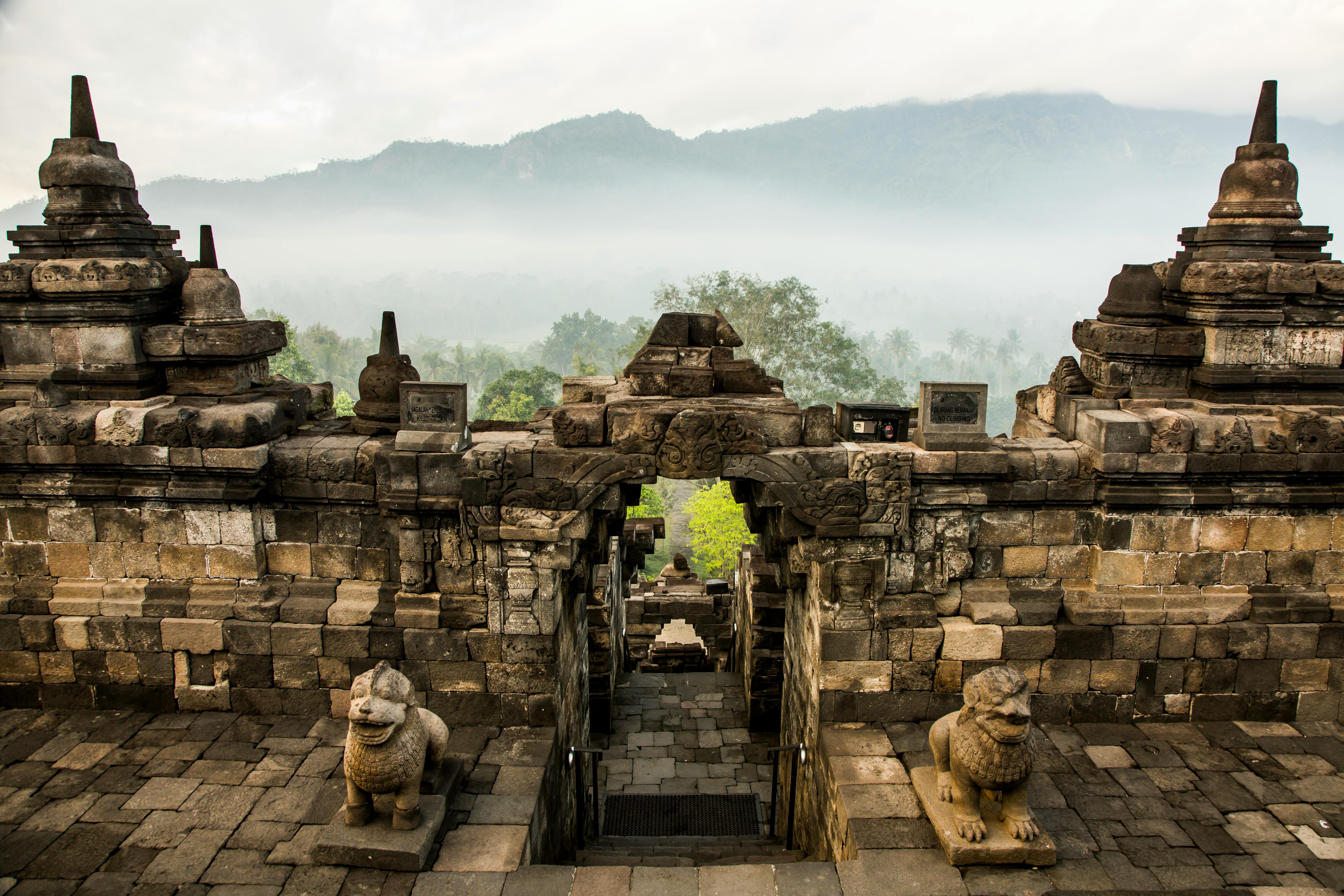 Photo: Charl Durand / Pexels
Why does Borobudur feel both ancient and oddly staged, as if the hill has been keeping part of its story from you? In Borobudur, Magelang, Indonesia, that tension is exactly why you should come: this is the largest Buddhist monument on earth, but it reads less like a ruin and more like a stone riddle. Dawn light slides across dark volcanic blocks, bells of nearby villages drift through the Kedu Plain, and the terraces rise ahead like a mountain taught to think.
Most visitors arrive expecting a single temple. Borobudur is stranger than that. UNESCO treats Borobudur, Pawon, and Mendut as one ceremonial line across the valley, a choreographed passage from one sacred point to the next rather than three unrelated monuments.
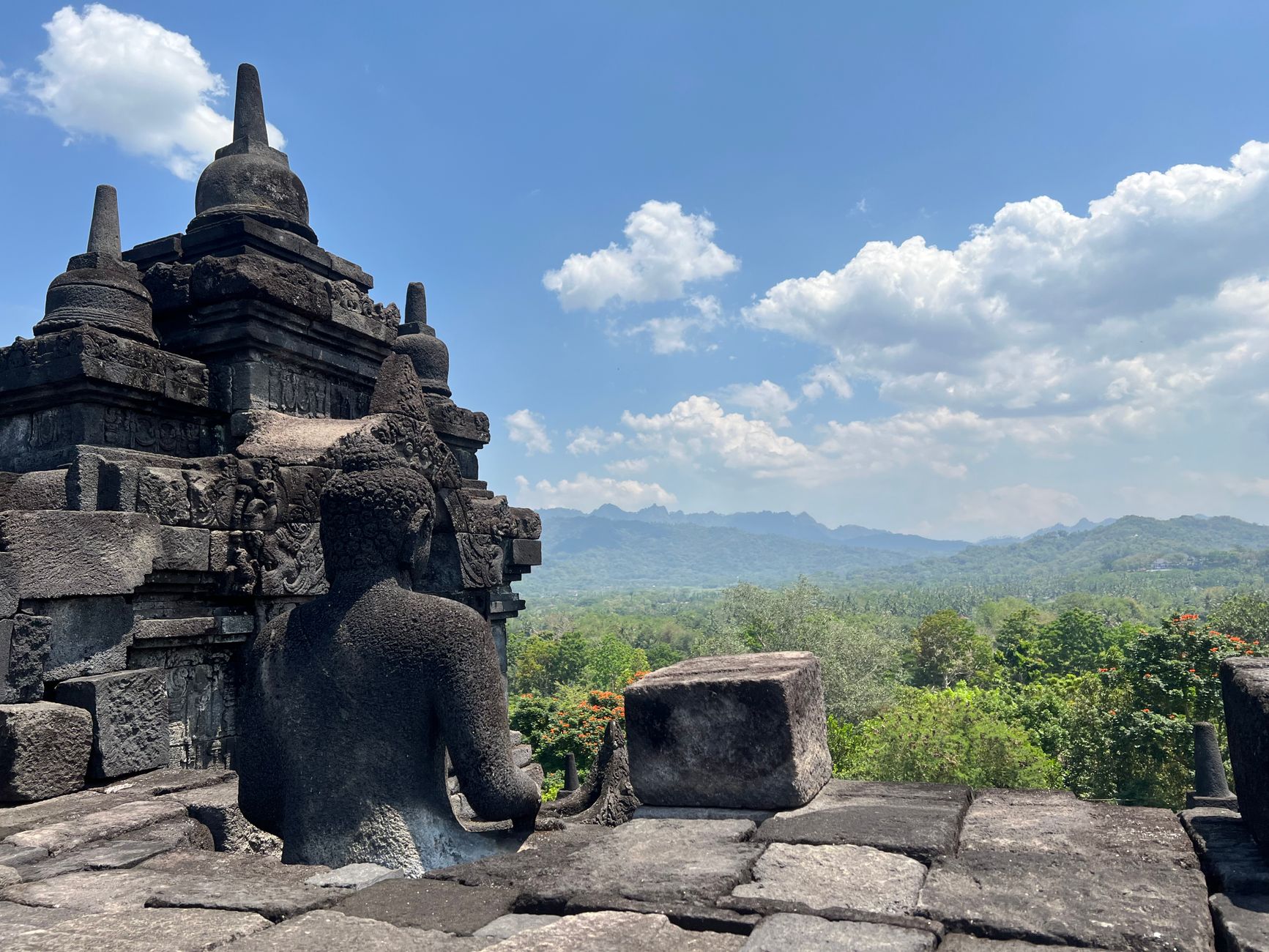
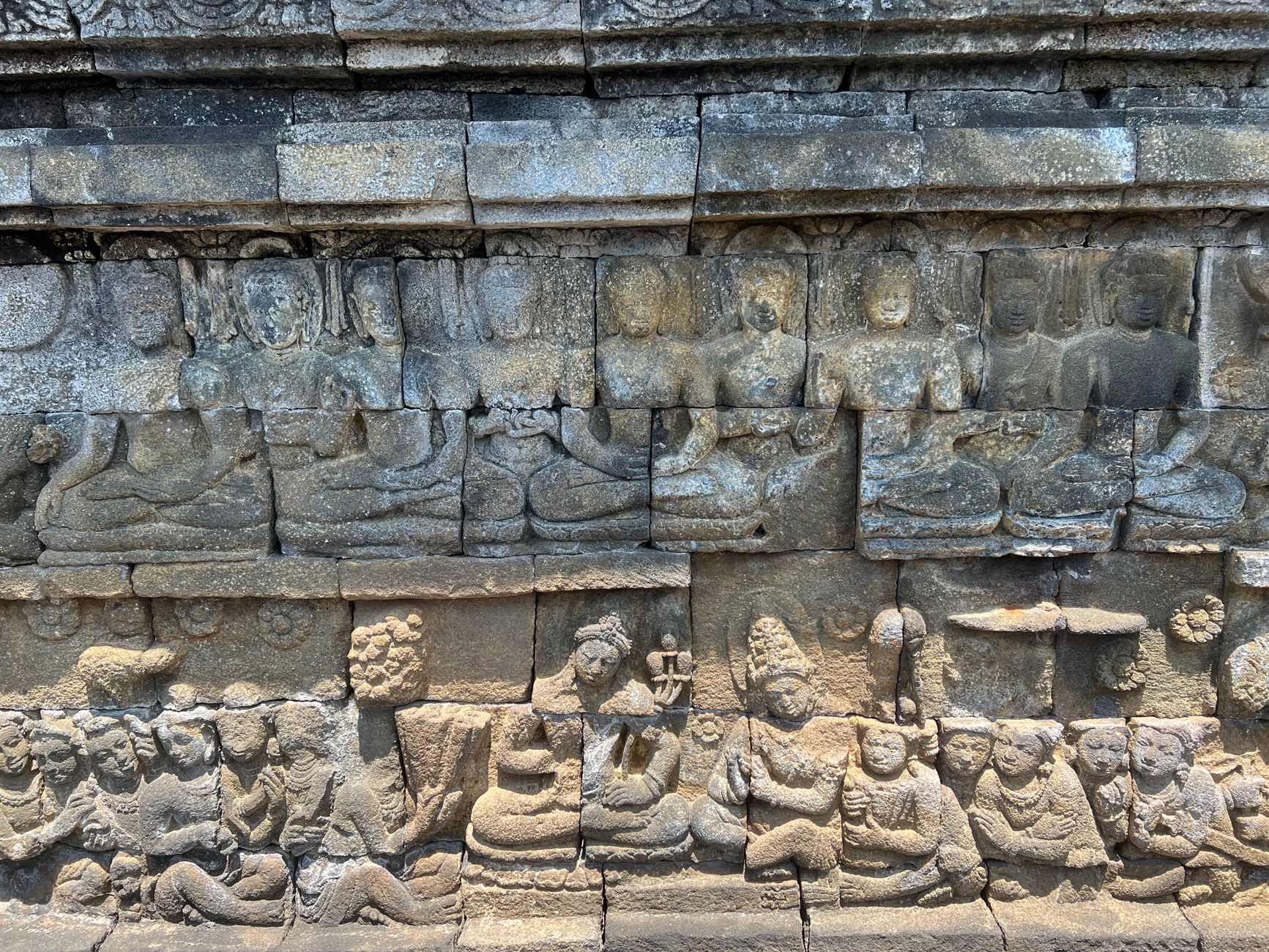
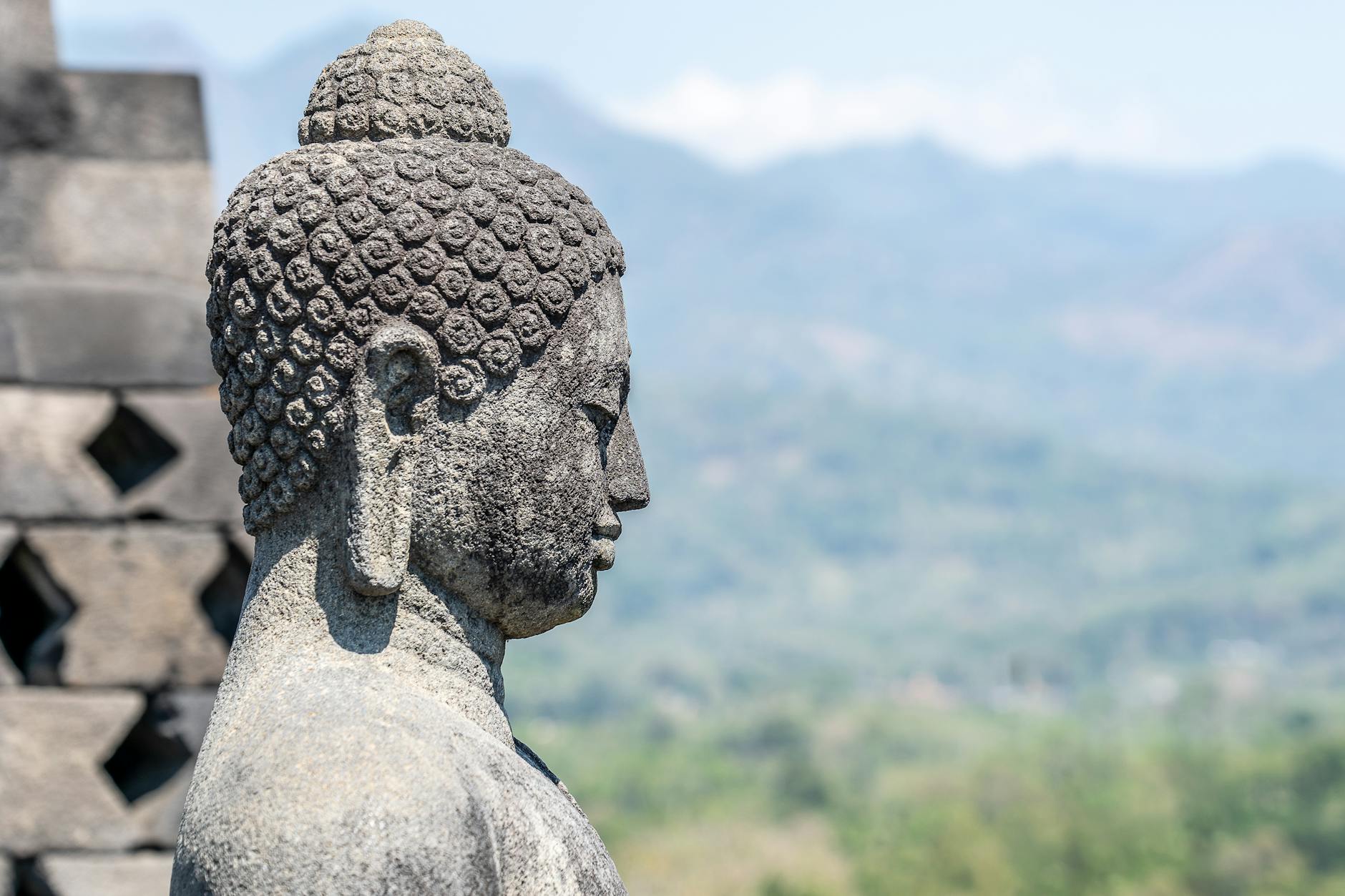
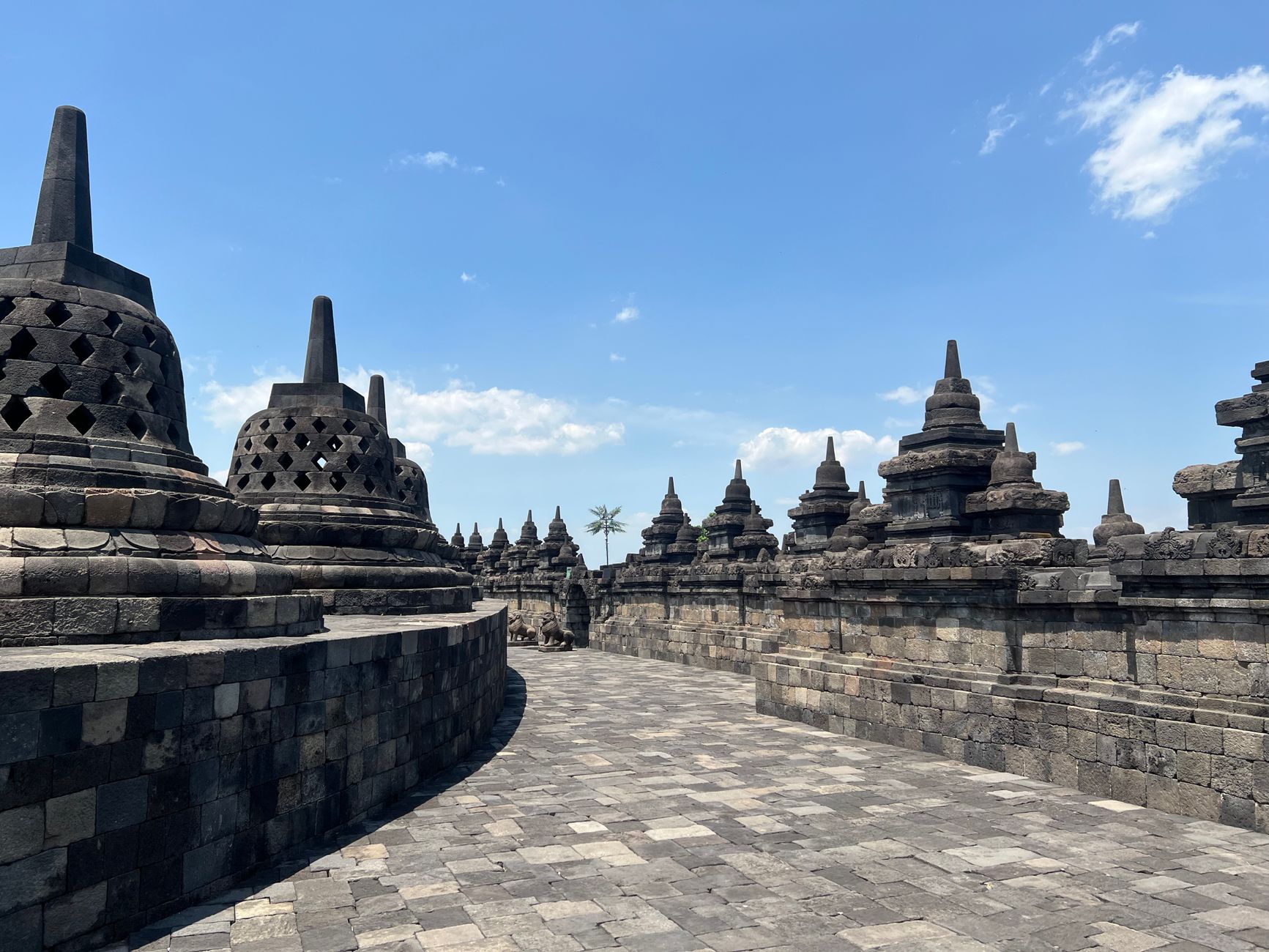
The stone does the seducing. More than 2,600 relief panels ripple with ships, courtly processions, punishments, temptations, and moments of release, while 72 perforated stupas crown the upper terraces like giant stone lanterns. Walk slowly. The monument was designed as movement, not backdrop.
And the setting matters. Borobudur rises in a basin shaped by volcanoes, monsoon water, and fertile fields, with Mount Merapi close enough to remind you that this masterpiece has always lived beside destruction. That friction gives the place its voltage.
What to see
-
Climb the Stone Mandala
Borobudur makes more sense from your feet than from any postcard. The monument rises through five square terraces and three circular platforms, all built in the 8th and 9th centuries under the Syailendra dynasty, so you feel the architecture change as you climb: tight relief corridors first, then sudden air and sky, with 72 perforated stupas spread across the upper terraces like a field of stone bells. Look closely at the andesite under morning light, gray as cooled lava at first, then honey-warm as the sun lifts, and notice how the galleries keep turning you back toward carved stories before the summit strips everything down to wind, distance, and one great central stupa. -
Karmawibhangga Museum
Most visitors leave with photos of the summit and miss the part that actually teaches them how to read the monument. The Karmawibhangga Museum gathers the hidden-foot reliefs, stone fragments, and restoration material that explain the base narrative of cause and effect, a layer largely concealed on the temple itself, so the visit feels less like a side stop than the key that turns the lock. Go after the climb, when your legs still remember the stairs, and the cool indoor air, the measured light, and the close view of the carvings make Borobudur feel less like an icon and more like a very deliberate piece of thought built in stone. -
Sunrise Ridge and Temple Circuit
Start before dawn at Punthuk Setumbu if you want Borobudur in its best mood, not its most famous queue. From that ridge the temple appears through mist with Mount Merapi and Mount Merbabu behind it, the whole mass sitting in the Kedu Valley like a chess piece placed by a patient god, then you can head down for the first temple session while the stone is still cool and footsteps still sound distinct on the stairs. That sequence matters. You first understand Borobudur as a shape in the landscape, then as a body you climb, and by the time you reach the open circular terraces the monument stops being an object to photograph and becomes a machine for changing your sense of scale.
Plan your visit
- Getting There
- Borobudur sits in Magelang, not Yogyakarta, and every route is by road. From central Yogyakarta, a car or ride-hail usually takes 1 to 1.5 hours; from YIA or Adisutjipto airports, plan on 1.5 to 2 hours. Public transport is slower but workable: buses run from Jombor Terminal toward Borobudur Terminal, and recent shuttle reports also place Sinar Jaya KSPN minibuses outside Bank Indonesia on Malioboro for about IDR 20,000 one way, then you still have 1 to 2 km to the gate by ojek, becak, dokar, or a 15 to 20 minute walk.
- Opening Hours
- As of 2026, the clearest official hours for climbing the temple structure are 08:30-17:00 WIB daily. Ground-level hours are less tidy across public pages, with official and tourism sources showing roughly 06:30 or 07:00 until late afternoon, and sunrise and sunset tickets start at 04:00 and 16:00. Recheck your exact ticket SKU before you go, especially around Vesak season: 31 May 2026 brought religious restrictions and shortened public access.
- Time Needed
- Give it 2 to 2.5 hours if you have a timed structure slot and move with purpose. A better visit takes 3 to 4 hours, which leaves room for the climb, the park, a museum stop, and a coffee while the stone still holds the morning cool. Slow travelers or anyone pairing the monument with nearby villages should budget 4 to 5 hours.
- Accessibility
- The grounds are the easier part: paved or compacted paths around the base are manageable for many wheelchair users and visitors with limited stamina, though the site is large and the heat can hit like a wall. The upper monument is another matter entirely, with steep stone stairs and no confirmed public elevator; as of 2026, even official discussion has stressed that no lift or escalator exists. If mobility is a concern, ask in advance about the Inner Circle Route with Papa Skuter rather than assuming the terraces are reachable.
- Cost And Tickets
- As of 2026, official sunrise and sunset tickets are clear: IDR 1,000,000 for international visitors and IDR 750,000 for domestic visitors, each capped at 100 people a day. Standard structure access is quota-based and includes a guide plus the mandatory Upanat sandals; widely cited 2026 figures put foreign structure tickets around IDR 455,000 and ground-only admission around IDR 375,000, but the operator's public pages do not display every live price consistently. Book through the official InJourney portal, especially for early slots and dry-season weekends.
Photo Gallery



History
A Monument Buried, Found, and Rewritten
Records and architecture place Borobudur in the 8th and 9th centuries, under the Sailendra dynasty, when Central Java was rich enough in rice, labor, and ambition to raise a stone mandala on a scale few Buddhist sites ever attempted. UNESCO confirms the broad date range, and the 824 Karangtengah inscription ties the court of King Samaratungga and Princess Pramodhawardhani to the same political world that produced it.
Then the monument slipped out of daily use between the 10th and 15th centuries. Scholars disagree on the exact trigger: volcanic ash from Merapi, a shift of political power to East Java, changing religious patterns, or all three working together. The silence lasted for centuries.
The turning point
The Temple You See Is Also a 19th- and 20th-Century Invention
At first glance, Borobudur seems to tell a simple story: a great Buddhist monument endured in place until the modern world finally appreciated it. That is the version most people absorb while climbing the terraces, especially when the stone looks so complete and self-possessed.
But one fact keeps needling that story. When Sir Thomas Stamford Raffles heard reports of a buried monument in 1804, Borobudur was not standing proudly above the plain; it lay choked by volcanic soil, vegetation, and local fear. Raffles had personal stakes in what Cornelius might find. As the British ruler of Java, he wanted proof that the island held a monumental past worthy of imperial study and his own reputation as a man of letters, not merely a colonial administrator passing through.
The turning point came when H.C. Cornelius, working with about 200 laborers, cut into the mound and carved terraces began to emerge from damp earth and roots. Records show the rediscovery was only the first reinvention. The monument was later dismantled and rebuilt in sections during the 20th-century UNESCO-backed restoration, and the protected park around it was cleared through the forced relocation of 425 households in the 1970s. The serene Borobudur of postcards exists because rulers kept remaking it: first Sailendra kings for devotion and dynastic display, then colonial surveyors for knowledge and prestige, then the modern Indonesian state for heritage and tourism.
Once you know that, the place changes. You stop seeing a survivor untouched by time and start seeing a monument repeatedly pulled back from disappearance, each rescue carrying a price. Even the stillness feels constructed.
The Years Underground
Preservation With a Human Cost
Tips for visitors
Go Early
Take the first structure slot you can get. By 11:00 the stone radiates heat like a griddle, and the broad terraces offer less shade than they look from below.Pair The Axis
Borobudur makes more sense when you treat it as part of the Borobudur-Mendut-Pawon line rather than a lone monument. Mendut works especially well on the same day, and it helps you feel the site as ritual geography instead of a famous pile of volcanic stone.Sacred Site Etiquette
The one rule published clearly is footwear: if you climb, you wear the provided Upanat sandals. Beyond that, dress respectfully, keep your voice low, and do not use worshippers or meditating visitors as photo props; the monument still carries prayer, not just foot traffic.Camera Limits
Phones and ordinary cameras are fine for personal use, but tripods, gimbals, drones, and commercial shoots are treated as restricted and may need prior permission. That matters here because a drone over Borobudur is less cinematic freedom than a fast way to annoy both staff and pilgrims.Eat Nearby
Skip the first random stall you see at the exit funnel unless you enjoy paying for haste. Better bets are Dapoer Gending Borobudur on Jl. Pramudyawardhani No. 19 for budget plates around Rp20,000, Benoa Borobudur Resto & Gallery on Jl. Balaputradewa No. 57 B for rice-field views and mains around Rp20,000-68,000, and Stupa Restaurant by Plataran for a calmer mid-range meal around Rp40,000-150,000.Watch The Souvenirs
The common hassle here is not violent crime but pushy selling and commission-driven detours, especially around exits and transport handoffs. Be skeptical of vendors pitching 'lava stone' pieces on the spot; some long-running reports say the souvenirs can be painted concrete wearing a volcanic costume.
Frequently asked
Is Borobudur worth visiting?
Yes, especially if you want a monument that feels less like a building and more like a stone mountain you climb with your body. UNESCO dates it to the 8th and 9th centuries under the Syailendra Dynasty, and the best part is the shift in feeling: tight relief corridors below, then open circular terraces above where 72 perforated stupas sit against the sky like giant stone lanterns.
How long do you need at Borobudur?
Plan 3 to 4 hours for a good visit. The official structure ticket is built around a 90-minute ascent, but you’ll want extra time for the grounds, the heat, and the Karmawibhangga Museum, which gives back the hidden base reliefs most people otherwise miss.
How do I get to Borobudur from Yogyakarta?
The simplest route is by road, either by car or shuttle, and most trips take about 1 to 1.5 hours depending on traffic. Public transport usually means a bus or shuttle from Yogyakarta toward Borobudur Terminal, then a last stretch of about 1 to 2 kilometers to the entrance, roughly the length of a 15 to 20 minute walk.
What is the best time to visit Borobudur?
Early morning wins. Dry season, usually May to October, gives you the cleanest views, while the first structure slot from 08:30 or the premium sunrise entry from 04:00 gives you cooler stone, thinner crowds, and mist that can make the temple seem to float above the Kedu Plain.
Can you visit Borobudur for free?
No, regular visitors should assume paid entry. Official ticketing separates Temple Ground, Temple Structure, Sunrise, and Sunset products, and while one May 29 to 31, 2026 festival listing was marked free, that applied to the event, not ordinary monument admission.
What should I not miss at Borobudur?
Don’t stop at the summit selfies. The square galleries carry the narrative reliefs where the monument actually speaks, the upper terraces reward you with the famous 72 lattice stupas, and the Karmawibhangga Museum helps you understand the hidden-foot carvings that visitors walk over without seeing.
Sources & attribution 9
- UNESCO World Heritage Centre — Used for Borobudur’s World Heritage status, 8th-9th century dating, the Borobudur-Mendut-Pawon compound, and the monument’s overall architectural form including the circular terraces and 72 stupas.
- InJourney Destination Ticket Portal — Used for current official ticket categories and confirmation that visits are managed through separate ground, structure, sunrise, and sunset products.
- InJourney Borobudur Temple — Used for official structure-visit timing, the 90-minute session context, and the requirement that climbers wear provided Upanat sandals.
- InJourney Borobudur Sunrise — Used for the 04:00 sunrise start time and the premium early-entry context.
- Indonesia Travel — Used for broader official visitor information including best planning context, transport from Yogyakarta, and seasonal visit guidance.
- Bimas Buddha Kemenag — Used for the Buddhist cosmological layout, the hidden-foot relief context, and detailed interpretation of what visitors should look for on the monument.
- Minimalist Journeys — Used for practical transport detail from Yogyakarta, walking distances from Borobudur Terminal, and realistic visit duration on the ground.
- Borobudur Tickets Visitor Guide — Used for practical planning guidance on heat, crowd timing, dry versus wet season patterns, and why the first session is usually the best choice.
- Indonesia Travel Festival Listing — Used for the note that a free festival listing existed in late May 2026, distinct from normal monument admission.
Built from cited sources · see the method · How we make our guides →
Pick up where you left off
Saved and recently read places — kept on this device only.
Photo credits (14)
- Charl Durand — Pexels License (https://www.pexels.com/license/) — Source: https://www.pexels.com/photo/6476719/
- Adrian Campillos — Pexels License (https://www.pexels.com/license/) — Source: https://www.pexels.com/photo/6109263/
- Vasilis Karkalas — Pexels License (https://www.pexels.com/license/) — Source: https://www.pexels.com/photo/34495902/
- Vasilis Karkalas — Pexels License (https://www.pexels.com/license/) — Source: https://www.pexels.com/photo/34495900/
- 明珠 梁 — Pexels License (https://www.pexels.com/license/) — Source: https://www.pexels.com/photo/34034317/
- Utkarsh Malviya — Pexels License (https://www.pexels.com/license/) — Source: https://www.pexels.com/photo/30559339/
- syafiudin vifick — Pexels License (https://www.pexels.com/license/) — Source: https://www.pexels.com/photo/38687173/
- 明珠 梁 — Pexels License (https://www.pexels.com/license/) — Source: https://www.pexels.com/photo/34034324/
- Charl Durand — Pexels License (https://www.pexels.com/license/) — Source: https://www.pexels.com/photo/6476728/
- Mike van Schoonderwalt — Pexels License (https://www.pexels.com/license/) — Source: https://www.pexels.com/photo/5505480/
- 明珠 梁 — Pexels License (https://www.pexels.com/license/) — Source: https://www.pexels.com/photo/34034313/
- Mike van Schoonderwalt — Pexels License (https://www.pexels.com/license/) — Source: https://www.pexels.com/photo/5505490/
- 明珠 梁 — Pexels License (https://www.pexels.com/license/) — Source: https://www.pexels.com/photo/34034297/
- Tokuo Nobuhiro — Pexels License (https://www.pexels.com/license/) — Source: https://www.pexels.com/photo/15065349/
Photos may have been resized or cropped.