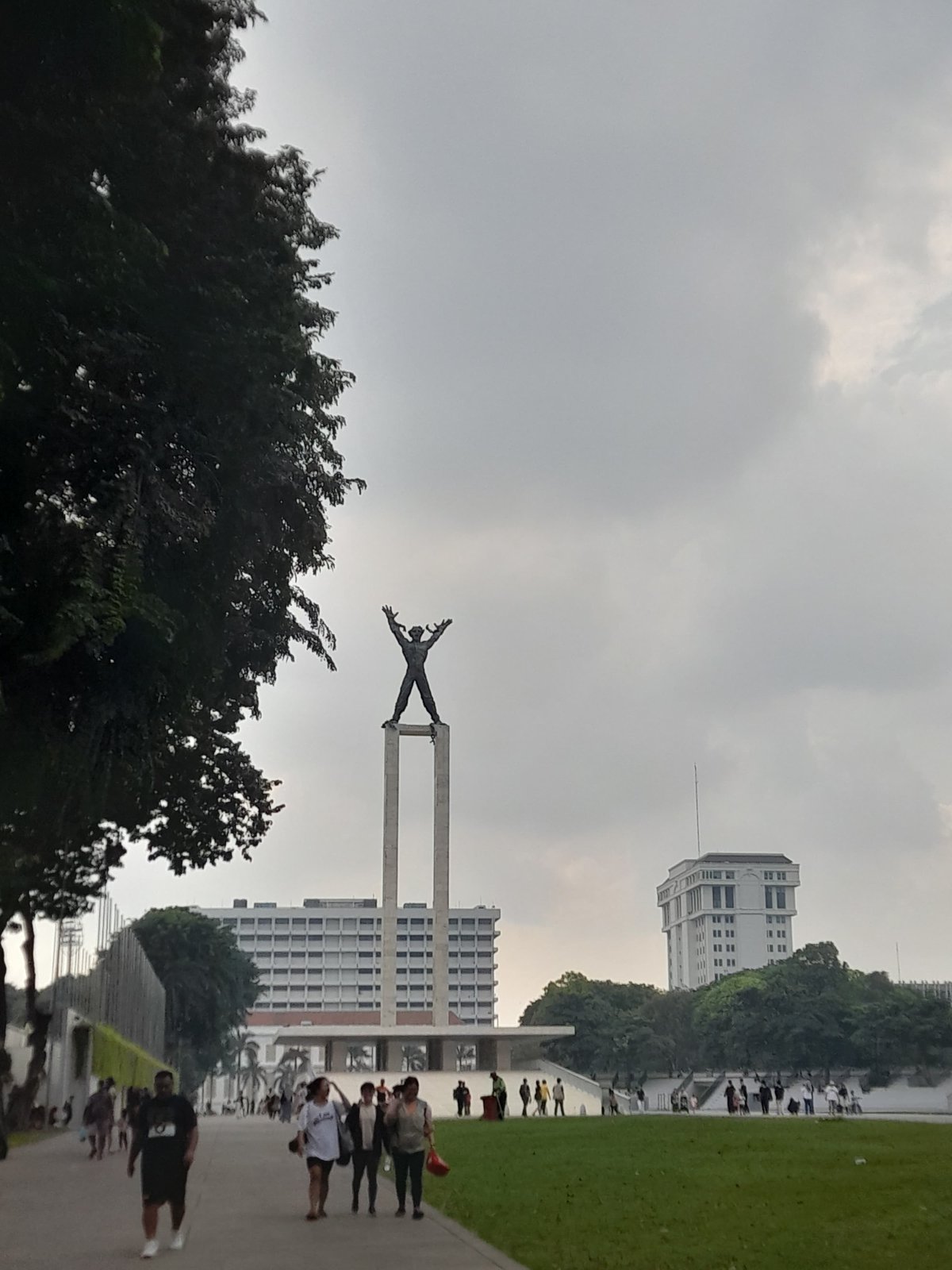
Plan and listen to West Irian Liberation Monument with Audiala.
Audio guide in your pocket, itinerary in your browser. Built for the way you actually visit.
Introduction to the Pembebasan Irian Jaya Monument
The Pembebasan Irian Jaya Monument, also known as the West Irian Liberation Monument, stands prominently in Jakarta, Indonesia, as a testament to the nation's struggle for sovereignty and unity. Commissioned by President Sukarno in the early 1960s, this monumental structure was built to commemorate Indonesia's successful efforts to reclaim West Irian (now Papua) from Dutch colonial rule. Completed in 1963, it symbolizes the nation's triumph and the enduring spirit of independence (Jakarta Tourism).
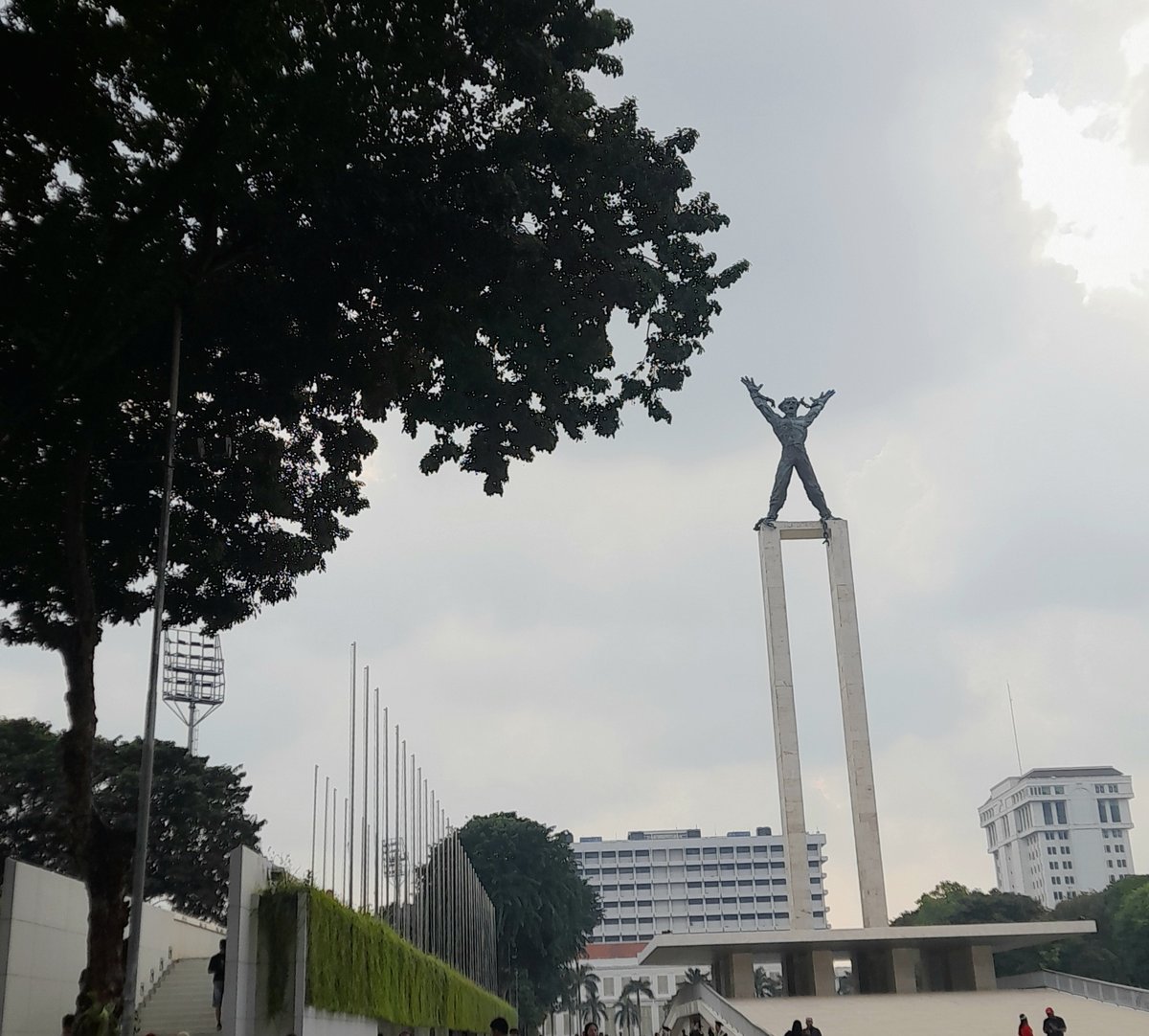
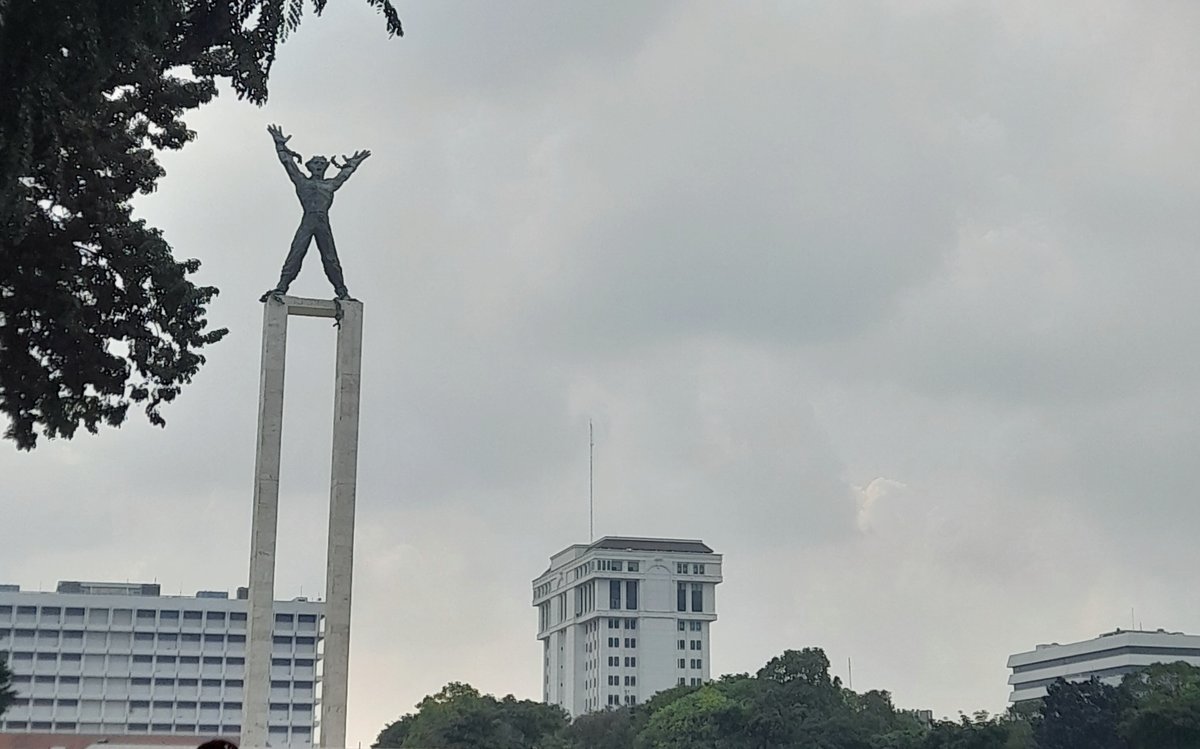
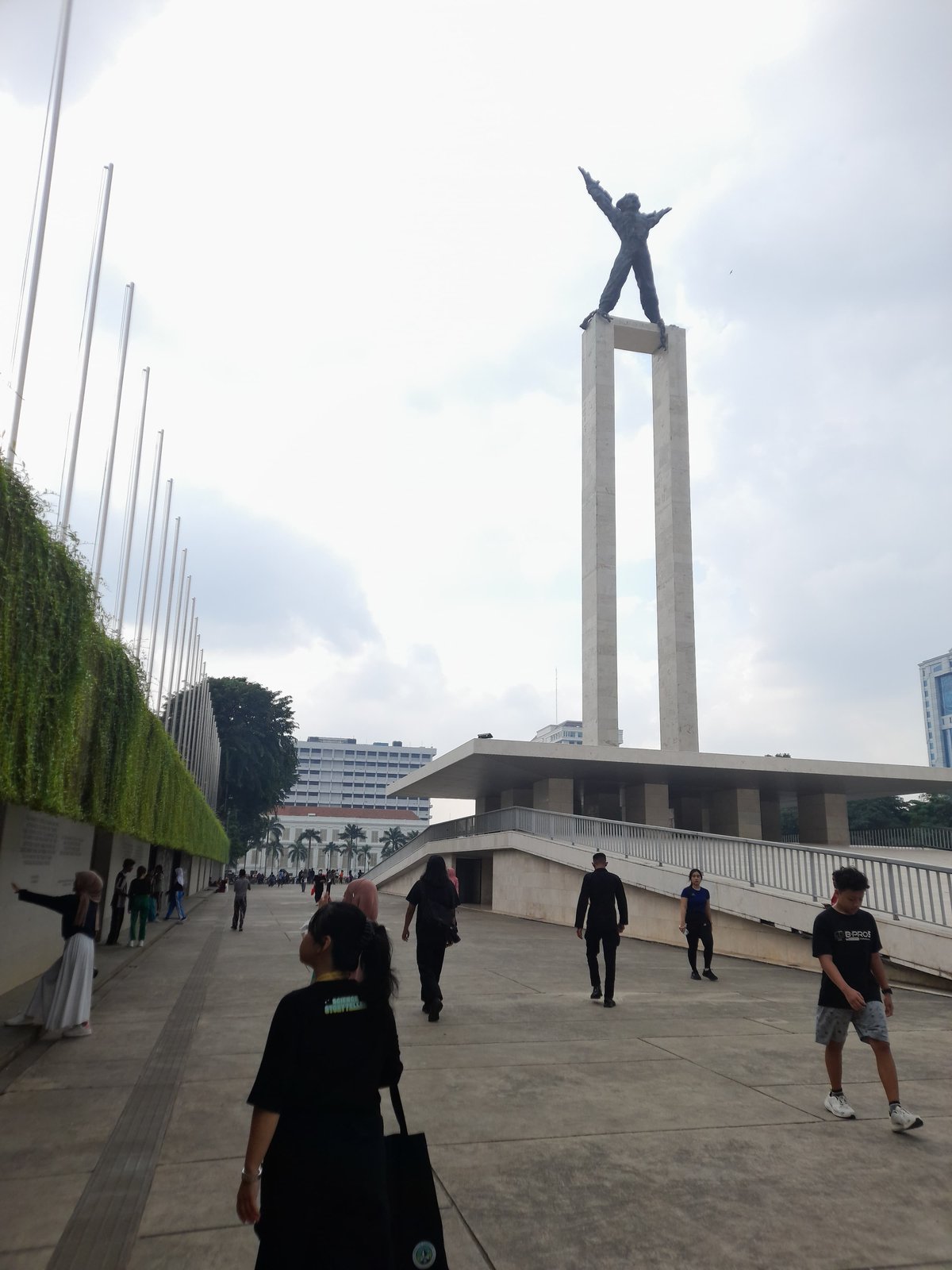
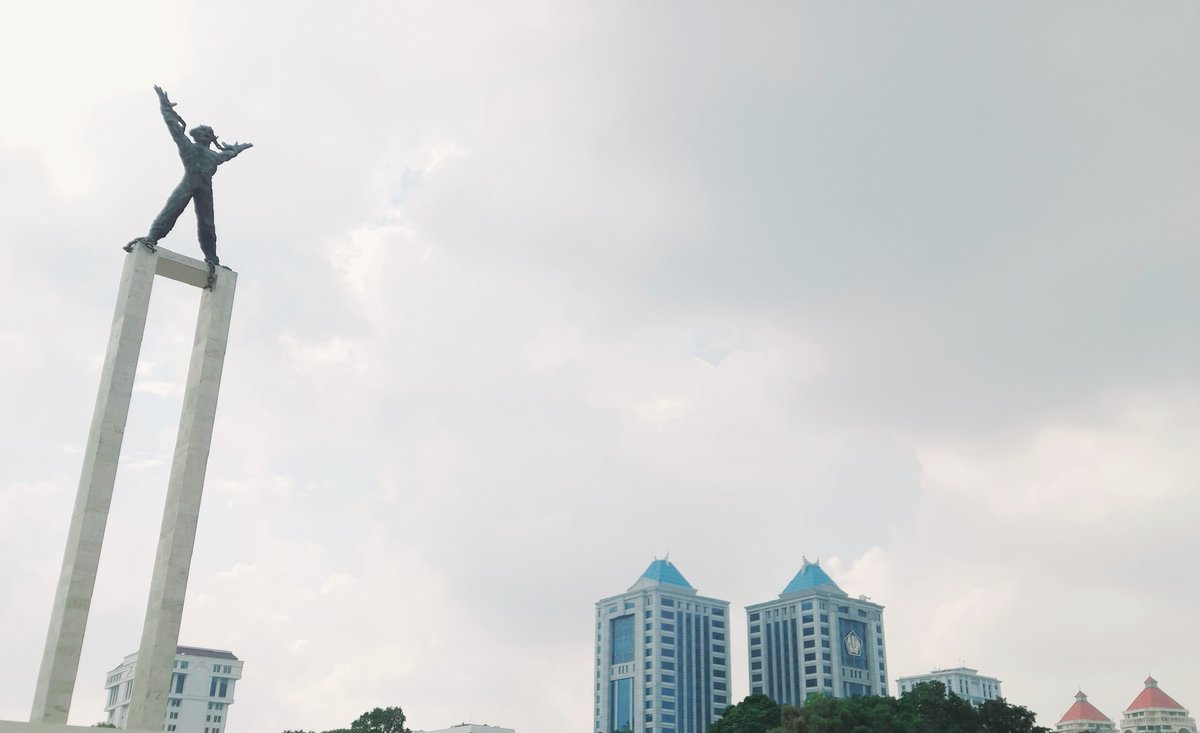
Designed by renowned Indonesian sculptor Edhi Sunarso, the monument features a striking bronze statue of a muscular man breaking free from chains, embodying the liberation of the Papuan people from colonial oppression. The 11-meter-tall statue stands on a pedestal adorned with reliefs depicting pivotal scenes from the struggle for West Irian's integration into Indonesia. This powerful imagery reflects the monumental effort and high stakes involved in the liberation movement (Indonesia Travel).
The Pembebasan Irian Jaya Monument is not merely a historical landmark; it is a cultural and educational focal point. It plays a significant role in national celebrations, particularly on Indonesia's Independence Day, and serves as a popular site for educational tours. Visitors to the monument can gain a profound understanding of the historical events that shaped Indonesia's national identity, making it a must-visit destination for anyone interested in the country's rich history and cultural heritage (National Monument).

Historical Background
Origins and Construction
The Pembebasan Irian Jaya Monument was commissioned by President Sukarno in the early 1960s to commemorate Indonesia's struggle to reclaim West Irian (now Papua) from Dutch colonial rule. The construction began in 1962 and was completed in 1963, symbolizing the nation's triumph and the spirit of independence.
Symbolism and Design
The monument's design is profoundly symbolic. It features a towering bronze statue of a muscular man breaking free from chains, representing the liberation of the Papuan people from colonial oppression. The statue stands on a pedestal adorned with reliefs depicting scenes from the struggle for West Irian's integration into Indonesia. The monument's height, approximately 11 meters, signifies the monumental effort and the high stakes involved in the liberation movement.
Historical Context
After declaring independence from the Netherlands in 1945, Indonesia faced numerous challenges in consolidating its territorial integrity. West Irian remained under Dutch control, leading to a prolonged diplomatic and military struggle. The New York Agreement of 1962, brokered by the United Nations, facilitated the transfer of West Irian to Indonesia, culminating in the Act of Free Choice in 1969, where the region was formally integrated into Indonesia.
Political Significance
The monument not only commemorates a pivotal moment in Indonesian history but also serves as a testament to the nation's resilience and determination. It reflects President Sukarno's vision of a united Indonesia and his efforts to galvanize national pride and unity. The monument's unveiling was a significant event, attended by dignitaries and citizens alike, symbolizing the collective achievement of the Indonesian people.
Cultural Impact
The Pembebasan Irian Jaya Monument has become an iconic symbol of Jakarta and a focal point for national celebrations, particularly on Indonesia's Independence Day. It is a popular site for educational tours, where students and visitors learn about the historical events leading to the liberation of West Irian. The monument also features prominently in cultural and artistic representations, including literature, films, and visual arts, further embedding its significance in the national consciousness.
Preservation and Maintenance
Over the years, the monument has undergone several restoration and maintenance efforts to preserve its structural integrity and aesthetic appeal. The Jakarta city government, in collaboration with cultural heritage organizations, has implemented measures to protect the monument from environmental damage and vandalism. These efforts ensure that the monument remains a lasting tribute to Indonesia's historical legacy.
Visitor Information
Visiting Hours and Tickets
The monument is open to visitors daily from 8 AM to 5 PM. Admission is free, making it an accessible destination for all.
Travel Tips
The monument is easily accessible by public transportation, with several bus and train routes passing nearby. It is advisable to visit early in the day to avoid the afternoon heat and crowds.
Accessibility
The site is wheelchair accessible, with ramps and designated paths ensuring that all visitors can comfortably explore the area.
Nearby Attractions
Visitors can also explore nearby attractions such as the National Monument (Monas), the National Museum, and Merdeka Square, making it possible to plan a comprehensive historical tour of Jakarta.
Visitor Experience
Park and Surroundings
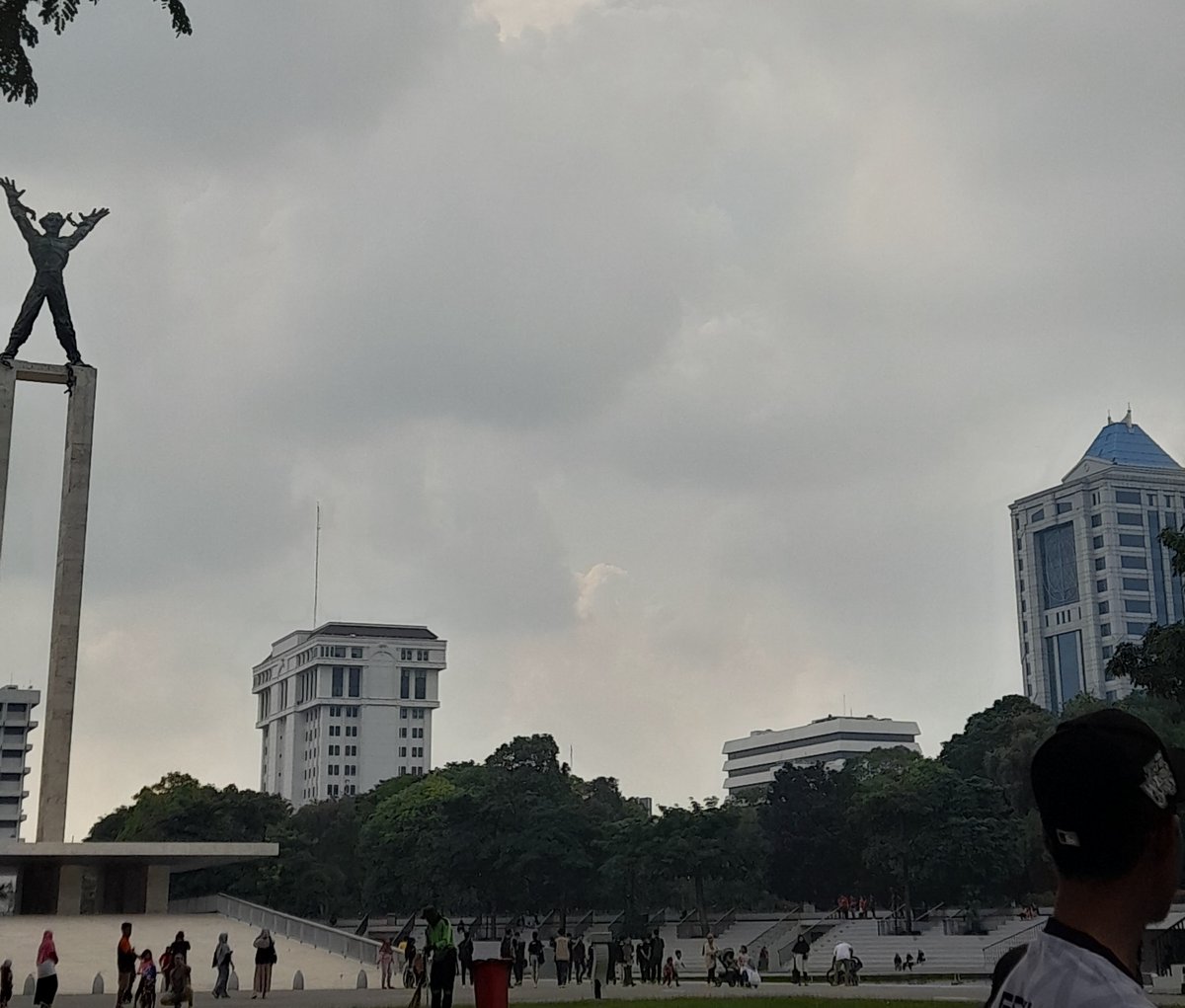
Visitors can explore the surrounding park, which offers a serene environment for reflection and relaxation. Informational plaques and guided tours provide insights into the monument's history and significance.
Informational Plaques and Guided Tours
Informational plaques are strategically placed around the monument, offering detailed descriptions of its historical background. Guided tours are available for a more in-depth understanding.
Educational Programs and Commemorative Events
Educational Programs
Schools and universities incorporate visits to the monument into their history and civics curricula. Special programs and exhibitions are often organized to commemorate significant anniversaries related to the West Irian liberation.
Commemorative Events
The monument is a central venue for commemorative events, including wreath-laying ceremonies and cultural performances. These events attract participants from various sectors of society, fostering a sense of national unity and pride.
Future Prospects
Future Plans for the Monument
Future plans for the monument include the development of a dedicated museum and visitor center, which will offer interactive exhibits and multimedia presentations, enhancing the educational and cultural experience for visitors.
FAQ Section
What are the visiting hours for the Pembebasan Irian Jaya Monument?
The monument is open daily from 8 AM to 5 PM.
Is there an admission fee?
No, admission to the monument is free.
How can I get to the monument?
The monument is easily accessible by public transportation, with several bus and train routes passing nearby.
Are there guided tours available?
Yes, guided tours are available for visitors who wish to gain a deeper understanding of the monument's history and significance.
What other attractions are nearby?
Nearby attractions include the National Monument (Monas), the National Museum, and Merdeka Square.
Listen to the full story in the app
The whole West Irian Liberation Monument,
told well.
Audio guides for 1,100+ cities across 96 countries. History, stories, and local insight — offline ready.
Verified, and shown.
Researched and written by the Audiala editorial team from historical records, architectural archives, and local expertise.
Researched from Wikidata, Wikipedia & official sources · fact-checked · How we make our guides →