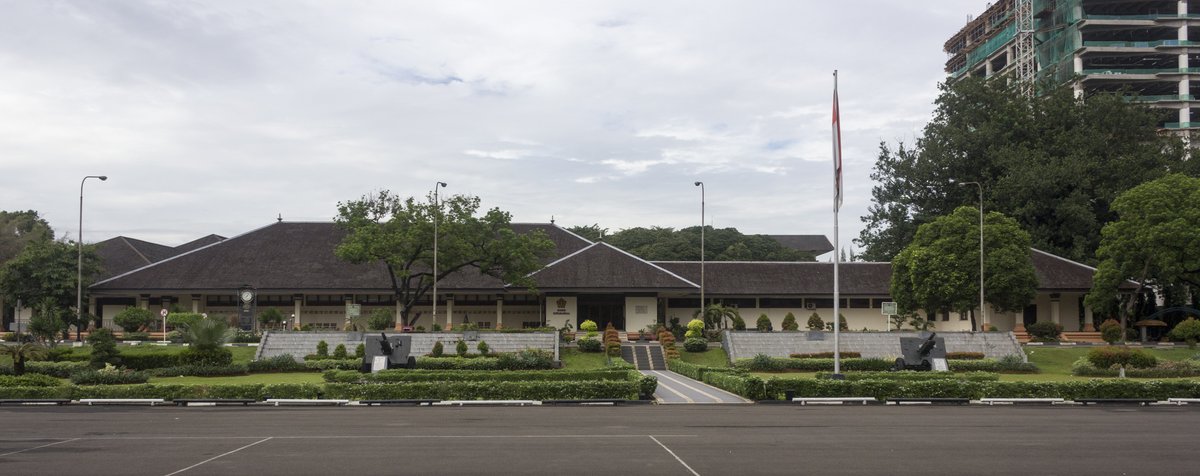
Plan and listen to Museum Perumusan Naskah Proklamasi with Audiala.
Audio guide in your pocket, itinerary in your browser. Built for the way you actually visit.
Introduction
Masjid Sunda Kelapa, situated in the historic Menteng area of Central Jakarta, Indonesia, stands as a testament to the city's rich cultural and religious heritage. Inaugurated on March 31, 1971, by Jakarta's then Governor Ali Sadikin, the mosque derives its name from the Sunda Kelapa harbor, a crucial port during the pre-colonial era named after the Sunda Kingdom (Jakarta Post). The mosque is renowned for its modernist architectural design by architect R. M. Soedarsono and its role as a hub of community service, cultural exchange, and interfaith dialogue (ArchDaily). This guide aims to provide visitors with detailed information on the history, significance, and practical aspects of visiting Masjid Sunda Kelapa for a respectful and enriching experience.

History and Significance
Historical Background
Masjid Sunda Kelapa, located in the Menteng area of Central Jakarta, Indonesia, is a significant religious and cultural landmark. The mosque was inaugurated on March 31, 1971, by the then Governor of Jakarta, Ali Sadikin. The name "Sunda Kelapa" is derived from the old port of Jakarta, which was a bustling trade hub during the pre-colonial era. The port itself was named after the Sunda Kingdom, which ruled the region before the arrival of European colonizers (Jakarta Post).
Architectural Significance
The architectural design of Masjid Sunda Kelapa is unique and modern, distinguishing it from other mosques in Jakarta. The mosque was designed by architect R. M. Soedarsono, who incorporated elements of traditional Indonesian architecture with modernist influences. The mosque's structure is characterized by its minimalist design, featuring clean lines and an open, airy prayer hall. The absence of a dome, which is a common feature in many mosques, sets Masjid Sunda Kelapa apart, symbolizing a break from traditional Islamic architectural norms (ArchDaily).
Cultural and Religious Importance
Role in Jakarta's Islamic Heritage
The establishment of Masjid Sunda Kelapa was part of a broader effort to promote Islamic heritage and culture in Jakarta. The mosque's location in Menteng, a historically significant and affluent neighborhood, underscores its importance in the city's religious landscape. Over the years, the mosque has played a pivotal role in the Islamic education of Jakarta's youth, offering various programs and activities aimed at nurturing a deeper understanding of the faith (Indonesia Expat).
Community Engagement and Social Services
Masjid Sunda Kelapa is renowned for its active engagement in community service and social welfare programs. The mosque operates a charitable foundation that provides assistance to underprivileged families, including food distribution, healthcare services, and educational support. These initiatives reflect the mosque's commitment to the principles of social justice and compassion, which are central to Islamic teachings (Kompas).
Interfaith Dialogue and Harmony
In addition to its religious functions, Masjid Sunda Kelapa has been a proponent of interfaith dialogue and harmony. The mosque frequently hosts events and discussions that bring together people of different faiths to promote mutual understanding and respect. This inclusive approach has helped to foster a sense of community and cooperation among Jakarta's diverse population, contributing to the city's social cohesion (The Jakarta Post).
Preservation and Conservation Efforts
Given its historical and cultural significance, efforts have been made to preserve and maintain Masjid Sunda Kelapa. The mosque's management has undertaken various conservation projects to ensure that the structure remains in good condition for future generations. These efforts include regular maintenance, restoration of architectural features, and the implementation of sustainable practices to reduce the mosque's environmental impact (Tempo).
Educational Programs and Initiatives
Masjid Sunda Kelapa is also a hub for educational activities, offering a range of programs aimed at enhancing the knowledge and skills of its community members. The mosque runs a madrasa (Islamic school) that provides religious education to children and adults alike. Additionally, the mosque organizes workshops and seminars on various topics, including Islamic finance, health, and family life, helping to equip individuals with practical knowledge and skills (Republika).
Visitor Information
Visiting Hours and Tickets
Masjid Sunda Kelapa is open to visitors throughout the week. The visiting hours are from 8:00 AM to 6:00 PM. There is no entrance fee, but donations are welcome to support the mosque's maintenance and community programs.
Accessibility and Facilities
The mosque is wheelchair accessible and provides facilities such as restrooms, ablution areas, and a parking lot. Guided tours are available upon request, and informational materials are provided in multiple languages to accommodate international visitors.
Travel Tips and Nearby Attractions
When visiting Masjid Sunda Kelapa, it is advisable to dress modestly and respect the ongoing religious activities. Nearby attractions include the National Monument (Monas), Taman Suropati, and the Jakarta Cathedral, which offer additional insights into Jakarta's rich cultural fabric.
Impact on Local and International Tourism
Masjid Sunda Kelapa has become a popular destination for both local and international tourists. Visitors are drawn to the mosque not only for its religious significance but also for its architectural beauty and serene atmosphere. The mosque's management has made efforts to accommodate tourists by providing guided tours and informational materials in multiple languages. This has helped to raise awareness about the mosque's history and significance, attracting a diverse range of visitors from around the world (Jakarta Tourism).
Future Prospects and Developments
Looking ahead, Masjid Sunda Kelapa aims to continue its mission of serving the community and promoting Islamic values. Plans are underway to expand the mosque's facilities and enhance its programs to better meet the needs of its growing congregation. These developments are expected to further solidify the mosque's role as a cornerstone of Jakarta's religious and cultural landscape (Antara News).
FAQ
What are the visiting hours for Masjid Sunda Kelapa? The mosque is open from 8:00 AM to 6:00 PM every day.
Is there an entrance fee to visit Masjid Sunda Kelapa? No, there is no entrance fee, but donations are welcome.
Are guided tours available? Yes, guided tours are available upon request.
Is the mosque wheelchair accessible? Yes, the mosque is wheelchair accessible.
Listen to the full story in the app
The whole Museum Perumusan Naskah Proklamasi,
told well.
Audio guides for 1,100+ cities across 96 countries. History, stories, and local insight — offline ready.
Verified, and shown.
Researched and written by the Audiala editorial team from historical records, architectural archives, and local expertise.
2024
2024
2024
2024
2024
2024
2024
2024
2024
Researched from Wikidata, Wikipedia & official sources · fact-checked · How we make our guides →