Historical and Mythological Context
The Legend of Bhalka Tirth
Bhalka Tirth is renowned as the site where Lord Krishna was mistakenly struck by the hunter Jara’s arrow, a pivotal moment marking the end of the Dvapara Yuga and the onset of the Kali Yuga. Hindu scriptures like the Mahabharata and Puranas narrate how Krishna, resting under a peepal tree, was mistaken for a deer by Jara, who shot an arrow at his foot. Upon realizing his error, Jara sought forgiveness, and Krishna granted it, exemplifying themes of compassion, forgiveness, and the cyclical nature of life and death (omastrology.com). The term “Bhalka” itself means “arrow” in Sanskrit, symbolizing the event’s significance.
Associated Sites
- Dehotsarg Teerth Located about 2 km from Bhalka, believed to be the place where Krishna relinquished his mortal body. The site features Krishna's carved footprint and lies on the banks of the sacred Hiran River, where pilgrims perform rituals (The Hindu Tales).
Religious Significance and Rituals
Bhalka Tirth is a prominent stop on the Dwarka–Somnath pilgrimage circuit, embodying the confluence of Vaishnavite (Krishna) and Shaivite (Shiva) traditions. Devotees believe that visiting Bhalka Tirth and participating in rituals here brings spiritual merit, forgiveness, and the potential for liberation (moksha) (trawell.in).
Rituals and Offerings
- Daily Aarti and Bhog Devotional songs and food offerings are performed in honor of Krishna.
- Abhishekam Ritual bathing of the Krishna idol.
- Special Ceremonies During Janmashtami and other major festivals, the temple hosts grand celebrations with bhajans, cultural performances, and communal meals (TravelSetu).
- Pind Daan Pilgrims conduct ancestral rites at the Hiran River near Dehotsarg Teerth.
Bhalka Tirth Temple Complex & Key Features
Main Attractions
- Sanctum Sanctorum Houses the blue marble idol of Krishna in a reclining pose, symbolizing his transcendence.
- Sacred Peepal Tree The legendary spot where Krishna was struck by Jara’s arrow.
- Interpretive Signage Multilingual boards detailing the legend and historical context (gujaratdarshanguide.com).
- Prayer Hall Venue for group prayers and bhajans.
- Nearby Shrines Including those dedicated to Goddess Hinglaj and Baldev Cave, believed to be where Krishna’s brother Balaram departed from the mortal world.
Atmosphere
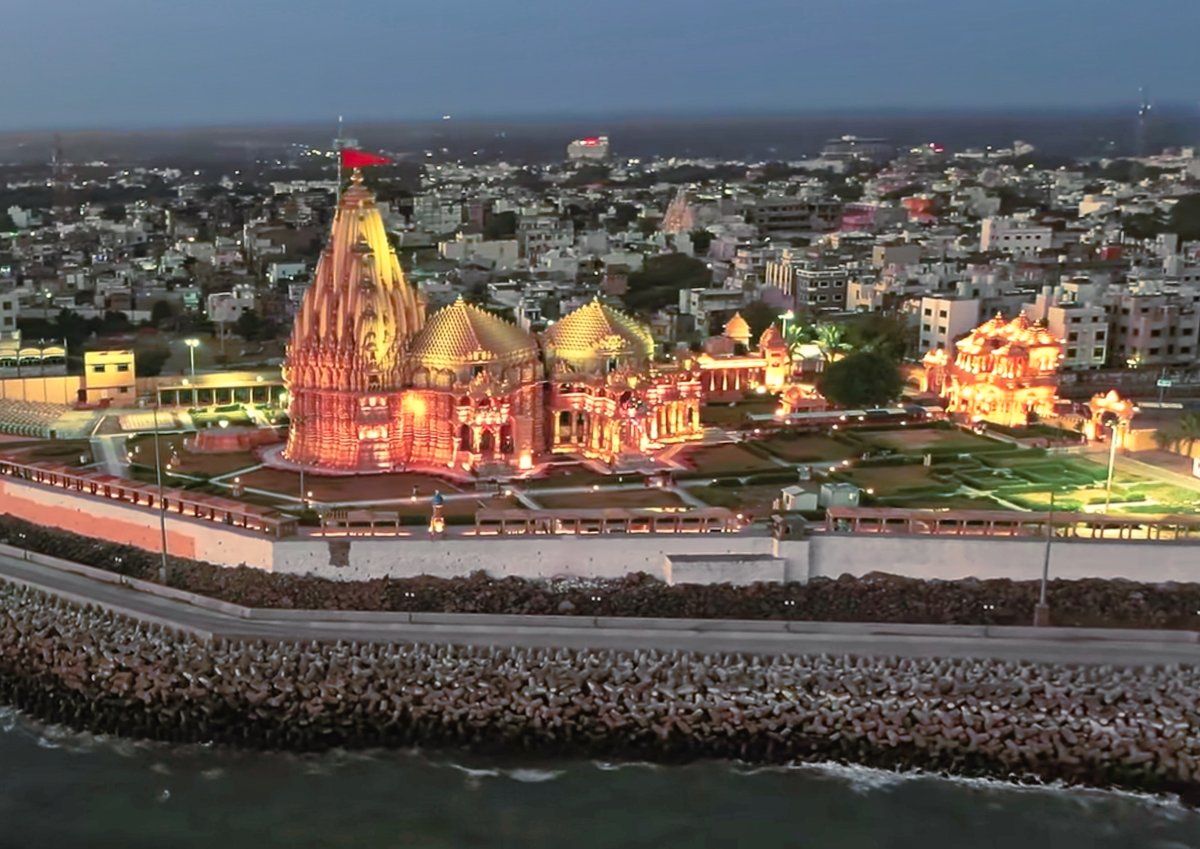
The temple’s architecture is modest but deeply symbolic. The tranquil gardens, devotional spaces, and accessible design foster quiet contemplation and spiritual reflection.
Visiting Hours, Entry, and Accessibility
- Opening Hours Bhalka Tirth is open daily from 6:00 AM to 8:00 PM (E India Tourism). Hours may be extended during major festivals.
- Entry Fee No entry fee; voluntary donations are appreciated for temple maintenance.
- Dress Code Modest attire is required (men: trousers/shirts; women: sarees/salwar kameez); shoes must be removed before entering the sanctum.
- Photography Allowed in outer areas; restricted inside the sanctum.
- Accessibility The temple is wheelchair-friendly, with ramps and wide pathways for elderly and differently-abled visitors.
Festivals and Community Life
- Janmashtami Krishna’s birthday, celebrated with midnight aarti, decorations, bhajans, and dramas.
- Mahashivratri Pilgrims often combine visits to Somnath Jyotirlinga and Bhalka Tirth, underscoring the unity of Krishna and Shiva traditions.
- Somnath Festival (February–March) Features music, dance, and spiritual seminars (Gujarat Tourism).
- Traditional folk music and dance such as garba and dandiya are performed during festivals.
Accommodation and Food
Bhalka Tirth itself does not have on-site accommodation but is close to Somnath and Veraval, both of which offer a range of options:
Hotels and Guesthouses
- Hotel Somnath Atithigruh Affordable, near Somnath Railway Station (TravelTriangle).
- Imperial Somnath Upscale, with modern amenities.
- Lords Inn Somnath, The Bliss Hotel, The Grand Daksh, The Square Somnath Options from budget to luxury.
- Shree Somnath Trust Guesthouses Clean, affordable, and specifically for pilgrims (Navrang India).
Dining
Only vegetarian food is served in the vicinity, in respect of the temple’s sanctity. Nearby eateries offer Gujarati thalis, dhokla, fafda, and other local delicacies (Namaste India Trip). During festivals, free community meals (langar/prasad) are common.
Getting There: Transport and Local Travel
By Air
- Diu Airport (DIU) 70–85 km away; taxis and buses connect to Veraval/Somnath (Ease India Trip).
- Rajkot Airport ~190 km.
- Ahmedabad Airport ~410 km, with nationwide connectivity.
By Train
- Veraval Railway Station 5–7 km from Bhalka Tirth. Regular trains from major cities.
By Road
- By Bus GSRTC and private operators run buses from Ahmedabad, Rajkot, and other cities.
- Taxis/Auto-rickshaws Available from Veraval and Somnath to Bhalka Tirth.
- On Foot/Bicycle The area is pedestrian-friendly, ideal for walking between nearby sites.
Practical Tips and Etiquette
- Dress modestly and remove shoes before entering temple areas.
- Maintain silence inside the sanctum; avoid loud conversations and public displays of affection.
- Photography Respect restrictions, especially during rituals.
- Shopping Local markets offer religious artifacts, handicrafts, and snacks (Gujarat Package).
- Language Gujarati is widely spoken; Hindi and English are understood by temple staff. Greetings like “Jai Shri Krishna” are appreciated.
- Safety The area is safe for solo travelers and families. Emergency contacts are available at hotels and with local authorities.
- Best Time to Visit October to March is ideal for pleasant weather.
Frequently Asked Questions (FAQs)
Q: What are Bhalka Tirth’s visiting hours?
A: Daily from 6:00 AM to 8:00 PM (may vary during festivals).
Q: Is there an entry fee?
A: No, entry is free; donations are welcome.
Q: Are guided tours available?
A: Yes, through the temple trust or local government-approved operators.
Q: How do I reach Bhalka Tirth?
A: By train (Veraval), air (Diu/Rajkot/Ahmedabad), or road from major Gujarat cities.
Q: Where can I stay?
A: Numerous hotels and pilgrim guesthouses in Somnath and Veraval.
Q: What should I wear?
A: Modest, comfortable clothes; footwear must be removed before entering the temple.