Thekkinkadu Maidan
ThrissurÍndia 10° N · 76° E Updated Apr 2026
Thrissur circles this sacred hill: a 65-acre maidan where temple rituals, tea-stop evenings, rallies, and the thunder of Pooram share one daily ring road.
- Entry
- Free
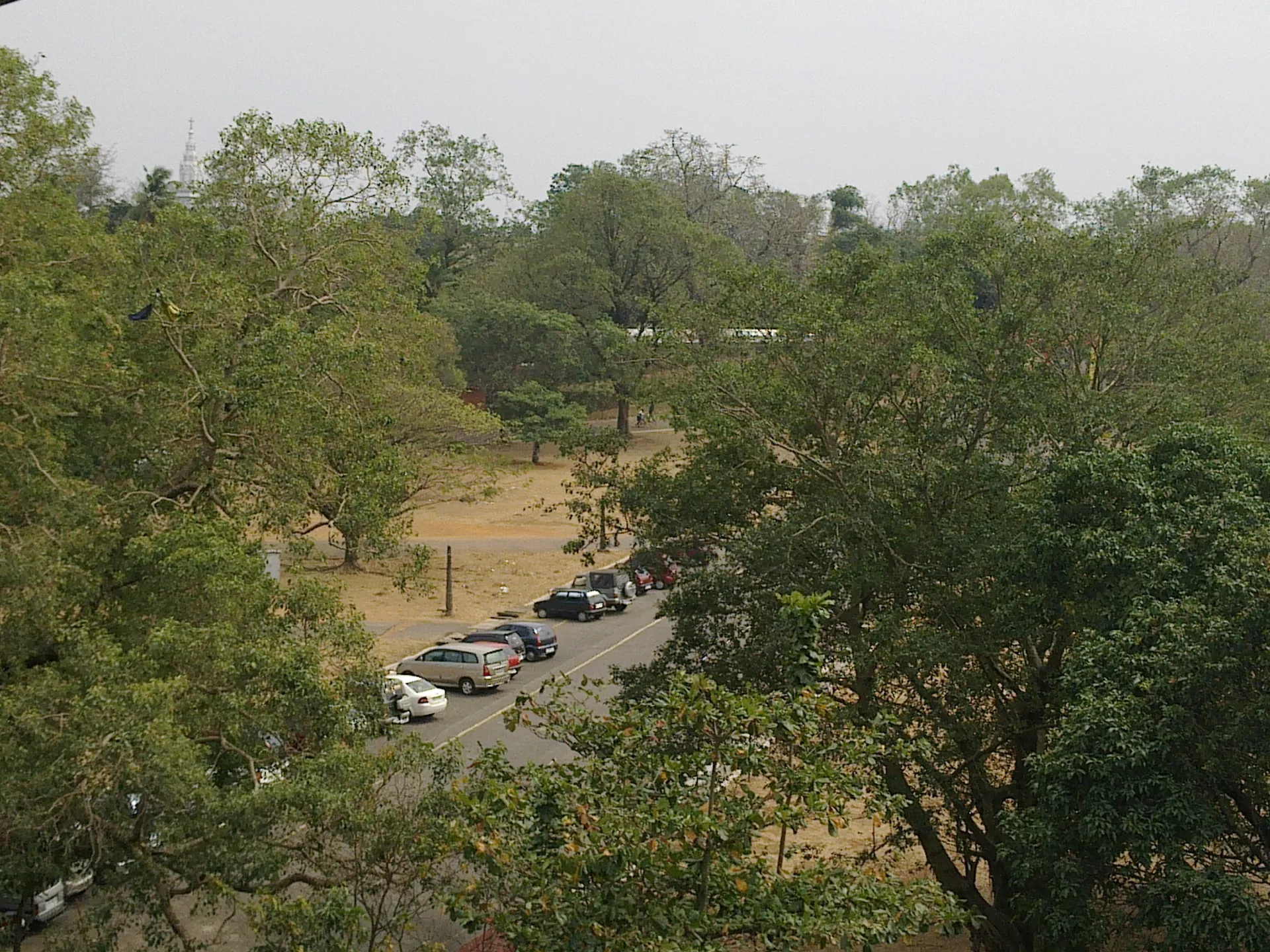
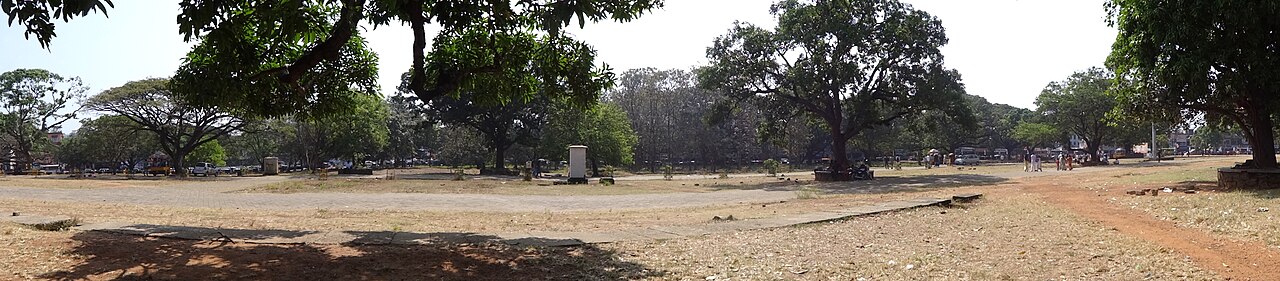
Sixty-five acres of open ground, about the size of 49 football fields, sit at the exact center of Thrissur, India, with a temple rising from the middle as if the city were built to orbit it. That's Thekkinkadu Maidan: part sacred hill, part civic stage, part daily breathing room. You come here to understand why Thrissur feels different from other South Indian cities, and why one ring road around one hill still controls its pulse.
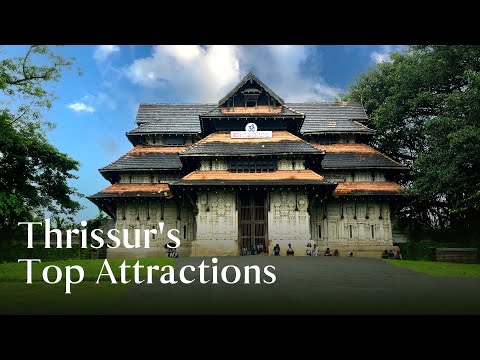
The first surprise is the shape of the place. Swaraj Round circles the maidan like a drawn line, while the Vadakkumnathan Temple sits in the center under old trees, the air carrying incense, dust, and the metallic throb of traffic from beyond the shade.
Most visitors know Thekkinkadu Maidan through Thrissur Pooram, when elephants, drums, and fireworks turn this ground into a public fever dream. Visit on an ordinary afternoon, though, and a quieter truth appears: this was not empty land that happened to host a festival, but a made void, cleared and arranged so power could be seen.
That matters because Thekkinkadu tells the story of Thrissur better than any museum gallery could. Walk here and you are standing in the city's argument with itself: temple and town, ritual and law, shade and spectacle, all held inside one circular sweep.
What to see
-
The Outer Maidan and Swaraj Round
The surprise is the scale: about 65 acres of open ground at the center of Thrissur, a green breathing space roughly the size of 49 football fields, with traffic circling it on Swaraj Round like a restless moat. Walk in from the ring road and the city falls away by degrees; horns fade, old trees start holding the heat in their leaves, and the low rooflines of Vadakkumnathan appear through the shade, which is when you understand that this is not a park at all but a civic clearing built around faith, gossip, politics, chess games, and the long habit of people meeting outdoors at dusk. -
Vadakkumnathan Temple Precinct
At the maidan's core sits Vadakkumnathan Temple inside a roughly 9-acre enclosure, an area about the size of seven football fields, and the mood changes the moment you cross toward the stone walls. Kerala temple architecture keeps its drama low and close to the earth: copper-clad sloping roofs, timber darkened by oil and time, granite underfoot, and corridors where bells, sandalwood, and incense seem to hang in the air a second longer than they should; seek out Vyasashila if you can, the granite slab where people write "Hari Sree Ganapathaye Namah," because that small act of touch tells you more about the place than any grand gateway does. -
Walk the Shift from City to Ritual
Do this slowly: start on Swaraj Round in the late afternoon, cross the outer maidan under the trees, then circle the temple's outer precinct as the light turns gold on the roofs and the evening sounds tighten from street noise to bells and chanting. During Thrissur Pooram, this same ground becomes almost physically loud with chenda drums, cymbals, elephants, and the thunder of Ilanjithara Melam near the ilanji tree; on an ordinary day, the quieter version is better for noticing the real secret here, which is that Thekkinkadu is less one sight than a sequence of thresholds.
Plan your visit
- Getting There
- Thekkinkadu Maidan sits inside Swaraj Round in central Thrissur, with Vadakkumnathan Temple at the center. From Thrissur Railway Station, it is about 1 km away, roughly a 12 to 15 minute walk, about the length of 10 city blocks; the nearest bus stop is Thrissur Round Bus Stop, around 300 m away, a three to five minute walk. From Cochin International Airport, expect a 50 to 58 km drive, about the distance of crossing a midsize city end to end.
- Opening Hours
- As of 2026, Thekkinkadu Maidan itself appears to function as an open public ground year-round, though I did not find an official posted closing time. Vadakkumnathan Temple inside the maidan keeps split hours: 04:00 to 11:00 and 17:00 to 20:30, with the temple's own page saying morning closing can stretch to 11:30 on Saturdays, Sundays, and holidays. During Thrissur Pooram in April or May, access, traffic, and movement patterns change sharply.
- Time Needed
- Give it 20 to 40 minutes for a quick circuit and exterior look, enough time for one stretch of the Round and a feel for the shade under the trees. A fuller visit with temple darshan needs 60 to 90 minutes. On Pooram days, think in half-days, not hours.
- Accessibility
- The outer ground is reached at street level from multiple sides, but this is a large open hillock with mixed terrain rather than smooth museum paving. I found no official accessibility statement for the maidan, and the temple interior is likely harder for wheelchair users because of traditional layouts and uneven surfaces. If access details matter, call the temple office before you go: 0487-2426040 or 0487-2421312.
- Cost & Tickets
- As of 2026, entry to Thekkinkadu Maidan is free, and regular entry to Vadakkumnathan Temple appears free as well. I found no official skip-the-line ticket for ordinary visitors. The temple does offer online booking for ritual offerings, with bookings requested 5 days in advance, which matters only if you are coming for worship rather than a walk.
Photo Gallery




History
Sakthan Thampuran's Open Stage
Thekkinkadu Maidan belongs, more than anyone else, to Raja Rama Varma, better known as Sakthan Thampuran. Official histories of Thrissur credit him with remaking the town between 1790 and 1805, turning a temple-centered settlement into the planned core of the modern city.
Before his intervention, local accounts describe dense woodland around the Vadakkumnathan Temple and older clerical authority tied to the hill. Under Sakthan, that wooded perimeter was cleared into public ground, and the city began to radiate outward from this point like spokes from a wheel.
The turning point
The Ruler Who Cleared the Forest
Sakthan Thampuran had more at stake here than urban tidiness. If he failed to control the temple precinct, he remained one more ruler negotiating with entrenched Namboodiri elites; if he succeeded, Thrissur would become visible proof that authority had shifted.
Official and local histories agree on the broad turning point: during his reign, between 1790 and 1805, the forest around Vadakkumnathan was cleared and the open maidan took shape. The change was physical, but it was political too. A sacred enclosure became a civic theatre.
Kerala Tourism credits Sakthan with giving Thrissur Pooram its genesis, and secondary sources widely place the first reorganized festival in 1798, though that exact year remains probable rather than fully secured in the source set. Picture the moment: elephants assembling, drums rolling through the dust, rival temple groups arranged into new ceremonial order. The ground had changed, and with it the city.
Early Life & Vision
Raja Rama Varma came to power in 1790 after decades when Thrissur had seen conflict involving the Zamorin of Kozhikode, Hyder Ali's forces, and Tipu Sultan, according to official district histories. He inherited more than a town. He inherited a fractured seat of authority, and his answer was architectural: fix the center, clear the hill, order the roads, and make ceremony serve rule.
Legacy & Influence
Sakthan's plan still governs how Thrissur works. The maidan remains the city's green core, its ritual engine, and its legal headache, with Kerala High Court rulings in 2011, 2013, and 2023 insisting that this is protected Devaswom land rather than an ordinary event ground. Even the trees tell a later chapter: the old forest was cut long ago, while much of today's cover comes from modern protection and planting.
Tips for visitors
Temple Dress
The maidan is casual, but Vadakkumnathan Temple is not. Men should carry a dhoti or mundu and expect shirts, banians, and trousers to be refused inside; women should wear modest full-length clothing.Camera Rules
Photos in the open ground are generally fine, but photography and videography inside the temple premises are prohibited unless cleared by both the Cochin Devaswom Board and the Department of Archaeology. Phone storage is weak or absent, so do not assume someone will hold your devices for you.Beat The Heat
Go early or after 17:00 if you want the place at its gentlest, when the light softens and the city heat stops pressing on your shoulders. During Pooram season, treat heat and crowd density as the real problem; local survival drinks like sambharam and naruneendi sarbath are smarter than another coffee.Eat Nearby
For old-school Thrissur fuel, try Hotel Bharath on Swaraj Round for vegetarian staples at budget to low-mid prices, or Thrissivaperoor Kaapi Club for tea, upma, kaaya bajji, and parippu vada on a budget. Sree Radhakrishna Coffee Club on Municipal Office Road is another close, no-fuss stop if you want dosa and vada without ceremony.Festival Reality
Pooram turns this green center into controlled event ground, with policing, barricades, pass checks, drone surveillance, and traffic diversions. Fake passes have been an issue in recent festival coverage, so trust only official event instructions and arrive with time to spare.Pair It Well
This works best as part of a central Thrissur walk, not as a sealed-off attraction. Start at the Round, take in the temple exterior, then continue to nearby Our Lady of Dolours Basilica or pause in Nehru Park; the whole zone reads like one continuous civic stage.
Watch & Explore Thekkinkadu Maidan.

Frequently asked
Is Thekkinkadu Maidan worth visiting?
Yes, especially if you want to understand Thrissur rather than just tick off a temple. This is the city's great clearing: a tree-covered hillock wrapped by Swaraj Round, with Vadakkumnathan Temple at the center and everyday life circling it like a slow drumbeat. On an ordinary evening you get shade, tea, traffic, temple bells, and locals treating the place as their shared living room.
How long do you need at Thekkinkadu Maidan?
Give it 60 to 90 minutes for a proper visit. That gives you time to walk part of the maidan, take in the shift from noisy ring road to shaded ground, and add temple darshan if you arrive during opening hours. During Thrissur Pooram, forget the clock and think in half-days.
How do I get to Thekkinkadu Maidan from Thrissur?
From central Thrissur, you usually walk, take an auto-rickshaw, or hop off near Swaraj Round. Thrissur Railway Station is about 1 kilometer away, roughly the length of 10 football fields laid end to end, and the Round Bus Stop is about 300 meters away, about three short city blocks. Ask for 'the Round' and locals will know exactly where you mean.
What is the best time to visit Thekkinkadu Maidan?
Early morning or late afternoon works best. Morning gives you cooler air, softer light on the temple roofs, and a calmer mood inside the precinct; late afternoon brings the local rhythm back, with walkers, conversations, and that city-center breeze under the trees. Visit in April or May only if you actively want Thrissur Pooram crowds, drums, elephants, and logistics that can swallow your day whole.
Can you visit Thekkinkadu Maidan for free?
Yes, the maidan itself is free to enter. Vadakkumnathan Temple darshan is generally free too, though offerings can be booked separately online and temple rules are stricter than the open ground. Carry modest clothing if you want to go inside, because the temple is a living shrine, not a casual photo stop.
What should I not miss at Thekkinkadu Maidan?
Don't miss the movement from outer ground to inner precinct, because that changing mood is the whole confession of the place. Walk the shaded maidan, look for the temple rising low under copper-clad roofs, then enter through the east or west side if permitted and seek out details like Vyasashila, the koothambalam, and the Ilanjithara area that turns into a wall of sound during Pooram. If you only glance from the road, you miss the point.
Sources & attribution 92
- Thrissur Municipal Corporation — Used for the city's official description of Thrissur being built around the hillock and open ground at Thekkinkadu.
- Thrissur District Administration — Used for official orientation to Thekkinkadu Maidan and Vadakkumnathan Temple as a major pilgrim center.
- Wikipedia — Used for commonly cited acreage, local-history summaries, and general secondary background on the maidan.
- BanBanjara — Used as a secondary source for the commonly repeated size of the maidan.
- Kerala Tourism — Used for official temple background, temple significance, and the distinction between temple heritage recognition and UNESCO World Heritage status.
- UNESCO — Used to confirm the 2015 UNESCO Asia-Pacific Award of Excellence for Cultural Heritage Conservation.
- Thrissur Municipal Corporation — Used for the official history of Thrissur, Sakthan Thampuran's role, and the political reshaping of the city center.
- Thrissur District Administration — Used for district-level historical chronology, including Sakthan Thampuran and older conflicts around Thrissur.
- Kerala Tourism — Used for the official account of Thrissur Pooram's origin under Sakthan Thampuran and the Brahmaswom Madom tradition.
- thinkMatter — Used for conservation-focused history, likely temple build phases, the 1816 drawing, and restoration context.
- Kerala Tourism — Used for official district background and Sakthan Thampuran's role in shaping modern Thrissur.
- Wikipedia — Used as a secondary source on Raja Rama Varma, known as Sakthan Thampuran.
- Thrissur Pooram Festival — Used as a secondary source for the commonly cited 1798 date for the first reorganized Thrissur Pooram.
- Wikipedia — Used as a secondary source for the date and structure of Thrissur Pooram.
- Indian Kanoon — Used for Kerala High Court references on green-space protection, restrictions, and afforestation at Thekkinkadu Maidan.
- CaseMine — Used for the April 11, 2023 High Court ruling on Thekkinkadu Maidan's legal status and use.
- Kerala Tourism — Used for restoration details and confirmation of the UNESCO Asia-Pacific conservation award.
- Sree Vadakkumnathan Temple — Used as the official temple website for current visitor, worship, and festival information.
- Sree Vadakkumnathan Temple — Used for official temple timings, pooja schedule, and the weekend or holiday morning closing variation.
- DTPC Thrissur — Used for temple timings, distances from station and bus stop, and nearby Nehru Park information.
- Kerala Tourism — Used for official temple timings, access context, and festival-period relevance.
- Kerala Tourism — Used for the Aanayoottu festival listing and distance references from transport links.
- The Times of India — Used for 2026 court-related coverage on festival compliance and restrictions at the maidan.
- The Times of India — Used as the AMP version of the same 2026 court-related report on maidan compliance.
- Mathrubhumi English — Used for festival logistics, surveillance, sanitation, and event-day controls during Pooram.
- Sree Vadakkumnathan Temple Booking — Used to confirm that online booking exists for offerings and should be made five days in advance.
- Sree Vadakkumnathan Temple Booking — Used to confirm official online booking for offerings rather than ordinary entry tickets.
- Sree Vadakkumnathan Temple — Used for official address and contact details for the temple office.
- Thrissur District Administration — Used for official transport access to Thrissur and airport distance information.
- Top-Rated Online — Used as a secondary source on parking availability near the temple.
- Onmanorama — Used for 2026 reporting on resurfacing works at Swaraj Round.
- Wanderlog — Used as a secondary traveler-report source on accessibility limits and dress expectations.
- Wanderlog — Used as a secondary traveler-report source on temple access and dress expectations.
- Indian Panorama — Used as a secondary source for darshan, amenities, and dress-code expectations.
- Audiala — Used as a secondary source for general visitor expectations and open-access assumptions.
- Airial Travel — Used as a secondary source for entry, timing expectations, transport, and visitor logistics.
- Onmanorama — Used for nearby food recommendations, festival drinks, and practical eating strategies near the maidan.
- Wanderlog — Used as a secondary source for a nearby Indian Coffee House listing.
- Yappe — Used as a local directory listing for Pisharody's Restaurant near the maidan.
- TripTap — Used as a local listing for The Vigneshwara Grand near Thekkinkadu.
- TripTap — Used as a local listing for Thrissur Kappi Club.
- Mathrubhumi English — Used for court-reported rules on photography and videography inside temple premises and phone-storage limitations.
- Reddit — Used cautiously as a weak secondary lead on possible railway-station cloakroom facilities.
- Wikipedia — Used as a secondary source on temple layout, shrine geometry, and major precinct features.
- Sree Vadakkumnathan Temple — Used for access gates, deities, Vyasashila, mural references, and key points in the worship circuit.
- Sree Vadakkumnathan Temple — Used for the list of principal and subsidiary deities in the temple complex.
- Kerala Museum — Used for the koothambalam's performance function and acoustic character.
- Sree Vadakkumnathan Temple — Used for the Ilanjithara area, festival context, and constituent temple details.
- Wikipedia — Used as a secondary source on Ilanjithara Melam and its role during Thrissur Pooram.
- Re-thinking The Future — Used as a secondary architectural source on materials, climate-fit design, and monsoon atmosphere.
- Wikimedia Commons — Used for visual evidence, shrine geometry, and the Nataraja mural note.
- Wikimedia Commons — Used for the note on evening light at the south gateway.
- Sree Vadakkumnathan Temple — Used for official overview of the temple and restoration-related references.
- Kerala Tourism Facebook — Used as a visual and experiential reference for the maidan as a public ground.
- Mathrubhumi Archives — Used as a secondary source for the current ilanji tree's planting and bloom chronology.
- Wikipedia — Used as a secondary source on local naming, the Round, and the broader urban setting.
- Reddit — Used cautiously for local sentiment about the Round and Thekkinkadu's evening atmosphere.
- Onmanorama — Used for the court-upheld ban on film shooting near the temple precinct.
- DTPC Thrissur — Used for district tourism framing of Thrissur as Kerala's cultural capital.
- Thrissur Municipal Corporation — Used for official cultural framing of Thrissur and the centrality of its festival culture.
- Reddit — Used cautiously for local opinion on Thrissur and the emotional pull of the Round.
- Reddit — Used cautiously for local habits, nostalgia, and social use of the Round and the Pooram Exhibition.
- Reddit — Used cautiously for local complaints about traffic, maintenance, and city-center conditions.
- The Times of India — Used for the present-day tension between heritage protection and urban development around the maidan.
- Reddit — Used cautiously for local comments about late-night policing around the Round.
- Kerala Picnic Spot — Used as a secondary source confirming Thrissur Pooram's association with the maidan.
- DTPC Thrissur — Used for festival descriptions, especially Ilanjithara Melam and Pooram experience.
- Kerala Tourism — Used as an official tourism listing for Thrissur Pooram.
- Onmanorama — Used for recent Onam activity and public-event use of Thekkinkadu Maidan.
- Mathrubhumi English — Used for reporting on a 60-foot pookkalam at Thekkinkadu during Onam celebrations.
- Wikipedia — Used as a secondary source on the Thrissur Pooram Exhibition as a major local institution.
- The Times of India — Used for recent civic and cultural events held at or around Thekkinkadu Maidan.
- Outpost Magazine — Used as a secondary local-culture source on nearby landmarks and the feel of central Thrissur.
- Wikipedia — Used as a secondary source for nearby skyline context and the basilica's presence in central Thrissur.
- Tripadvisor — Used as a secondary source on Thrissivaperoor Kaapi Club and nearby food culture.
- The New Indian Express — Used for reporting on the temple's UNESCO Asia-Pacific conservation honor.
- Onmanorama — Used for reporting on footwear restrictions and temple conduct during Pooram.
- Janam TV English — Used as another report on court-backed footwear restrictions during Pooram.
- LiveLaw — Used for legal reporting on videography restrictions inside temple premises.
- LiveLaw — Used for legal reporting on refusal of permission for commercial filming at the temple ground.
- Onmanorama — Used for a recent safety-related incident near the eastern gopuram.
- Tripadvisor — Used as a secondary source for Indian Coffee House and other budget dining references.
- Silly Suitcase — Used as a secondary source for broader food recommendations beyond the immediate maidan area.
- The Round — Used as the restaurant's own website for ROUND The Global Diner.
- InHeritage Foundation — Used as a secondary source on temple materials and heritage-conservation interpretation.
- En-Academic — Used as a secondary reference for the city's orientation around the Round.
- Thrissur District Administration — Used for the last-updated date on the municipal corporation page in the visitor-practical date audit.
- Kerala Tourism FAQ — Used for general Kerala temple etiquette and dress expectations.
- Wanderlog — Used as a secondary source for practical notes on dress norms and photography expectations.
- Thrillophilia — Used as a secondary source for the commonly cited size of Thekkinkadu Maidan.
- The New Indian Express — Used for the Brahmaswom Madom stop and its historical link to Pooram tradition.
- Cargo Collective — Used as a secondary source for the idea of Thekkinkadu as a raised hillock and cultural landscape.
Built from cited sources · see the method · How we make our guides →
More in Thrissur.
23 places to discover — a few worth pairing.


Pick up where you left off
Saved and recently read places — kept on this device only.
Photo credits (9)
- Neeraj Anoop — Pexels License (https://www.pexels.com/license/) — Source: https://www.pexels.com/photo/31376426/
- Ananthu Ganesh — Unsplash License (https://unsplash.com/license) — Source: https://images.unsplash.com/photo-1689610118132-96bde7f87e6e
- Sanu Sph — Unsplash License (https://unsplash.com/license) — Source: https://images.unsplash.com/photo-1559778694-3b46194a40e9
- Thekkinkadu Maidan and mo road — Arjuncm3 — CC BY-SA 3.0 (https://creativecommons.org/licenses/by-sa/3.0/) — Source: https://commons.wikimedia.org/wiki/File:Thekkinkadu_Maidan_and_mo_road.JPG
- Thekkinkadu Maidan — Arjuncm3 — CC BY-SA 3.0 (https://creativecommons.org/licenses/by-sa/3.0/) — Source: https://commons.wikimedia.org/wiki/File:Thekkinkadu_Maidan.JPG
- Graffity in the making...(On a wall at Thrissur) CIMG9868 — Viswaprabha — CC BY-SA 3.0 (https://creativecommons.org/licenses/by-sa/3.0/) — Source: https://commons.wikimedia.org/wiki/File:Graffity_in_the_making...(On_a_wall_at_Thrissur)_CIMG9868.JPG
- Thekkinkadu — Arjuncm3 — CC BY-SA 3.0 (https://creativecommons.org/licenses/by-sa/3.0/) — Source: https://commons.wikimedia.org/wiki/File:Thekkinkadu.JPG
- Thekkinkadu Maithanam — Akhilan — CC BY-SA 2.5 IN (https://creativecommons.org/licenses/by-sa/2.5/in/) — Source: https://commons.wikimedia.org/wiki/File:Thekkinkadu_Maithanam.jpg
- നായ്ക്കൻ-ആൽ-തൃശ്ശൂർ — Challiyan at Malayalam Wikipedia — CC BY-SA 2.5 (https://creativecommons.org/licenses/by-sa/2.5/) — Source: https://commons.wikimedia.org/wiki/File:നായ്ക്കൻ-ആൽ-തൃശ്ശൂർ.jpg
Photos may have been resized or cropped.