Place
India Updated Mar 2026
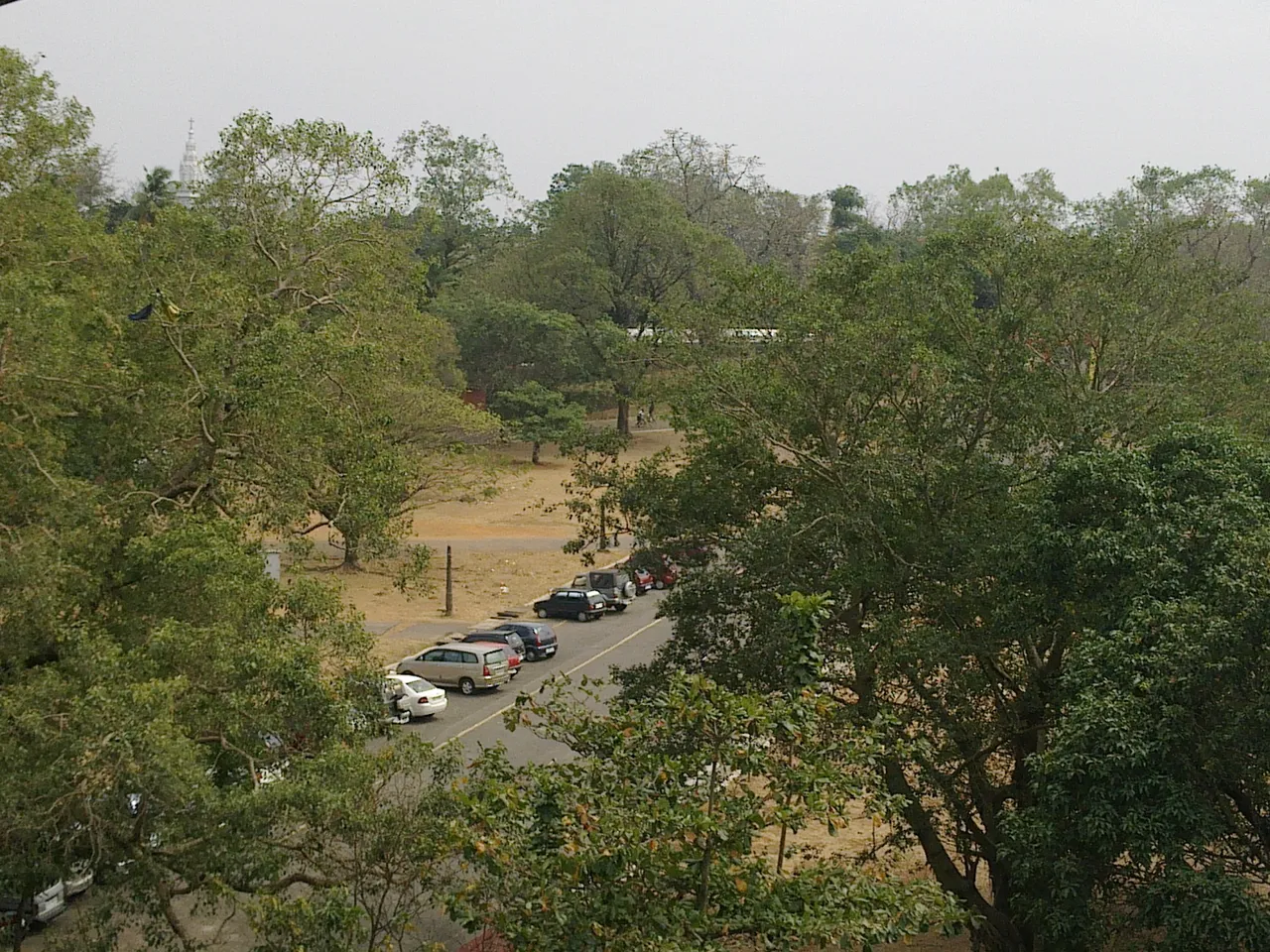
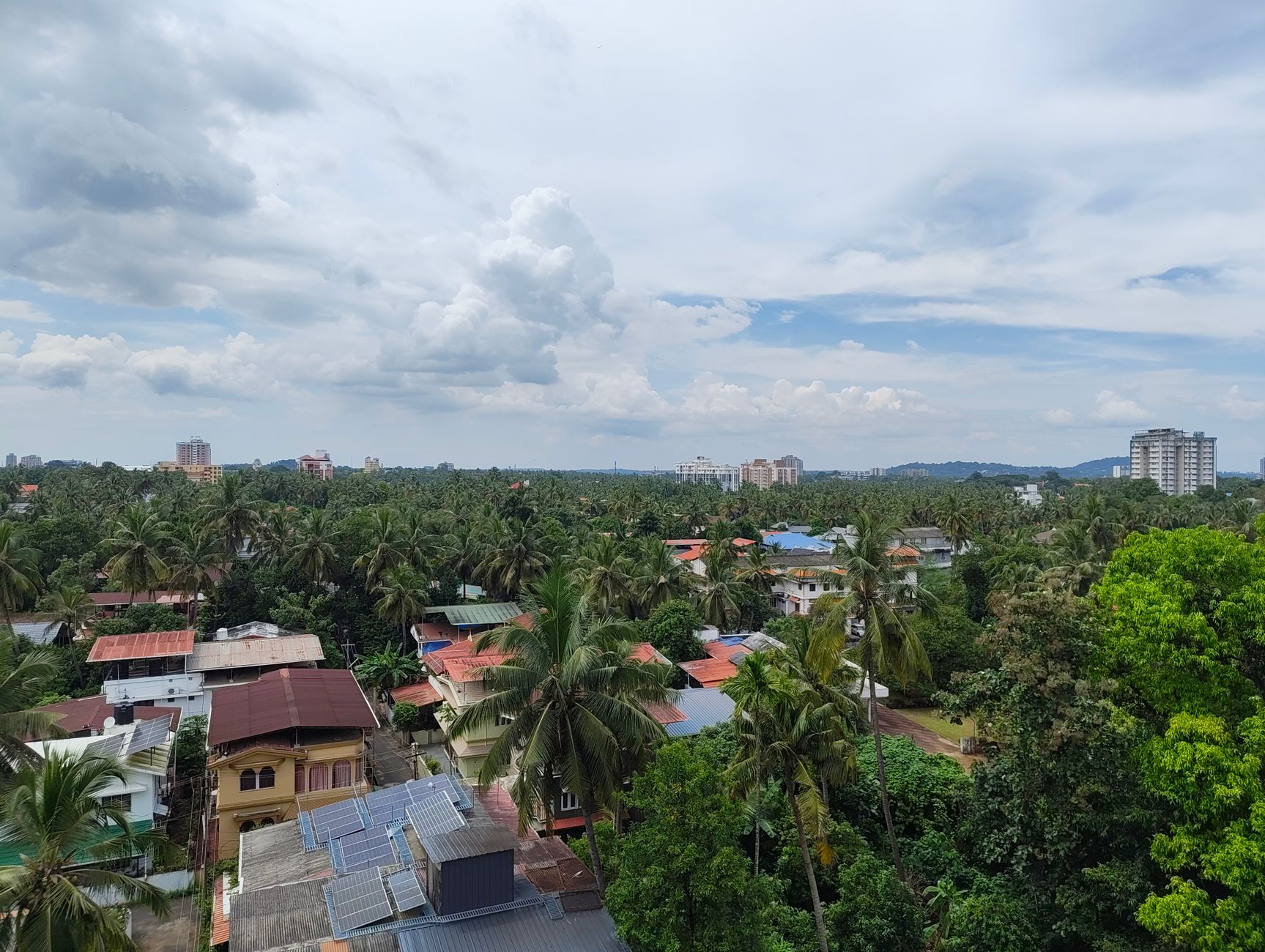
You hear Thrissur before you fully see it: chenda drums ricochet off concrete, incense drifts through traffic, and evening light pools under giant rain trees in the middle of a roundabout. In Thrissur, India, a nine-acre temple grove sits at the city’s core, so ritual and rush-hour occupy the same circle. The surprise is how naturally this works, as if festival scale and everyday errands were always meant to share one stage.
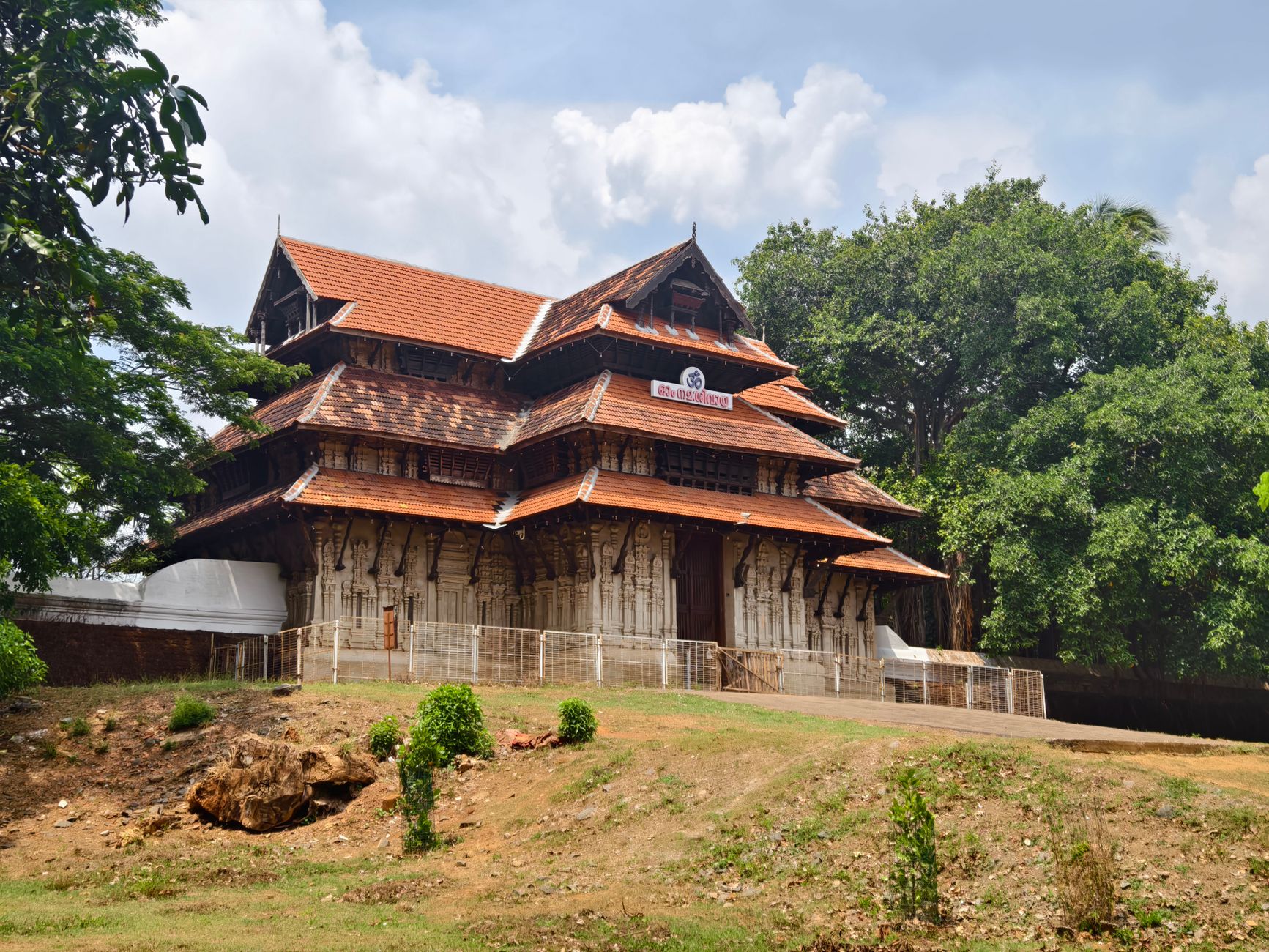 Photo: Neeraj Anoop / Pexels
Built from cited sources · see the method · How we make our guides →
Thrissur is called Kerala’s cultural capital so often that it can sound like a slogan, until you spend a day here. The claim is built into the street map: Vadakkumnathan Temple at the center, then state institutions for literature, theater, music, and visual art within short rides of each other. At Kerala Sahitya Akademi, the library alone holds more than 150,000 books, while performance culture stays alive through venues tied to Kerala Sangeetha Nataka Akademi and city festivals.
Timing changes the city. During Thrissur Pooram (main day April 26, 2026), the Round turns into a vast public theater of percussion, elephants, and umbrella ceremonies; on an ordinary weekday, the same zone is walkers, buses, tea stalls, and long-standing vegetarian hotels. Thrissur’s food memory is local and repeatable rather than flashy: dosa breakfasts, 4:00-6:30 p.m. snack rituals, banana-leaf lunches, and late dinners in hotel bars or old institutions.
What stays with you is Thrissur’s double exposure: a compact city that feels complete on foot, and a wider district that opens into waterfalls, temple towns, coast, and performance schools. You can spend the morning at a palace museum, the afternoon on a heritage street where old facades are under pressure, and the evening under the trees of Thekkinkadu Maidan listening to drums carry across the circle. Thrissur changes your sense of scale: culture here is not a show put on for visitors, but a working civic rhythm.
Not every monument, just the ones we'd walk you past ourselves.


Where to wander, by quarter — each with its own rhythm.
Before you go
From Muziris tides to Swaraj Round drumbeats
In the wider Thrissur-Kodungallur zone, archaeology points to maritime activity by about 500 BCE. Even now, the story starts with water, trade winds, and cargo jars rather than palaces. This early port world became the deep foundation beneath later Thrissur history.
Christian memory in the region places St. Thomas at nearby Muziris and links Palayur to that same year. Whether read as faith-history or literal chronology, it marks the coast as an early meeting point of beliefs. Thrissur’s religious pluralism has always smelled of sea routes.
Tradition dates the Cheraman Juma Masjid at Kodungallur to 629 CE, tying the region to Islam’s earliest Indian Ocean chapters. The exact fabric of the surviving structure is debated, but the historical memory is powerful. It adds another layer to Thrissur’s interfaith map.
From the 9th century, Mahodayapuram near Kodungallur emerged as the Kulasekhara Chera capital. Royal authority, temple culture, and long-distance commerce tightened into one political machine. For the region, this was a true golden age of power and exchange.
In the early 11th century, Rajendra Chola’s forces struck Mahodayapuram. The blow was military, but its aftertaste was political fragmentation and uncertainty. Central Kerala’s balance of power never returned to its earlier shape.
After the Chera Perumal framework unraveled, authority splintered among regional houses. The Thrissur region shifted from one capital-centered order to negotiated local rivalries. This was the hinge between imperial coherence and contested medieval politics.
Madhava of Sangamagrama, associated with present-day Irinjalakuda in Thrissur district, was born around this period. His mathematical work seeded the Kerala school’s breakthroughs in infinite series and astronomy. In a fragmented political age, intellectual ambition still burned bright.
A major Periyar flood is widely credited with crippling old Muziris and rerouting commerce toward Kochi. One hydrological disaster redrew economic geography for centuries. The silence left by a lost port echoes through Thrissur’s later rise inland.
The Portuguese fortified Kodungallur with Kottappuram Fort, anchoring gunpowder-era maritime competition in the region. Stone walls and cannon lines announced that Indian Ocean trade was now imperial chess. Thrissur’s coast became a battlefield of global ambitions.
After attacks in 1662, Dutch forces captured Kottappuram in 1663 and reworked it for their own trading-security logic. The handover showed how quickly coastal control could flip between European powers. Local politics had to adapt to each new flag.
Rama Varma, later called Sakthan Thampuran, was born in 1751. He would become the decisive architect of modern Thrissur’s urban form and civic rhythm. Few South Indian rulers left such a visible imprint on one city’s geometry.
By later historical tradition, fighting around Thrissur in 1763 marked the struggle to push back Zamorin power in Cochin territory. The city zone sat between rival courts, military expeditions, and shifting alliances. Control here meant leverage across central Kerala.
Tipu Sultan stayed in Thrissur from 14 to 29 December 1789 during his campaign season toward Travancore’s defenses. The same year, Travancore purchased Kottappuram Fort from the Dutch on 31 July. Thrissur was no backwater; it was frontline geography.
When Sakthan Thampuran took the Cochin throne in 1790, Thrissur’s fate changed quickly. He shifted political weight to the city and tightened royal authority over older feudal blocs. Modern Thrissur begins here, not in legend.
The palace rebuilt in 1795, now known as Shakthan Thampuran Palace, became the clearest royal monument of this city-making moment. Its Kerala-Dutch architectural language still carries that transition in brick, timber, and open courtyards. Power took material form.
In the late 1790s, Thrissur Pooram was organized in the Vadakkumnathan-Thekkinkadu core, with sources differing between 1796 and 1798. The festival fused ritual, public spectacle, percussion thunder, and civic identity. It turned urban space into choreography.
The original Our Lady of Dolours church was established in 1814, marking the 19th-century expansion of Thrissur’s Christian urban landscape. Bells, processions, and parish institutions became part of city life around the market streets. The sacred map widened beyond the temple core.
Vallathol Narayana Menon was born in 1878 and later made Thrissur district central to Kerala’s performance revival. His work eventually produced Kerala Kalamandalam, giving classical forms institutional muscle. Through him, poetry became cultural policy.
The Shoranur-Cochin rail link reached Thrissur in 1902, shrinking travel time and tightening trade circuits. Steam whistles and station clocks changed daily tempo as much as commerce. The city became more legible to the wider colonial economy.
Kerala Kalamandalam was founded in 1930 and shifted to Cheruthuruthy in 1936, in Thrissur district. It gave Kathakali and other classical forms a disciplined training home rather than a purely hereditary circuit. The district’s claim as Kerala’s cultural capital gained institutional teeth.
The Guruvayur Satyagraha of 1931-1932 made the district a frontline of anti-caste and temple-entry politics. Protest, negotiation, and public pressure pushed religious access into the center of modern citizenship debates. Reform here was noisy, risky, and irreversible.
On 2 June 1947, Guruvayur Temple opened to all Hindus, a landmark outcome of earlier reform struggles. Just weeks later, on 15 August 1947, India became independent. In Thrissur’s orbit, social emancipation and political sovereignty arrived in the same season.
Kerala was formed on 1 November 1956, reorganizing the political map that governed Thrissur. In the same period, Kerala Sahitya Akademi was inaugurated and then anchored in Thrissur, reinforcing its literary authority. The city’s cultural title gained bureaucratic backbone.
Born in Thrissur in 1969, I. M. Vijayan emerged from local grounds to captain India in football. His rise tied city neighborhoods and municipal playing culture to national sporting imagination. In Thrissur, even the stadium became part of civic folklore.
Our Lady of Dolours was elevated to basilica status in 1992, confirming its major place in the city’s religious life. The church complex became an even stronger landmark in both ritual and skyline terms. Thrissur’s plural sacred architecture gained another formal crown.
On 2 October 2000, Thrissur Municipal Corporation was created, expanding governance over 101.42 square kilometers. Administrative scale changed what “city” meant in planning, roads, and services. Modern Thrissur became metropolitan in structure, not just reputation.
Mudiyettu, rooted in central Kerala’s ritual-performance ecology that includes the Thrissur cultural zone, was inscribed by UNESCO in 2010. This was not museum nostalgia; it validated living temple-performance practice. Local night-long enactments entered a global heritage vocabulary.
After a decade of conservation work, Vadakkumnathan Temple received UNESCO’s Asia-Pacific Award of Excellence in 2015. The recognition honored craft-level restoration in wood, mural, and stone rather than flashy reconstruction. Thrissur proved heritage could be repaired with patience and precision.
Kerala’s catastrophic 2018 floods hit Thrissur district hard, especially in low-lying and Kole regions. Relief lists, damaged homes, and waterlogged fields turned climate risk into everyday memory. The disaster forced fresh thinking about land, drainage, and resilience.
On 28 February 2026, Puthur Zoological Park opened after a long campaign to replace the old city-zoo model with habitat-based planning. The shift signaled a new civic imagination of science, conservation, and public space. Thrissur’s story keeps moving by redesigning what it inherited.
Maharaja of Cochin · 1751-1805
Ruled from Thrissur and reshaped the city
He did not just govern Thrissur; he reorganized it around the temple core and gave it the civic rhythm that still defines the Round. Thrissur Pooram, now the city's loudest signature, traces back to his decisions. He would likely recognize today's traffic and neon, then smile at how the festival pulse survived everything.
Poet and cultural revivalist · 1878-1958
Lived and worked in Thrissur district; founded Kerala Kalamandalam
Vallathol helped turn classical Kerala performance from fragile inheritance into an institution with a future. Through Kalamandalam in Thrissur district, he made training, discipline, and transmission part of modern public life. He would probably be relieved to see students still learning these forms for stages far beyond Kerala.
Space scientist and former ISRO chairman · born 1949
Born in Irinjalakuda, Thrissur district; educated in Thrissur
Before he led ISRO through the Mars Orbiter era, his roots were in Thrissur district classrooms. His arc from local schooling to planetary missions is the city's quieter story: disciplined education feeding global ambition. In today's Thrissur, he would likely see the same seriousness in students moving between coaching centers and libraries.
Footballer · born 1969
Born in Thrissur city
Vijayan's legend began in a city where football was played with urgency and little glamour. He carried Thrissur's street-hardened style into the national team and captaincy. Watching kids still crowd local grounds, he would probably say the city never lost its hunger.
Actor and singer · 1971-2016
Born in Chalakudy, Thrissur district
Mani brought the cadence of central Kerala speech and working-class humor into mainstream cinema without polishing the edges away. His screen presence felt like someone from the next bus stop suddenly commanding the whole room. In present-day Thrissur's mix of old eateries and new flyovers, his voice would still sound native.
Chess grandmaster · born 2004
Born in Thrissur city
Nihal's rise made Thrissur part of global chess conversation while he was still a teenager. His story fits the city's modern layer: traditional cultural capital, but also a place producing digital-era prodigies. He would likely appreciate how a city of drums and processions now also celebrates silence over a chessboard.
Where locals actually book dinner — not the tourist menus.
Small things that change how the city treats you.
The city, as it actually looks.


Yes, especially if you care about living culture more than checklist sightseeing. Thrissur packs temple-centered urban design, Kerala's major arts institutions, and festival traditions like Pooram and Pulikali into a compact core. Add one district day trip (Athirappilly or Kalamandalam) and the city makes even more sense.
Two days works for the city core; three to four days is better with district excursions. Day 1 can cover Thekkinkadu Maidan, Vadakkumnathan precinct, and old central food institutions. Day 2 fits museums and academies, while extra days are for Athirappilly, Guruvayur, or Kalamandalam.
The simplest way is a prepaid taxi from COK directly to your hotel in Thrissur. Budget options exist: airport bus or feeder to Aluva/Angamaly, then train or bus onward to Thrissur. Thrissur Railway Station is the main rail gateway into the city.
No, Thrissur does not have a metro or tram. Local movement is mainly private and KSRTC buses, auto-rickshaws, taxis, and rail for longer hops. For route planning, TTIS is the most practical public lookup tool.
Generally yes, with normal urban caution. Pay extra attention around bus stands, railway approaches, and festival crowd zones near Swaraj Round late at night. Keep emergency numbers handy: 112 (police), 101 (fire), and 108 (ambulance).
December to February is usually best for weather. Late November and early March are still workable, while April-May can feel hot and June-September is heavy monsoon. If you want festival intensity, target Thrissur Pooram season even though crowds surge.
No, it can be very budget-manageable compared with larger Indian metros. Everyday meals, local transport, and simple stays are usually affordable, especially if you use buses and old local eateries. Keep some cash for smaller shops and autos, and treat card/UPI acceptance as uneven outside bigger venues.
Cards are common at major hotels, restaurants, and larger shops, but not universal. UPI is dominant in India, yet international compatibility depends on your bank and app network. Carry backup cash in INR for small purchases and local rides.
25 places to discover



Saved and recently read places — kept on this device only.
Photos may have been resized or cropped.