Plan and listen to Kowdiar Palace with Audiala.
Audio guide in your pocket, itinerary in your browser. Built for the way you actually visit.
Introduction
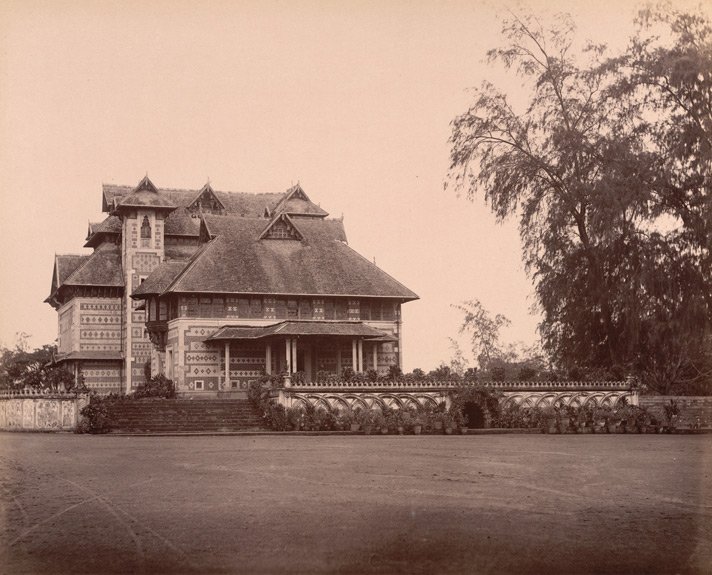
Kowdiar Palace, located in Thiruvananthapuram, Kerala, stands as one of the most distinguished symbols of Kerala’s royal heritage and the enduring legacy of the Travancore royal family. Constructed in 1934 by Maharajah Sree Chithira Thirunal Balarama Varma as a wedding gift for his sister, Maharani Karthika Thirunal Lakshmi Bayi, the palace seamlessly blends traditional Kerala architecture with European and Dravidian influences. Perched atop a lush, 100-acre hillock, its architectural grandeur and historical significance make it a key highlight on any Thiruvananthapuram cultural itinerary.
Although Kowdiar Palace remains a private residence and is not open to the public, its striking exterior and beautifully landscaped surroundings can be admired from public vantage points. The palace’s proximity to other important historical attractions—such as the Padmanabhaswamy Temple, Kanakakkunnu Palace, and Napier Museum—further cements its status as a must-see site for travelers interested in Kerala’s rich past.
This guide provides detailed information on the history, architecture, accessibility, photography opportunities, nearby attractions, travel tips, and practical details to help you make the most of your visit to Kowdiar Palace and Thiruvananthapuram’s historical sites.


Historical Significance of Kowdiar Palace
Kowdiar Palace is intrinsically linked to the Travancore royal family, whose lineage shaped much of Kerala’s social, cultural, and political history. The palace became the official residence for the family’s descendants after the abolition of princely states in 1949, serving as a symbol of progressive reforms such as the Temple Entry Proclamation of 1936 (Tripinic, Tusk Travel). The palace is a living testament to the modernization and evolving identity of Kerala, encapsulating an era of enlightened rule and innovative governance.
Architectural Heritage and Highlights
Kowdiar Palace’s architectural style is a unique amalgamation of traditional Kerala, Dravidian, and colonial influences (artechrealtors.com, hitvm.in). Key features include:
- Sloping, Tiled Roofs: Designed to manage monsoon rains effectively.
- Six Iconic Steeples: Blending Dravidian temple architecture with colonial elements, these steeples define the palace’s skyline.
- Intricate Woodwork: Exquisite carvings, wooden beams, and panels exemplify Kerala’s carpentry traditions.
- Expansive Courtyards: Multiple inner courtyards enhance natural ventilation and light.
- The Wooden Elevator: An early innovation in India, reflecting the Travancore dynasty’s embrace of modern technology.
- Lush Gardens: The palace is surrounded by color-lit fountains, sculptures, and manicured lawns, reinforcing the harmony between architecture and nature.
Visitor Information: Hours, Tickets, and Accessibility
Public Entry and Tours:
Kowdiar Palace is a private residence and is not open to the public. There are no tickets, official visiting hours for the interiors, or guided tours available. Visitors may appreciate the palace’s exterior and gardens from public roads and vantage points outside the property (Kiomoi, Yappe.in).
Best Time for Exterior Viewing:
The exterior and gardens are best viewed from 9:00 AM to 6:00 PM, especially during festival seasons when the palace is illuminated. Early mornings and late afternoons offer optimal lighting and pleasant weather for sightseeing and photography.
Getting There:
- Address: GXF7+H8C, Kowdiar Gardens, Kowdiar, Thiruvananthapuram, Kerala 695003, India
- Access: About 2.5–4 kilometers from Trivandrum Central railway station; accessible via taxi, auto-rickshaw, or public transport
- Parking: Available in the vicinity (not on palace grounds)
Accessibility:
The surrounding neighborhood and adjacent Kowdiar Park are pedestrian-friendly and feature ramps for wheelchair access (Kiomoi FAQ). Visitors with mobility challenges can comfortably explore the public areas.
Best Photography and Viewing Tips
- Photography: Allowed from public roads and paths bordering the palace. Please avoid intrusive photography and respect privacy; use of drones or professional equipment may require special permission.
- Festival Seasons: The palace is especially picturesque when illuminated during cultural festivals.
- Kowdiar Park: Adjacent to the palace, this tranquil park features lush greenery and offers excellent vantage points for photographs.
Nearby Attractions and Suggested Itineraries
Enhance your cultural experience by visiting these nearby historical landmarks:
- Padmanabhaswamy Temple: One of the world’s richest and most important temples, located about 5 km away.
- Napier Museum and Zoo: Houses a diverse collection of Kerala’s art, artifacts, and heritage, approximately 3 km from Kowdiar.
- Kanakakkunnu Palace: A public palace hosting cultural events, located nearby.
Suggested Itinerary:
- Begin with a morning walk in Kowdiar Park
- Admire Kowdiar Palace from outside
- Visit Padmanabhaswamy Temple and Napier Museum
- Relax at a local café or restaurant to complete your tour
Facilities, Amenities, and Local Etiquette
Facilities Nearby:
- Restrooms: Available in adjacent commercial establishments
- Dining: Numerous local cafes, restaurants, and street food options within walking distance (Yappe.in)
- Medical Services: Clinics such as Neuberg Diagnostics and Dew Clinic are nearby
Etiquette:
- Respect the privacy of the royal family and do not attempt to enter private areas
- Keep noise levels low and dispose of litter responsibly
- Dress modestly and observe local customs
Frequently Asked Questions (FAQ)
Q1: Are there visiting hours or tickets for Kowdiar Palace?
A1: No, the palace is a private residence; there are no public visiting hours or tickets.
Q2: Can I join a guided tour of Kowdiar Palace?
A2: No public tours are available, but some city tours offer historical commentary and exterior viewing.
Q3: Is photography allowed?
A3: Photography is permitted from public areas, provided privacy is respected and drones are not used without permission.
Q4: Is Kowdiar Park accessible to people with disabilities?
A4: Yes, Kowdiar Park and the surrounding roads have ramps and smooth pathways.
Q5: What are other must-see attractions near Kowdiar Palace?
A5: Padmanabhaswamy Temple, Napier Museum, and Kanakakkunnu Palace are all nearby.
Listen to the full story in the app
The whole Kowdiar Palace,
told well.
Listen to sourced travel stories with local history and practical context — ready offline.
Verified, and shown.
Researched and written by the Audiala editorial team from historical records, architectural archives, and local expertise.
Built from cited sources · see the method · How we make our guides →